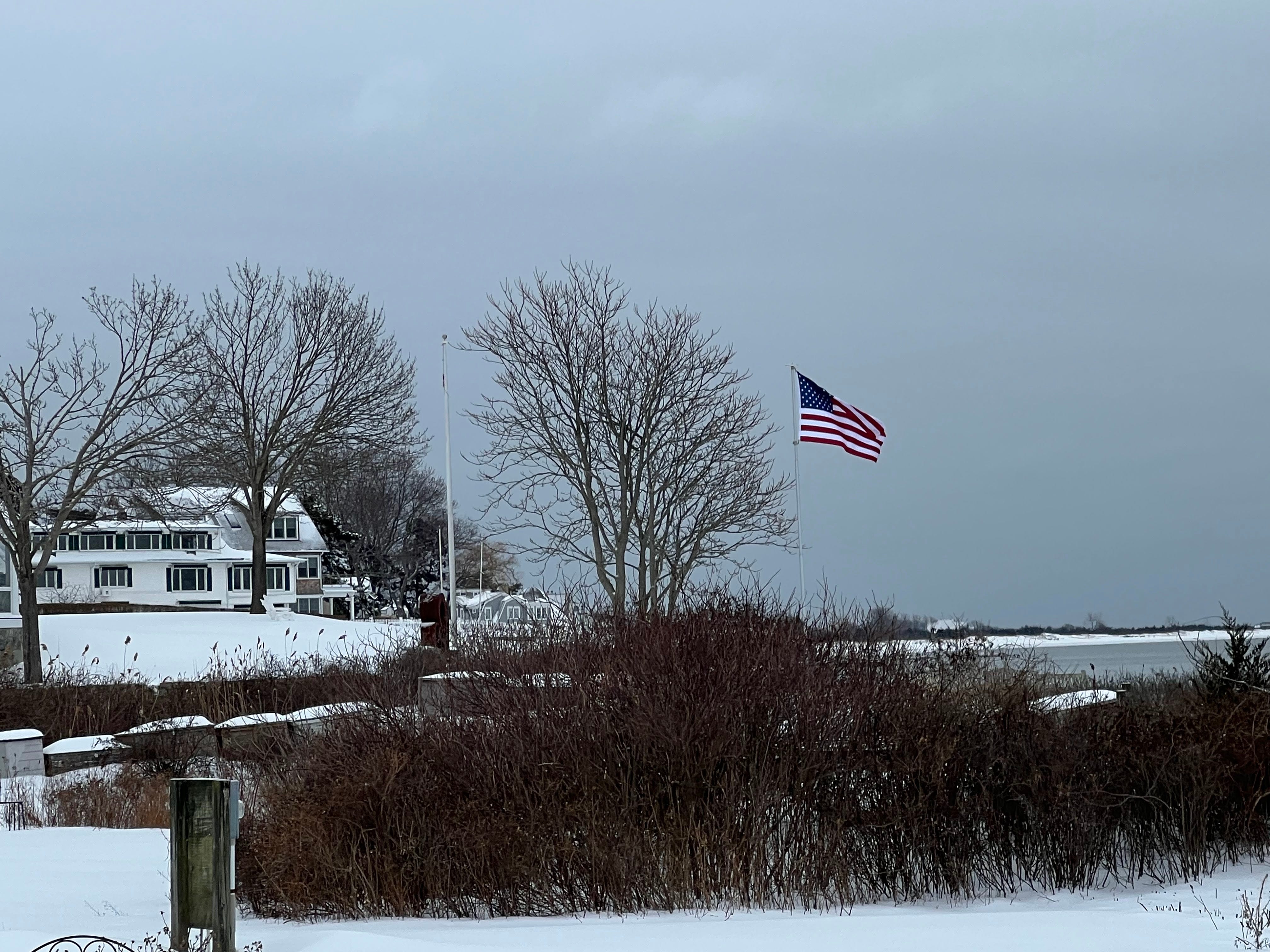
For all who are snowed in, here’s a bonus edition, inspired by Job 37:6
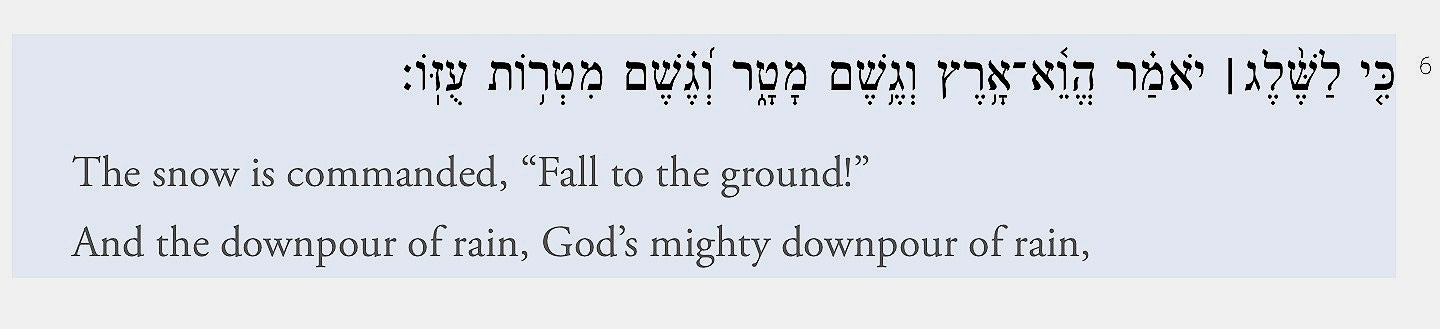
When the world was created, why did God see a need for both snow and rain? Wouldn’t one have been enough to water the earth?
Perfect storms are hard to appreciate when you are living through them. Taking the dogs out on Sunday in blinding blizzard conditions, I thought all four of us would blow away. Even when promised an extra treat, they were not intent on making that trip a productive one. But how could I blame them? I was asking them to do something perfectly normal at a time when we felt like we were aboard the Andrea Gail.
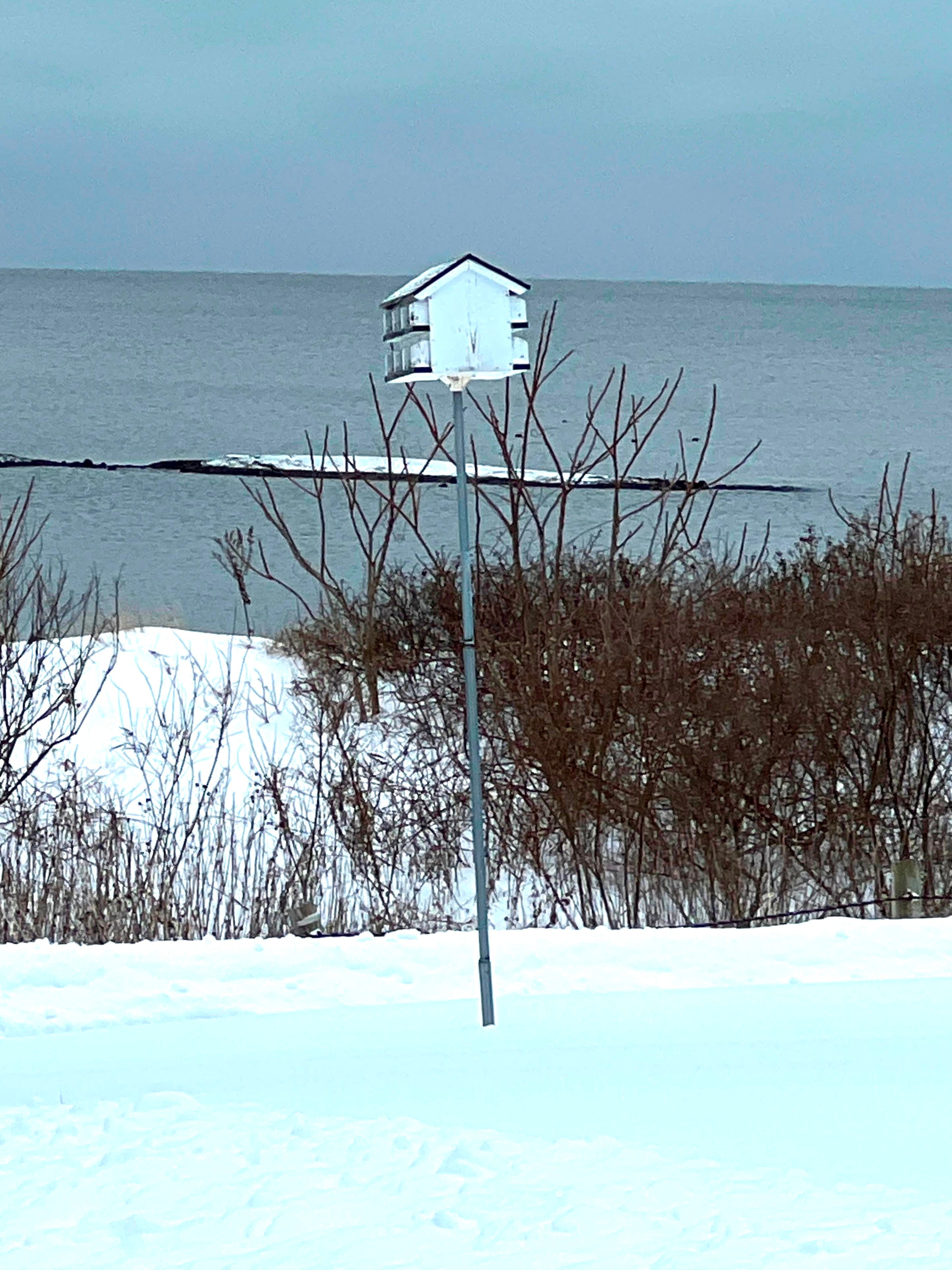
But in its wake, this storm, like life, left a blanket of peace. This morning, I spent a few moments of solitude at the beach, until the frigid wind chased me out, reminding me of the fine line that exists between a bucolic New England scene and a forbidding Arctic tundra. Even this split-level bird B and B looked to have plenty of vacancies.
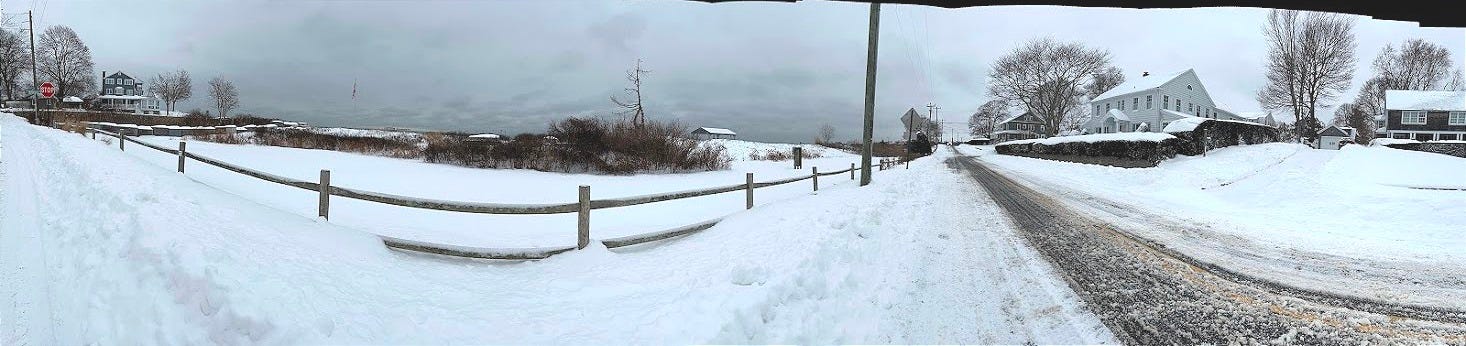
The coastline is always beautiful, but it never looks more beautiful than when it is covered by a foot and a half of fresh, blowing snow.
When I lived in Stamford, the parsonage was next door to the synagogue’s cemetery -like an old New England church. After a paralyzing snowfall, when all modern modes of transportation were shut down, I walked over to visit the “neighbors” and felt a serenity that masked the struggle and suffering that brought them there. Disease, accidents, war, terrorism, childbirth, old age - these grim realities were all shrouded in unspoiled purity and a hushed tranquility.
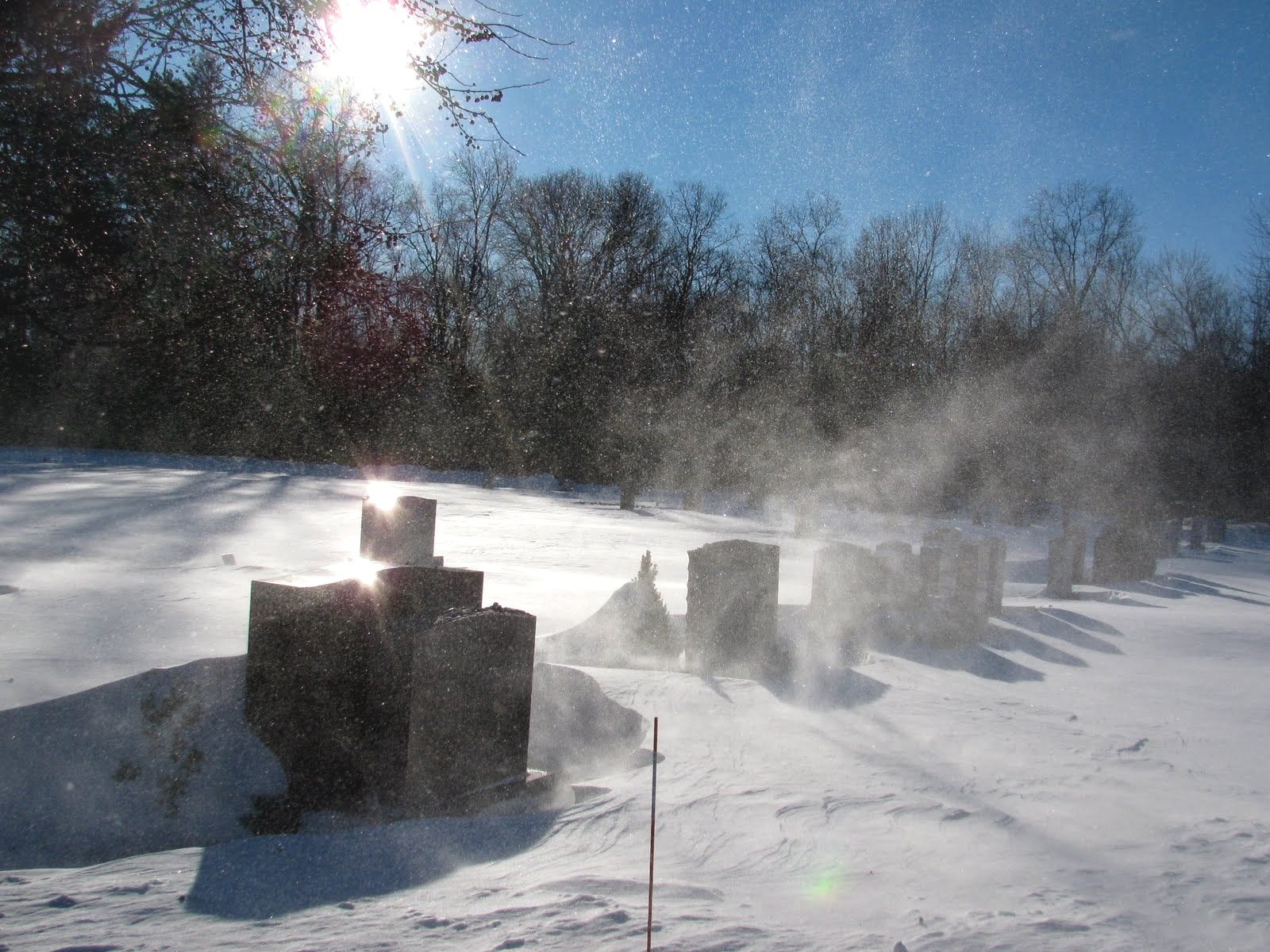
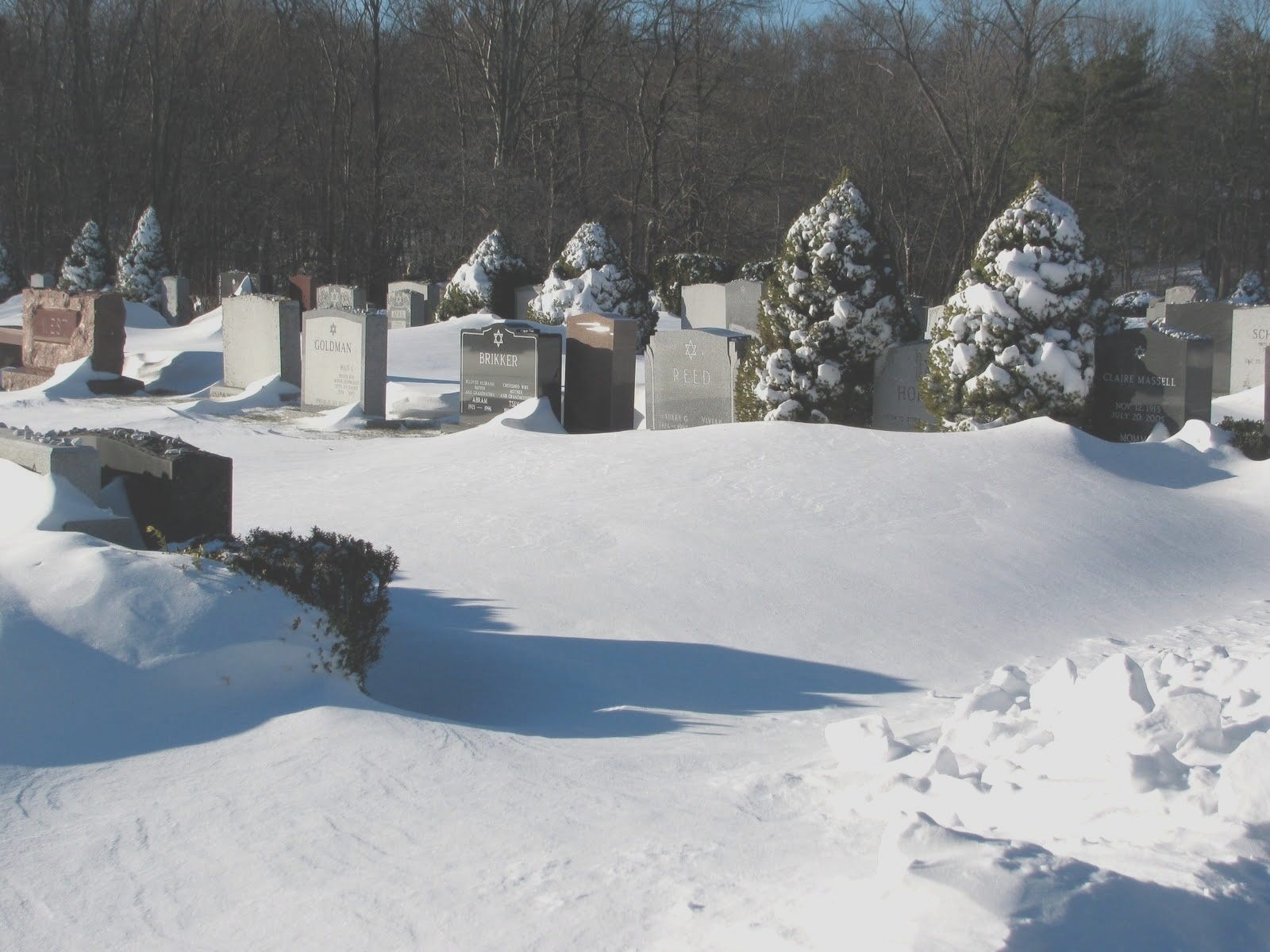
At the beach this morning, the snow seemed almost playful, sifting spirit-like and then churning up a whirlwind of surf in the distance. Its surface was smooth and velvety, but with ripples looking somewhat like rings on a tree trunk or the grain of rounded olive wood. Everything everywhere was touched by it.
But that intoxicating beauty is both a salve and a threat. For the snow calls on us to remember even as it tempts us to forget.
Yesterday, a field in Denver was bathed in wintry innocence, but the glossy facade softened the sharp icy edges of a titanic struggle for gridiron survival. That battle had its own beauty, and the game itself served as a distraction from the most horrible reality we are facing, on the snowy streets of Minneapolis.
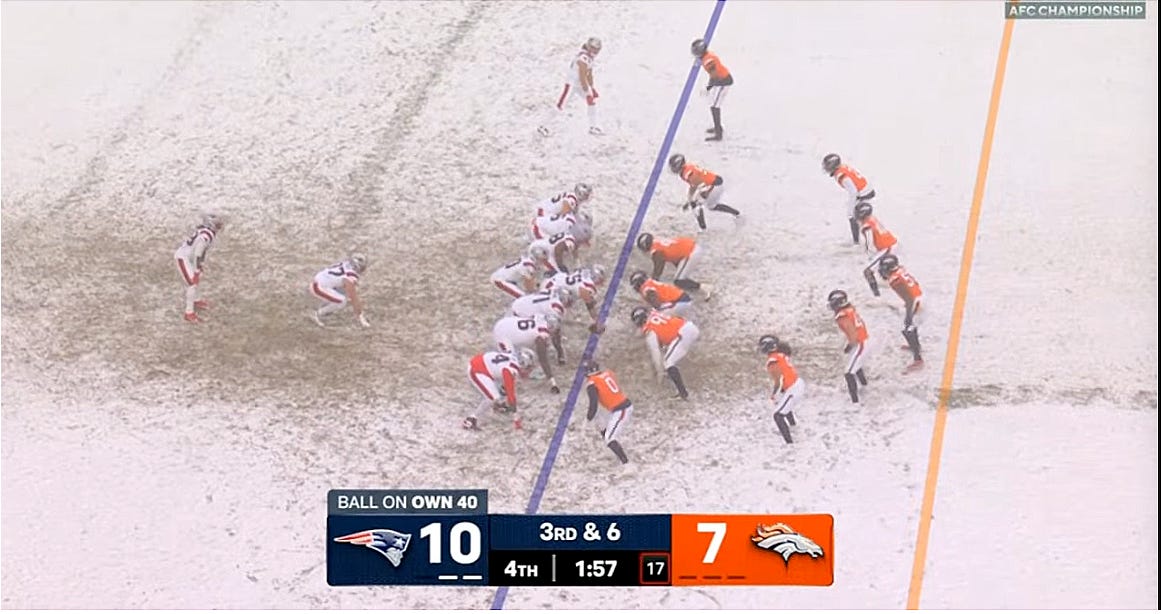
As much as I pine for the distraction that football provides (especially for this Patriots fan), we can’t avert our eyes for a minute, from what lies beneath.
Forgetfulness is especially dangerous these days. But so is our need to look beyond the here and now. That’s why we need both the rain and the snow.
Aside from Job 37 snow appears 18 times in the Hebrew Bible. And there are plenty of other Jewish connections to snow, in Midrash and prayer, poetry and parody.1
And even numerology. The Hebrew word for snow - sheleg - has a numerical value (according to the Kabbalistic numerology tool of gematria) of 3332 -- the same as the word shich’cha, which means forgetfulness. This suggests that snow is an instrument of divine balm. Comfort implies a degree of deliberate forgetfulness. It is the denial stage of grief. And when we venture outside on a snowy day, we are surrounded by forgetfulness.
So, as we’ve seen, snow helps us to deny the pain of death, the brutality of football, and the grime of urban landscapes.
And snow dissolves barriers.
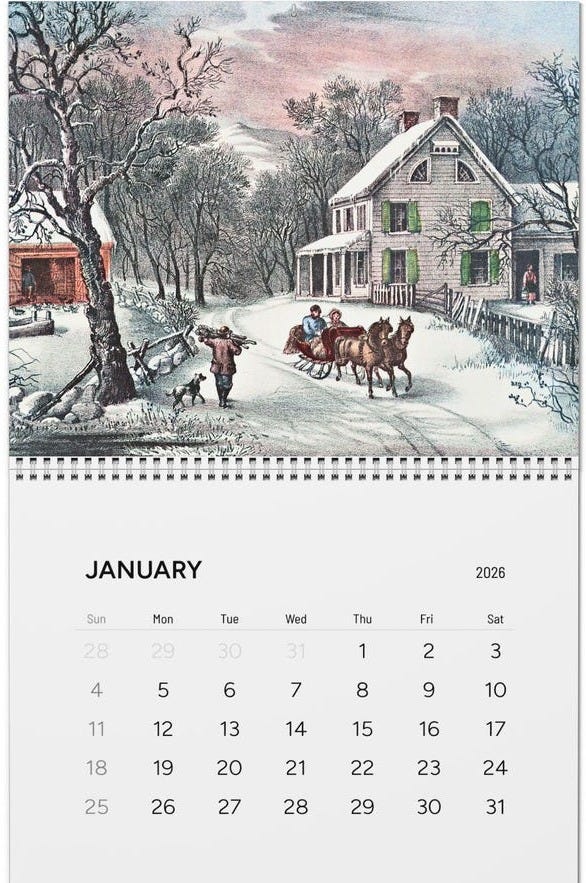
Snow obliterates the boundaries of time itself, turning 2026 into a page from a Currier and Ives calendar.
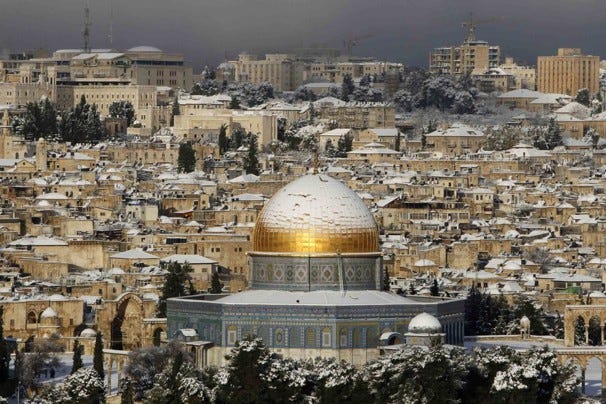
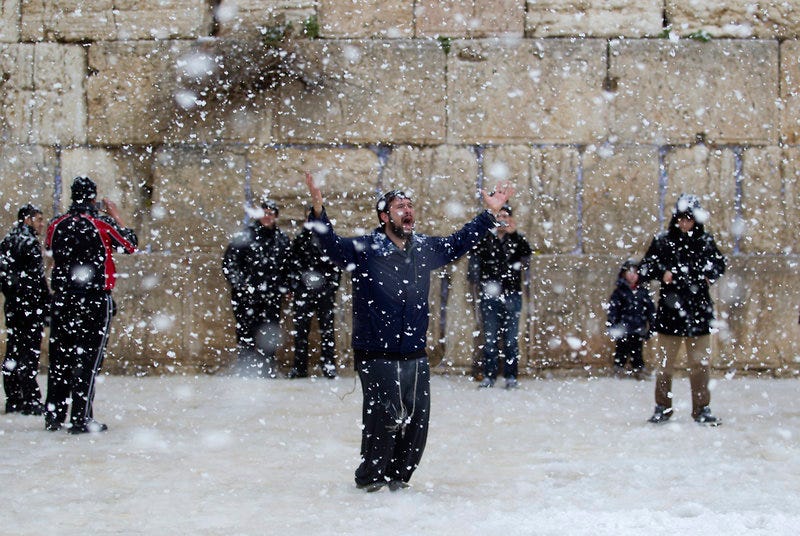
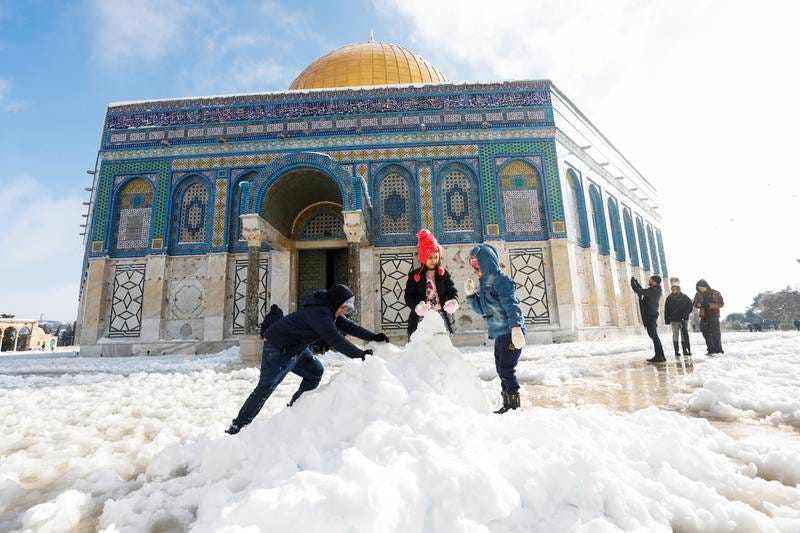
Sometimes snow can dissolve differences and bring people together in shared human experience. See these photos of Jerusalem in the snow.
Snow does all that for us. It promises us a fresh start.
Who has not been awed by the beauty of nearly any kind of landscape when covered in snow? We sense the purity of snow when we wake up in the morning and the streets, which are so often filled with grime, are all covered with a white blanket of snow. Snow is a great equalizer - no matter how big the building, or the car, whether a Lexus or a Hyundai, they all look the same when covered by the snow.
Snow has the ability to cover over the impurities of life and remind us of our potential to return to innocence.
Rabbi Lawrence Kushner, who used to serve a synagogue in Sudbury, Mass., writes about how one year, in the middle of November, he was telling the young children a story. Midway through, snow started to fall outside - the first snowfall of the year. As you might expect, there was suddenly great excitement in the room. “Look! It’s snowing outside! Winter is here!” They all ran over to the window, completely oblivious to the fact that the rabbi was trying to tell them a story.
Now, there’s a special blessing to be recited upon seeing spectacular natural events -such as the first snowfall of the year. Rabbi Kushner thought about telling the kids about the blessing and having them join him in reciting it. But he decided just to recite the blessing to himself. He realized that for the children, there was no reason to recite the blessing. Their spontaneous reaction, their excitement, was an even stronger affirmation of the wonder of nature than any adult’s blessing could ever be. After all: for the preschoolers, this was snowfall number five or six of their entire lives! There’s no way that adults can be amazed at snow the way kids can.
As Rabbi Kushner writes, “There are places children go that grown-ups can only observe from afar.”
Kabbalist Simon Jacobson has written of the spiritual meaning of snow:
So snow is heaven speaking to us - speaking to us through purity, speaking to us gently and gradually on our terms. Snow is the intermediary stage between heaven and earth; ice is a little closer to the level of earth; sleet is in between snow and ice. Thus every weather condition sends us a message and lesson - whether it’s rain, snow, ice, sleet or hail.
Which is why, in Job 37, God summons the snow to service.
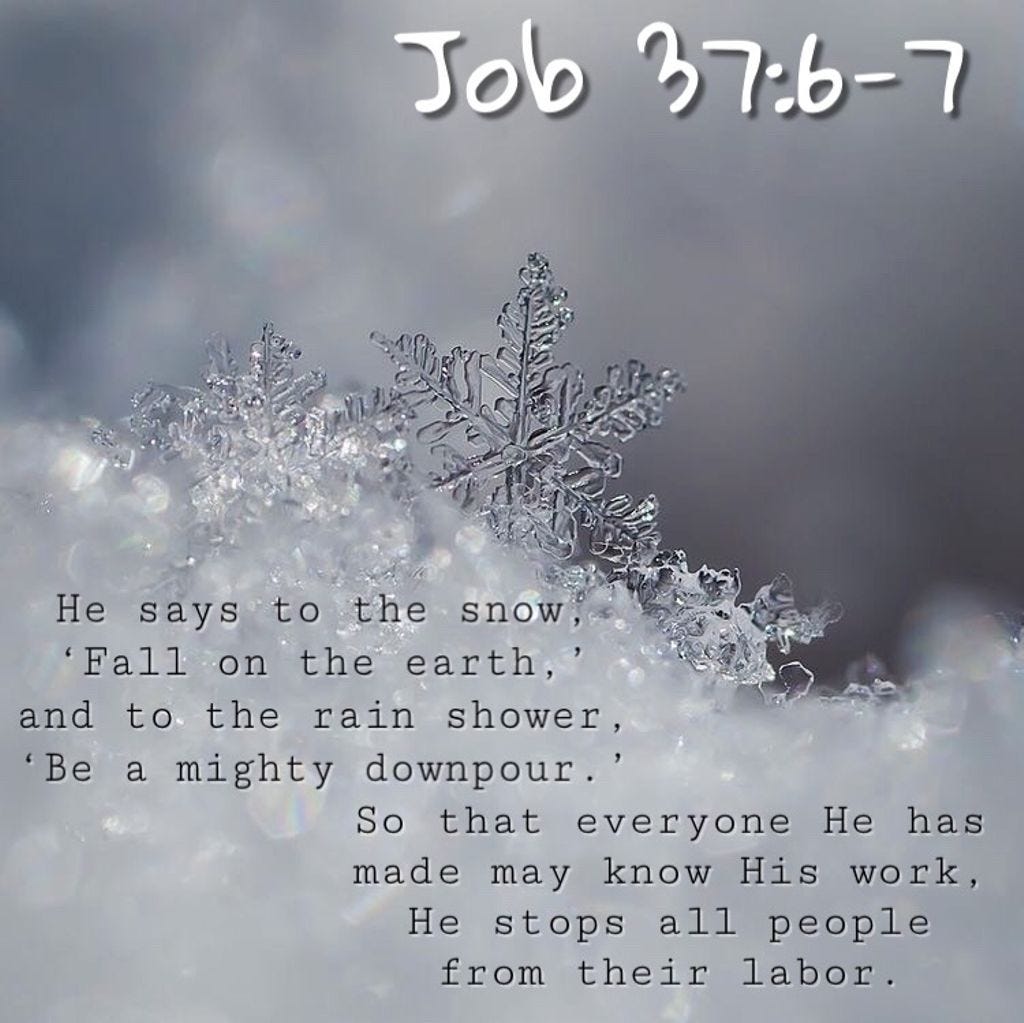
But the rain is equally necessary, because it washes the snow away. It reminds us of God’s - and our power - to see the world as it is, not merely as we wish it to be, and make the changes necessary.
Snow is for dreams. Rain is for reality.
As the snow falls this week - and beyond - let’s take a moment to figure out how we adults can get just a little closer to those sacred snowy places.... while never allowing this natural facade to divert us from the grimy realities beneath. So that we can gather strength to plow ahead - and never cease from our sacred labor.
Stay safe.
Little-Known Facts About Snow in Jewish Tradition and Lore (parody)
Many traditional Jewish congregations refuse to count snowmen in the prayer quorum.
Medieval Jewish mystics practiced rolling in the snow to purge themselves from evil urges. They were the first snow angels.
Moses Maimonides, 10th century physician to the Egyptian Khalif, prescribed snow as a cure for the hot Cairo summers.
The elders of Safed have 36 different words for snow -- but none for snow removal.
During 3 particularly cold Sinai winters, the Israelites were led by a pillar of snow.
It is forbidden to write in the snow on the Sabbath.
Following the great Jerusalem blizzard of 1900, Zionist visionary Theodor Herzl proposed the “Uganda option.”
According to some rabbinic authorities, one must wait six hours between going out in the snow and in the rain.
On snowy days, the procession of King Solomon’s immediate family was pulled by 2,800 reindeer and 1,200 huskies.
Israel’s national hockey team participated in the 1992 Winter Games, dominating both the Olympic village and concession area.
On January 9, 1896, a snowball from St. Patrick’s elementary school landed in Mrs. Manischewitz’s kitchen, inspiring her to invent matzo ball soup.
A Jewish Guide to Shoveling Snow (parody)
Artscroll Hilchos Sheleg (”Laws Regarding Snow; Ashkenaz version, chapter 5) - “First approach the snow with the proper kavanah, meditating on the concept of snow removal. Recite the “...Who commanded us concerning the shoveling of snow” benediction,” then take three steps back, bend the knees slightly with feet together, then look at the snow, lift shovel and dig, turning right and then left, bend knees fully, take three steps forward and deposit snow deliberately. Repeat until done, then recite the Sheheheyanu benediction, go indoors and have a hot drink, remembering to say the Shehakol brocha (see Artscroll, Hilchos on Drinking Hot Liquids)...”
The letter shin equals 300, lamed is 39 and gimmel is 3.

Isn't it nice that both teams are from Sanctuary Cities; entertainers are Bad Bunny & Green Day. And no president.
Yes, this will a Blue State classic! And great for coffee drinkers: Dunkin vs. Starbucks
The first snowfall is truly magical, exciting and allows us to feel that mystical feeling of wonder we felt as children. It means clean doggies 🥳! But when it enters the melting stage ... yuck! Thank you for this symbolic notebook entry during a time of great change. Let´s all hope for renewal when the snow has melted...spring is on its way. And thanks for the chuckles!
Snow is Devine, Ice is satanic.
CRUNCH. SLIP.
I see where you’re going there. I left ICE out of this one, but while out of sight, it’s never out of mind.
You’re just too cerebral! My focus is on quite the opposite end. Ouch!
Totally!
Lovely, lovely offering. Thank you!
If you can, find the song, "First Snow" by the Maine folk group Schooner Fare.
Embrace the Winter!