Friday, August 12, 2022

The Climate bill is our generation’s moonshot: Failure is not an option (RNS)

 The climate bill is our generation’s moonshot. Failure is not an option.

As Ron Howard's new movie shows, our new adventure means digging deep, not going high.  https://religionnews.com/2022/08/12/a-moonshot-for-planet-earth-apollo-13-ron-howard-13-lives/

A man looks out at wind turbines in Livermore, Calif., Wednesday, Aug. 10, 2022. Congress is poised to pass a transformative climate change bill on Friday, Aug. 12. The crux of the long-delayed bill is to use incentives to accelerate the expansion of clean energy such as wind and solar power, speeding the transition away from the oil, coal and gas that largely cause climate change. (AP Photo/Godofredo A. Vásquez)

(RNS) — Last week Congress passed the most consequential climate change legislation the United States has ever attempted, designed to reduce carbon emissions by 40% and solidify America’s position as the world leader in the fight to save our planet.

Saving our planet is this generation’s moonshot, and we have finally, and belatedly, achieved liftoff: The journey from the Mercury program’s initial forays into orbit to Apollo’s lunar landing was much shorter than the five-decade odyssey to this moment from the first warnings of what Daniel Patrick Moynihan called “the carbon dioxide problem,” back in 1969, two months after the moon landing.  

So here we go, but it’s important to note that this week’s liftoff was horizontal, not vertical. Our focus must turn now from outer space to inner space, from the planets and stars to the overflowing rivers and parched forests. But there is much that the prior moonshot can teach the current one. 

One man who seems to realize this already is Ron Howard, the Oscar-winning director whose new film, “Thirteen Lives,” brings us back to the tense early summer of 2018, when an international team of experts and volunteers joined forces to rescue a boys soccer team stranded in a flooded cave in Chiang Rai province, in northern Thailand.


As I watched, I couldn’t help but see similarities to “Apollo 13,” Howard’s 1995 movie, in which, with teamwork, ingenuity and outside-the-box thinking, another skilled team was able to rescue highly trained astronauts from an infinite void, with no atmosphere, no climate and no possibility of sustaining life.

In “Thirteen Lives,” the rescued are children imperiled by a supercharged atmosphere driven by a changing climate.  

The Chiang Rai cave where the boys were trapped was flooded very early in what turned out to be a particularly extreme monsoon season throughout eastern Asia that year. Their rescue, though cause for celebration, was a Pyrrhic victory when we consider the deaths of so many climate change victims before and since, including those who died these past few weeks in rain-drenched Kentuckyfire-torched California and sunbaked Europe

Earth, one senses, is angry at our hubris and is sending us a final ferocious warning before it all goes up in flames.

A Thai Buddhist monk prays for 12 boys and their soccer coach in Mae Sai, Chiang Rai province, in northern Thailand, on June 27, 2018. Rain continued to fall and water levels kept rising inside a cave in northern Thailand, frustrating the search for the boys and the coach who have been missing in the sprawling underground caverns since last weekend. (AP Photo/Sakchai Lalit)

A Thai Buddhist monk prays for 12 boys and their soccer coach in Mae Sai, Chiang Rai province, in northern Thailand, on June 27, 2018. Rain continued to fall and water levels kept rising inside a cave in northern Thailand, frustrating the search for the boys and the coach who were missing in the sprawling underground caverns. All were eventually rescued. (AP Photo/Sakchai Lalit)

In Howard’s new film, the wrathful rains are personified by the mythical princess Jao Mae Nang Non, also known as the “reclining goddess,” whose image looms over the mountain and cave (that both share her name) where the boys were trapped. Legend has it that her ill-fated love met a tragic demise in that spot. Villagers make offerings to appeal to her for mercy, while the rains fall like tears from her grieving eyes. She is a constant, visible reminder that we have made a mess of our relationship with nature, and now we are paying the price.

Unlike last year’s climate change film, “Don’t Look Up,” the message of “Thirteen Lives” is that we need to look down, into the darkest fissures of the earth, the caves and sinkholes, the submerged rice paddies and gushing tributaries. Look down into the eyes of the princess.

“The heavens belong to the Lord, but the earth God gave over to us,” the Bible’s Psalm 115 reminds us. We need to fix what’s in our backyard and not be distracted by the shinier objects above.

Curiously, both of Howard’s rescue films have the number 13 in the title, which points to another shared lesson: Both the celestial and earthbound moonshots are profoundly spiritual missions, boosted by a fusion of humility and hope. “Who knows thirteen?” — Jews sing at the conclusion of the Passover seder. “Thirteen are the attributes of God,” referring to the 13 qualities of mercy through which God governs the cosmos. Through these attributes, we can sense God’s presence and the unity of all creation. 

This summer, the James Webb Space Telescope enabled us to see galaxies being born and dying and light that was generated at the dawn of time, just after the Big Bang, 13 (yes, 13) billion years ago. In the Israeli media, the Hebrew word used for this Webb’s-eye view of the universe was Ein Sof, which in the secular context means “infinity,” but it is also a well-known kabbalistic name for God’s most mysterious and unknowable essence.

When we gaze back through those 13 billion years and slip the surly bonds of time and space, we approach the face of God. The closer we come to seeing the beginning — and touching God — the more we recognize that we are not God, and the smaller we feel. That stunning vision from the heavens should fortify us with humility for the struggle that awaits; for back here on earth, the reclining goddess is growing impatient.

In the Talmud, 13 is also the age of responsibility. And what greater responsibility do we have than to take those God-like qualities of mercy and apply them to sustaining life here on our home planet? For while we look up and our Webb-enhanced view gets clearer and sharper, we look down and our view of what lies beneath us becomes muddier and murkier. As more sinkholes start to appear, the ground gives way and the waters rush in. The princess is begging us to act.


“Chiang Rai,” the princess of the cave cries, “we have a problem!”

We need to summon the same dogged determination of Apollo 13 astronaut Jim Lovell and flight director Gene Kranz as we grapple with humankind’s most intractable predicament:  “From now on, we live in a world where man has walked on the moon,” said Lovell. “And it’s not a miracle, we just decided to go.”

Kranz put it best as he wrestled with the unmanageable challenge of bringing the boys home:  

“Failure is not an option.”
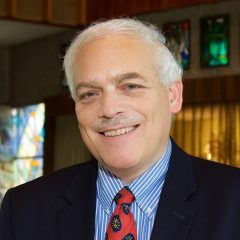
Rabbi Joshua Hammerman. Courtesy photo

Rabbi Joshua Hammerman. Courtesy photo

Now the work can begin, at long last, thanks to the underwhelmingly named Inflation Reduction Act of 2022. 

Let’s call it the “Inconvenient Truth Act” of 2022. 

(Rabbi Joshua Hammerman is the spiritual leader of Temple Beth El in Stamford, Connecticut, and the author of “Mensch-Marks: Life Lessons of a Human Rabbi” and “Embracing Auschwitz: Forging a Vibrant, Life-Affirming Judaism that Takes the Holocaust Seriously.” The views expressed in this commentary do not necessarily reflect those of Religion News Service.)




A Moonshot for Planet Earth (Times of Israel)


A Moonshot for Planet Earth

The most consequential climate change legislation ever, designed to reduce carbon emissions by forty percent and solidify America’s position as the world leader in the fight to save our planet, is being called the “Inflation Reduction Act.”

Come again?

We should be shouting from the rooftops the pending enactment of the “One Earth Act,” or the “Planet Fitness Act,” or even the “Al-Gore-Was-Right-All-Along Act.”  But no. Reducing inflation is important, no doubt, as are the bill’s other features. But an earth-shaking $370 billion for climate change shouldn’t be slipped through the back door.

So here we go. This week’s liftoff was horizontal, not vertical, and the focus must turn now from outer space to inner space, from the planets and stars to the overflowing rivers and parched forests. But there is much that the prior moonshot can teach the current one.

Ron Howard’s new film, “13 Lives,” brings us back to the tense early summer of 2018, when an international team of experts and volunteers joined forces to rescue a boys’ soccer team stranded in a flooded cave in Chiang Rai province, in northern Thailand.

As I watched the film, I couldn’t help but note the similarities to one of Howard’s prior films, “Apollo 13,” where, using teamwork, ingenuity and outside-the-box thinking, another skilled team was able to bring home three astronauts from an equally dire predicament. In one case, adults were rescued from an infinite void, with no atmosphere, no climate, and no possibility of sustaining life. In the other, the rescued children were imperiled by a supercharged atmosphere driven by a changing climate.

The boys were trapped as the Chiang Rai cave was flooded very early in what turned out to be a particularly extreme monsoon season throughout eastern Asia that year. The rescue of the thirteen was cause for celebration, but it was a Pyrrhic victory when we consider the deaths of so many climate change victims before and since, including those who died these past few weeks in rain-drenched Kentuckyfire-torched California and sunbaked Europe.

There is a sense that the Earth itself is angry at our hubris and is sending us one final, ferocious warning before it all goes up in flames. In Howard’s new film, the wrathful rains are personified by the mythical princess Jao Mae Nang Non, also known as the “reclining goddess,” whose image looms over the mountain and cave (that both share her name) where the boys were trapped. Legend has it that her ill-fated love met a tragic demise in that spot. Villagers make offerings to appeal to her for mercy, while the rains fall like tears from her grieving eyes. She is a constant, visible reminder that we have made a mess of our relationship with nature, and now we are paying the price. 

Recalling last year’s metaphoric climate change film, “Don’t Look Up,” the message of “Thirteen Lives” is that we need to look down, into the darkest fissures of the earth, the caves and sinkholes, the submerged rice paddies and gushing tributaries.  Look down into the eyes of the princess– and look around – and follow the advice of the Psalm 115:16, “The heavens belong to the Lord, but the earth God gave over to us.” We need to fix what’s in our backyard and not to be distracted by the shinier objects above.

Both of Howard’s rescue films have the number thirteen in the title, which points to another shared lesson, that both the celestial and earthbound moonshots are profoundly spiritual missions, boosted by a fusion of humility and hope. “Who knows thirteen?” – Jews sing at the conclusion of the Passover seder. “Thirteen are the attributes of God,” referring to the thirteen qualities of mercy through which God governs the cosmos. Through these attributes, we can sense God’s presence and the unity of all creation.

This summer, the James Webb telescope enabled us to see galaxies being born and dying and light that was generated at the dawn of time, just after the Big Bang, thirteen (yes, thirteen) billion years ago. In the Israeli media, the Hebrew word used for this Webb’s eye view of the universe was Ein Sof, which in the secular context means “infinity,” but it is also well-known kabbalistic name for God’s most mysterious and unknowable essence. When we gaze back through those thirteen billion years, and slip the surly bonds of time and space, we approach the Face of God. The closer we come to seeing the Beginning – and touching God – the more we recognize that we are not God, and the smaller we feel.

That stunning vision from the heavens should fortify us with humility for the struggle that awaits; for back here on earth, the reclining goddess is growing impatient. In the Talmud, thirteen is also the age of responsibility. And what greater responsibility do we have than to take those God-like qualities of mercy and apply them to sustaining life here on our home planet? For while we look up and our Webb-enhanced view gets clearer and sharper, we look down and our view of what lies beneath us becomes muddier and murkier. And as more sinkholes start to appear, the ground gives way and the waters rush in. The princess is begging us to act.

“Chiang Rai,” the princess of the cave cries, “we have a problem!”

We need to summon the same dogged determination of Apollo 13 astronaut Jim Lovell and flight director Gene Kranz, as we grapple with humankind’s most intractable predicament. “From now on, we live in a world where man has walked on the moon,” said Lovell. “And it’s not a miracle, we just decided to go.”

And from now on, this generation’s moonshot will be to protect our own little livable orb. We can gaze up there, but only in as much as it inspires us to change things down here. For we have no choice.

Kranz put it best as he wrestled with the unmanageable challenge of bringing the boys home:

“Failure is not an option.”

Now the work can begin, at long last, thanks to the “Inconvenient Truth Act” of 2022.

Thursday, August 11, 2022

In This Moment: Lessons of Kansas; A Dog Hero; The 97 Percent Solution; The Sh'ma and the Sandman; The Jewish Valentine's Day


In This Moment

The brief flareup of violence last week was a strategic win for Israel, with minimal civilian casualties among Palestinians (understanding that even one is too many) and significant damage inflicted upon Islamic Jihad leadership. Hamas stayed out of it, and, with Iron Dome achieving an unbelievable 97 percent success rate, not one Israeli civilian died from the hundreds of rockets fired. PM Lapid's gamble of a preemptive strike against terrorist leaders poised for an attack seems to have paid off. For now. The Hebrew headline below states, "Until the Next Round."
There was one Israeli casualty of recent anti-terror operations, a 'true four-legged warrior': an elite unit dog killed in a West Bank raid (The Times of Israel). The canine hero was featured on the front pages the week. The headline here says, "A Hero on Four (legs)" and features a photo of Zili, who belonged to the elite Yamam counterterrorism police unit and was killed by Palestinian terrorists, as he was laid to rest at the unit’s dog cemetery. The nine-year-old Belgian Malinois, was killed during a gun battle in the West Bank city of Nablus. Three Palestinians also died in the battle, including Ibrahim Nabulsi, a wanted Al-Aqsa Martyrs’ Brigades member and two other gunmen. Zili was truly a hero, who bravely participated in hundreds of dangerous missions, including capturing a Palestinian man who later pleaded guilty to the murder and rape of Israeli teen Ori Ansbacher in Jerusalem in 2019. As we mourn Zili, we shouldn't lose sight of the fact that human beings died, even though they were hardly innocent. Meanwhile, Zili was more innocent than the rest of us. He risked his life willingly and often, but never understood why people can be so mean. National Dog Day is coming up at the end of this month. Zilli's sacrifice is a reminder of how much we owe our four legged friends.
Shabbat Shalom.

This Friday night, with the weather forecast looking ideal, we will at long last have services outdoors, at 6 PM. The plan is to be outdoors next week too, for Barechu and Barbecue, but why put off until tomorrow what you can do today! Come look for us by the sanctuary windows, on the side of the Sukkah. Take some deep breaths and enjoy Kabbalat Shabbat the way it was meant to be. On Shabbat morning, Shabbat Nachamu (the Shabbat of Comfort), Hank Silverstein will give the d'var Torah.

I'm proud to announce that I am a a finalist for the 2022 RNA (Religion News Association) Awards for Religion Reporting Excellence, in the category of religion commentary. See all the finalists here. I was first prize winner in this category in 2019. 

These three columns, all published and distributed via the Religion News Service, were submitted:


Winners will be revealed in October in a hybrid ceremony hosted by the Scripps Howard Program in Religion Journalism and the Spiritual Life at Columbia Journalism School.


What we learned from Kansas
The shocking margin of victory for those favoring maintaining abortion rights in the Kansas constitution has been endlessly analyzed by the pundits. Clearly this "bright red" state is not as conservative as previously thought. But if you look at the color coded map above, that should not surprise us. Every state veers not toward the extremes, but toward the middle. Every state is a shade of purple. This is what America looks like: infinite shades of purple. Many who are conservative on some issues are progressive on others. People slide back and forth, especially on issues as complex as this one, seen by all sides as a matter of life and death. The overturning of Roe v Wade by the Supreme Court was a radical shift, eliminating freedoms long taken for granted, and trampling upon the rights of women and religious minorities. What the Supreme Court did requires a concerted response, and I am glad that the response is taking the form of a mass movement. Nothing less will suffice to undo the damage of this ruling. I again share this resource from the NCJW explaining why for Jews supporting abortion rights is a consensus issueeven though there are differences of degree. There is no reason why these positions can't resonate anywhere in the country. They certainly do in Kansas.


Good News - Bad News on Pluralism

Tonight and tomorrow, many Jews will celebrate Tu B’Av, a day that has become known, especially in Israel, as the Jewish day of love. At first glance, Tu B’Av seems a lot like Valentine’s Day — many couples exchange gifts or flowers and celebrate with a romantic dinner or a night out. However, unlike Valentine’s Day, Tu B’Av is an ancient Jewish holiday that dates back to Second Temple times. According to the Mishnah (Taanit 4:8), this was an annual matchmaking day when unmarried women would dress in white and dance in the vineyards outside the walls of Jerusalem. See How Tu B’Av, the ancient Jewish holiday of love, was revived (Forward)See also: Tu B’Av, the Jewish Day of Love (MJL) And What's Love Got to Do With It? Guided Learning for Tu B'Av (Sefaria)And Click here (or on the poem above) for some poems of love and oneness, honoring Tu B'Av and this week's portion, which includes the Sh'ma, and a primer on Tu B'Av.

Recommended Reading
  • This week is "Super Shabbat," Shabbat Nachamu. The portion of Va'etchanan includes both the Ten Commandments AND the Sh'ma!


  • What happened on the 10th of Av? Judaism was rebooted (R.N.S) - The rabbis at Yavneh were the midwives of a paradigm shift. No more altar in Jerusalem? OK. They would relocate Judaism from the Temple to the home — more precisely, to the table. That would become their new sacrificial altar. Can’t sacrifice lambs anymore at the Temple for Pesach? OK. We move the whole thing to the table in the home. We institute the Passover Seder. We start working on the Haggadah. Can’t offer sacrifices anymore? We cope. We create a new religious language — of prayer, Torah study and mitzvot. While they were at it, the sages in Yavneh decided what books would be included in the Tanakh (the Hebrew Bible), and which would be left on God’s cutting room floor. They reestablished the Sanhedrin, the legal system of ancient Judaism. They formulated the Amidah, the classic statement of Jewish prayer. That whole scene where Yochanan leapt out of the coffin? That is a fantasy of resurrection. For that is exactly what the sages did. In Yavneh, the sages resurrected — we might say rebooted — Judaism.


  • Facebook bans hate speech but still makes money from white supremacists (WaPo) A new report from the Tech Transparency Project, a nonprofit tech watchdog, found 119 Facebook pages and 20 Facebook groups associated with white supremacy organizations. Of 226 groups identified as white-supremacist organizations by the Anti-Defamation League, the Southern Poverty Law Center, and a leaked version of Facebook’s dangerous organizations and individuals list, more than a third have a presence on the platform, according to the study.
[Facebook says it will now block white-nationalist, white-separatist posts] Released Wednesday and obtained exclusively by The Washington Post, the report found that Facebook continues to serve ads against searches for white-supremacist content, such as the phrases Ku Klux Klan and American Defense Skinheads, a longtime criticism of civil rights groups, who argue that the company prioritizes profits over the dangerous impact of such content.
The findings illustrate the ease with which bigoted groups can evade Facebook’s detection systems, despite the company’s years-long ban against posts that attack people on the basis of their race, religion, sexual orientation and other characteristics.
Activists have charged that by allowing hate speech to proliferate across its networks, Facebook opens the door for extremist groups to organize deadly attacks on marginalized groups. In the wake of several high-profile incidents in which alleged mass shooters shared prejudiced beliefs on social media, the findings add to the pressure on Facebook to curb such content.


  • In Defense of the Synagogue: RABBA YAFFA EPSTEIN & RABBI DAVID WOLPE (Sapir) The erosion of synagogue life is at the heart of the dilemma of Jewish continuity.There are many things synagogues do not do well. As the product of a shul, a day school, and a Jewish summer camp, I think the third was the most effective in my own Jewish development. But the synagogue remains home base. First, let’s remember the depth of the synagogue’s place in Jewish tradition. It is the modern instantiation of the Temple, and Jewish law obligates every community to build a synagogue (Shulchan Aruch, Orach Chayim 150:1).


  • Is Yeshivish a New Jewish Language? (Mosaic) - Where are you holding?” asked the email I received from an English-language editor at a Jerusalem publishing house with which I was working on a project. Although English was the editor’s native language, she did not phrase her question in normal English. I recognized it as “Yeshivish,” a form of English, peppered with rabbinic Hebrew and Aramaic, and with Yiddish calque expressions, that is spoken today in the world of yeshiva students, their families, and parts of the Jewish Orthodox community. The Yiddish verb haltn has the primary meaning of “to hold,” and the editor’s question was a literal translation of vu halt ir, whose idiomatic sense, often regarding someone’s progress in a talmudic or rabbinic text, is “Where are you up to?” or “How far have you gotten?” Yet while the editor was writing in Yeshivish, what struck me was that she did not seem to realize she was doing so. Generally, Yeshivish speakers use it only within their own community. There is not much point, after all, in saying things like “I’m not dealing with the question gufa” (in itself), or “Let me put it to you poshut” (simply), if you know your interlocutor is not going to understand you. Theoretically, the same should have been true for “Where are you holding?” But although the editor had no reason to believe that I knew or spoke Yeshivish, she apparently used this phrase anyway because she was under the impression that it was ordinary English, or at least, ordinary Jewish English.

  • Mahane Yehuda Market in Jerusalem turns 100! Mahane Yehuda websiteVideo Below: Zooming In on the history of Jerusalem's iconic Machane Yehuda market.
Zooming In on the history of Jerusalem's iconic Machane Yehuda market
  • Olivia Newton-John, ‘Grease’ star and granddaughter of Jewish Nobel laureate, dies at 73. See also The secret Jewish history of Olivia Newton-John (Forward) In a recent celebrity memoir, the author writes, “In 1933, my Jewish grandfather fled from Germany with his wife, Hedwig, to escape Hitler’s regime. He was not only a brilliant mind but also a humanitarian who helped Jews escape Germany. I’m extremely proud of my peace-loving grandfather.” The grandfather was Nobel Prize-winning physicist Max Born, one of the founders of quantum mechanics and a longtime friend of Albert Einstein. The granddaughter, which might come as a surprise to some, is Olivia Newton-John. In fact, the English-born Australian singer/actress has plenty of yikhes to spread around. Her maternal great-grandfather was prominent German-Jewish jurist Victor Ehrenberg; her father was a British intelligence officer who took Deputy Führer Rudolf Hess into custody during World War II; and she also traces her ancestry back to Protestant theologian Martin Luther....Newton-John apparently did have some serious Jewish mystical concepts in mind when she recorded her 2006 album “Grace and Gratitude.” The new-agey confection is rife with instrumental interludes with titles including “Yesod,” “Hod,” “Nezah,” “Tiferet,” “Hesud-Gevurah,” “Binah,” “Hochmah” and “Keter” – names corresponding with the divine sefirot, or vessels of divine energy, in the Kabbalistic Tree of Life. Although she doesn’t discuss this in her memoir, she does write about her friendship with fellow pop star/actress Madonna, a self-professed adept of Kabbalah.
The Sh'ma, featured in his week's Torah portion, also appears in a scene of the Netflix series, The Sandman, that dropped this week. I'm not a big Sandman fan but I found this clip quite genuine and moving. Read more about the show here. And for something completely different, click here to see a video of Mandy Patinkin singing the Sh'ma to his dog. Be like Mandy! Make the Sh'ma part of your day!
Netflix's The Sandman - Exclusive "Death" Clip (2022) Tom Sturridge, Kirby Howell-Baptiste
Temple Beth El
350 Roxbury Road
Stamford, Connecticut 06902
203-322-6901 | www.tbe.org
  
A Conservative, Inclusive, Spiritual Community