Showing posts with label food. Show all posts

Thursday, April 27, 2023

This Moment: When Does Joseph First Cry? Hello, Margaret, It's Me, God; Bringing Jewish Values into the Synagogue Kitchen


In This Moment


The annual Yom Ha'atzmaut Bible Quiz was held yesterday in Jerusalem. Here are the two finalists grappling over the final question:

When does Joseph cry for the first time? (Answer below)

The Golden Rule is found in many faith traditions, and more than once in Judaism. But it all began with Leviticus 19, which we read this Shabbat. Join us for our Praying the Margins on Shabbat morning and on Friday night, we can put the mitzvah of loving our neighbor into practice as Building One Community's Jennifer WIlliams will teach us how we can save innocent people from deportation. Both services are available in person and virtually.

Recommended Reading & Listening


  • Intro to Judaism - This Thurs. night's class will focus on Shabbat. Here are three info packets that we'll be using:


Shabbat Info Packet 1

Shabbat Info Packet 2

A focus on the rituals of Friday night


  • Israeli teen girls win first, second place in annual Bible quiz (TOI) - Result is first of its kind in 17 years; Emunah Cohen and Neta Lax beat out 41 contestants from 20 countries who qualified for advanced stages. See the video here. The final question? When does Joseph first cry? Answer: Joseph cries a lot! At least seven times: Genesis 42:24; 43:30; 45:2; 45:14-15; 46:29; 50:1; 50:17. The first time is when Reuben leads the brothers in pleading with Joseph not to hold Benjamin captive. Once the floodgates are opened, he basically doesn't stop crying when seeing his family. Not that there's anything wrong with that.


  1. I visited New York City, and everyone seemed so polite.
  2. I texted people a question without first saying, “Hi, good morning.”
  3. I let my shopping cart hold my place in line at the supermarket while I did my shopping.
  4. I started saying “Ehhhh” instead of “Uhhhh.”


Today's Israeli Front Pages

click for pdf of the full page

Yediot Achronot (Hebrew)

Ha'aretz (English)

Jerusalem Post (English)

Above: Yediot Achronot front page for Yom Hazikaron. A girl speaks of "the Father I Never Knew." She was just ten months old when her father was killed in the Second Lebanon War.

Parsha Packets for Ahare Mot / Kedoshim

Jews and Tattoos


Don't Stand Idly By

Civility and Discourse on Israel in the Jewish Community

The Holiness Code and Gay Sex: New Interpretations: The author explores the complicated verses in Leviticus traditionally interpreted as forbidding gay sex, surveying several interpretations that stray from the traditional approach to these verses


How to Tell People Off and When to Hold Your Peace: The Art of Moral Criticism

"And Live By Them..." Jewish Law and the Infinite Value of Human Life

Taking Kosher to the Next Eco-Level


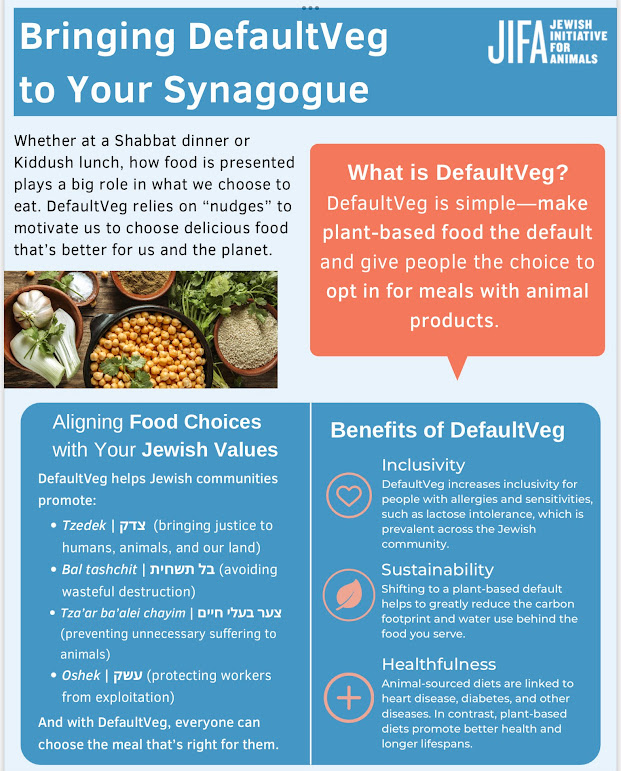
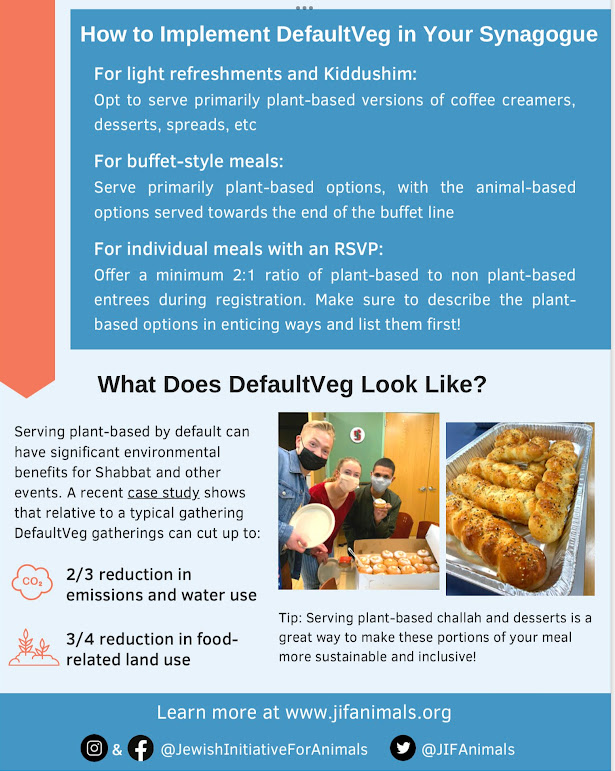
Although I've been a vegetarian for most of my life, I've never been an evangelist for the cause, though I do believe that humanity's natural state was vegetarian, before things got screwed up in the early chapters of Genesis. With Earth Day just behind us and with it becoming clearer that dramatic grass roots action is needed to head off disaster, an interesting alternative has sprouted: DefaultVeg. In L.A., the Jewish Initiative for Animals (JIFA) has been appearing on billboards promoting the idea that we see "fleshed out" below. It's simple and inclusive - not an imposition. Aligning food choices with Jewish values makes lots of sense, no? This is is no PETA extremism. You won't have to give up that schmear or even that chicken dinner. No need for blame and recrimination. It's not about fault, it's just about defaults. And really, if you think about it, why should the vegetarian option always be the one at the end of the table? Why are we always made out to be the fussy weirdos? And if you are a Kosher Vegetarian, you are doubly weird - bring out the cellophane airline dinner for that one! Maybe it's time to rearrange the tables as proposed by DefaultVeg. Otherwise we'll soon be rearranging the deck chairs on the Titanic.

  
LinkedInShare This Email
Temple Beth El
350 Roxbury Road
Stamford, Connecticut 06902
203-322-6901 | www.tbe.org
  
A Conservative, Inclusive, Spiritual Community

Wednesday, May 30, 2018

Feasting on Choice, Dining with Dignity (Parshat Beha’alotecha)


Feasting on Choice, Dining with Dignity (Parshat Beha’alotecha)


Commentary on Parshat Beha’alotecha (Numbers 8:1 – 12:16)
I’ve been watching entirely too much television lately. With the basketball playoffs so riveting for this native Bostonian, two Israeli networks now on Cablevision, and a gazillion movie options streaming, my abundance of options has been a good preparation for this large and unwieldy Torah portion. This portion even has an unwieldy name, Beha’alotecha; it’s a compendium of odds and ends, mostly odd, that don’t fit anywhere else in the Torah, a Chinese restaurant menu of choice.
In Beha’alotecha, you can surf your way from the standard religion channels to HGTV for tabernacle décor, to the Soap Network for stories of domestic betrayal, sickness and healing. Then you’ve got your C-Span – Moses and the council of 70 elders share power, and your Travel Network, as Israel sets forth on the journey from Sinai.
But what I like most of all is the Food Network.
From the moment the Israelites set foot in the wilderness to the very end of the journey, they complain about lots of things, but primarily, they kvetch about food. Here the issue isn’t the scarcity, but rather the lack of variety. They want meat, and they want the fish that was plentiful in good old Egypt. Ah yes Egypt, that fish capital of the world – Gorton’s of Giza. They want leeks, cucumbers and melons, onions and garlic. According to Midrash Rabbah and Rashi, Rav Shimon ascribes more sensual connotations to these items, but I see it for what it is – they want more on the menu. More to the point, they want a menu. They want Wednesday to be Prince Spaghetti Day, but not Thursday and Friday too.
What’s amazing here is that the food they already had, Mannah, was the tastiest food in the world. Mannah is described as looking like coriander seeds, or smooth peppercorns, and having a bronze, yellow-brownish color. It was made into cakes and tasted like rich cream. Now, if you could choose between having this delicious Haagen Dazs concoction all the time, or a rotation of onions, leeks and fish sticks, what would you select?
Eighteenth-century commentator Jonathan Eybeschutz posits: “To feel prosperous, it is not enough for people to have everything that is needed. One must have more than one’s neighbors have. The Mannah was psychologically unsatisfying because everyone had it in abundance.”
All too often we look at life as a matter of winners and losers. As Harold Kushner has written, “To see the goal of life as ‘winning’ forces us to see other people as competitors, threats to our happiness. For us to ‘win,’ they have to ‘lose.’”
Maybe this is why the Mannah has that name. In Hebrew it is “mahn.” But it is almost always referred to as THE Mannah, or “Ha-mahn.” This delicious little delicacy turned the entire nation of Israel into a bunch of raving, insatiable, dissatisfied, jealous little Hamans, each one looking over his shoulders at what the other one has.
But maybe there is another message here about human nature, one that brings us back to the Chinese menu I was discussing earlier. Even if the quality is bad, having the power of choice is paramount. How the Israelites felt about the Mannah is how I feel when there’s no vegetarian option on the menu.
I’m sure we all have our own restaurant stories. Comedians have made a living on the eccentricities of their great-aunts who would ask for a hamburger with the meat “on the side.” Food is a very personal thing – and choice is too.
It’s interesting that the Israeli Ministry of Health has put out a guide to eating with dignity, directed toward caregivers of those with dementia. At the same time, a new Washington D.C. based restaurant chain “Falafel, Inc,” with a clear Palestinian bent, bills itself as “the world’s first falafel food social enterprise,” with the goal of using proceeds to feed and employ refugees around the world. Its motto is “Eat with dignity.”
We all crave food – but equally, we crave the dignity of being able to choose what, how and where we eat. So as we turn our attention to the Farm Bill and the Republican effort to slash food stamps and cut SNAP funding, we need to focus on feeding the hungry. That is a worthy and justifiable endeavor, but we should also recall that the goal of such funding is not simply health, but also basic human rights. People need to dine with dignity, whether at nursing homes, prisons, refugee centers, hospitals or even summer camps. The fact of eating sustains and nourishes our bodies. But beyond that, the act of eating is an essential part of what makes us fully human.

Thursday, May 24, 2012

Shabbat-O-Gram for May 25


Memorial Day and Shavuot: Imperfect Together?
One holiday features dairy foods and the other barbecues.  Unless you are into barbecued blintzes, it seems like a mismatch. 
But Shavuot and Memorial Day have more in common than we would think.  For one thing, both celebrate the unofficial beginning of summer.  For another, they are both curiously neglected and rarely are they observed as originally intended. 
In the case of Shavuot, the celebration of the giving of the Torah at Sinai was a later insertion of history into what was essentially an agricultural holiday.  These days, most Jews are unfamiliar with Shavuot altogether, as it gets the least attention of all Jewish festivals (here's a funny quick primer, "The Idiot's Guide to Shavuot" ).
For more - see my blog post: Subversive Shavuot: Our Most Radical Holiday
 
Memorial Day, meanwhile was originally a day to remember war dead ("Memorial" Day...get it?), before it became an occasion for car sales, beach trips and barbecues.  Maybe this year we can regain some of the deeper meaning of each festival, now that we'll be celebrating them together. 

All weekend long, ironically, our cemetery will be officially closed because of Shabbat and Shavuot. I can't recall a time when our cemetery has been closed on Memorial Day. But on Memorial Day, the second day of Shavuot, we will recite Yizkor prayers at our morning service, and at that time, I'll be reading the names of some American Jewish soldiers who have died recently in Iraq and Afghanistan.  This weekend, I hope that each of us will take a moment to recall those who have made the supreme sacrifice.

For a history of Memorial Day go to the History Channel website and to the official US Memorial Day site. And as I have in prior years on Memorial Day weekend, I share with you the words of Rabbi Roland Gittlesohn in a speech delivered in dedication of the 5th marine Cemetery on IwoJima, in March 1945. It has been called one of the great battlefield sermons to come out of World War Two. 

-------------

SHABBAT MORNING, CAMP STYLE

Weather permitting, we'll be holding Shabbat morning services OUTDOORS this week, in honor of the beginning of the summer season (which Memorial Day and Shavuot both mark, unofficially). Look for us to the left of the office entrance, in the shady area with tree stumps.  If this works out, we'll do it again during the summer.  Dress is campy-warm weather-casual.

 ------------------------
READ JAN GAINES' "LETTER FROM NETANYA"  SENT ON JERUSALEM DAY.

Also, see the new videos from ELI Talks. It's the Jewish Version of the TED series.  I've embedded two of them, one on "What is a Jew" and the other, "Innovation, Revolution and Tradition."  Perfect for Shavuot!

---------------------
NUMBERS and NAMES - a TEXT Message for this week's portion

I've had the honor of being included among dozens of rabbis, educators and other Jewish leaders who have contributed to the new book "Text Messages: A Torah Commentary for Teens," being released this week by Jewish Lights. It so happens that this week's portion of Bamidbar is the one that I wrote about.  Nice timing!  With permission of Jewish Lights, I share it with you here.

I've never been great at math, but I've always had a fascination with numbers.

"Who knows one? I know one!" we sing at the Passover Seder-  the same event that boasts four cups, four children, four questions, three matzot, and ten plagues.

Come to think of it, Jews are obsessed with numbers. We even have an entire book of the Torah called Numbers, though in Hebrew it has an entirely different name-Bemidbar, "in the wilderness,"
which is also the name of this Torah portion.

Bemidbar contains a count of the Israelites. It is very rare for the Bible to contain a census, or count, and Jews have always been a little nervous about such counts.  But wait: how could a tradition so obsessed with numbers be so afraid of counting people?

Here's the answer.

We don't want to turn people into numbers.

In the haftarah (the prophetic reading) that goes with this Torah portion, the prophet Hosea seems to be sending that message when he states that the number of the people in Israel cannot be counted, much like grains of sand. Rashi, the great medieval commentator, says something similar in a commentary to Exodus 30, which also contains the story of a census: "The evil eye controls something that has been counted." The Talmud echoes the idea that God only imparts blessing to that which is not quantified. In very traditional Jewish worship services, when people calculate whether there is a minyan (quorum of ten worshippers), they'll count "Not one, not two, not three ..." to fool that "evil eye."

Yes, that practice probably seems superstitious, but what is it really saying to us? It is saying something very big and very valuable: a human being is more than the sum of his or her parts. We can't be reduced to merely our statistics: our age, our phone number, our Social Security number. We are more than all of that.

We can learn this, terribly, from the Nazis. When the Nazis wanted to totally dehumanize someone, what did they do? They assigned him or her a number, and they tattooed that number on the person's arm. After all, if you can reduce an entire life to a number, then it makes it that much easier to erase that entire life. As someone who loves sports, I look closely at statistics, but I know that while a player's stats can be impressive, they never tell the whole story. A basketball player's scoring averaging doesn't
tell us whether he can block out, set picks, or make a perfect pass.

For me, the number "twelve" will always remind me of my favorite quarterback, Tom Brady, and "fifty-six" is Joe DiMaggio's hitting streak, but we cannot measure the accomplishments of these players in numbers alone. When we rate someone's looks numerically ("She's a ten!"), it may be flattering, but we have just turned that person into an object.

In the words of the theme song to the old television show Secret Agent, "they've given you a number, and taken away your name."

We live in a digital age. After all, when you really think about it, what are all of those photos on our computers, or the streaming music, or the text messages, or the Skype chats, or the Google searches? They are all based on computer language, and computer language is nothing more or less than infinite combinations of ones and zeros.

There can be something very powerful-even sacred-about the relationships and connections that we forge online in that virtual world.

But the Torah suggests that from time to time, we step back from the virtual to the real, the world of infinitely complex and infinitely beautiful human beings created in God's image. We are more than our numbers.


Excerpt from Text Messages: A Torah Commentary for Teens
© 2012 Jeffrey K. Salkin. $24.99.
Permission granted by Jewish Lights Publishing, P.O. Box 237, Woodstock, VT 05091
www.jewishlights.com


Let Them Eat (Cheese) Cake

And finally, join us on Sat. night for our "Food for Thought" panel (begins with a musical service at 8:30)

For the main course, we've got renowned food author Ronnie Fein, nutritionist Greta Meyers and Rabbi Michelle Dardashti discussing these intriguing questions, among others...

- What makes Jewish food "Jewish?" 
 - Is kosher/Jewish food healthy?
- How much is enough?  When should we stop eating?
 - Are Jews fatter than the general population?
- Is pizza on Friday night sacrilegious?
- Is the food the prime factor that keeps people identified as Jews?
- What's YOUR favorite Jewish food?

Click here for a complete study guide on "Jews and Food" and be prepared to come here and use your mouths extensively that night, for both talking and eating (yes, we'll have cheesecake!) and some praying too.

SHABBAT SHALOM - enjoy the holidays!
Rabbi Joshua Hammerman

Friday, March 16, 2012

Parsha Packet for Pekuday - What is Show Bread - and Why?

See this week's Parsha Packet on the Show Bread and find out why this ancient ritual, the only sacrifice we still perform, has generated legend and lore.

Friday, March 18, 2011

The Meaning of Edible Gifts on Purim – Jew And The Carrot – Forward.com

What kind of a gift is food? Unlike other presents, food disappears once consumed (in this case, often leaving a trail of hamentaschen crumbs). Yet a gift of food — cookies, cakes, fruits, nuts and other treats are common on this holiday — sends two special messages that are appropriate for a day of celebrating our success escaping national collapse. Food keeps our physical bodies alive and is also a celebration of life, having within it the capacity to elevate the basic experience of eating into one of delight and joy. Giving the gift of food says at once: “I don’t want you to be hungry” and “I want you to really enjoy life.” In the face of the grim story of Purim, not only should we note that we’re indeed still alive enough to eat — we should revel in it.

Read more:
The Meaning of Edible Gifts on Purim – Jew And The Carrot – Forward.com

Sunday, March 13, 2011

TBE Bar Mitzvah Commentary: Matthew Kobliner on Vayikra

When I heard what my portion of Vayikra was about, I realized that it is the perfect portion for me. No, it’s not that I’m in to sacrifices. But when you look at it more closely, the sacrifices were actually gigantic cookouts – and if there’s one thing that I like to do more than anything else, it’s cook. OK except maybe watch TV. But cooking comes a close second.

Many different foods were offered as sacrifices, including animals, birds and grain. The offerings, or at least most of them, were really meals for the priests.

I started cooking when I was about 6 or 7. It all begin as sort of a competition with my sister: who could learn the most recipes and cook them so they would taste good. Ari would whip up eggs in a pan and I specialized in using the microwave. I make lots of things, but my specialty is my secret muffin recipe. What happened was that I once accidently put in two sticks instead of two tablespoons of butter and it came out tasting divine. There are also some other changes that I made to the original recipe, but I can’t tell you.

Through my cooking, I’ve come to understand how food brings people closer to one another. Think of how the pilgrims and the Indians made pace over the first Thanksgving meal. It’s interesting to note that the Hebrew word for sacrifice is KORBAN, and it comes from the word KAROV, which means “to bring close.” By bringing a gift of food to the priests our ancestors felt closer to God. Eating together as a community helps us feel closer to one another. That’s why I’m looking forward to the Kiddush!

My mom has taught me that certain foods have special qualities. You’ve heard the expression “you are what you eat.” Well I think that’s really true. For instance, certain animals that are really violent and aggressive, like lions and tigers, are not kosher, because the Torah doesn’t want people to be violent and aggressive. But interestingly, candy is kosher even though it makes us a little hyper.

There’s a traditional blessing for learning Jewish texts, “May the Torah be as sweet as honey in your mouth.” And it’s actually a custom to put honey on Hebrew letters on the first day of Hebrew school so that a young child will find learning to taste good. Even today, some teachers reward us with M and Ms when we learn.

Now that I am a bar mitzvah, I’m looking forward to sharing lots of meals with those who are hungry. For my mitzvah project, I’ve been cooking for an organization called “Kids in Crisis.” I’ve made them all sorts of food, tacos, burritos, penne pasta – but no muffins yet.

I’ve come to learn though that the cooking, as important as it is, in not as important as the sharing. That’s what turns a simple sacrifice into a mitzvah.

Friday, November 5, 2010

Parsha Packet: "The Great Toldot Taste Test"

See our parsha packet on Jewish food, "The Great Toldot Taste Test," by clicking here. It features a Jewish food quiz and a chance to choose your Jewish food group.

Wednesday, March 17, 2010

It's a Small Planet After All

With all that we've been going through here these past several days, it is easy to lose sight of our relative good fortune. While we can't minimize the pain of those who had to toss out a freezerful of spoiled TV dinners, we need to recall that there are so many around the world with nothing at all to eat. As Passover approaches, this message is spelled out clearly in that call at the beginning of the seder, "Let all who are hungry come and eat."

Back in the early '70s when "Diet for a Small Planet" introduced a new era of mindful-eating, little did we know how small our planet would subsequently become. During this season more than any other, we need to feed the hungry.

This weekend's Synaplex promises to be one of our most significant ever. From start (Friday night) to finish (Saturday night's caberet), we'll go global, focusing on the issue of hunger while sharing in a cultural feast of Jewish diversity. Our special guest, Prof. David Kraemer, has literally written the book on Jews and food, ("Jewish Eating and Identity Throughout the Ages"). He'll begin our global tour on Friday night, following our 7:30 Kabbalat Shabbat service (featuring Katie Kaplan and our 3rd and 4th graders) and continue it on Shabbat morning. Also on Shabbat, among our usual array of service and meditative options, I'll be leading a Learner's Service (at 10) on the theme of Global Hunger Shabbat (which this week happens to be, thanks to the American Jewish World Service). Our children's programming will feature African drumming. At lunch, all of us will connect with families in far-flung nations to see how they cope with hunger and then after lunch, I'm really looking forward to a panel discussion featuring congregants who will talk about what it was like to grow up (and eat) Jewishly in India, South Africa, Iran, Afghanistan, Russia, and elsewhere.

Finally on Sat. night, one of the musical highlights of the year, a Cabaret Night featuring the talented Sarah Aroeste and her band. Sarah is noted for her exciting fusion of Ladino, jazz, blues, traditional and modern. We have over a hundred reservations in already. Make sure to add yours, which you can do online at http://www.tbe.org/2010/02/come-to-the-cabaret-at-tbe/. For the full Synaplex schedule, go to http://www.tbe.org/2010/02/jews-and-food-around-the-world-march-19th-20th/.

Oh, yes, and one more thing. There will be food. Lots of food, at lunch and at night - food representing the far-flung diversity of the Jewish people around the world.

It truly is going to be an amazing weekend at TBE. The world has just gotten a whole lot smaller. So has the planet.

See you at Synaplex!

Tuesday, November 24, 2009

Talkin' Turkey About Ethical Eating

At the recent Reform movement biennial, two major initiatives were proposed, both of which are already part of our agenda. Read a summary of the hi tech initiative here -
4 great suggestions for integrating technology into synagogue life.

The other initiative has to do with eating ethically, and includes a recommendation to build community gardens. Well, guess what we've been doing this past week! Our TBE garden is nearly complete. By next Thanksgiving we'll be ready for a feast with the Natives. We'll bring our first fruits up to Foxwoods and have a feast!


The drive for ethical eating is a major trend cutting across the board (or this week, "carving" across the board) of the denominations. The Conservative movement is promoting it's new ethical kashrut certification Magen Tzedek (see also Magen Tzedek: Model of the Jewish Future or Show Without an Audience?) and in light of the Rubashkin fiasco (see also the Forward editorial here), Orthodox groups have been proclaiming the need to promote "Yosher" over "Kosher" (in other words, ethical behavior to match ritual strictness in food production).

See http://urj.org/life/food/ for the Reform Movement's recommendations on eating ethically and for families with kids this week, check out their material on Celebrating Thanksgiving Jewishly.

See especially the Food for Thought Curriculum, an extensive guide to ethical eating, created in partnership with Hazon, leaders of the new Jewish food movement, to prepare this special Food for Thought curriculum designed for adult education and religious school classes. In this three-part series, you’ll learn how to consecrate your food through Jewish blessing, think critically about the ethical implications of food choices and food systems, and discover the real effects of red meat consumption.

I used material that curriculum in my class on ethical eating given at last Saturday night's Tapestry program. You can see some of the other materials I used here as we looked at the values symbolized by our "Jewish" foods and taboos and some of the sources promoting vegetarianism.

With all the scandals that have shamed us this past year, perhaps the Agriprocessors scandal has the most potential to yield a positive outcome. Ethical eating makes sense on so many levels, environmentally and economically in addition to all the community building that can take place when you have a community garden such as the one we are building. And then there are the ethical concerns themselves, involving the treatment of animals as well as human laborers. I have been reading Jonathan Safron Foer's new book "Eating Animals" and highly recommend it. But if you are not a vegetarian, you might want to wait until after Thursday's main course is served.

Once you read it, your next Thanksgiving meal might just consist of things harveested from our TBE Community Garden!

Happy (and ethical) eating!