Showing posts with label Shmini Atzeret. Show all posts

Wednesday, October 4, 2023

In This Moment: More than a Hazzan; Spitting in Jerusalem? Gender Separation in Tel Aviv? Happy Simhat Torah!

In This Moment

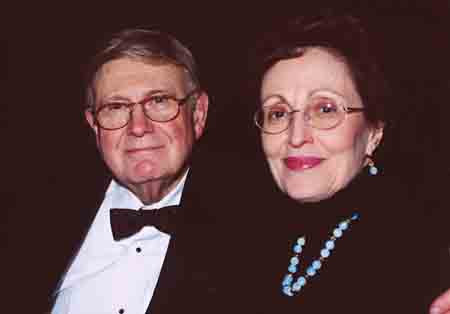
As the festival week begins to wind down, we look forward to a weekend of celebration, Shmini Atzeret (with Yizkor) on Shabbat and Simhat Torah on Sunday morning, when we'll honor Sue and Carl Shapiro as our Kallat Bereisheet (Bride of Genesis) and Hatan Torah (Groom of the Torah), as the last and first sections of the Torah are read. You can see on this page some classic Simhat Torah flags from the collection of the National Library of Israel. Join us throughout this festival weekend - and bring your own creative flag!


Shabbat Shalom and Hag Samayach

Rabbi Joshua Hammerman

"More Than a Hazzan"


Personal Reflections on the Life of

Hazzan Sidney G. Rabinowitz, z'l,

who passed away this week.


When we recall Hazzan Sidney G. Rabinowitz, many images come to mind. For some, it is of the caring smile at bedside in the hospital, or that warm hand clasp at a house of shiva. For others it is the twinkle of an eye under the huppah. For many it is the word "e-nun-ci-ate," which first appeared in the nightmares of 12-year olds, then in their most cherished memories for the remainder of their lives.  


But for me the most vivid memory is also one of the first. It was a simple greeting, in the humble spirit of Abraham. Not a bow, like we've seen from him so often on the High Holidays for Alenu, but with the same idea behind it. A sense of true humility, a desire for true friendship, a feeling that there is never a distance of status or stature, just two human beings, two with Yiddishkeit in their hearts, one reaching out to the other.  


It was the day I moved in next door, in July,1987, and even before the first box was unpacked, there was Hazzan Rabinowitz, walking over to my driveway, with a basket of bread and wine in hand to welcome us. The Hazzan was sending a message that I understood immediately. For we read in the book of Genesis how Abraham was greeted by Melchizedek, the King of Salem, with bread and wine and a heap of humility, following an epic battle in which the two were allies. Since then, bread and wine have become a symbol of Jewish hospitality, and that king's city, later renamed Jerusalem, was to become a symbol of peace.  


The sages asked, "Who is wise? The one who learns from all others," and Abraham learned well from this encounter, for we flash forward to Abraham as he is seeking a burial place for his wife Sarah, and he comes across the people of Heth, the Hittites. And the text says, "Vayakam Avraham vayishtachu l'am ha'aretz livnay heth." Literally, "And Abraham arose and bowed down to the people of the land, to the children of Heth." This verse is packed with the spirit of humility, with great "derech eretz" common decency, to "amei ha-aretz" to total strangers.


Rabbi S. Wagschal, in his book, "Guide to Derech Eretz," writes, "the essential ingredients of what we call derech eretz are: impartiality, humility, sensitivity towards the feelings and rights of others, an understanding of human nature; a sense of justice; and respect for each individual and for humanity as a whole." The rabbis taught that derech eretz as a norm of human behavior preceded the Torah by 26 generations, and in Pirke Avot we read, "Where there is no Torah, there is no derech eretz, and if there is no derech eretz, there is no Torah."


Hazzan Rabinowitz stood at the point, the pinnacle, where Torah and derech eretz intersected, and that is the secret to his great success and why we cherished him so. As our shaliach tzibur, he stood before God representing the entire congregation, not just the most accomplished ones, not just the wealthiest, not just the ones who come closest to moral perfection. The Hazzan reached down with all his strength, he dug his hands down into the earth, beneath the lowest of the low, and like a push from the diaphragm to reach the high notes, he lifts us all up to Godliness.  


This is done with music and prayer, most visibly, and by all hazzanim. But it is what is least visible that distinguished Hazzan Rabinowitz from all the rest. It was the one-on-one bowing and digging and lifting, the hard-hat work of the spirit. It was knowing what is troubling dozens of families at all times; it was knowing how to reach scores of b'nai mitzvah students at the same time; it was answering every call, it was filling every need, and it was finding the time to do that without neglecting the needs of his own beloved family.


A reporter once asked me if I knew anyone who worked harder than Hazzan Rabinowitz. I replied, "Not even God. At least God takes a day off once a week." But to do God's work here on earth, that was a never-ending task, and for the Hazzan it was a labor of love. I saw that immediately in July of '87 - and even before he came to me with the bread and wine of the King of Salem. Because just days before, I had seen him by chance at the Kotel, in Jerusalem itself, as he escorted a Beth El group and I was there with a group from my old congregation. 


You know, people love to talk about rabbis and cantors. It's universal. There's a whole genre of jokes about the intrigue that supposedly goes on. The competitiveness, the jealousies that are assumed must be there. The stories of rabbi-cantor battles are legendary. But, for the most part, that didn't happen here, and for a few key reasons: It doesn't hurt when the rabbi is from a cantorial family, and his father and uncle both knew and worked with our cantor. But most of all, it's because of the deep mutual respect we shared. Ours was a partnership, and one that we knew was precious to the Temple. Did we ever disagree? Of course! Did I ever win? C'mon! Get real! Who here ever said no to the Hazzan? Well I did. Once. So...who here ever said no a second time? 


And the funny thing is that this partnership was forged even though we seemed to be predestined for conflict. After all, when I was brought here as assistant rabbi I was told that my prime responsibility would be to see to the spiritual development of the kids. I was here two days and said to the president, "C'mon. Whose kidding here? You've got the most active cantor in the country when it comes to youth involvement and you're asking me to do the youth?" 


And yet, from day one, we found a way to work together that allowed us each to do what we do best for the congregation -- and we found that we were amazingly complementary. Conservative Judaism rests on the balance between tradition and change. The dialogue between the two of us created the synthesis that made for a dynamic Conservative congregation. Which doesn't mean that he was all tradition and that I was solely an agent of change. In fact, Hazzan Rabinowitz was one of the most innovative cantors around, and I often am a vigorous defender of the status quo. But the dialectic was there, and it was the engine that made us run. And yes, there was a slight generational difference, though both he and I realized that each of us, along with Rabbi Goldman, must be there for congregants of all ages. This balance helped all members of the congregation to feel that at least one clergy person was the exact right fit for their needs at that time. 


And there are other ways that we complemented each other so perfectly:


He had daughters, I have sons. His dog was small and well trained, mine have been large and occasionally off the wall. I don't know about the two of us, but the dogs should really have been renamed Oscar and Felix.  Maggie, the dog we had while we worked together, spent lots of time on Suzie's front lawn. And the dogs were actually a reflection of our different teaching styles. The styles were different, but the results were wonderful for the student who had the chance to worked with us both. Now I don't intend to compare Bar/Bat Mitzvah students with dogs here, but I am firmly convinced that I couldn't do what I do with the kids if he didn't do what he did so well. Most of the time, I got to be the "good cop."


The same was true for services, for all the life cycle events we did, for everything: Because he did what he did so well, and only because of that, could I do what I did, and pull it off.  


We were a partnership in every sense of the word, and just as with all relationships that work, in the end we discovered not how complementary we are, but how similar.


If we were both strong-willed it is because we both cared so much about the future of Judaism and about this community. We both shed the same tears over Israel. We both kvelled and cried when people like Jill Gullotta became an adult bat mitzvah on this pulpit, because we knew that for this victim of a terribly debilitating stroke, we had helped her to climb her Everest. 


Jill had nearly died from a stroke back when her daughter Allison was born, and had lived the remainder of her life confined to a wheelchair, unable to communicate easily. Allison never knew her mother as the vibrant woman that she had once been, but her illness only brought out her inner beauty all the more. Jill had come to my attention when I received a call from her nursing home saying that they had a resident who wanted to become Bat Mitzvah. And so Jill was introduced to the team of Temple Beth El. With the patient tutoring of Rosalea Fisher and the tireless help of Hazzan Rabinowitz, Jill realized her dream, right on our pulpit, in one of the most inspiring services I’ve ever witnessed. Jill died a few years after that. Then, several years later, Allison followed in her mother’s footsteps onto our bima and become a bat mitzvah herself.


How can you go through a moment like that together and not be bound for life? And to see him work with so many with varying disabilities, and our elders, and the children, as I did all the time, how could one not grow to love the man?


And it's the little things that I saw. If a person of limited means needed low cost housing, the Hazzan was on the phone. If a non-member called in desperate need of a minyan at his home, he finished his work here then went out and did the little extra. If recent Russian immigrants wanted to become Bar/Bat Mitzvah, he started a class. If an adult wanted to learn Hebrew, he set aside time. We could easily fill our sanctuary with the people he helped in truly unique and special ways.


Torah and derech eretz: Learning and kindness; an iron will and a heart of gold. They all came together in this man. The voice, of course the voice. The music; of course the music. But more, much much more. More than a Hazzan indeed. 


He said the "G" in his name stood for Gershwin. Whether or not it always did, it is absolutely the case that for this congregation, "Our Love is Here to Stay."


Our love is here to stay

Together we're

Going a long, long way

In time the Rockies may crumble

Gibraltar may tumble

There're only made of clay

But our love is here to stay


May his memory be for a blessing.


See the bottom of this email for an additional tribute.

Click on the photo below or click here to see my Yom Kippur sermon on my Substack page - and then share it from there. It already has had hundreds of views. And don't forget to subscribe to my Substack. It's free and you won't miss a beat when I move my weekly missives exclusively to Substack.

Recommended Reading


Today's Israeli Headlines


The Jerusalem Post

Ha'aretz (English)

Yediot Achronot


Shameful Israeli Scandal of the Week...

Yes, this is a thing. Spitting.

All I can say is,

"Dessssspittable!"


  • Could the Saudis be the Gamechangers? "For Heaven's Sake" podcast (Hartman-TOI). Historically the Arab world, and Saudi Arabia in particular, has acted as a force in encouraging Palestinian rejection of Israel. With recent and unprecedented shifts in the geopolitical landscape, could a formal alliance with Saudi Arabia be a reality for Israel? Donniel Hartman, Yossi Klein Halevi, and Elana Stein Hain explore the security implications of a deal with Saudi Arabia, how the Israeli public might respond, and whether Prime Minister Netanyahu, for whom peace with Arab neighbors was always a strategic goal, will consider forming a new coalition.


  • Simchat Torah: A Jewish holiday of reading, renewal and resilience (The Conversation) - Writer and Holocaust survivor Elie Wiesel saw in Simchat Torah a reminder that we never know everything, and much less than we think we know. Even for a text as familiar as the Bible, an entire lifetime of reading the Torah week after week, year after year cannot begin to yield all the possible interpretations. So, according to Wiesel, Simchat Torah is a time to take joy not only in completing the liturgical reading cycle, but in the reminder that we always need to look again, and be willing to begin again – even stories that we think we know so well.


  • Tefillat Geshem: The Prayer for Rain (MJL) - The earth, like most living things, is primarily comprised of a transparent, odorless, virtually tasteless and colorless fluid we call water. Even though our bodies, the ground, and most of the world we experience seems solid to us, just beneath the surface, water is ever-flowing, moving blood and nutrients and earth, enabling life to grow. The complete dependence of life on water is powerfully conveyed through the Hebrew root ג-ש-ם (gimel-shin-mem), which can mean both rain and physicality. Lest we forget that we are made up of nearly three-quarters water, the Hebrew reminds us that without geshem (rain), there is no gashmiut (physicality). Or in other words, without mayim (water), there is no chaim (life). See also The Mystery of the Angel of Rain (Mosaic)


  • Ecclesiastes' Theology of Distraction (Erica Brown - First Things) Ecclesiastes is not trivializing our major existential issues by suggesting a good meal, but merely acknowledging that the larger challenges are out of our control. We can either be devastated by uncertainty and unfairness or do what we know how to do well: seek pleasure in what God has given us. Whether or not we want to admit it, distraction works. It’s the interruption that lightens our full attention from utter sadness. It’s the slivers of enjoyment, the fleeting bliss, and the moments of wonder that soften the harshness. They are just as real. They, too, are divinely ordained. They sugar the bitterness and enable us to justify our existence despite it all. See also Kohelet: The Best Jewish Comedian of All Time and Kohelet: Older and Smarter and Kohelet: Torah for the 21st Century


  • Gender Separation in Services: Is it Justified? - Parsha Packet from last week's discussion about the mechitza controversy in Tel Aviv. Separate seating has basically no biblical justification and dates itself in fact the the second temple period celebration of Sukkot, which sometimes got out of hand. Take a look at this material for more.

Click for the rest of the packet.

The Eleven Hundred


I wrote this tribute as a responsive reading recited on the occasion of Hazzan Rabinowitz's retirement in 2002.


News Item: Hazzan Rabinowitz has trained approximately 1,100 Bar/Bat Mitzvah students over the years.


Who are these Eleven Hundred who have been touched so deeply? They are the Hazzan's Jews, adopted for six months or more, indebted for life.


Some are teens today, others have teens; some are doctors, some are rabbis, some live in Stamford, some live in Israel, some have overcome disabilities, some have strayed from Judaism and returned; but they all share a primal experience at age 13 that changed their lives.


That experience begins and ends with love: love of Torah, love of song. The intersection of sacred word and chant is the place where one truly begins a life of holiness. The word and the song intersect in the person of our Hazzan.


Love of Torah, love of song, love of humanity, love of Israel.


The Eleven Hundred have been touched by this love and they in turn have transmitted it to their children, their friends, their world. To have been touched by the Hazzan is to have been given a gift that cannot be hoarded, only shared.


It is to have been touched by a commitment that defies boundaries, a dedication to one's art, one's faith and to other people that is without parallel.  


It is to know the joy of a bride and groom being serenaded under the Huppah, and the sweet contentment of an elder tasting matzah at a model seder.


Or the excitement of a family in Israel, singing the sacred prayers from the ancient stones of Masada; or the comfort of a family in mourning or a congregant in the hospital, hearing that soothing, caring voice.


Some of us are fortunate to be among these Eleven Hundred Points of Light; all of us have been touched by them. And all of us have been touched in some manner by the teacher himself. That is why we are here today.


We thank you, Hazzan, for thirty two blessed years. We pray that God continue to provide you with the strength to lead and inspire, and that you be able to see the warmth and love that you have spread throughout the land, through your students and your many acts of kindness.


by Rabbi Joshua Hammerman - In tribute to Sidney G. Rabinowitz: colleague and friend


Temple Beth El
350 Roxbury Road
Stamford, Connecticut 06902
203-322-6901 | www.tbe.org
  
A Conservative, Inclusive, Spiritual Community

Thursday, October 13, 2022

In This Moment: D.I.Y.izkor; Happy Birthday, Oldest President Ever! And what Ecclesiastes Has to Say About It

In This Moment

Kesher Beth El students decorating our TBE sukkah last week! 


Happy Sukkot, Shemini Atzeret and Simhat Torah - and Shabbat Shalom!

D.I.Y.izkor


The holiday season ends with a bang this weekend, with the Intermediate Shabbat of Sukkot, featuring the reading of Ecclesiastes, then on Monday morning Shemini Atzeret with Yizkor, and Simhat Torah on Monday evening and Tuesday. Throughout this transitional (Covid-wise) year, we've tried to remain steadfast and safe while getting closer to a semblance of normalcy. It's been a daunting task, but I think we've succeeded to a great extent. All services are being streamed or Zoomed, and the goal is for everyone to be engaged and feel embraced, whether in the sanctuary or hundreds of miles away. Yizkor presents a unique challenge. So I want to help those who will be participating online as well as those who may not be available either in person or online on Monday morning but wish to have a memorial service of some form on their own. 


So here is what you need for a D.I.Y Yizkor: First, light a candle. This one on YouTube flickers and burns for ten hours.  That ought to do.  Of course, a real candle at your home would be best of all!


Now, find your prayers. Here is the pdf of that part of the service that includes the Yizkor prayers (beginning on page 330 of the siddur, p.15 of the packet).  Here are some other Yizkor prayers, including remembering Righteous Gentiles and victims of sexual assault.   See also: Yizkor: For a Family Member You Love in an Estranged Family You Love No Longer, also Yizkor Kavannah, and Yizkor for Someone I Wish I Knew Better, Also, A Jewish Sanctification to Honor Trans Peoples’ Lives. Also, A Mussar Practice for Grief and finally, Prayer for Yizkor, from the Tkhine of the Matriarchs by Seril Rappaport (ca. 18th century).  Plus, there's always the option of a more personal meditation.


Then click here to download our Book of Remembrance names that we used on Yom Kippur. And click here for the full list of names of those interred at our cemetery. 


Every time I look at that list it awes me.  For one thing, I can't believe I knew (and buried) so many of them.  But more to the point, what wonderful people they were, good souls who loved their families and changed the world for the better. Each of them still has a story to tell, a lesson to teach. I couldn't ask for better neighbors. TBE's greatest asset is its people, both those here in person and those with us in spirit, and to have the cemetery right next door is one of the most gratifying and life-affirming things about our congregation. So whether or not you plan a Do It Yourself Yizkor, take a few moments to think about the folks on both lists - the Book of Remembrance and the TBE Cemetery.


So now you have the tools to do Yizkor your way.  And by all means, make your Yizkor even more memorable by topping it off with us on Monday night, in person or online. as we celebrate the Torah that links us to all the generations.


My warmest wishes to everyone for a safe, healthy and happy remainder of the festival.


Rabbi Joshua Hammerman


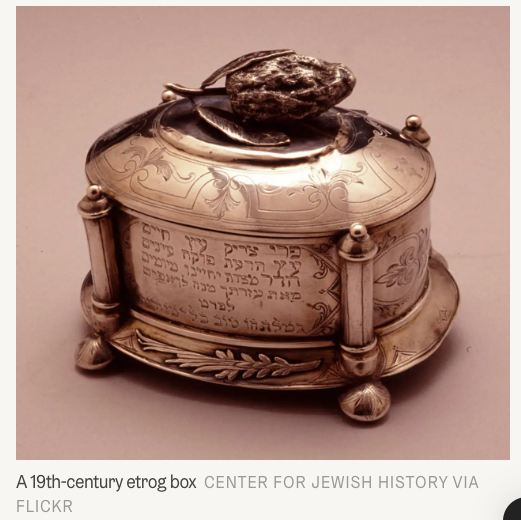
Why Etrog Boxes?

Etrogs were imported to far-flung Diaspora communities from the Mediterranean area and due to the limitations of supply and the requirement that it be unblemished, great care was devoted to etrog storage. It was usually kept in an appropriate container that had been adapted from a different use. Hence, etrog boxes have a great variety of shapes and materials and can be difficult to identify without an inscription. Plus, the command for Sukkot is to beautify the mitzvah, leading to a great variety of beautiful Etrog boxes, which were often originally used as containers for sugar or small sweets. Boxes that were originally made for etrog storage are either shaped like the etrog or contain depictions of this fruit in relief or sculpted form; the usual material is silver.

Happy Birthday, Oldest President Ever!

(and what Ecclesiastes has to say about it)


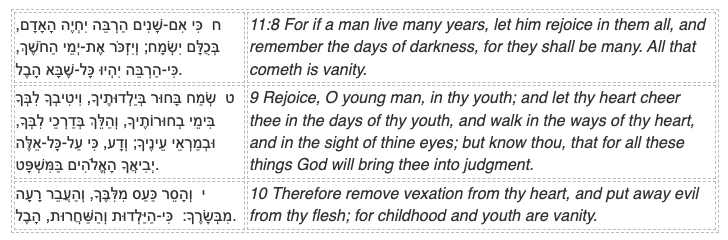
For the first time ever, (God willing), on November 20 the US will have an 80-year-old president. And everyone but President Biden seems to be feeling an almost Y2K-level dread. The question on people's minds: Are we better off with an 80-year-old president or one half that age? Of course, no one should generalize about these matters - every individual ages differently. But the question is one that is very relevant this week of Sukkot, as Jews around the world read the book of Ecclesiastes (Kohelet).


A couple of years ago I read a provocative article on the subject by Arthur Brooks in the Atlantic, entitled, "Your Professional Decline Is Coming (Much) Sooner Than You Think." You can read it here.


Brooks writes that according to research by Dean Keith Simonton, a professor emeritus of psychology at UC Davis, success and productivity increase for the first 20 years after the inception of a career, on average. So if you start a career in earnest at 30, expect to do your best work around 50 and go into decline soon after that.


Decline soon after 50? Oy.


He adds: "Much of literary achievement follows a similar pattern....Poets peak in their early 40s. Novelists generally take a little longer. When Martin Hill Ortiz, a poet and novelist, collected data on New York Times fiction best sellers from 1960 to 2015, he found that authors were likeliest to reach the No. 1 spot in their 40s and 50s. Despite the famous productivity of a few novelists well into old age, Ortiz shows a steep drop-off in the chance of writing a best seller after the age of 70. (Some nonfiction writers-especially historians-peak later.)"


On the other hand, wisdom, according to Brooks, increases even as mental acuity falls. "There are many exceptions," he writes, "but the most profound insights tend to come from those in their 30s and early 40s. The best synthesizers and explainers of complicated ideas-that is, the best teachers-tend to be in their mid-60s or older, some of them well into their 80s." He cites a number of Buddhist and Hindu sources on wisdom to make that point.  


Jewish sources concur with what he shares of Eastern religions - like this passage from the Talmud (Pirkei Avot 5:24), which, at a time when lifespans were compressed, the aged were respected for their life experience.


He [Yehudah ben Tema] used to say: The five-year-old is for [learning] Scripture; the ten-year-old is [of age] for the Mishnah; the thirteen-year-old, for [the obligation of] the mitzvoth; the fifteen-year-old, for [the study of] the Talmud; the eighteen-year-old for the wedding canopy; the man of twenty is to pursue [a livelihood]; that man of thirty [has attained] to full strength; the man of forty to understanding; the man of fifty is to give counsel; the man of sixty [has attained to] old age; the man of seventy to venerable old age; the man of eighty, to [the old age] of strength; the man of ninety [is of the age ] to go bent over; the man of a hundred is as though already dead and gone, removed from this world.


The book of Kohelet is the product of an entire genre of biblical and post biblical material known as "Wisdom Literature." For its author, the specter of death colors all of life. Death for Kohelet is contradictory, to be both welcomed and feared; but as one ages, death's proximity vastly increases wisdom.  Kohelet adopts the perspective that youth is wasted on the young, on those who have not yet learned to appreciate those fleeting moments of peak strength.

Rabbi Zalman Schachter, a founder of neo-hasidism and Jewish renewal, wrote extensively on "Age-ing and "Sage-ing." To hear him speak of spiritual eldering is to hear a modern version of Kohelet. In this excerpt, he speaks of how each human being is put here to share one insight, harvest it, and pass it on. Old age is not a time of diminishing capability, but of cultivating new spiritual and intellectual opportunities.

Join us next Thursday for Two Interfaith Programs!


The Talmud teaches:

Rabbi Eliezer said: "Why are 70 offerings brought on Sukkot? For the (merit of the) 70 nations of the world." (Sukkah 55b)

Rashi comments:

To bring forgiveness for them (the 70 nations which comprise the world), so that rain shall fall all over the earth.

The Sages stress that Sukkot has a universal element which is absent in the other festivals: Passover represents the exodus from Egypt and the emergence of the Israelite nation; Shavuot celebrates the giving of the Torah to the Jews.


Sukkot, on the other hand, focuses on universal themes of wandering, harvest and food insecurity, environmentalism and most of all, the need for rain in due season. Plus, coming on the heels of the High Holidays, the gates of judgment and repentance are still a crack open. So it's become a popular practice for Sukkot to be a time of ecumenical celebration and conversation.


Next Thursday, Oct. 20 at 6 PM we'll be hosting the first of four sessions of interfaith dialogue on subject near and dear to us all: the Bible. We'll participate, along with our friends at St John's Lutheran Church and St Francis Episcopal Church. We'll host the first two sessions, in our sanctuary as well as online and I'll be providing keynote comments for the series and also presenting Jewish perspectives throughout. The book we are using is a fantastic exploration of key biblical passages that have changed history and caused so much tension between Christians and Jews over the centuries.


Click here for flyer with live links to the readings and livestream. It is truly amazing how the exact same texts can be read so differently - with such profound consequences for the world.


And then, immediately after the bible conversation, we'll pivot to the first of a series of monthly interfaith programs dedicated to exploring religious responses to climate change. We're hosting the first session, and I'll be presenting at a session down the road. Our interfaith council has always treasured shared learning experiences, and this year we are focusing on two key areas of concern: climate change and sharing our stories. Come join us next week!

Reading for Oct. 20 introductory session on Biblical Interpretation

Reading for Oct. 27 session on Virgin Birth

Reading for Nov. 3 session on Sacrifice and Atonement

Reading for Nov. 10 session on Turning the Other Cheek

Order the entire book here....

Recommended Reading


  • The most inclusive siddur ever! The Inclusive Siddur Project is an attempt to imagine what a fully inclusive, de-stigmatized Jewish liturgy might look like. The main release is Siddur Davar Ḥadash, a non-denomenational Ashkenazi siddur. The siddur uses a modified and expanded version of the Nonbinary Hebrew Project's third-gender Hebrew system to refer to G-d as well as to human worshipers across the entire liturgy. In addition, the siddur replaces passages of the standard liturgy that are sexist, ableist, xenophobic, or otherwise stigmatizing, finding alternatives — in Hebrew and in English — that are not demeaning. All Hebrew in the siddur is fully transliterated, and is translated in all-new translations. With the exception of one commissioned poem, the siddur is entirely in the public domain, free to use, distribute, modify, and reproduce however you want, without restriction or cost. The source files are also available to download if you would like to use them as the basis for your own version.


LinkedInShare This Email
Temple Beth El
350 Roxbury Road
Stamford, Connecticut 06902
203-322-6901 | www.tbe.org
  
A Conservative, Inclusive, Spiritual Community