Thursday, October 20, 2022

In This Moment: And God Said, "Let US Make Humans"


The Shabbat-O-Gram is sponsored

by Leslie and David Napach in honor of their son, Aaron,

becoming a Bar Mitzvah.


In This Moment

Above: As the Jewish holiday season concludes,

we are greeted by a glorious, blazing October not-so-surprise.


Below, Kesher students learn the fine art of lulav shaking during Sukkot.

Shabbat Shalom!


With the holidays at long last behind us, let the B'nai Mitzvah begin! Mazal tov to Aaron Napach as he becomes Bar Mitzvah this Shabbat. We return to the beginning of the Torah and the portion of Beresheet. A reminder that those looking for my recent High Holidays sermons, text and video, can find Rosh Hashanah's here and Yom Kippur's here. Several have also mentioned seeing some interviews I did on JBS TV with Rabbi Mark Golub, which were recently replayed on air. They can be found here. 


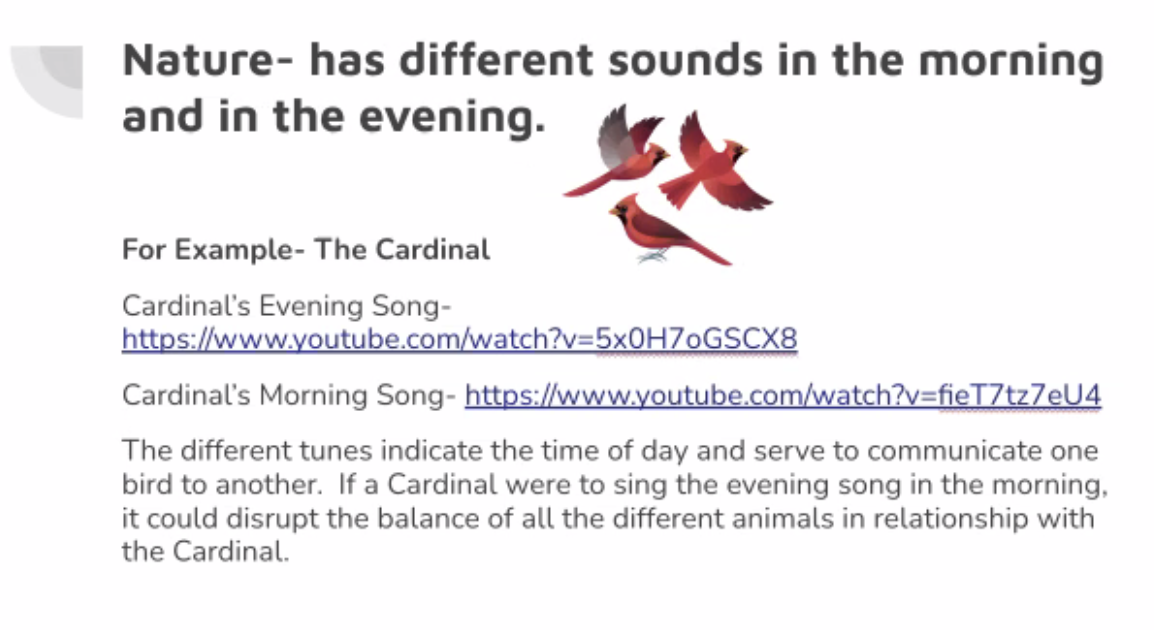
Next Tuesday, Cantor Kaplan begins a series exploring how and why various melodies, liturgical modes known as nusach, are integrated into our service. She gave me a sneak preview and I can not recommend it more highly. Anyone interested in the subtleties of Jewish prayer should attend this virtual class (a recording will also be made, in case you can't hear it live). Below is one of the slides from her presentation, lending a keen insight about the ways that the music attunes us to the particular time when that service is being recited. I had never heard it put quite this way before.


Enjoy the fine fall weather!

Rabbi Joshua Hammerman 

Why Does God Say, "Let US Make the Human"

One of the great puzzles of the Creation story is when God states in Gen. 1:26, "Na'aseh Adam," "Let us make the human being." Who exactly is God talking to here? Other gods? Angels? Nature? Godself? Each possibility offers significant theological complications as well as midrashic possibilities. Christians see this as proof of the Trinity. Partly because of that, many rabbinic commentators rejected suggestions of God's consulting multiple deities as heretical. The commentator Ibn Ezra suggests that it was just a matter of God using the royal plural, that when humans were actually created the singular verb was used. 


Taking another tack, Nachmanides (Rabbi Moshe ben Nachman) propses that God was referring to the earth from which humans were actually formed. As we see in the next chapter (2:7), "And the Lord God formed man of dust from the ground, and God breathed into his nostrils the soul of life, and the human became a living soul." The idea of planet as partner seems especially relevant in our Climate Change challenged era, and less problematic theologically. 


But others buy into the idea that, while God didn't have to consult with others, for this new project, the pinnacle of creation, collaboration was precisely what was called for. This was the ultimate teachable moment: the entire human race was watching. God wanted to take advantage of the opportunity to instruct us how good it is to work together.


There are some who say that the partner God was collaborating with was not a celestial being at all, but the human being themself. The Baal Shem Tov indicates that with this gesture, God is letting humanity know that we are God's co-collaborators in creating ourselves. This interpretation informs us that we can't pin the blame on God for having created us with certain inclinations or temptations, but must take responsibility for our own behaviors.  


Ultimately, I subscribe to the teachable moment theory.  it is less about who God is consulting with than the simple fact of partnering.  Dr William Muir discovered this when he bred a group of super-chickens at Purdue. The experiment is described in the Ted talk video below. 

Essentially, As author/entrepreneur Margaret Heffernan describes it, Muir found one flock that was fairly productive and just left it alone for six generations, letting chickens do what chickens do. And then he created another flock, which was constructed of the individually most productive chickens that he could find. After six generations of chickens, Muir took his first flock of average, good old worker chickens and then he looked at the second flock of chickens - the super chickens flock. And he compared how many eggs each flock had laid. And what he found at the end of the experiment amazed him: the average flock was doing very well. They were all really plump, fully feathered, very healthy and, importantly, they were more productive than ever. And the other flock - the superflock - all but three were dead.


Muir's chicken experiment has become legendary among social scientists because it's a window into human behavior and the way we work and a lesson on how we could do it better. 


Here's what Margaret Heffernan says to interviewer Guy Raz about Muir's chickens and her Ted talk:


And then the super chickens all kill each other to get into Harvard or Yale, right? And then they kill each other to get into Harvard Law or Harvard Business, blah, blah, blah. And by the time they get into work, they have been taught that their success must depend on the failure of others. And so you have, then, performance management systems, which are about identifying the high potentials, right, which is management speak now for gifted and talented. You have evaluation systems, like forced ranking, which say, well, we're really going to promote the top 10 percent. And so, again, they're still in the system that's familiar to them, which is your success is contingent upon making the people around you less successful than you are.


RAZ: I mean, the irony is that this kind of system that is sort of the model, it does not lead to more productivity.


HEFFERNAN: No, it doesn't lead to more productivity. In fact, it leads to, I think, a catastrophic loss of productivity and creativity. But there's this belief that the only way you can make people successful is to make work a fight to the death. And then they scratch their heads thinking, well, we've done that and it doesn't work. Let's make the stakes higher. Let's introduce some money into this game. And, of course, it gets more vicious, still.


RAZ: Money might make you work harder, but it might not make you work better with other people because to do that, Margaret says, you have to build something called social capital. You can think of it as trust.


HEFFERNAN: Social capital is what gives companies momentum. And social capital is what makes companies robust. What does this mean in practical terms? It means that time is everything because social capital compounds with time. So teams that work together longer get better because it takes time to develop the trust you need for real candor and openness. And time is what builds value.


The lesson of Genesis 1:26: Teamwork beats talent every time. Just ask God. Just ask the chickens.


Recommended Reading


  • Israeli headline of the week: On top of the front page shown below, "Rejoice and be glad" - a traditional greeting for Simhat Torah, featuring school children from Ein Ha-Emek in the Jezreel Valley. On the bottom, "Death of a Giant" reports on the passing of Robbie Coltrane, who played Hagrid in the Harry Potter movies.
  • What Is A Hamsa? (MJL) - Even as scholars debate nearly every aspect of its emergence, the hamsa is recognized as a kabbalistic amulet and as an important symbol in Jewish art.


  • How Many Forms Of Antisemitism Can Trump Cram Into One Truth Social Post? Let’s Count. (TPM) - Donald Trump used his Truth Social account to assure his audience that he would not be outdone in the current alarming escalation in antisemitic rhetoric on the American right. It is impossible not to read “have to get their act together” as a threat, particularly with his addition of the phrase “Before it is too late!” at the end. The threat is susceptible to multiple meanings — probably intentionally — and none of them are good. One interpretation is theological, a topic on which Trump is notoriously illiterate, although he’s likely spent enough time around evangelicals to know they believe they have an imperative to convert Jews to Christianity. They seek converts now, because you never know when Jesus is actually coming back, and you want to be saved already when it happens. The evangelicals who await Jesus’s return at the battle of Armageddon envision it as an event during which Jews will be forced to accept Christ, or perish in a lake of brimstone. “Before it is too late!” has a very particular meaning here. Another interpretation is purely political. Trump demands loyalty, and he gets it from an overwhelming majority of white evangelicals, but only a tiny minority of Jews. In this interpretation, Trump is angry not to see Jews at bended knee. Jews’ supposed failure to “appreciate what they have in Israel” is actually a failure to appreciate that Trump has done heroic things for Israel. Those things, which include tearing up the Iran nuclear deal and moving the U.S. embassy from Tel Aviv to Jerusalem, are valued by evangelicals, but not so much by American Jews. Trump, then, rather than seeking Jewish support through other means or gestures, uses it as a bludgeon against them — which is itself antisemitic. As the historian Federico Finchelstein noted on Twitter about Trump’s post, “This is an old concern in the history of antisemitism. For antisemites, Jews do not appreciate the leader’s power/refuse to believe in the leader’s cult, etc & thus undermine him.”


LinkedInShare This Email
Temple Beth El
350 Roxbury Road
Stamford, Connecticut 06902
203-322-6901 | www.tbe.org
  
A Conservative, Inclusive, Spiritual Community

Joshua Hammerman Interviewed by Mark Golub on JBS TV, 2018 (Parts 1 and 2, on "Mensch-Marks") and 1998


Thursday, October 13, 2022

In This Moment: D.I.Y.izkor; Happy Birthday, Oldest President Ever! And what Ecclesiastes Has to Say About It

In This Moment

Kesher Beth El students decorating our TBE sukkah last week! 


Happy Sukkot, Shemini Atzeret and Simhat Torah - and Shabbat Shalom!

D.I.Y.izkor


The holiday season ends with a bang this weekend, with the Intermediate Shabbat of Sukkot, featuring the reading of Ecclesiastes, then on Monday morning Shemini Atzeret with Yizkor, and Simhat Torah on Monday evening and Tuesday. Throughout this transitional (Covid-wise) year, we've tried to remain steadfast and safe while getting closer to a semblance of normalcy. It's been a daunting task, but I think we've succeeded to a great extent. All services are being streamed or Zoomed, and the goal is for everyone to be engaged and feel embraced, whether in the sanctuary or hundreds of miles away. Yizkor presents a unique challenge. So I want to help those who will be participating online as well as those who may not be available either in person or online on Monday morning but wish to have a memorial service of some form on their own. 


So here is what you need for a D.I.Y Yizkor: First, light a candle. This one on YouTube flickers and burns for ten hours.  That ought to do.  Of course, a real candle at your home would be best of all!


Now, find your prayers. Here is the pdf of that part of the service that includes the Yizkor prayers (beginning on page 330 of the siddur, p.15 of the packet).  Here are some other Yizkor prayers, including remembering Righteous Gentiles and victims of sexual assault.   See also: Yizkor: For a Family Member You Love in an Estranged Family You Love No Longeralso Yizkor Kavannahand Yizkor for Someone I Wish I Knew BetterAlsoA Jewish Sanctification to Honor Trans Peoples’ Lives. Also, A Mussar Practice for Grief and finally, Prayer for Yizkor, from the Tkhine of the Matriarchs by Seril Rappaport (ca. 18th century) Plus, there's always the option of a more personal meditation.


Then click here to download our Book of Remembrance names that we used on Yom Kippur. And click here for the full list of names of those interred at our cemetery. 


Every time I look at that list it awes me.  For one thing, I can't believe I knew (and buried) so many of them.  But more to the point, what wonderful people they were, good souls who loved their families and changed the world for the better. Each of them still has a story to tell, a lesson to teach. I couldn't ask for better neighbors. TBE's greatest asset is its people, both those here in person and those with us in spirit, and to have the cemetery right next door is one of the most gratifying and life-affirming things about our congregation. So whether or not you plan a Do It Yourself Yizkor, take a few moments to think about the folks on both lists - the Book of Remembrance and the TBE Cemetery.


So now you have the tools to do Yizkor your way.  And by all means, make your Yizkor even more memorable by topping it off with us on Monday night, in person or online. as we celebrate the Torah that links us to all the generations.


My warmest wishes to everyone for a safe, healthy and happy remainder of the festival.


Rabbi Joshua Hammerman


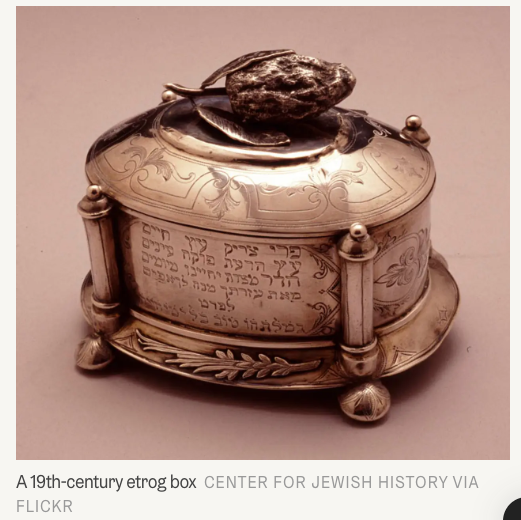
Why Etrog Boxes?

Etrogs were imported to far-flung Diaspora communities from the Mediterranean area and due to the limitations of supply and the requirement that it be unblemished, great care was devoted to etrog storage. It was usually kept in an appropriate container that had been adapted from a different use. Hence, etrog boxes have a great variety of shapes and materials and can be difficult to identify without an inscription. Plus, the command for Sukkot is to beautify the mitzvah, leading to a great variety of beautiful Etrog boxes, which were often originally used as containers for sugar or small sweets. Boxes that were originally made for etrog storage are either shaped like the etrog or contain depictions of this fruit in relief or sculpted form; the usual material is silver.

Happy Birthday, Oldest President Ever!

(and what Ecclesiastes has to say about it)


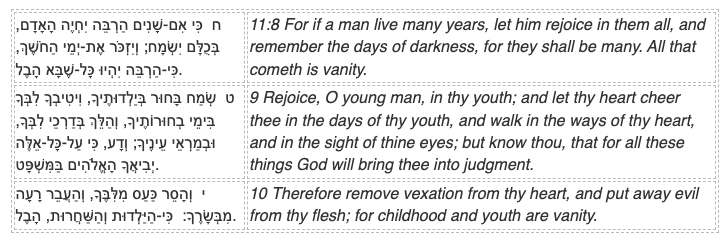
For the first time ever, (God willing), on November 20 the US will have an 80-year-old president. And everyone but President Biden seems to be feeling an almost Y2K-level dread. The question on people's minds: Are we better off with an 80-year-old president or one half that age? Of course, no one should generalize about these matters - every individual ages differently. But the question is one that is very relevant this week of Sukkot, as Jews around the world read the book of Ecclesiastes (Kohelet).


A couple of years ago I read a provocative article on the subject by Arthur Brooks in the Atlantic, entitled, "Your Professional Decline Is Coming (Much) Sooner Than You Think." You can read it here.


Brooks writes that according to research by Dean Keith Simonton, a professor emeritus of psychology at UC Davis, success and productivity increase for the first 20 years after the inception of a career, on average. So if you start a career in earnest at 30, expect to do your best work around 50 and go into decline soon after that.


Decline soon after 50? Oy.


He adds: "Much of literary achievement follows a similar pattern....Poets peak in their early 40s. Novelists generally take a little longer. When Martin Hill Ortiz, a poet and novelist, collected data on New York Times fiction best sellers from 1960 to 2015, he found that authors were likeliest to reach the No. 1 spot in their 40s and 50s. Despite the famous productivity of a few novelists well into old age, Ortiz shows a steep drop-off in the chance of writing a best seller after the age of 70. (Some nonfiction writers-especially historians-peak later.)"


On the other hand, wisdom, according to Brooks, increases even as mental acuity falls. "There are many exceptions," he writes, "but the most profound insights tend to come from those in their 30s and early 40s. The best synthesizers and explainers of complicated ideas-that is, the best teachers-tend to be in their mid-60s or older, some of them well into their 80s." He cites a number of Buddhist and Hindu sources on wisdom to make that point.  


Jewish sources concur with what he shares of Eastern religions - like this passage from the Talmud (Pirkei Avot 5:24), which, at a time when lifespans were compressed, the aged were respected for their life experience.


He [Yehudah ben Tema] used to say: The five-year-old is for [learning] Scripture; the ten-year-old is [of age] for the Mishnah; the thirteen-year-old, for [the obligation of] the mitzvoth; the fifteen-year-old, for [the study of] the Talmud; the eighteen-year-old for the wedding canopy; the man of twenty is to pursue [a livelihood]; that man of thirty [has attained] to full strength; the man of forty to understanding; the man of fifty is to give counsel; the man of sixty [has attained to] old age; the man of seventy to venerable old age; the man of eighty, to [the old age] of strength; the man of ninety [is of the age ] to go bent over; the man of a hundred is as though already dead and gone, removed from this world.


The book of Kohelet is the product of an entire genre of biblical and post biblical material known as "Wisdom Literature." For its author, the specter of death colors all of life. Death for Kohelet is contradictory, to be both welcomed and feared; but as one ages, death's proximity vastly increases wisdom.  Kohelet adopts the perspective that youth is wasted on the young, on those who have not yet learned to appreciate those fleeting moments of peak strength.

Rabbi Zalman Schachter, a founder of neo-hasidism and Jewish renewal, wrote extensively on "Age-ing and "Sage-ing." To hear him speak of spiritual eldering is to hear a modern version of Kohelet. In this excerpt, he speaks of how each human being is put here to share one insight, harvest it, and pass it on. Old age is not a time of diminishing capability, but of cultivating new spiritual and intellectual opportunities.

Join us next Thursday for Two Interfaith Programs!


The Talmud teaches:

Rabbi Eliezer said: "Why are 70 offerings brought on Sukkot? For the (merit of the) 70 nations of the world." (Sukkah 55b)

Rashi comments:

To bring forgiveness for them (the 70 nations which comprise the world), so that rain shall fall all over the earth.

The Sages stress that Sukkot has a universal element which is absent in the other festivals: Passover represents the exodus from Egypt and the emergence of the Israelite nation; Shavuot celebrates the giving of the Torah to the Jews.


Sukkot, on the other hand, focuses on universal themes of wandering, harvest and food insecurity, environmentalism and most of all, the need for rain in due season. Plus, coming on the heels of the High Holidays, the gates of judgment and repentance are still a crack open. So it's become a popular practice for Sukkot to be a time of ecumenical celebration and conversation.


Next Thursday, Oct. 20 at 6 PM we'll be hosting the first of four sessions of interfaith dialogue on subject near and dear to us all: the Bible. We'll participate, along with our friends at St John's Lutheran Church and St Francis Episcopal Church. We'll host the first two sessions, in our sanctuary as well as online and I'll be providing keynote comments for the series and also presenting Jewish perspectives throughout. The book we are using is a fantastic exploration of key biblical passages that have changed history and caused so much tension between Christians and Jews over the centuries.


Click here for flyer with live links to the readings and livestreamIt is truly amazing how the exact same texts can be read so differently - with such profound consequences for the world.


And then, immediately after the bible conversation, we'll pivot to the first of a series of monthly interfaith programs dedicated to exploring religious responses to climate change. We're hosting the first session, and I'll be presenting at a session down the road. Our interfaith council has always treasured shared learning experiences, and this year we are focusing on two key areas of concern: climate change and sharing our stories. Come join us next week!

Reading for Oct. 20 introductory session on Biblical Interpretation

Reading for Oct. 27 session on Virgin Birth

Reading for Nov. 3 session on Sacrifice and Atonement

Reading for Nov. 10 session on Turning the Other Cheek

Order the entire book here....

Recommended Reading


  • The most inclusive siddur ever! The Inclusive Siddur Project is an attempt to imagine what a fully inclusive, de-stigmatized Jewish liturgy might look like. The main release is Siddur Davar Ḥadash, a non-denomenational Ashkenazi siddur. The siddur uses a modified and expanded version of the Nonbinary Hebrew Project's third-gender Hebrew system to refer to G-d as well as to human worshipers across the entire liturgy. In addition, the siddur replaces passages of the standard liturgy that are sexist, ableist, xenophobic, or otherwise stigmatizing, finding alternatives — in Hebrew and in English — that are not demeaning. All Hebrew in the siddur is fully transliterated, and is translated in all-new translations. With the exception of one commissioned poem, the siddur is entirely in the public domain, free to use, distribute, modify, and reproduce however you want, without restriction or cost. The source files are also available to download if you would like to use them as the basis for your own version.


LinkedInShare This Email
Temple Beth El
350 Roxbury Road
Stamford, Connecticut 06902
203-322-6901 | www.tbe.org
  
A Conservative, Inclusive, Spiritual Community