Showing posts with label election day. Show all posts

Thursday, November 10, 2022

In This Moment: Kristallnacht and Veterans Day


In This Moment


Mazal tov to all the winners of this week's elections, especially TBE's own Senator Richard Blumenthal!


Veterans Day and Kristallnacht

Shabbat Shalom


Last night, marking the 84th anniversary of Kristallnachtthe "Night of Broken Glass," recalling the destruction of hundreds of synagogues and thousands of Jewish-owned businesses across German-controlled areas of central Europe, I went out and took this photo of our sanctuary. It was part of a UJF community wide commemoration. Lights shone brightly throughout Jewish Stamford last night (though with the Climate Change Conference going on in Egypt right now, I turned the lights off right after taking the photo). In contrast to the blazing infernos of that horrific November evening in Germany, how peaceful our sanctuary looked as it illuminated the New England night.


Second Gentleman Douglas Emhoff visited a Jewish owned business in Iowa this week, a reminder of how our current situation contains echoes of the past, but if we take the red flags seriously, we can ward off evil. Despite the fear and hatred awakened by dark forces in our country, we can still leave the lights on and let them shine out into the world through our unbroken glass, as we proclaim unabashedly who we are, albeit through a glass darkly (to quote the New Testament) in our shattered world.

We can also take some comfort that some of those who have expressed great contempt for Jews and Judaism took a shellacking on Election Night, perhaps first and foremost PA governor candidate Doug Mastriano, defeated soundly by Josh Shapiro (who keeps kosher, observes Shabbat. proposed to his wife in Jerusalem, and featured hallahs she baked in his campaign launch video) after introducing antisemitic tropes into the campaign, including a strange "Fiddler on the Roof" parody done by a Messianic Jew. Yes, the big winners this week just might have been civility, truth and moderation, which can only bode well for our democracy.


Because Kristallnacht is commemorated on the secular anniversary of Nov. 9-10, it always leads directly into Veterans Day. The two holy days are linked by the quote you see below, which I found in the National Museum of American Jewish Military History, a small gem of a museum that I stumbled upon a few years ago while wandering on the side streets near Dupont Circle. You can find there and elsewhere the stories of a number of Jews, like Frank Cohn, who escaped Germany around the time of Kristallnacht only to return among American soldiers of liberation a few years later.


Join us on Friday night, in person or on livestream, as we pay tribute to our vets.

Join us on Zoom at 6 tonight for the final session of our interfaith dialogue Bible study. Tonight we'll be discussing how Jews and Christians look at the Biblical concepts of "eye for an eye" and "turning the other cheek," along with adultery, murder and divorce (not necessarily in that order); based on the Sermon on the Mount.


Click here to read the chapter.

Join Zoom Meeting
https://us02web.zoom.us/j/87411102614?pwd=T0RNNDEvbUlsNE53QjBJY05YS1phQT09
Meeting ID: 874 1110 2614. Passcode: 723118


Recommended Reading


  • More Proof that this is the End of History (Francis Fukuyama) Liberal democracy, precisely because it distributes power and relies on consent of the governed, is in much better shape globally than many people think. Despite recent gains by populist parties in Sweden and Italy, most countries in Europe still enjoy a strong degree of social consensus.


Daniel Gordis: The Israel We Knew is Not Gone

Thomas Friedman: The Israel We Knew is Gone (NYT)

  • For this week's portion of Vayera, some of my favorite Parsha Packets. (Click on cover thumbnail to see pdf)
  
LinkedInShare This Email
Temple Beth El
350 Roxbury Road
Stamford, Connecticut 06902
203-322-6901 | www.tbe.org
  
A Conservative, Inclusive, Spiritual Community

Monday, November 7, 2022

Jewish Reasons to Vote


In This Moment


Jewish Reasons to Vote


"I speak not for myself but for those without voice."

Malala Mousafzai


After watching historian Jon Meacham on CBS yesterday compare the selfless patriotism of Abraham Lincoln, who was more than willing to give up power had he lost in 1864 (see his quote above), with those who cynically subvert confidence in our elections today, I realized that we all could use a reminder as to why it is a mitzvah to vote.


A vote is the least cynical thing AND the most Jewish thing we could do, a celebration of freedom, and a rebuff of those who deny the ballot's validity simply to stoke anger and mistrust. It is an affirmation of light and life in a world of growing darkness.


Rabbi Yitzhak taught that "A ruler is not to be appointed unless the community is first consulted" (Babylonian Talmud Berachot 55a). Living in a decidedly non-democratic age, the ancient sages understood the importance the consent of the governed. 


Here is some more about how Jewish values relate to elections and voting and why it is our responsibility to play an active role in our community and choosing its leaders.  


"The Torah teaches us, "This day I call heaven and earth as witnesses against you that I have set before you life and death, blessings and curses. Now choose life, so that you and your children may live" (Deuteronomy 30). There is an eternal Jewish value, a mitzvah, that informs us to be active in shaping our future for the good, for a better life: u'vacharta b'chayim"Choose life!" When faced with options that offer us two or more different paths on which to proceed, we are instructed to choose, to make a selection, to vote.


Here are some more texts on voting and fair elections: In the Talmud, the rabbis state that not even God would select rulers without consulting the people (B.T. Berachot 55a). As the rabbis did, we continue to "pray for government's welfare, for without fear of it [we] would swallow each other alive" (M. Avot 3:2). In fact, support of government became one of the few duties that Jewish law recognizes for all, Jew and non-Jew alike (B.T. Sanhedrin 56b).


The Rabbinical Assembly's resolution on voting in the 2020 elections (no resolution was passed this year), calls on all segments of American society to preserve democratic norms and values in the elections process. It's a resolution that never was even considered in years before 2020.


We are called upon to do the same. Lincoln would have done no less.


Please forward this message to all who might be receptive of it, especially anyone signaling that they are on the fence about voting tomorrow.


See also:


LinkedInShare This Email
Temple Beth El
350 Roxbury Road
Stamford, Connecticut 06902
203-322-6901 | www.tbe.org
  
A Conservative, Inclusive, Spiritual Community

Friday, November 6, 2020

In this Moment for November 6: After the Election, Rabin's Legacy; Lessons of the Akeda; Kristallnacht


In This Moment
 Shabbat-O-Gram, November 6, 2020

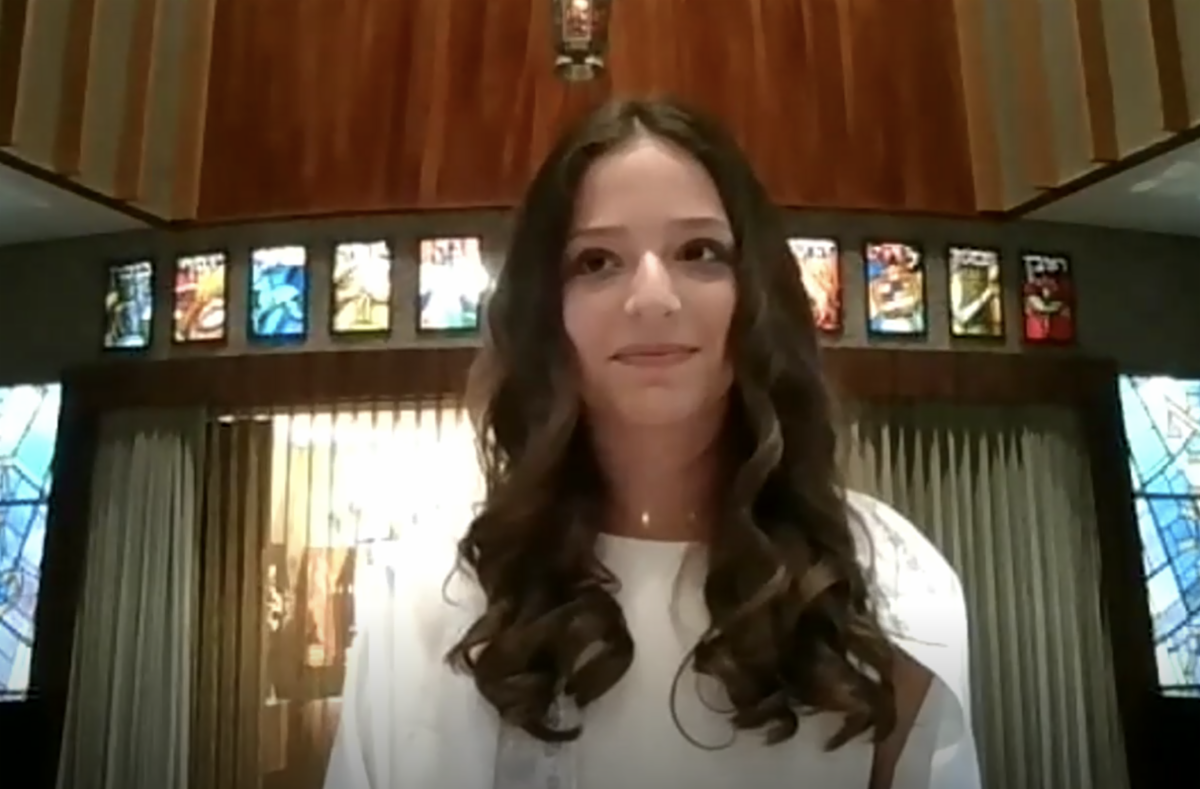
Mazal tov to Maya Shapiro, who becomes Bar Mitzvah this Shabbat morning. The Shabbat-O-Gram is sponsored by Danielle and Lael Shapiro in honor of Maya.


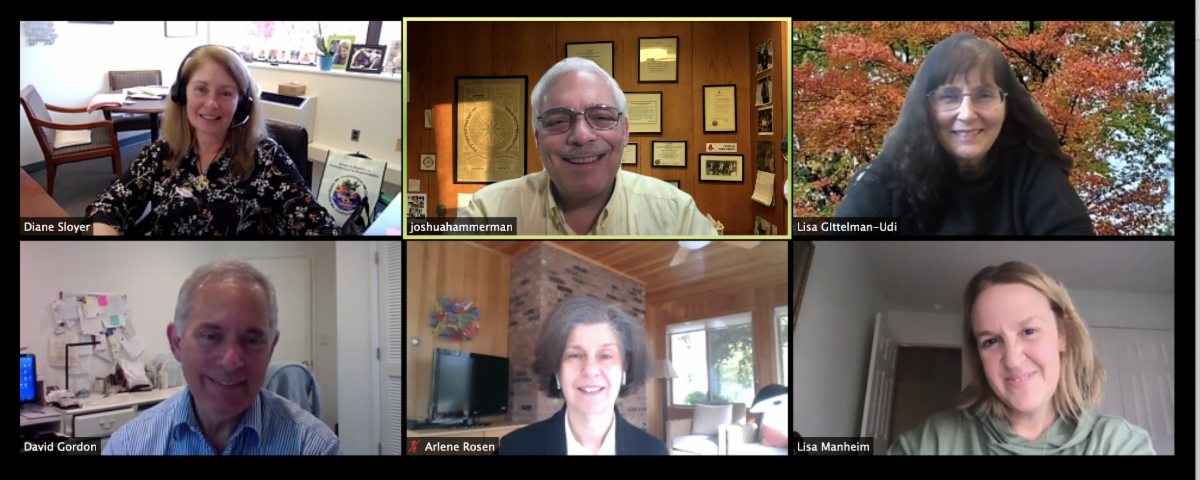
Our professional and lay leadership convened with leaders from UJF this week, to affirm our common goals and values.  Please respond to the call at UJF's Super Sunday this week. See more photos in our fall album


Click here for Zoom recording, screen shots and the dvar Torah 
from last week's service celebrating Richard Baer becoming Bar Mitzvah


If you missed last week's commentary on the film "Borat," (or have since seen the film and are now immune to the spoilers), see it here as a Times of Israel featured op-ed.


For this week's portion of VayeraThe Akedah Project


The Akedah Project explores the story of the Binding of Isaac ("akedah" means "binding" in Hebrew), which is one of the most confounding narratives in the Bible. Scholars, rabbis, artists, teachers, poets, and readers have tried to make sense of this story for millennia, which has given us a range of lenses through which we can read it, even as we bring the new questions, ideas, and perspectives that come with every new generation of readers. Click here to find more than 30 videos, each offering coming to the Akedah from a different angle.

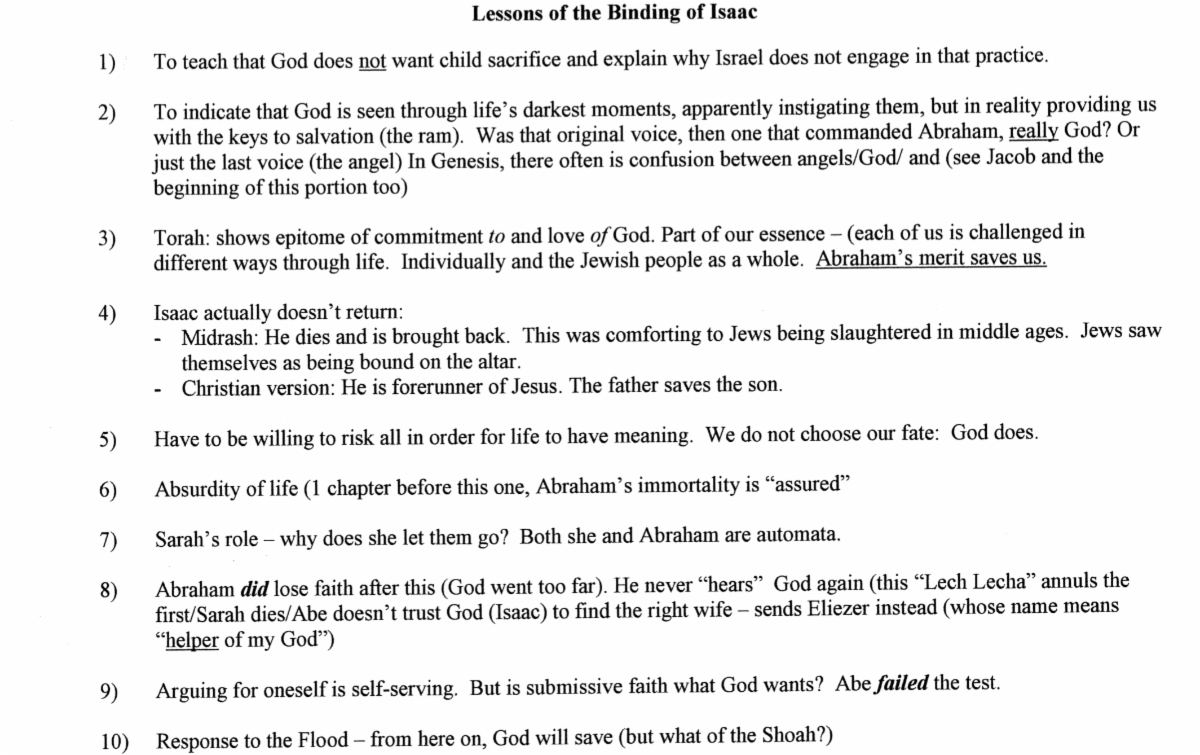
And see my take below as to 23 lessons we can learn from the Akeda:


Rabin's Hope


Stamford Jewish Community Responds to Rabin Assassination, Nov. 1995


As I write this, the election has not been called, so it would be premature to opine on it or congratulate the winners.  I invite you to join us at our Kabbalat Shabbat services this evening at 6 as we enter a most welcome - and most needed - Shabbat and start the process of regaining strength for the important work head - the work of healing and recovery, especially needed as the Covid cases continue to rise, nationally and in our area.  

Yesterday and today mark the 25th anniversary of the assassination of Prime Minister Yitzchak Rabin.  That event changed the course of history dramatically and it continues to traumatize us to this day.  Rabin's legacy can be helpful to us this week.

What made him such a visionary leader is that he was able to let go of the past without losing his historical perspective. There are lessons to be learned from any experience, and he learned plenty over the course of his epic career. But he never let old resentments cloud the fact that every new day presented a gleaming blank slate of possibilities. 
Though not a religious man, he embodied the spirit of the prayer Jews recite each morning, praising God "who renews in goodness each day the work of Creation." Every day God presses the "reset" button. Rabin was able to do this as well, like Mandela and Gandhi, Lincoln, Sadat, Martin Luther King Jr. and other visionary leaders (many of whom also met violent ends) - and unlike the vast majority of the Israeli and Palestinian leaders who have followed him.
When he received his Nobel Prize, Rabin said, "...of all the memories I have stored up in my 72 years, I now recall the hopes.  Our peoples have chosen us to give them life. Tonight, their eyes are upon us and their hearts are asking: how is the authority vested in these men and women being used? What will they decide? What kind of morning will we rise to tomorrow? A day of peace? Of war? Of laughter or of tears?"
Rabin could have fallen back on his litany of tragic memories, of countless comrades buried, of opportunities wasted, of incessant terror and reprisal, of hatred endlessly regurgitated. He chose instead to "recall hopes," a seeming oxymoron, to retrieve - from his past - a future-focused buoyancy that is at the very core of Zionism, a hope that is its anthem's very name, and to use it to forge a vision of astonishing promise and endless possibility. He chose to go back to the future.
And as we begin to navigate past a traumatic 2020 and painfully divisive period in American history, so must we. What lies before us can either be seen as a wasteland, a huge mess in a bitterly divided landscape, or a glittering opportunity for a fresh start.  
Like Rabin before us, let's lean toward the latter.  Let's posture ourselves in the direction of hope. 
Also on Rabin, See:
Kristallnacht

This coming week we mark the 72nd anniversary of Kristallnacht, the Night of Broken Glass, when many say the Holocaust really began. Read about those fateful events here.
Shabbat Shalom
Rabbi Joshua Hammerman

Thursday, October 29, 2020

In this Moment: Borat's Hidden Message to Jews, Jewish Voting Guide; Anti-Semitism in America Survey

In This Moment
 Shabbat-O-Gram, Oct 30, 2020


Not even a pandemic could delay the grand opening of Emmet Manheim Playground last week. See more photos in our fall album.  Photos by Aviva Maller Photography.

Mazal tov to Richard Baer, who becomes Bar Mitzvah this Shabbat morning


I participated in a spirited interfaith dialogue about the upcoming elections on the faith community Facebook page of the Lincoln Project.  Click below to watch it.


Shabbat Shalom!

Two things to remember to do this weekend:
1) vote and 2) turn back your clocks.

While inclement weather is forcing our planned Challahween service to be Zoom-only, we'll still manage to get into the spirit of day - Jewishly.  For instance, Jewish folklore provides us with ample advice on how to ward off evil spirits. Here are some popular superstitions to get you started. I'll share some more tips, (God willing), at that service.  Pooh pooh pooh. 

Mazal tov to Richard Baer and family, who becomes Bar Mitzvah on Shabbat morning.  Last week's Bat Mitzvah service Camryn Laichtman, was held in the sanctuary and on Zoom and it was lovely.  See the Zoom recording, screen grab photos and Camryn's D'var Torah here.   See the text and commentaries for week's portion of Lech Lecha here.


Jewish Voting Guide

Rabbi Yitzhak taught that "A ruler is not to be appointed unless the community is first consulted" (Babylonian Talmud Berachot 55a).  In a decidedly non democratic age, the ancient sages understood the importance the consent of the governed. 
The time for such consultation has arrived
Here are some more about how Jewish values relate to elections and voting and why it is our responsibility to play an active role in our community and choosing its leaders.  

Some call voting a mitzvah"The Torah teaches us, "This day I call heaven and earth as witnesses against you that I have set before you life and death, blessings and curses. Now choose life, so that you and your children may live" (Deuteronomy 30). There is an eternal Jewish value, a mitzvah, that informs us to be active in shaping our future for the good, for a better life - u'vacharta b'chayim, choose life. When faced with options that offer us two or more different paths on which to proceed, we are instructed to choose, to make a selection, to vote."

Here are some more texts on voting and fair elections: In the Talmud, the rabbis opine that not even God would select rulers without consulting the people (B.T. Berachot 55a). As the rabbis did, we continue to "pray for government's welfare, for without fear of it [we] would swallow each other alive" (M. Avot 3:2). In fact, support of government became one of the few duties that Jewish law recognizes for all, Jew and non-Jew alike (B.T. Sanhedrin 56b).

The Rabbinical Assembly's resolution on voting in the 2020 elections, included in full at the bottom of this email, calls on all segments of American society to preserve democratic norms and values in the elections process. It's a resolution that never was even considered in years past.


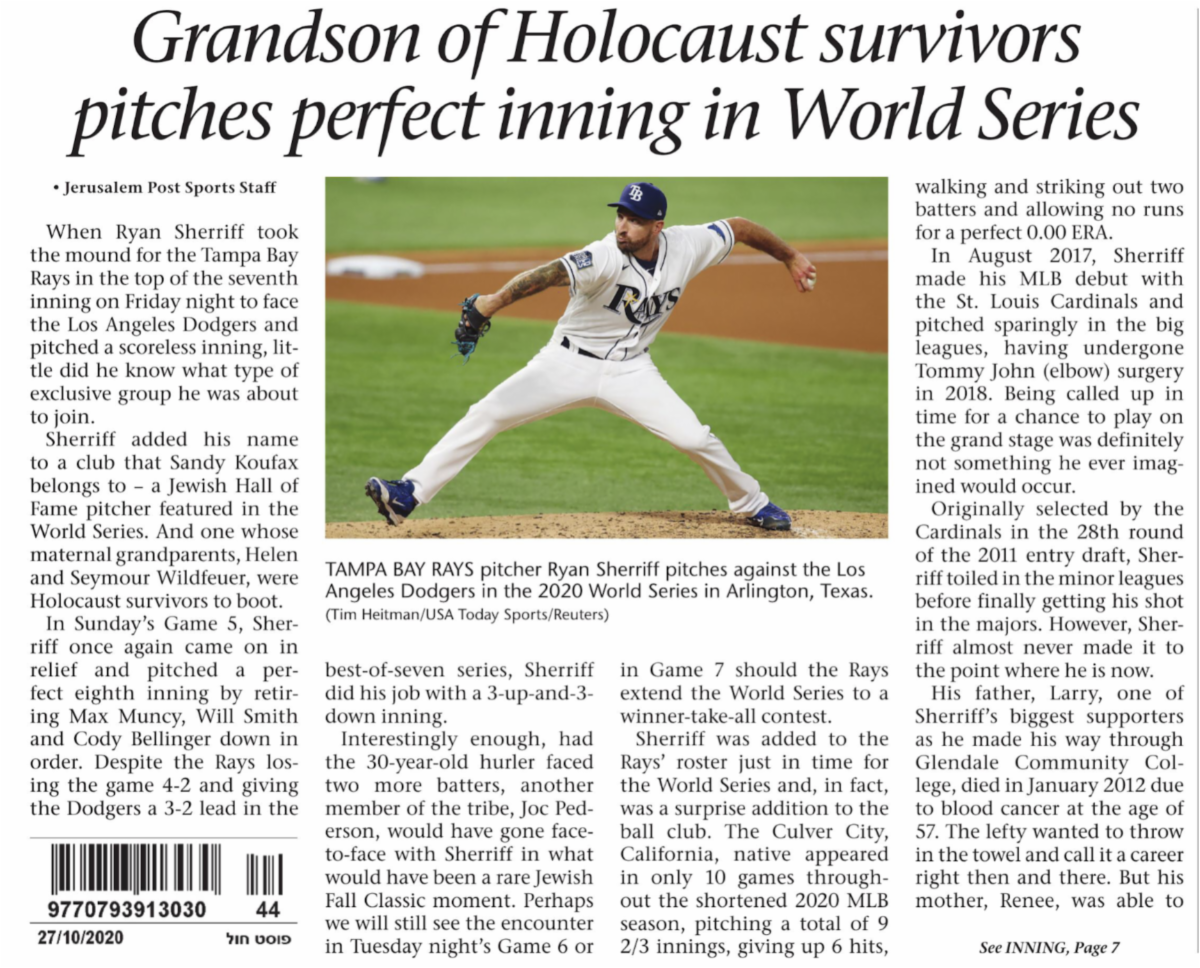
Mazal tov to the Dodgers!

The only thing this World Series was missing was the first ever Jew vs. Jew matchup in Series history.  But alas, Joc Pederson never faced Ryan Sheriff.


Borat's Hidden Message to Jews

Beware of spoilers... and to share on social media, click here for Times of Israel version.

I watched the new "Borat" movie last weekend and while I didn't laugh out loud as much as I did back in 2006 - and I may have cringed twice as much - I came away once again admiring Sacha Baron Cohen's ability to smoke out bigotry wherever it may be found.  And while those in red states and Kazakhstan may take offense at being the most visible targets of his jabs, the film mocks all bigotry, not just what may be found at gun rallies, cotillions and peasant villages in the Central Asia.

The critique is so biting that one wonders how some of the participants could possibly have not been in on the joke, like the baker who obligingly inscribes "Jews Will Not Replace Us (smiley face)" on a cake, or the shop owner to whom Borat asks how many gas canisters it would take to kill a truckload of gypsies.  Cohen was not the first to show us how just plain folk are capable of extraordinary cruelty, but it never ceases to shock us.  And it never should.  Yes, there are real people capable of laughing at songs about Saudis chopping up people and somewhere in America is at least one plastic surgeon who can air-trace a Jewish hook-nose that would make Der Stürmer proud.
  
Sacha Baron Cohen is this generation's Charlie Chaplin, Groucho Marx and Lenny Bruce rolled into one.  His humor is quintessentially Jewish in that each disarming punch line contains a hidden arrow aimed at the heart of the enemy; the enemy being ignorance, cruelty and hate.  The banality of the evil next door never ceases to shock us, but even more, Sacha Baron Cohen's sheer chutzpah never ceases to amaze us.  With every act of derring-do, he winks at his fellow Jews, who would best recognize the dangers, as if to say, "You think I can survive a few nights with these wacko conspiracy theorists (who turn out to be pretty decent folks)?  You think I can expose the hypocrisy of CPAC while dressed as Donald Trump? You think I can nab Rudy himself?  Watch me!"  For a people used to hiding in closets, Cohen, who hid in a closet while Rudy was being nabbed, is wish fulfillment incarnate.
 
While his humor appeals to people everywhere, Cohen inserts hidden clues for Jews affirming that he gets it - he understands that anti-Semitism is the mother of all hatreds, and therefore we have a special mission to combat hatred everywhere, even when it's uncomfortable, even when it's down the street at the bakery.  Our mission is to be able to laugh in the face of evil while showing unmitigated compassion for victims, which he shows for individuals like a Holocaust survivor whom he meets in a synagogue, Judith Dim Evans, arguably the most inspiring person in the film (and whose family also nearly sued Cohen over the incident).  
 
Cohen loves to let his fellow Jews in on the joke.  Borat #1 had plenty of Hebrew in it, primarily when Borat is ostensibly speaking his native Kazakh tongue.  Aside from throwing a bouquet to his landsmen, this is Cohen's way of demonstrating that his depiction of Kazakhstan is purely fictitious. Borat might as well have haled from Cossack-stan.  Or a Kurdish moshav in the Negev. 

One classic Boratism in the first film was the expression, "Wa wa wee wa," ("wow!") an hommage to the Israeli comedian Dovale Glikman from golden-age TV show Zehu Ze.  

Borat#2 continues in the hilarious tradition of Cohen's use of Hebrew as a fake version of the Kazakh language. Whenever he speaks with his daughter Tutar, he is speaking Hebrew.  (Many) Jews know that.  Few others do.  It's the greatest in-joke among Jews since God pranked Abraham at Moriah. 
 

Here are some examples:


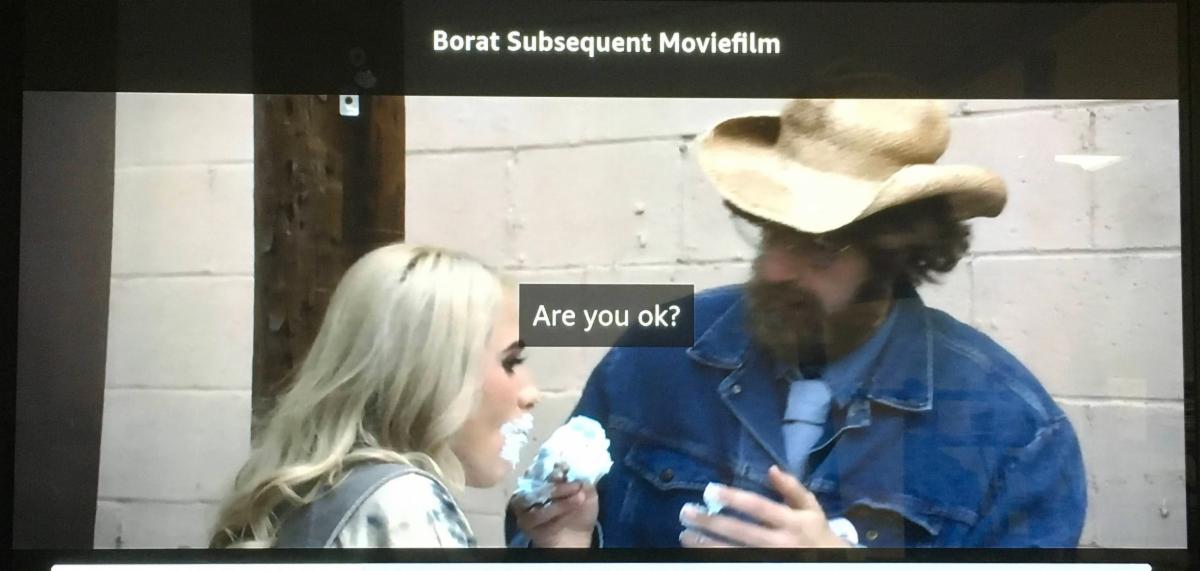
Borat's daughter, played by the amazing Maria Bakalova, has just mistakenly eaten a plastic baby figurine on top of a cupcake.  T
he subtitle says, "Are you OK?" but in Hebrew, Borat is really asking, "Ayfo ha-tinok? - Where's the baby!?" It's much more urgent and on point, setting up the next scene perfectly, while also leaving the viewer imagining some plastic dingo running off with it somewhere.


Here, Borat spews up some Hebrew gobbledygook but ends up saying what I think is "Baruch Hashem ma-she-hu yikra (God willing something will happen)." You would think he might use a more urgent and negative expression like "Has v'halila, (God forbid something should happen)."  But in fact he is turning the phrase on its head and saying that a father loving his children equally (and not caging his daughters) would be a good thing.  Which is exactly what God was trying to tell Abraham at Moriah.


What Borat really says in Hebrew is, "I'm taking you to someone who will teach you how to be lovely (nechmad - which also can be translated in Borat-ese as "niiice").  There is nothing feminist about the influencer they meet; the goal here is not to liberate the girl, but to prepare Tutar to be gifted to a person who is decidedly anti-feminist. But ultimately Tutar is in fact liberated. Nechmad is a perfect word choice for the knowledgeable Jew, evoking a well known Hebrew song (and a popular children's TV program) about colorful butterflies emerging from the cocoons (cages) of childhood. Nachmad is a cuddly word - the word for warmth (cham) is embedded within it, evokes the nostalgic feelings of an old '70s singalong - there's even a Poogy song with that name.  

You can see how much more there is to the film if you can crack Borat's secret code, using the Jews' secret language.  And because we get the joke, we know how deadly serious Cohen's message really is and can intuit why he urgently wanted to release this "moviefilm" a week before the American election.

When the election is over, the world will still need people like Sacha Baron Cohen and we Jews will still admire his chutzpah. The guy who was gutsy enough to call out Facebook, saying "They would have let Hitler buy ads." will always have a placein the Jewish pantheon.  No matter what happens next Tuesday, the world will still need niiice people like that. 

Recommended Reading...

From Times of Israel:


After voting was delayed for nearly 48 hours as factions on the religious right and progressive left waged a bitter political battle, a coalition agreement was reached Thursday evening at the 38th World Zionist Congress outlining the incoming leaders of some of the world's largest and most highly-funded Zionist institutions.
Thursday's agreement, which was passed unanimously, sees moderate gains for the center-left parties and progressive Jewish movements. It also includes some concessions from the political right and Orthodox factions, which had garnered a slight majority and were poised to pass a sweeping coalition deal which would have marginalized the center-left.
 

From the Forward:


"Unlike the Originalists, the Talmudic rabbis understood that the divine comes into the world through the tradition of sacred interpretation. For the Talmudists, there was no original text - not in the sense that Coney Barrett believes the Constitution to be. They understood that a text is sanctified through time only because we read it, because we bring it into our world, be it through study in the case of the Torah, or through court rulings, performances, and our interpretations in the case of the Constitution, or a Shakespeare play.Works are not intrinsically sacred but become so through their histories, and the attention we give to them. This is the lesson of the Talmud."

From AJC:


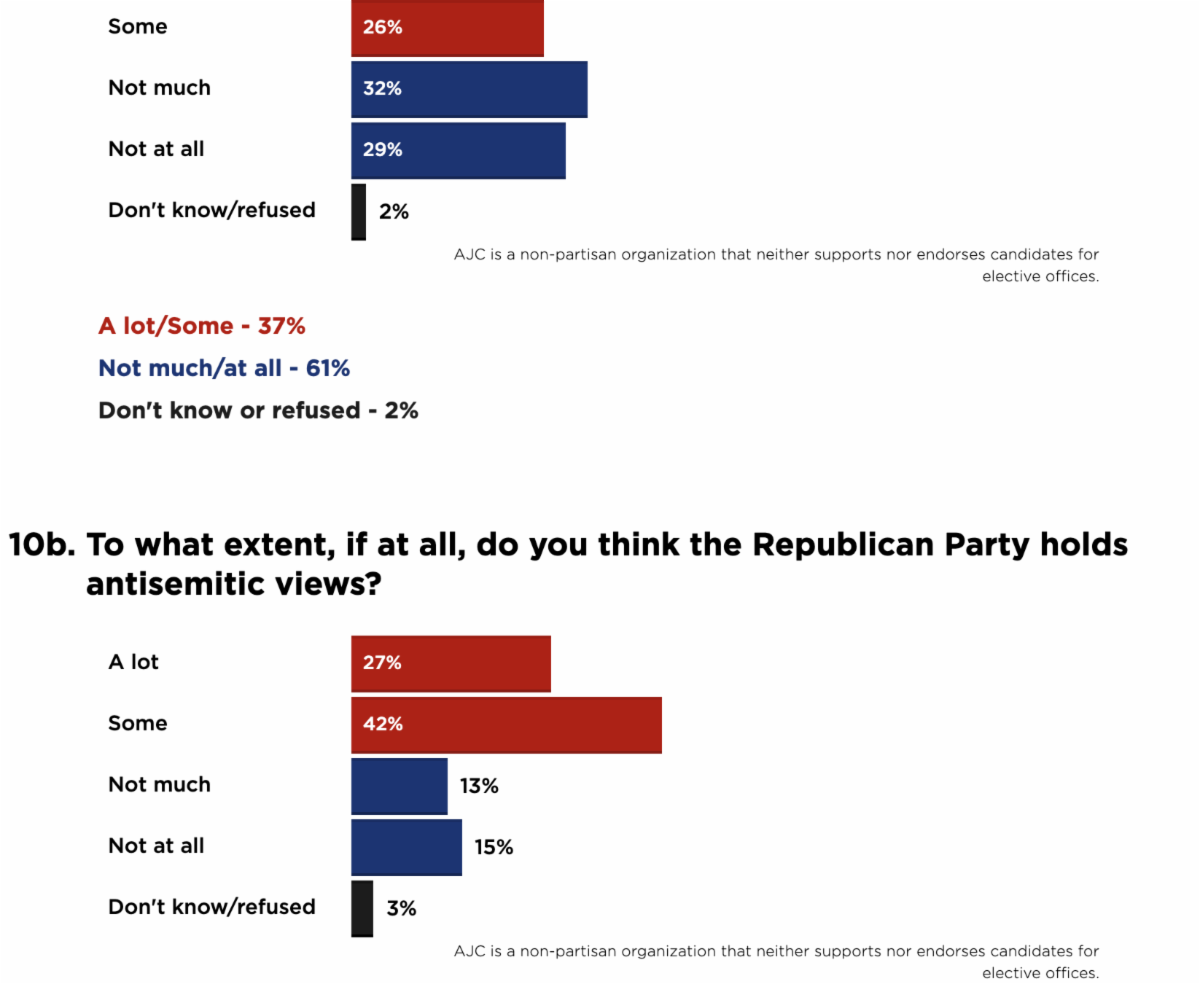
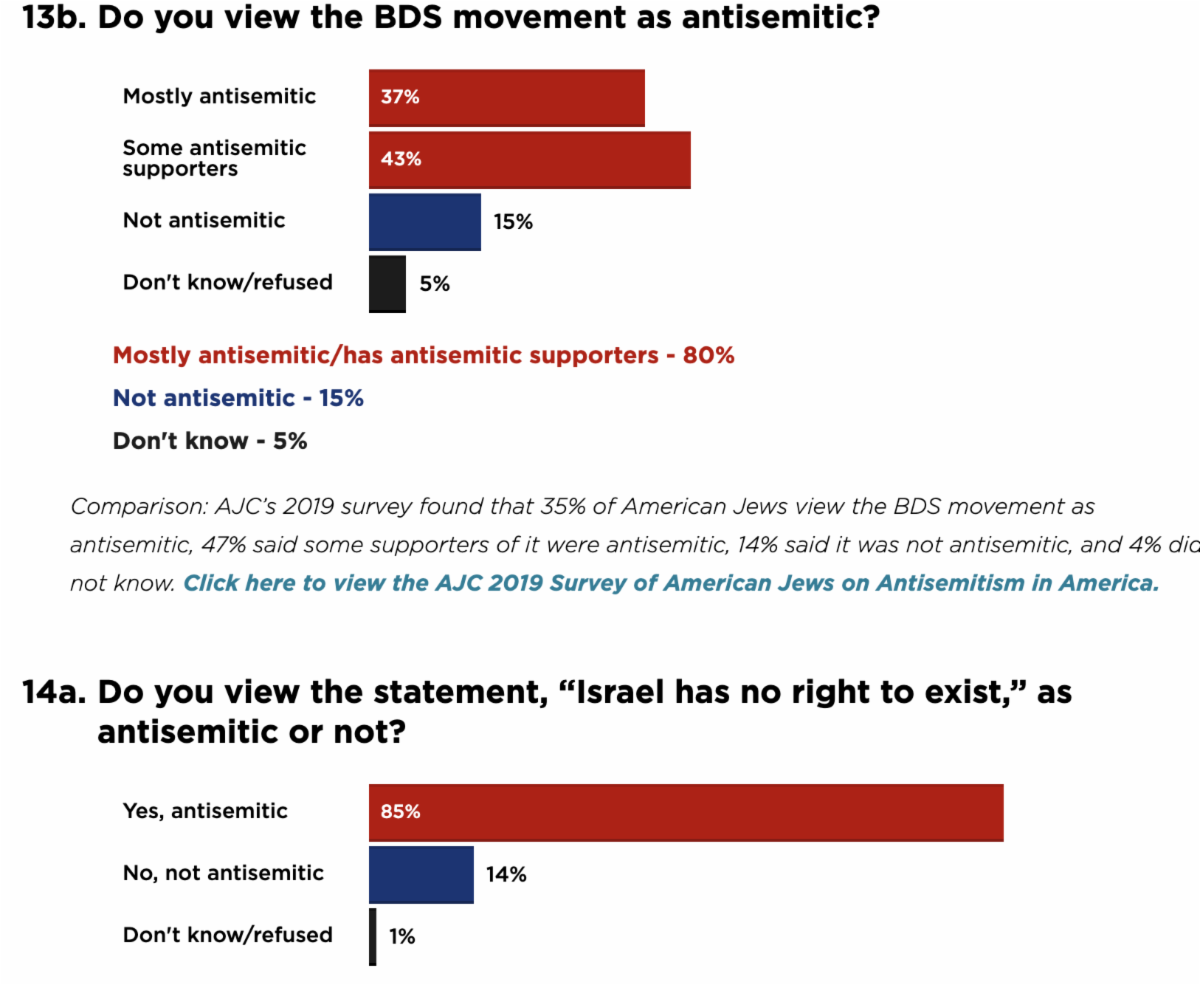
AJC's first-ever State of Antisemitism in America report, released on October 26, 2020, shows deep anxiety among American Jews and a disturbing lack of awareness among the general public about the severity of antisemitism in the United States. Parallel surveys of American Jews and the U.S. general public reveal widely divergent views regarding Jew-hatred in America. 

Ignorance About Antisemitism Creates Dangerous Breeding Ground for Hatred of Jews  Parallel surveys of American Jews and the general public form the basis of the first-ever AJC report on the state of antisemitism in America. The state, simply put, is poor. To the traditional sources of antisemitism - the far right, hard left, and extremists in the name of Islam - we can now add a fourth: ignorance. The lack of awareness and refusal to enable Jews to define hatred against them create a dangerous breeding ground for anti-Jewish hostility.

The State of Antisemitism in America 2020: Insights and AnalysisThis year, for the first time, we carried out two surveys in parallel. Combined, the two surveys form the first-ever AJC State of Antisemitism in America Report. This report lays bare the very different ways American Jews and the general public understand antisemitism, enabling us to identify key challenges and more effectively target our education and advocacy efforts as we seek to eradicate this most ancient form of hatred.

Here are some of the highlights of the survey...


Jewish communities around the world have historically flourished in societies with healthy democracies that champion "government of the people, by the people, for the people."

Jewish tradition calls upon us to pursue justice and govern ourselves through fairness and the rule of law. The Torah recognizes the need for a justice without bias as fundamental to the functioning of society, as it is written: לֹא־תַעֲשׂ֥וּ עָ֙וֶל֙ בַּמִּשְׁפָּ֔ט, "you shall not render an unfair decision" (Leviticus 19:15).

Furthermore, the Talmud acknowledges the role the people must play in selecting their own leaders:  אֵין מַעֲמִידִין פַּרְנָס עַל הַצִּבּוּר אֶלָּא אִם כֵּן נִמְלָכִים בַּצִּבּוּר,"a ruler is not to be appointed unless the community is first consulted" (Berakhot 55a).

This value is codified in significant documents and constitutions such as the US Declaration of Independence which says that the government derives its "just powers from the consent of the governed."

In light of the highly contentious atmosphere surrounding the 2020 United States election, the Rabbinical Assembly, representing Conservative and Masorti rabbis around the world, is concerned about the integrity of the democratic process, as well as the potential discord and division in American society, both during the voting process and in the period following the November 3 Election Day.

This election season comes amidst the devastating COVID-19 pandemic that has taken the lives of well over 200,000 Americans and has disrupted everyday life. In order to safely participate in the election, many more Americans than in the past are voting by mail to avoid in-person crowds at the polls. The surge in balloting by mail has stressed the system and election results likely will not be completely tabulated on Election Night, November 3. Consistent with our Resolution on Voting Rights in the United States of America, passed in 2019, the Rabbinical Assembly seeks to ensure that all citizens who lawfully cast a vote in 2020 will have their votes counted. Safe, fair, and accessible elections are core components of a strong, thriving democracy.

Therefore, the Rabbinical Assembly resolves to call on all segments of American society to preserve democratic norms and values in the elections process. In pursuit of this goal, the Rabbinical Assembly further resolves to:
  • Advocate for the full registration of all eligible would-be voters;
  • Advocate for the counting of every vote lawfully cast in the 2020 elections and denounce efforts to limit or reduce opportunities and means to vote;
  • Denounce all violence both prior to and following the election, including any intimidation towards election officials and citizens seeking to cast their vote and/or intentional disinformation about the voting process;
  • Urge candidates not to proclaim victory prematurely, media outlets not to declare the outcome of an election prematurely, and states to wait to appoint their presidential electors until their results are officially certified; and
  • Demand all candidates and their supporters respect the outcome of election results. In those cases in which the electoral system calls for a transfer of power, we call on everyone to engage in the peaceful transfer of power  and to uphold the fundamental rights and governing sentiments of the United States Constitution, which seeks to "establish Justice" and "ensure domestic tranquility."
צֶ֥דֶק צֶ֖דֶק תִּרְדֹּ֑ף--May we all merit fulfilling the Torah's instruction to pursue justice.

And finally, below is a spoof of a Talmudic discussion about Zoom. Thank you to everyone who has sent it to me!


Enjoy, and Shabbat Shalom.

Rabbi Joshua Hammerman