Showing posts with label Washington Post. Show all posts

Thursday, November 11, 2021

We must commemorate Jan. 6. A national fast is the best way to do so. (Washington Post)

(RNS) — With the first anniversary of the Capitol insurrection less than two months away, it is not too soon to begin figuring out how it will be commemorated. I believe it should become the American Fast Day. 

Congress or the White House should echo the prophet Joel, who proclaimed:

Solemnize a fast,Proclaim an assembly;Gather the elders — all the inhabitants of the land —In the House of the LORD your God,And cry out to the LORD

When profound national traumas happen, they need to be ritualized so their lessons will not be forgotten. Painful memories need to be channeled into constructive actions, with a focus on symbolism and sacrifice. Cemetery visits on Memorial Day or name recitations on Sept. 11 enable us to reexperience, annually, the pain of shared loss and to retell the sacred history.

For years to come, the war of the narratives regarding Jan. 6 will be fought in the courtroom and classroom — but right now, the prime battlefield is the calendar. Ritual observances need to be established immediately, before purveyors of falsehoods seize the storyline, distorting what really happened. There is not a minute to spare.

So, why a fast day? Jews typically set aside the anniversary of a national tragedy as a time for fasting and reflection. The formula is simple. When we’ve strayed and thereby suffered, we fast, afflicting ourselves to cleanse both our body politic and our individual souls.

The most traumatic ancient event for Jews was the destruction of the Second Temple by the Romans in the year 70. The rabbis established the ninth day of Av as the anniversary of that catastrophe, and that day (and prior three weeks) become the focus of annual grieving rituals, including refraining from meat, haircuts and weddings. This enabled the Temple’s fall to become living history for every Jew, an annual journey from sin to repentance, and from there, potentially, to redemption.

The ancient rabbis established a handful of fast days that are still observed, and many others were left on the cutting room floor. An entire Talmudic tractate is devoted to fasts, including those designed to mitigate against drought, plague and wild animals, or to commemorate the occasional political assassination.

The presumption, in establishing these fast days, is that the people had somehow drifted from the righteous path. In the case of the Second Temple, the cause was “baseless hatred” of Jews for one another. The most famous fast day of all, Yom Kippur, was a means of atonement, originally, for the sin of the golden calf and the shattering of the tablets of the covenant.

For Americans, fast days extend back to Colonial times, when fasting was practiced during planting time in the spring. Cotton Mather wrote, “We may not eat or drink so much …, on such a day, as at another time.” In 1774, the Virginia House of Burgesses voted for a day of prayer and fasting to protest the Boston Port Act. Then, confronted by a crisis with France in 1799, John Adams proclaimed a fast day of “humiliation, penitence and prayer.” Abraham Lincoln declared the same in August 1861, at the start of the Civil War, and called for another fast day in 1863, expressing the fear that “the awful calamity of civil war, which now desolates the land, may be but a punishment, inflicted upon us, for our presumptuous sins … ”

Fasts have fallen from favor, though the current National Day of Prayer  on the first Thursday of May is derived from these prior observances. But there is no fast day tied to a cataclysmic event; not for Pearl Harbor, 9/11 or the Civil War.

Jan. 6 deserves one. As happened in ancient Jerusalem, America’s sacred precinct was desecrated, this time not by Romans bearing pigs, but by cretins bearing Confederate flags and feces. The Capitol was quickly washed and fixed up for the inauguration, but it was never ritually cleansed and rededicated like the ancient Temple in Jerusalem after some of its desecrations (that’s how Hanukkah came to be). And neither have we been cleansed of the stain inflicted upon our democracy. Our blemished Capitol and our sullied democracy still need that moment of cleansing and rededication.

I am not proposing a specifically religious event — fasting does not need to be religious — but faith groups should be encouraged to tailor observances to their denominational proclivities. A national interfaith commission — including secular organizations — could be set up to establish a common set of goals for these observances. They could include prayer, learning (teaching the roots of American democracy) and voting rights advocacy.

The Capitol and its history should be central to the programming; diverse groups of Americans (politically and geographically, as well as demographically) could meet there for extended dialogue on the virtues — and fragility — of our system. As with Jewish and Muslim fast days, at sundown, the mood would become more hopeful, with the day’s observances culminating in an evening musical celebration of the ideals that make American democracy so precious for the world, and so worth fighting for. 

Then everyone would eat.

Of course, the Jan. 6 observance should include memorials to those who died as a result of the insurrection. Any service, colloquium, concert or advocacy event should include a recitation of the basic credo: The 2020 election was fair and conclusive, a violent coup was attempted and put down. It nearly succeeded — and the Big Lie lives on.

Writer and historian Anne Applebaum said on the morning after Jan. 6: “People are trying to say that this is not who we are. I’m afraid this is who we are now.” The doomsday cult that invaded our most sacred precinct on Jan. 6 is who we are now. But we can change that.

“This is the fast that I desire,” proclaimed Isaiah. “To unlock the fetters of wickedness and … let the oppressed go free.”

This is the fast we need to desire — and ratify as soon as possible. We can make Jan. 6 the American Fast Day, a somber celebration of what truly makes America great, so the catastrophe of last January will never be repeated.

(Rabbi Joshua Hammerman is the spiritual leader of Temple Beth El in Stamford, Connecticut, and the author of “ Mensch-Marks: Life Lessons of a Human Rabbi ” and “ Embracing Auschwitz: Forging a Vibrant, Life-Affirming Judaism that Takes the Holocaust Seriously.” The views expressed in this commentary do not necessarily reflect those of Religion News Service.)

Friday, July 9, 2021

Inducting a Jew into the Hall of Fame on Rosh Hashana? What is the MLB thinking? (RNS and Washington Post)

Inducting a Jew into the Hall of Fame on Rosh Hashana? What is the MLB thinking?  

What would Sandy Koufax do?   See this op-Ed in the Washington Post

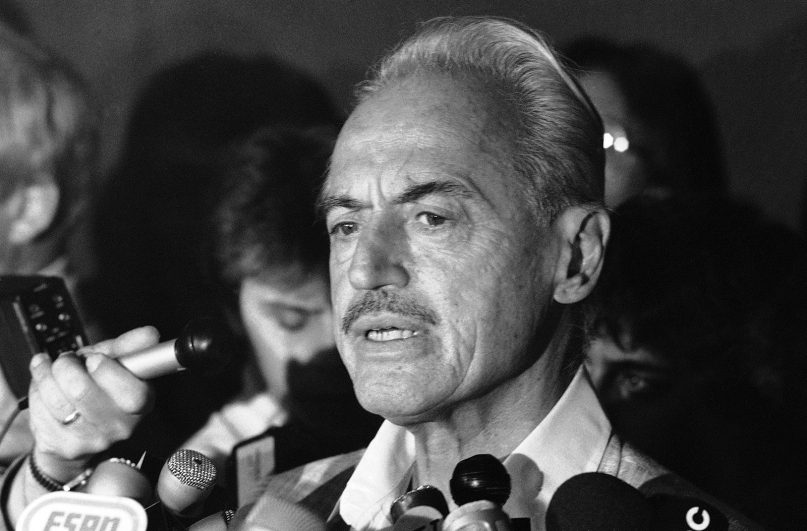
FILE - This July 16, 1981 file photo shows baseball union leader Marvin Miller speaking to reporters after rejecting a proposal to end a baseball strike, in New York. Miller, the union leader who revolutionized baseball by empowering players to negotiate multimillion-dollar contracts and to play for teams of their own choosing, was elected to baseball's Hall of Fame on Sunday, Dec. 8, 2019. (AP Photo/Howard, File)

(RNS) — It was announced last month that Major League Baseball’s Hall of Fame Induction Ceremony, normally held in July, has been set for Wednesday, September 8, the second day of Rosh Hashana. To add insult to injury, one of the honorees is Jewish.

No, not Derek Jeter, who will also be inducted, but Marvin Miller, the legendary leader of the Major League Baseball Players Association, a modern-day Moses who released ballplayers from the shackles of bondage by fighting to overturn the dreaded reserve clause. Miller, who died in 2012, will become just the fifth Jewish member of the Hall. 

On Rosh Hashana.

There are two scandals here: One, that baseball had plenty of dates from which to choose but opted for one of the three most consecrated days of the Jewish year for this sacred enshrinement. And two, that almost no one seems to think it’s a scandal, including most American Jews, whose silence on this matter has been deafening.  

For generations, American Jews have been weaned on the stories of Sandy Koufax missing a World Series game in 1965 because it coincided with Yom Kippur. That gesture, more than the lefty’s four no-hitters, three Cy Young Awards, 2,396 strikeouts and multiple World Series heroics (including a Game Seven win that same year), cemented his spot in the American Jewish sports pantheon.

Koufax stands above those whose athletic feats were comparable, but whose dedication to Jewish principle and peoplehood may have been less exemplary. Olympic gymnast Kerri Strug’s mother said her daughter did not become bat mitzvah because “she was too busy.” Mark Spitz shortchanged his Jewish education in favor of swimming practice because, as his father said, “Even God likes a winner.” By contrast, Koufax’s willingness to stand up proudly for his people and tradition remains unsurpassed.

In Koufax’s day, rescheduling a World Series game to avoid Yom Kippur was never considered. Back then, no Jew would have had the audacity to ask for such a delay. They felt fortunate just to have been allowed entrance into America’s pastime. Just leave your tzitzit (fringes) at the door. 

And it’s not as if the date of Yom Kippur wasn’t known in 1965 — it was set thousands of years ago. It just never occurred to anyone at MLB that Jews had a right to see their holy day respected. 

But we live in more pluralistic times, when respecting sacred observances of minorities has become a means of reinforcing inclusiveness toward formerly marginalized groups. Juneteenth is the latest example of that, along with observances during the month of Ramadan.

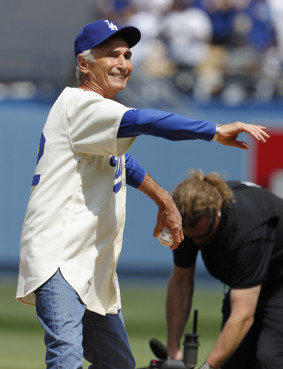
Former Dodger Sandy Koufax pitches the first pitch during pre-game ceremonies before the Dodgers play against the San Francisco Giants in their MLB National League baseball game in Los Angeles, California on April 1, 2013. Photo courtesy of REUTERS/Alex Gallardo*Editors: This photo may only be republished with RNS-SALKIN-COLUMN, originally transmitted on September 22, 2015.

Former Dodger pitching legend Sandy Koufax throws out the first pitch during pre-game ceremonies before a game in Los Angeles, California, on April 1, 2013. Photo by Alex Gallardo/Reuters

And it’s not as if Rosh Hashana is a weak sibling to Yom Kippur. The 1959 World Series, which also included the Dodgers, coincided with Rosh Hashana, and because of that, Koufax did not pitch in Game 4 (he pitched a 1-0 shutout in Game 5). Also, in 1961 and 1963, Koufax skipped regular season starts that coincided with Rosh Hashana.

Regarding the Day of Atonement, Koufax told the UPI’s Milton Richman that “a man is entitled to his belief, and I believe I should not work on Yom Kippur. It’s as simple as all that, and I have never had any trouble on that account since I’ve been in baseball.”

An article on the Hall of Fame’s own website makes the case for respecting major religious holidays, reporting that the 1959 World Series was not the first time Koufax missed a game in favor of a Jewish holiday. On April 22 of that year, Koufax requested to skip a start scheduled for the first night of Passover.

Koufax was following in the footsteps of Hank Greenberg, another of the five Jewish inductees to the Hall of Fame. Greenberg played in the ’30s, when antisemitism was omnipresent — yet he had the courage never to play on Yom Kippur. In 1937, this may have prevented him from breaking Lou Gehrig’s RBI record. But he did play on Rosh Hashana during a heated pennant race in 1934, after much soul searching and some welcome support from his rabbi, who called Rosh Hashana a “festive holiday,” when playing would be acceptable. Greenberg hit two home runs, including a walk-off game winner. No doubt that rabbi’s lenient ruling was made with a wary eye trained on the Tigers’ unforgiving fan base, which included notorious antisemites like Henry Ford and Father Coughlin.

“I caught hell from my fellow parishioners,” Greenberg later said. “I caught hell from some rabbis.”

So what would Sandy Koufax do about this unforced error by Major League Baseball? What should Jews do? If we grant that a World Series game might not be easily moved from its natural October perch, the Hall of Fame ceremony, which typically is in July, most definitely could still be set for a day other than September 8, especially with someone Jewish being inducted, along with an all-time New York Yankee. I believe there are more than a few Jewish Yankee fans; don’t you think some of them might be perturbed by this?

Or maybe not. Which is my other concern. 

Several weeks ago, a high school football coach in Ohio punished a Kosher-observant player by forcing him to eat pork. The coach and seven of his assistants were fired, but this story elicited a general ho-hum from the Jewish blogosphere. Granted, the player in question was a Hebrew Israelite and not technically a Jew, but pork is pork, humiliation is still humiliation, and this incident should have registered a big number on antisemitism’s Richter scale.

Hannah’s seven sons were martyred because they refused to eat pork, and that led to the Maccabean wars. The Spanish Inquisition used pork to “out” Jews. The Nazis force-fed Jews pork. It should bother us when people don’t respect our most core values and fundamental observances, like the Kosher laws … and Rosh Hashana.

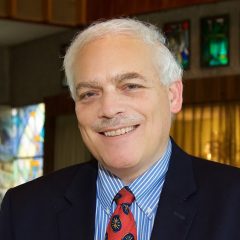
Rabbi Joshua Hammerman. Courtesy photo

Rabbi Joshua Hammerman. Courtesy photo

But instead, people seem to be shrugging it off, saying, “Hall of Fame? No matter. Marvin Miller is dead, anyway. The football coach? No big deal on that either. And pass the pepperoni!”

(Rabbi Joshua Hammerman is the spiritual leader of Temple Beth El in Stamford, Connecticut, and the author of “Mensch-Marks: Life Lessons of a Human Rabbi” and “Embracing Auschwitz: Forging a Vibrant, Life-Affirming Judaism that Takes the Holocaust Seriously.” The views expressed in this commentary do not necessarily reflect those of Religion News Service.)

Wednesday, April 21, 2021

Bystanders in a Digital Age: Washington Post


Bystanders in a digital age: The heroes of the Derek Chauvin trial

(RNS) — This week, in the wake of the historic guilty verdict in the most charged racial justice case since O.J. Simpson, Jews around the world will read in the Torah (Lev. 19:16) the commandment not to stand idly by the blood of our neighbor.

Rarely before has that directive been more profoundly followed than by the witnesses testifying this week to what they saw the day of George Floyd’s murder — and the impact that could change forever what it means to be a bystander.

There is no question that the sources stand on the side of active intervention rather than passivity. As the Talmud states (Sanhedrin 73a), “Whence do we know that if a person sees his neighbor drowning, mauled by beasts, or attacked by robbers, he is bound to save him? From the verse, ‘Thou shalt not stand by the blood of thy neighbor.’”

Recent events have demonstrated idleness is, in many ways, no longer an option now that most onlookers carry in their pockets small, handheld instant-justice machines that can make star witnesses out of 9-year-olds. When a crime happens and you are there, either your cellphone camera is on or someone else’s has you in the frame. Either way, you will be found — and you will be involved.

What does it mean to be a bystander in a digital age? Is it even possible to stand back and stand by anymore without more direct involvement?

We’ve been asking that question a lot lately. The riveting testimony of the trial for the murder of George Floyd was marked by emotion, especially from the mouths of the youngest bystanders. Darnella Frazier, the teenager who filmed the viral video of Floyd’s arrest, said during her cross-examination there have been nights when she has stayed up and apologized to Floyd for not doing more to save his life.

“(Floyd) looked like he was fighting to breathe,” said another teen witness, Alyssa Nicole Funari, 18, who was outside Cup Foods during the arrest. “It was difficult because I felt like there really wasn’t anything I could do as a bystander,” Funari said. “The highest power was there and I felt like I was failing — like, failing to do anything.”

“Technically I could have done something; but I couldn’t do, physically, what I wanted to do,” Funari said, because police were ordering bystanders to stay back. Again and again, we heard the voices of the bystanders, like the off-duty firefighter who wanted to give CPR. They’re now stepping up to take responsibility for their inaction. But was it inaction?

At the other end of the spectrum, we’ve seen bystanders fail to respond correctly to recent hate crimes directed against people of Asian descent. They did respond — poorly — and their response also thrust them to the center of the story. Two New York City apartment building workers were fired for failing to help a 65-year-old Asian American woman as she was being violently attacked on the sidewalk outside. As she was being physically and verbally assaulted, cameras show these workers not only failing to assist but closing the door on the scene.

In Orange County, California, an Olympic hopeful was in a park training for the summer games when a man targeted her in an incident she captured on video. She became, in effect, her own corroborating witness, victim and bystander all in one.

Research shows most people are more than willing to intervene and help someone.

A whole branch of psychology has grown from this question, based on the famous 1964 Queens stabbing attack on Kitty Genovese that was ostensibly witnessed by 38 passive onlookers who did nothing to stop it. Later it was proven the numbers were inflated, and New Yorkers did not deserve the reputation for apathy that has been given them.

But we are forced to ask ourselves, if we were outside of that Manhattan apartment building or Cup Foods in Minneapolis, what would we have done? And how has digital technology changed the equation since 1964?

Or since biblical times. When the young Moses went out and saw his fellow Israelite being beaten, as he was about to strike the taskmaster, the text says, “ he turned this way and that. … ” Perhaps he saw no potential witnesses and figured it was OK to strike.

Or perhaps he saw lots of people around, but they all looked haggard and weary — like slaves — and he calculated that no one would have the strength to testify against him. Moses understood that moral paralysis is the mark of enslavement; the people had been cowed into complicity — to idleness — indifferent to the plight of their fellow and unlikely to get involved. So Moses got involved.

In Leviticus 9:22, an older Moses is once again a bystander as Aaron blesses the people. But then, curiously, in the very next verse, Moses joins Aaron in a blessing do-over, and this time, “the glory of God appeared to the entire people.”


According to the medieval commentator Rashi, Aaron’s initial blessing was a misfire. And Aaron, afraid he was not in God’s good graces, appealed to Moses, who immediately leapt once again and joined his brother in a renewed appeal to God, who this time responded with an appearance.

The early Hasidic master the Baal Shem Tov takes from this the lesson that we are bystanders for a reason; not to stand in judgment — and Moses did not — but to share the burden. From that perspective of humility, Moses did not judge Aaron. He simply seized the moment when his moment arrived, and he ran to assist.

In his moving closing remarks at the Chauvin trial, Prosecutor Steve Schleicher called the bystanders “Random members of the community, all converged by fate at one single moment in time to witness something. To witness 9 minutes and 29 seconds of shocking abuse of authority, to watch a man die …”


And he added, “All they could do was watch and gather what they could. Gather their memories, gather their thoughts and impressions, gather those precious recordings. And they gathered those up and they brought them here. And they brought them here and they got up on the stand and they testified and they bore witness to what they saw.” 

Those people in Minneapolis waited for their moment, having no idea their moment to act would be delayed for nearly a year. That’s a lot of bystanding but not a minute of idleness. They may not have been able to save George Floyd, but through their testimony, they may save the integrity of the American justice system. These heroic bystander witnesses in Minnesota heard the clarion call of Elie Wiesel: “Don’t stand idly by if you witness injustice. You must intervene. You must interfere.”

(Rabbi Joshua Hammerman is the spiritual leader of Temple Beth El in Stamford, Connecticut, and the author, most recently, of “ Embracing Auschwitz: Forging a Vibrant, Life-Affirming Judaism that Takes the Holocaust Seriously.” The views expressed in this commentary do not necessarily reflect those of Religion News Service.)

Wednesday, March 29, 2017

When a Jew does it (Washington Post)

Acts of Faith

When a Jew does it


See article in Washington Post


On a sunny Tuesday morning, Aug. 19, 1999, my synagogue was violated by
 a vicious hate crime. A package of medical waste emblazoned with swastikas
had been tossed into our parking lot the night before. I walked out to the
 corner of the lot. Our custodians had already cordoned off the area with
 traffic cones, as if to contain the contamination — not of the bloody syringes
 and tubes that were dumped, but of the swastikas themselves. They were
 crudely drawn in marker, small, almost dainty spiders, like the stick-figure
 drawings a first-grader brings home.
Only later did I feel the anger. My first sensation, astonishingly, was just the
opposite. For the first time in my life, I felt utterly connected to the essence
 of the Jewish condition. Suddenly the eternal dialogue between God and
the Jewish people now ran through me. I was no longer a bystander. I had
become, in the eyes of at least one crazed individual, the Other.
Recall that world of mid-1999. It was a summer of fear all across America,
but particularly for Jews. In the shadow of the Columbine massacre lurked
the figure of Dylan Klebold, grandchild of proud Jewish community bene
factors in Ohio who became not a Jew but a hater of Jews, who admired
Hitler and white supremacists. Then there was Buford Furrow, who
attempted to murder Jewish preschoolers in Granada Hills, Calif.,
then proudly turned himself in proclaiming, “I killed the Jewish
 children.” To those outrages were added the torching of synagogues in Sac
ramento and Long Island.
What happened in my parking lot seemed to fit perfectly into this pattern of
hate crimes. And the leadership of Stamford and its surrounding towns —
places already burdened with a checkered history of intolerance — was
determined to respond proactively.
I was exceedingly moved by these gestures. I recall sitting at the rally
listening to the speeches of love and support for Jews, imagining how history
 could have been changed if this same scene had played out in Germany in
1933. Not to compare Heidelberg and Munich to Greenwich and Darien, but
I could not help but wonder how miraculous it is — and how simple — that
former bastions of prejudice can so quickly be turned into citadels of sym
pathy. It was if the person who intended to defile our sacred space had in
stead brought about a mass communal exercise in atonement.
But that viewpoint on the incident was short-lived. Several weeks later, the
 perpetrator was apprehended — and shockingly, he turned out to be a Jew.
Not only that, but at one time he had been a member of my own congrega
tion. Alan Lorenz was a salesman of containers used to dispose medical
waste and, through some bizarre logic, he had apparently perpetrated this
outrage as a publicity stunt to improve business.
But Amalek is always one of us, I now realize, because something of Amalek
 resides within each of us.  The battle against hate is internal as much as
external.
Ironically, Lorenz was charged with the federal civil rights crime of
obstructing persons in the free exercise of their religious beliefs. In fact, his
act had brought people to a deepened awareness of their faith attachments.
Service attendance increased substantially after the incident.
He had also clarified for us the battle lines, redrawn every generation,
between victim and villain. Everything was crystal clear, that is, until his
identity became known. I could feel myself backpedaling as I told the local
reporter that “we still must fight bias, whatever the source,” but my
discomfort was acute. It was embarrassing.
I can’t exactly dedicate this to Alan Lorenz, but, with this week’s arrest in
Israel in mind, maybe his death can come to have a purposefulness that
eluded him in life. Before I knew his identity, I turned Lorenz into a devil
that he never was. The lessons I learned then are worth recalling now.
Perhaps I was also too quick this time to assume that the perpetrator
making threatening phone calls to Jewish Community Centers was a white
supremacist or an Islamic State-inspired extremist — and maybe the
surprising facts present an opportunity for healing here in America. Maybe
President Trump can ask in this moment that our society steer away from
hate, rather than barrage the reeling Jewish community with a fusillade of
“I told you so.”
And perhaps my sense of betrayal and anger must be accompanied by a
new resolve to address the widening gap between Israelis and American
Jews. This is a moment of profound sadness for both Jewish communities
— we need to ask how our cruel stereotypes of other Jews might have led
this teen astray.
I have come to realize that the line between victim and villain is not so easy
 to draw. It’s squiggly and amorphous. Kind of like a chalk-drawn swastika
after a few days of rain.