Showing posts with label LGBT. Show all posts

Thursday, January 26, 2023

In This Moment: "Status Quo," "Transgender" and Other Borrowed Words. International Holocaust Remembrance Day, More A.I., Women of the Wall


In This Moment

Click on the photo to hear the service held by the Women of the Wall this week at the Kotel for Rosh Hodesh Shevat. Assisted by an all-women's choir, as you can read in the article below (see the full article here). You'll note a familiar name in the article, Cantor Deborah Katchko-Gray. If you listen to the video, you'll hear the intentionally disruptive loudspeaker nearby, attempting to drown the women out.

Shabbat Shalom


Last week's conversation about A.I.generated a good deal of interest. You can see some of the sermons generated for last week's portion by ChatGPT here and others here. And click on the icon below to listen "live" to my first-ever A.I. assisted sermon delivered here.

International Holocaust Remembrance Day

Friday is International Holocaust Remembrance Day. This year, Yad Vashem is involved in two significant exhibitions, One is at the U.N., where a Book of Names will be dedicated, a literal book with tangible, searchable pages containing the alphabetically arranged names of 4,800,000 Jewish men, women and children murdered by the Nazi Germans and their collaborators during the Holocaust. The names in the Book have been meticulously gathered over the past 70 years by Yad Vashem, the World Holocaust Remembrance Center, from a range of sources, including Pages of Testimony. Empty pages at the end of the Book leave room for over a million names of Holocaust victims still to be recovered. 


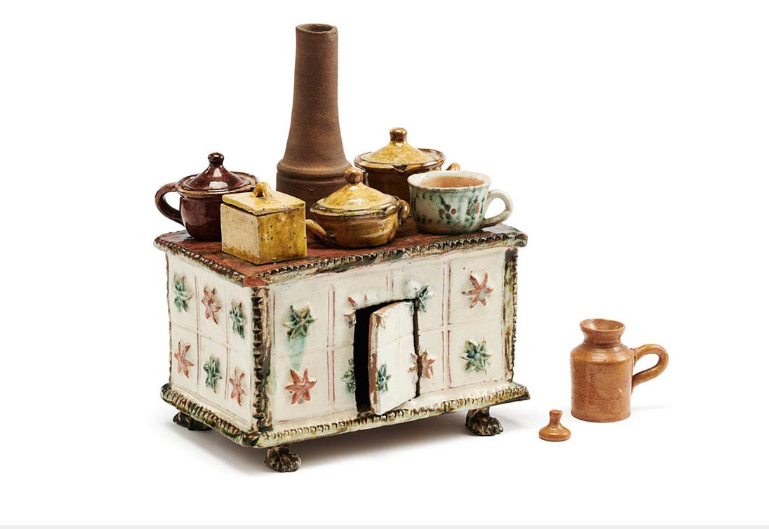
I'm especially excited about the "16 Objects" exhibit that will be opening in Berlin. It features unique Holocaust-era items, one from each of the Federal States of Germany, whose stories are intertwined with individual Jews hailing from across that country. The objects range from this toy kitchen to a piano, all of which were sacred to a Jewish family. See the artifacts.

Almost Paradise?

The Garden of Eden in Christianity and Judaism


Join me and our interfaith partners for another of our sessoins based on the new book, "The Bible With and Without Jesus," tonight (Thurs) at 6:30 (note the time - check the flyer for the Zoom link). This week's topic is "Adam and Eve." You can find the chapter here. Join us as we discuss the very different ways Jews and Christians understand the concepts of "Original Sin," "Paradise," and the status of women as reflected in the Genesis account. Are men and women equals in both Creation stories or is the woman "cursed" to be subservient? Is Eden supposed to be a reflection of heaven, or simply a place of where humanity and nature coexist in perfect harmony? Is THAT heaven (or is it Iowa)? Is death a curse? Is the knowledge of good and evil a bad thing? Was the forbidden fruit an apple? Or maybe a fig? Lots to chew on.


How do you say "Status Quo" in Hebrew?

"Statoos K'vo"

Transgender? "Trens-g'endair"

Both are loanwords from English.

What does that say about our sacred language?


Plus, a word about Fauda,

a Hebrew show with an Arabic name


This week's Hebrew Front Page (below) has an English front page right beneath it. Both are from Wednesday's Ha'aretz. Note that in the headline highlighted in yellow, the English term status quo, is transliterated directly into Hebrew (second line, middle). "Netanyahu Promises Jordanian King to Preserve the Status Quo on the Temple Mount." It's odd and a little disconcerting that there is no Hebrew term for "status quo." The status quo on the Temple Mount has been sacrosanct since the 6-Day War, and it is under threat right now, as this article attests (and Jordan's king fears). Preserving the status quo with regard to holy places enables the Muslim authorities to supervise worship while Israel maintains security while (usually) respecting the sanctity of the place for Muslims. That arrangement has allowed for an uneasy but stable peace to prevail for over half a century. By resolving not to resolve the conflict unilaterally, the parties allow the status quo to become a baseline, albeit an imperfect one, forged in compromise, but durable enough to hold things in place until the time is right to address prevailing issues constructively and incrementally. Status quo is so important to Israel's continued survival that it's hard to believe there is no Hebrew word for it. There are six Hebrew words for peace, but not a single one for the time-tested method for preserving it.

Acceptance of the status quo has not only kept peace between Israel and Muslim authorities, but it has also allowed Israel to preserve its own fragile balance between religion and state among the Jewish population, particularly in areas of Shabbat and holiday observances, kashrut, family status, education and the military. So, for example, in some cities buses run on Shabbat and in some they don't. Compromises were made back in the early years, and once that happened, things were kept basically the same, for the sake of peace. It was all about finding some middle ground that everyone could live with, even if no one was completely happy with the arrangement. At its best, status quo allows the pot to simmer just long enough for fresh ideas to germinate. It should not be a prescription for eternal ossification. In some cases adjustments to status quo policies need to be made for compelling moral reasons, especially regarding basic human rights, but allowing Jewish prayer atop the Temple Mount has never been cause to upset the status quo - until now.


Prime Minister Netanyahu traveled all the way to Jordan to assure King Abdullah that he would preserve the status quo, but will he? Watch out for what happens on Passover, when right wing extremists will undoubtedly try to stir the pot by sacrificing a goat in the shadow of Al Aqsa. It's been tried beforejust last year, in fact. The police have stopped these attempts in the past, But now the inmates are running the asylum. The police are supervised by Itamar Ben Gvir, the right wing zealot who has already made his first official visit atop the Mount, and the Temple Mount movement is planning for a robust return of Jews to the site. And this year, Passover, Easter and Ramadan all coincide. Circle the first week of April on your calendars and stock up on canned goods. Things could get very tense around the world.


Still, there is no Hebrew word for "status quo."


And on the very same front page, another word lacks an authentic Hebrew translation.


In the red-highlighted story, about a transgender child being removed from a religious school because of parental pressure, you can see that the term "transgender" is also transliterated directly from English to Hebrew. (Read the entire sorry Ha'aretz story here). There is no Hebrew word yet for "transgender," just an English loanwordlike טלפון, ג’ינס and ביי ("telephone," "jeans" and "bye") and like "status quo."


In this situation, though, I think I'd rather not see the Israeli language authorities take a crack at creating an organic Hebrew word for trans, considering that the best they've been able to do with LGBTQ is "homo." I'm happy just keeping things as they are. Let English carry the loan-load on this one.


The fact that the Hebrew language can't handle either gender fluidity or historical flexibility, (which maintaining the status quo ironically requires), suggests that Judaism's sacred language might have a problem with fluidity in general. The Hebrew word for fluidity is נְזִילוּת ("n'zilut")which comes from "nazal," "to ooze." There's another word as well: זרימה, ("zrima,"), which comes from the word "zerem," a biblical term for downpour (see Psalm 77:18). Somewhere in between those two words, in between the oozing and the gushing, between stagnation and revolution, there is a simple, flowing stream - a fluidity that recognizes that nothing is static and unchanging, not regarding gender nor ownership of sacred spaces. Because of that, we need to be respectful of people who pray in different ways, for whom the very same location might have a very different history - different but also holy.


Fluidity is a key to understanding how, over the coming few weeks, the Torah cycle takes us from the blood-soaked banks of the Nile to the rising and ebbing tides of the Red Sea, and from the depths of winter's frost to the first oozing of sap on Tu B'Shevat.


In some ways, Israelis have always been very good at going with the flow. But with the current government's approach to both the Temple Mount and LGBTQ, and so many other areas, there has been a considerable hardening of the arteries. That needs to change quickly. As Pharaoh discovered, nothing good comes from a hardened heart.


Which brings me to Fauda, a show that thrives on fluidity. Having binge-watched the fourth season this week, I come away amazed at how interchangeable the Jewish and Arab characters are, as they flow from language to language, from tragedy to tragedy, from love to revenge and back to love again. The great tragedy is that the the fighting protagonists can never see, just for a second, just how similar they are to those they are killing, and in those fleeting moments when they might see it, they are betrayed by those who don't, whose hearts have been hardened beyond repair. The way the show flows from hatred to love, from enemy to friend, and from death to birth, might present the illusion of hope that the cycle can be broken. But the only ones broken in the end are the people themselves,exhausted from their endless battles. Even the births seem tragic because there is little hope but for a repetition of the cycle of stuck-ness, of an eternal, unending, unbending status-quo, and not the good kind of status quo, the one borne of inertia rather than compromise. As if we needed more proof, art imitated life last night in the streets of Jenin, where an israeli raid resulted in the deaths of nine Palestinians.


But transcending a plot that is replete with tragedy, there is one glimmer of hope. This Israeli show that glides effortlessly from Arabic to Hebrew, from Beirut to Tel Aviv, is Netflix's number one show in Lebanon and highly rated throughout the Arab world.


Everyone is watching. and that counts for something. On some level, we're all speaking the same language.


That portends a fluidity that just might upend the "statoos quo" some day, And it just might save us all.

Recommended Reading


To this list of 15 top prayer moments, we might now add the final scene of this season of Fauda, but no spoilers. I'll just say that the prayer - at least in part - is the Sh'ma. The finale lent the powerful impression that we are all connected, no matter what tribe we support, at birth, in death, and everywhere in between, but especially in death.


  • Wear It, Plant it: World's First Fully Compostable Footware (No Camels) - You wear it and plant it. Israeli startup Balena has developed what it describes as the world’s first fully compostable plastic fashion product. Balena has developed BioCir, a pioneering plastic that maintains its shape and use like conventional plastic. It’s only when it’s exposed to the specific bacteria and conditions of a compost facility, that the breakdown is triggered – so ethical consumers don’t need to worry about the slides disappearing on their feet. Balena released their first 1,000 pairs of men’s and women’s BioCir slides – with a cinnamon scent – in Tel Aviv, its hometown, together with designated take-back spots for when they wear out. Owners return the slides to be shredded, then planted back into the ground for full biodegradation at a local industrial compost facility, instead of tossing them into the garbage to be landfilled.


  • I want Judd Hirsch to win an Oscar — but not like this (Forward) - In a piece for The Hollywood Reporter, Simi Horwitz said, “Boris is well beyond Jewish stereotype.” I described him variously as the entire fish line at Zabar’s and an entire Upper West Side apartment block. (My editor punched this up with “as scripted by Mel Gibson.”) While there’s no doubting Hirsch’s Jewish bona fides, there is the uncomfortable fact that his performance plays somewhere closer to Eddie Murphy’s Jewish barber shop patron in Coming to America — except that that was funny.I have to say, I don’t blame Hirsch, who is one of two Jewish acting nominees this year with Jamie Lee Curtis for Everything Everywhere All At Once (a film which, in the theatrical cut, credited Jenny Slate’s character as “Big Nose”). I’m more inclined to fault Oscar-nominated screenwriters Tony Kushner and Steven Spielberg, who penned a character bordering on offensive even for a Jew to play, and that would be worth some kind of sanction from the ADL if performed by a gentile.


Parsha Packets for Bo

Did the Exodus really happen - And does it matter? - A provocative discussion of the deeper truths of the Exodus, and whether they need to correspond with proven historical fact.

Deja Jew: Does history repeat itself and if so, is that a good thingJust in time for Groundhog Day.Have you ever experienced a feeling of déjà-vu? What are the “rituals” of our daily lives? How do these rituals help us – or not? Does repeating something make it boring or more meaningful?

Tefillin Sourcebook - The World Wide Wrap is coming up soon, and this week's portion contains the foundation for the laws of tefillin. All the "hows" and "whys" of this ancient, powerful and mysterious ritual - all wrapped up" in a source packet that has been distributed to famlies at the annual "Wrap."

Fear and Faith - "Fighting fear when homes become tombs; leaps of faith from narrow places." Initially prepared after the devastating earthquake in Haiti, this packet looks at the tenth plague and the symbolism of Egypt's hidden meaning as a "narrow place." a place of narrow escape as well as a birth canal toward a new life.


LinkedInShare This Email
Temple Beth El
350 Roxbury Road
Stamford, Connecticut 06902
203-322-6901 | www.tbe.org
  
A Conservative, Inclusive, Spiritual Community

Friday, June 3, 2022

In This Moment, June 3: Pride Shabbat, The Voice of God, Shavuot


In This Moment


This week's Shabbat-O-Gram is being sponsored by Debby Goldberg in honor of Jack's milestone birthday.
The sign below from Thursday's Jerusalem's Pride Parade says "Love your neighbor as yourself."
Shabbat Shalom!

We celebrate Pride Shabbat on Friday evening, in the sanctuary and online, with music, song, poetry and some special words from Leo Mahler, whose d'var Torah for the portion of Bamidbar (which begins the book of Numbers) is entitled "Being Counted in a Way That Counts" Join us at 6 PM (note the time) in person or via livestream. Click here for our Pride Shabbat booklet, featuring the poetry of my cousin, Jeff Avick, who died of AIDS in Stamford in the late 1990's.

And click here for photos, video, and the dvar Torah of Benjamin Winarsky, last week's Bar Mitzvah.
Senator Blumenthal spoke with us in person last Friday night. We are so appreciative of his last-minute appearance at our service to share wisdom and comfort following the killings in Uvalde, Texas. You can listen to his moving comments herewhich expressed some hope that maybe this time, the Senate will make progress on common sense gun legislation. Below is the tally of gun violence for 2022 as of yesterday, according to https://www.gunviolencearchive.org/, with at least 20 mass shootings just since Uvalde. The growing toll is heartbreaking and we need to work toward, at long last, finding a solution.
The upcoming weekend could not be more full. Following last night's installation concert and this evening's Pride Shabbat service, along with services tomorrow morning, we go right from Shabbat into Shavuot. Join us if you can on Saturday night at 8:30, for a brief Shavuot study session focusing on the Book of Ruth, traditionally read on Shavuot, in light of the expected overturning of abortion rights in America. We'll explore how the book can guide us on questions of choice, life, and the rights of women. Joining Rabbi Ginsburg and me in this conversation will be two representatives of Congregation Beth El of Norwalk, including my colleague, Rabbi, Ita Paskind. This week our board joined Norwalk's in voting to unite our Hebrew School programs, in a very exciting new communal venture. So Sat. night will be an opportunity to study together with our new partners in Jewish education. Meanwhile at our service on the first day (Sunday) we'll honor Jack Goldberg on his special birthday and on Monday, Rabbi Ginsburg will speak and we've got Yizkor. All services and events will be available online. So lots going on this weekend at TBE. (More more info, see the flyers on the bottom).

Installation of Cantor Katie Kaplan
 
What an amazing concert and installation last night, For those who were unable to be here or to watch online, a special Shavuot treat! You can watch the entire concert by clicking here and inserting the password 6911175; although sharing this concert is our gift to you, for those who wish to honor the cantor and her installation with a donation, of course that would be most welcome. I hope you'll enjoy the cantor's inspirational "Long and Winding Road" as much as I did.

Here are my comments delivered at the installation concert last night for Cantor Katie Kaplan:
 
In a few days we’ll usher in the festival of Shavuot, and once again relive that moment at Mount Sinai when the covenant was signed, sealed and delivered. The scene at the mountain is one of the most dramatic in all of history. And as it reaches the climax, in Exodus 19: verse 19 we read:
 
וַיְהִי֙ ק֣וֹל הַשֹּׁפָ֔ר הוֹלֵ֖ךְ וְחָזֵ֣ק מְאֹ֑ד מֹשֶׁ֣ה יְדַבֵּ֔ר וְהָאֱלֹהִ֖ים יַעֲנֶ֥נּוּ בְקֽוֹל׃
 
"And the sound of the shofar was very strong; Moses spoke, and God answered him 'b’kol.' " What does that word "Kol" mean? It’s most often translated as “voice” or “sound” in Hebrew, but what kind of sound?
 
Some say it means the roar of thunder. God replies to Moses in thunder. Rashi suggests that it’s the crackling of a fire. Or perhaps that sound is the shofar’s cry itself. We often feel like we are hearing God’s voice in that sound.
 
Or perhaps the “Kol” is a “Bat Kol” – literally the "daughter of a voice," that still, small voice of God, that whisper in the wind heard by Elijah when he returns to the same mountain centuries later. (Click for a comprehensive exploration of the "Bat Kol" concept.)
 
Here’s another possibility – one that I first heard from my childhood rabbi, Manuel Saltzman, when he spoke at a testimonial honoring my father’s 20th anniversary as cantor at Kehillath Israel in Brookline. It always stayed with me. 
 
“Elohim Ya’anenu b’kol,” means God answers not with voice, but with instructions about voice. God’s reply to Moses raises the topic of voice. Why? “Metzaveyhu l’shorer,” the midrash answers. At that moment, God commands Moses to chant. God commands Moses not to speak the Commandments into existence, but to sing them into existenceL’shorer. Shir. A song. To sing a Shir hadash. A new song. 
 
מֹשֶׁ֣ה יְדַבֵּ֔ר וְהָאֱלֹהִ֖ים יַעֲנֶ֥נּוּ בְקֽוֹל׃
 
“Moses speaks and God says, “No. Sing.”
 
That is why the role of the cantor is still so important to Judaism. That is why music has always been a top priority here at Beth El, why we’ve always placed a premium on musical excellence and had such remarkable cantors. "Good enough" was never good enough. Why? Because there are places where music can go that mere words can barely penetrate. There are heavens that music can pierce that words can only approach. 
 
Moses talked and God said: No – not enough. Don’t just lecture them. Aim for the emotional jugular. Aim for the soul. Aim for the song.
 
Cantor Kaplan does that. God blessed her with magnificent talent, as a musician with inordinate technical skills, as a teacher, with boundless love and infinite patience. (Well maybe not infinite.) And beyond those technical skills, as an artist, with a God given voice. A “KOL.” And while others take their talents and run with them, Cantor Kaplan knows that her voice is on loan, and she readily returns to its source, as an offering to God. 
 
A mitzvah is like a musical score and its performance is an artistic act. But the music in a score is only open to those who have music in their soul. Cantor Kaplan has that.
 
It’s not enough to play the notes. One must be what you play. It is not enough to do the mitzvah. One must live the mitzvah. From early childhood, Cantor Kaplan has had the music of the synagogue in her soul. She’s a quick study. And with each year she’s added a new generation of Jewish music to her repertoire. The music of the past and of the present are synthesized in her. The music of Sinai and the coffee house and the kibbutz. All of them are important to our eclectic vision. Not only does she make beautiful music, but she arouses song in the hearts of Jews of all ages – she brings out the music in us. We are very lucky to have her here. 
 
I feel fortunate to have known known her and Eric since they came here 20 years ago, at a time when Cantor Jacobson was bringing her wonderful voice and joyous heart to the service of our community. So it is fitting that Cantor Jacobson is here tonight and, along with Cantor Kaplan’s mentor Rabbi Hazzan Luis Cattan, they will now officially install her as our cantor.  He as president of the Cantor’s Assembly, a position both my father and uncle once held, is charged with strengthening a noble profession that has faced many challenges. But he did himself and the cantorate quite a favor by taking in Katie Kaplan and preparing her for this moment. I can report back to the C.A. that she has learned her lessons well and is now an exemplary shlichat tzibur, a custodian of sacred music. She is, in a true sense of the word, a Bat Kol – a daughter of the divine voice.
 
We’ve waited so long to do this because of the vicissitudes of Covid. Her tryout was our last major Shabbat service before everything closed down in March of 2020. But those challenges never got Cantor Kaplan down for the past two years. She only proved her mettle even more. And now, although the dangers are still real and at times we are overwhelmed with sadness, we can take a moment to breathe – something she loves to remind us to do with intentionality – and to utter a prayer of thanksgiving – a shehechianu, for this is a true shehechianu moment for our congregation. May her sweet voice be heard on this bima for many years to come. 
 
Recommended Reading

  • Pre-Holocaust home movie footage leads to an award-winning documentary (JPost); Three minutesThese three minutes of life were taken out of the flow of time by David Kurtz. an American tourist, in 1938. Located 30 miles northeast of Warsaw, Nasielsk is not an important town unless you lived there. It was just a town, but of all the Polish towns destroyed in the Holocaust Nasielsk among the very few that exist in moving pictures, and among just a handful preserved in color. Kurz's family happened to come from there, so he took a detour while traveling in Europe - and recorded the daily joys of this unassuming community, nearly all of whom would be dead within a few years. It's haunting, but in some way reassuring, to have these faces come back to life in full color today. Click here to see the full documentary (before June 5)
THREE MINUTES - A LENGTHENING Trailer | TIFF 2021
  • 20 Jewish Books For Every Age | My Jewish Learning - Shavuot is a festival celebrating Jewish learning. Now, for the People of the Book, here's a different book for every age, all the way up to 120! How many have you read? What are your favorites?


  • Getting Used to It | Commonweal Magazine - One measure of a sick society is how much suffering it can resign itself to. By this measure, the United States isn’t doing very well these days. Much of the country is now treating an ongoing global pandemic—one that has killed more than a million of our fellow citizens—as if it were already behind us, though thousands are still hospitalized every day. An opioid epidemic that took the lives of more than a hundred thousand Americans last year is often spoken of as if it were a natural disaster: lamentable, mysterious, out of our control. Meanwhile, as the rate of real natural disasters steadily increases, we carry on as if extreme weather events were acts of God rather than evidence of climate change, a problem we helped cause and could still correct if we chose to. Call this attitude exhaustion or call it callousness. Just don’t call it resilience: there are things one shouldn’t get over too quickly, and things one should never get used to. This—not the number of people leaving their jobs—is the Great Resignation we should be most worried about.


  • Beethoven and Freedom (Tablet)- Rabbi Joseph Soloveitchik wrote, “Beauty itself is in need of redemption. There is so much primitive, cold, cruel, scheming and treacherously false beauty that it is comical to speak about the high potential of remedial energy in beauty. Was not Delilah lovely? Does not the Book of Esther tell us about the developed sense of beauty of King Ahasuerus. ... Is beauty good, and art cathartic, by its very nature?” And that is why I am an observant Jew first and a musician second.... But that does not diminish my debt to Beethoven, my boyhood inspiration. On the contrary: As I deepen my Judaism, I love and understand him better.

  • The Book of Ruth: A story about famine offers a powerful lesson for a pandemic (Forward) - Throughout the four short chapters of Ruth we learn about the fates of vulnerable women who are hungry. Naomi and Ruth are reduced to the most public forms of poverty: to leaning on the kindness of others, to collecting fallen barley stalks from fields. Ruth’s actions in Boaz’s fields tells the story not only of hunger but of its intersection with foreignness. When Boaz asks the youth working his field for Ruth’s identity, he answers that she is a Moabite girl. Her identity as a stigmatized migrant is paramount. This is underscored by Boaz’s directive to Ruth. He tells her that he instructed his workers to not bother her and advises her to glean from his field, where she will be safe. His words imply that she might face abuse or exploitation elsewhere, perhaps because she is a Moabite. These narrative elements reaffirm the key famine motif. The natural disaster of famine is never solely to blame for hunger or suffering: It is human prejudice and avarice that can take advantage of a natural disaster to oppress the others.

  • The Modesty of Ruth (Shira Teluishkin, Tablet) There is a right time, and a wrong time, for naked legs

Shabbat Shalom and Happy Shavuot!

Rabbi Joshua Hammerman
Temple Beth El
350 Roxbury Road
Stamford, Connecticut 06902
203-322-6901 | www.tbe.org