Showing posts with label shoftim. Show all posts

Monday, September 5, 2022

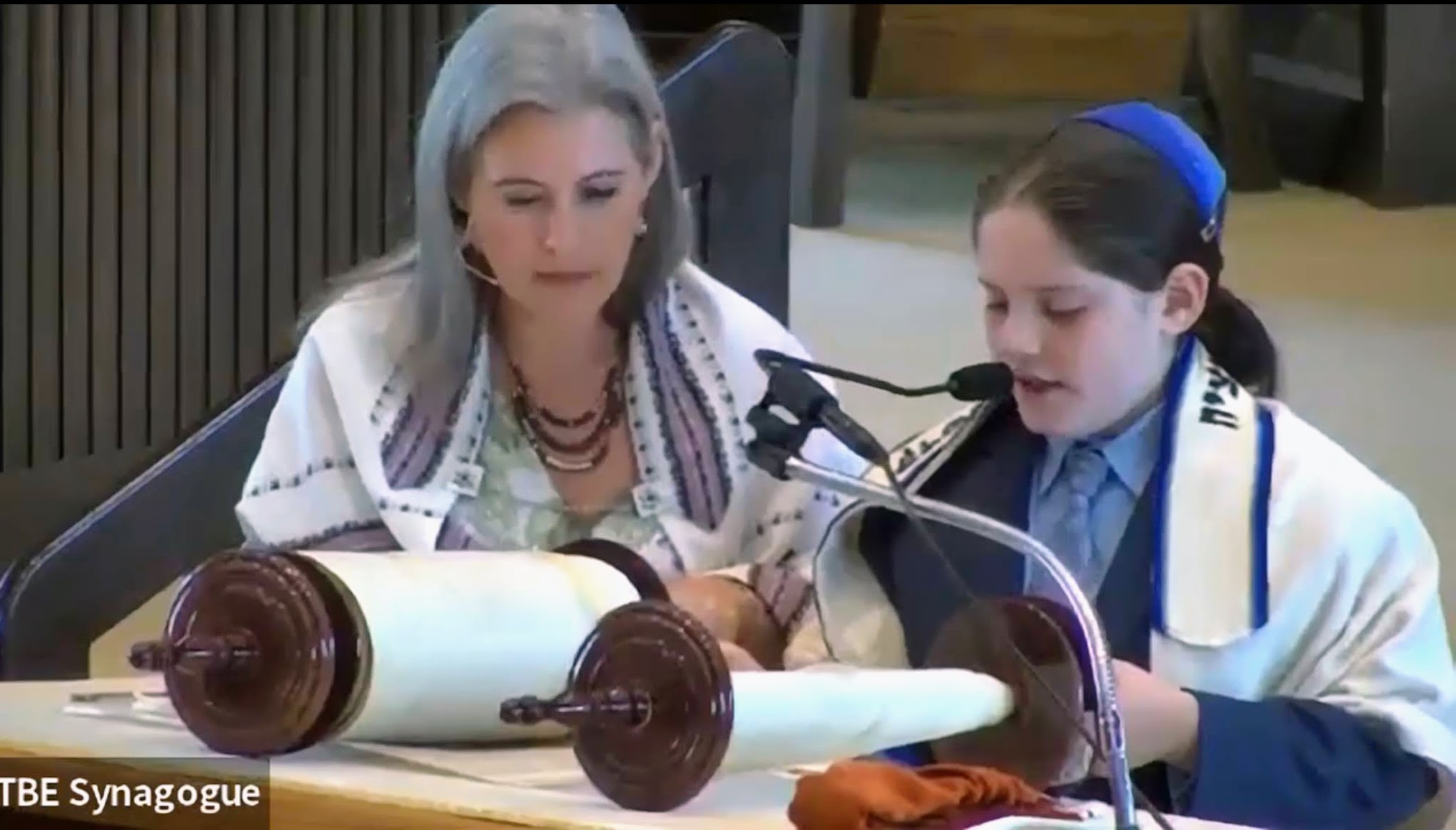
TBE Bar/Bat Mitzvah Commentary, Video and Screen Shots: Ethan Kaplan on Shoftim


Ethan Kaplan’s D’var Torah- Justice with Compassion

Parshat Shoftim- September 3rd, 2022


When I was a little kid, I was always bothered seeing people or animals who were suffering.  I can remember a time when my mom and I were walking and we saw a little bird on the side of the road, that had fallen out of its nest.  The wing looked broken.  I begged my mom to help me help it – and we brought a box filled with towels and picked up the bird.  The next day we brought it to Wildlife in Crisis, which is, by the way, is why I chose that place for my Bar Mitzvah project


I’ve always had a strong sense of justice, combined with compassion… and so I was delighted to hear that the bird was successfully rehabilitated and released.  

My Torah portion of Shoftim states, “Tzedek Tzedek tirdof” – “Justice, justice you shall pursue.”  


Commentators have often asked why it is that the word Tzedek is repeated twice.  Incidentally, the word Tzedek appears in the Hebrew Bible 118 times in all.  So justice was a big priority for our ancestors.  But why twice in a row here?

Some commentators say it’s that just deeds need to be done just-ly.  Or it appears twice in order to emphasize the importance of justice.


I interpret it a little differently. The first time it says Tzedek, it means justice.  But I believe that the second “justice” actually stands for compassion.  Justice by itself is not enough.  It needs to be fueled by compassion. 


One of my favorite games is called Undertail.  For those who don’t know, Undertail is a game revolving around three types of playthroughs. Just like in the real world, in Undertail your choices matter.  At the end of the game, you are judged by everyone’s favorite magically fused skeleton, named Sans.  He’s a comedic genius.  A very funny character – until he is judging you at the end.  Depending on the choices you have made, he will either let you pass or try to kill you.


In the game, if you do not show compassion, for instance by sparing people and not killing them, you will not receive justice. One of the ways to win is called the Pacifist Run, where you spare everyone and save them from the Underground where humans have trapped them a long time ago.


So, I’m going to give you a few examples of moral dilemmas from my portion, and if you make the right call, you win!   These are from two areas that are of great interest to me: The environment and war.


Shoftim says that if you are surrounding a city during a war, there is one thing you shouldn’t do. Is it:


  1. Chopping down fruit trees?

  2. Throw a cat at it?

  3. Give them an Aliyah?


The right answer is 1 – we’re not supposed to ruin the environment, even if we need to fight a war.  After all, what did the trees do to harm us?  This is the basis for the Jewish view on saving the environment.


And here’s our second and final question: when the nation is about to go to war, the leaders have to do one thing first.  What is it?


  1. Offer the enemy a chance to make peace.

  2. Challenge the enemy to a Pokémon battle

  3. Sneak up to the enemy and tickle their toes.


The answer is 1, offer them terms of peace.  Even in a time of war, it’s important to pursue justice - justice with compassion.


For my mitzvah project, I started a GoFundMe page to donate to Wildlife in Crisis, which helps save animals like my bird.  We are also collecting things like cat food, puppy chow, paper towels and other items which you can see in my bimah baskets and listed on the back page of my booklet to give to them as well.  I look forward to bringing these donations to Wildlife in Crisis and continuing to support this organization for years to come.




Friday, September 6, 2019

TBE Bar/Bat Mitzvah Commentary: Sydney Marks on Shoftim


Shabbat Shalom!

My portion of Shoftim revolves around the theme of justice – it includes the famous phrase, “Tzedek Tzedek tirdof,” “Pursue Justice!” – and it talks about how we should work to make this a better world.

It’s a perfect portion for me – because I have a very strong sense of right and wrong….I’m right and you’re wrong 😊

Seriously, I’ve always been concerned about justice - I watch the news more than many other teens and I’ve been troubled by how kids are being treated at the border and about racism and discrimination everywhere.

But I have a special concern for environmental justice.  We are living in a world where my generation has reason to worry about the impact of climate change on our own lives, not just on those generations who will come after us.

When I was in 5th grade I was researching how kids in India and other parts of Asia have to wear masks all the time because their air is so polluted. And I can recall some of the big storms we’ve had here, that have been made worse by climate change.  

My clearest memory of Hurricane Sandy was that when we heard how bad it was going to be, my brother and I moved all our stuffed animals to the living room and built a fort around them to protect them.  As I’ve grown up, I’ve come to realize that stacking blankets and pillows with stuffed animals won’t protect us for long. We’ve got to change our world and we can begin in small ways, by recycling.

It so happens that the basis for the Jewish approach to the environment is found in my portion.  In chapter 20 of Deuteronomy, verse 19, it says, “Don’t cut down trees when besieging a city.”  לֹא-תַשְׁחִית אֶת-עֵצָה

And then the verse asks, כִּי הָאָדָם עֵץ הַשָּׂדֶה, לָבֹא מִפָּנֶיךָ בַּמָּצוֹר

“Is a tree an enemy soldier that you need to make war on it and destroy it?”

From this verse the rabbis came up with the concept of “Bal Tashchit,” teaching us how important it is to recycle and not waste.  For Jews, nothing should be wasted.

The Talmudic sage Rabbi Ishmael taught: if the Torah warns us not to destroy fruit trees, then we should be even more careful about not destroying the fruit itself. This applies to all food that is fit to be eaten, and not only the fruit of trees.

According to a 2011 study commissioned by the Food and Agriculture Organization of the United Nations, “Roughly one third of the food produced in the world for human consumption every year — approximately 1.3 billion tons — gets lost or wasted.”  In the United States, less than three percent of this waste is recovered and recycled.  We need to do better.

Two years ago, my family did what the temple did a few years prior, we put solar panels on our roof.  I know that already we’ve saved a lot of energy and put less carbon into the atmosphere.  There are lots of other ways to make the world greener.  A few months ago, Connecticut started enforcing strict laws keeping us from using plastic bags at the supermarket.  I’m happy to say that my family has always done this.  Ever since I can remember, we’ve brought recycled bags to the supermarket.  We also use LED bulbs at home, which saves energy and makes things brighter too!

My mitzvah project is also related to the environment.  I’m donating to an organization called “4 Ocean,” which makes bracelets like this one that I have on my wrist.  Each bracelet is made with one pound of trash taken from the ocean.  Of course, the trash is cleaned!

You can order your own from the website for $20, or you can buy one of these necklaces like the one I’m wearing, which I will make for you $5 and then donate the money to “4 Ocean.”  Since 2017, 4 Ocean has removed over 6 million tons of trash from the ocean.  4ocean is a global movement actively removing trash from the ocean and coastlines while inspiring individuals to work together for a cleaner ocean, one pound at a time.

And that’s the only way to fight climate change and save the earth – one mitzvah at a time.

Thursday, September 15, 2016

TBE Bar/Bat Mitzvah Commentary: Shane Neyer on Shoftim

Those of you who know me know that I love water polo. Ive been on a team for several years.  We won the tournament this year. 

One of the aspects of water polo that makes it so interesting is that so much takes place, literally, beneath the surface, where people cant see whats going on. 

Some of those people who cant see whats going on happen to be referees.

The rules say there should be no kicking of opponents under the water.  But in truth, everyone is kicking.  And not only are they kicking, but many use sneaky tactics to try to draw the opponent into a foul.  I must admit that from time to time I do that too.

My Torah portion, Shoftim,  speaks all about the nature of justice. The most important verse states, “TZEDEK, TZEDEK TIRDOF.”  “Justice, Justice You Shall Pursue.”

Why is the word “Justice” repeated?  One commentator suggests that not only should we pursue just goals, but we should use just and fair tactics to reach those goals.

In other words, the Torah seems to be suggesting that we shouldnt pretend that we are drowning in the water polo pool just to get the ref to penalize the opponent.  And not only that, but in basketball, players shouldnt flop to draw fouls.  And in football, receivers shouldnt fall down to draw pass interference penalties.

The fact is that things, in life as well as in sports, are more complicated than the Torah seems to be saying.  Theres a lot of gray area between whats legal and whats not.  For instance, in baseball, you need to know the umpires strike zone, which may not be exactly the same as the rule books.  In water polo, as well, different referees will call a game differently.

So, in other words, I never try to do anything that is illegal in the pool – I just am aiming to find that right balance between what is legal and what is acceptable.  In other words, what we can get away with… uh, I mean, what the judges will allow.

Life is very complicated.  The fact is that, on the roads, many people drive through yellow lights.  I even know someone who speeds up.  Some people even drive over the speed limit! Can you believe that!!!!  Its not technically legal, but is it really a crime?

Part of growing up, and part of becoming a Bar Mitzvah, is gaining the wisdom and experience to know in real life just what the boundaries are between the letter of the law and the spirit of the law.

Maybe the reason the word “justice,” “tzedek,” is repeated is that the first one is talking about the letter of the law and second is talking about the spirit.

So maybe that verse in the portion is actually giving me permission to draw fouls on my opponents in the pool…..  Or maybe not ()


Meanwhile, a form of the word tzedek, justice, is tzedakkah, or charity.  When we give charity, we are making the world a more just and fair place, especially for those who arent as fortunate.  With that in mind, Ive chosen to have the  Special Olympics as my mitzvah project.  My grandpa coaches it in weight lifting and swimming, and he asked me to help out one day.  Ive been doing it for a while, now, and plan to continue. Ill also be making a donation to that worthy cause.  If anybody would like to donate their time and volunteer to help out or donate some money, there will be a table in the lobby.

Wednesday, September 7, 2011

TBE Bar/Bat Mitzvah Commentary: Sarah Druckman on Shoftim

Believe it or not my Torah portion today is not Noah and the great flood, even though that may be the most appropriate, given this past week’s events. I am so relieved that we are all here together celebrating my Bat Mitzvah, with electricity -- and with the Rabbi.

Today my Torah portion is Shoftim, which means “judges”. Shoftim is a fascinating and very complex torah portion about all kinds of things from soothsayers and black magic, to chopping down trees during war, to unusual rituals around unidentified murder victims. So when I first read it my initial thought was, “what the heck?” and then “I don’t get it” and then, “what does this have to do with me or my bat mitzvah?” But with a little help from the rabbi, some guidance from www.writemybatmitzvahspeech.com and some parental advice, I realized that this portion is about judging, and this, I know something about.

My portion gives judges three pieces of important advice. They are:
• Don’t favor the rich or poor
• Don’t take a bribe, and
• Pursue justice, justly
I would like to think that I practice all three. As for not favoring the rich or poor, my Mizvah project focused on helping feed hungry kids in America. This has shown me first hand not to consider myself any better than anyone else simply because I have enough food to put on my table. Especially in today’s unstable economy, I have learned that people from all walks of life can find themselves without enough money for food.
As for not taking bribes – well I’m only 12, what do I really know about that? But I can say with confidence that I never would try to bribe or influence the judges unfairly at my dance competitions.

The most important advice is the last one which in Hebrew is Tzedek, Tzedek Tirdof which I recited in the first torah portion today. The scholars wonder why the word Tzedek, justice, is repeated twice. One response is that it is not enough to pursue justice but you have to do it justly.

Over the past few years I have had many experiences of both being a judge and being judged. In my last two years of middle school I have learned not to quickly judge others. I have found that I need to use my own judgement about people and not be swayed by gossip or rumors. This is not always so easy as a teenager. It is easy to get caught up in wanting to fit in by going along with the popular opinion. I am proud that I can stand up for what I believe in and feel confident in my actions.

For the past 5 years I have been on a dance competition team where a group of judges evaluates our team performances and scores us against the other teams. This year I competed my first solo dance performance. This was the first time that I was alone on stage being judged independently (which was great practice for today). As Shoftim discusses, judges should be fair and impartial. There were times when I felt I was judged justly and other times, maybe not so much. But rather than let the judges scores discourage me, I use their feedback to strive to improve my skills and try harder the next time.


If there is one thing you take away from today’s torah portion, always remember to judge others justly. If someone wrongs you, confront it and deal with it fairly rather than seeking revenge or staying angry. Remember: tzedek tzedek tirdof!

Thursday, August 12, 2010

Anguish, Amichai and Warfare

This week’s portion, Shoftim, contains the basis for the value system behind Jewish warfare. Judaism is not pacifist – hardly – but it does very much believe in war as a last resort and as viable only when it is moral. Am excellent and comprehensive summary of the halachic position can be found here, at the site of Jlaw. It’s entitled "Fighting the War and the Peace: Battlefield Ethics, Peace Talks, Treaties, and Pacifism in the Jewish Tradition," by Michael J. Broyde. Also see this article for related information on this subject.

Maimonides included several laws of warfare in his listing of the 613 commandments in the Torah, and he placed them “last but not least.” To see them, scroll down to the bottom of http://www.jewfaq.org/613.htm.

It’s a complicated topic, one that I have spoken about frequently. We need to understand it, but understanding, alas, will not help us to overcome the helplessness we all feel in a world where the ethics of warfare have become so murky.

The great poet Yehuda Amichai probably expresses that frustration better than anyone. See his poem, "I Want to Die in My Own Bed," as one example, as well as "Temporary Poem of My Time". Check out the home page of this site. It’s very moving.

Amichai ironically died just days before the second intifada erupted. Despite his death, his quintessentially human voice became the “voice of Jacob” as the fires raged, however, even in translation.

Perhaps his most oft-cited poem with regard to warfare is “The Diameter of the Bomb.”


The diameter of the bomb was thirty centimeters
and the diameter of its effective range about seven meters,
with four dead and eleven wounded.
And around these, in a larger circle of pain and time,
two hospitals are scattered and one graveyard.
But the young woman who was buried in the city she came from,
at a distance of more than a hundred kilometers,
enlarges the circle considerably,
and the solitary man mourning her death at the distant shores
of a country far across the sea includes the entire world in the circle.
And I won’t even mention the crying of orphans that reaches up to the throne of God and beyond,
making a circle with no end
and no God.