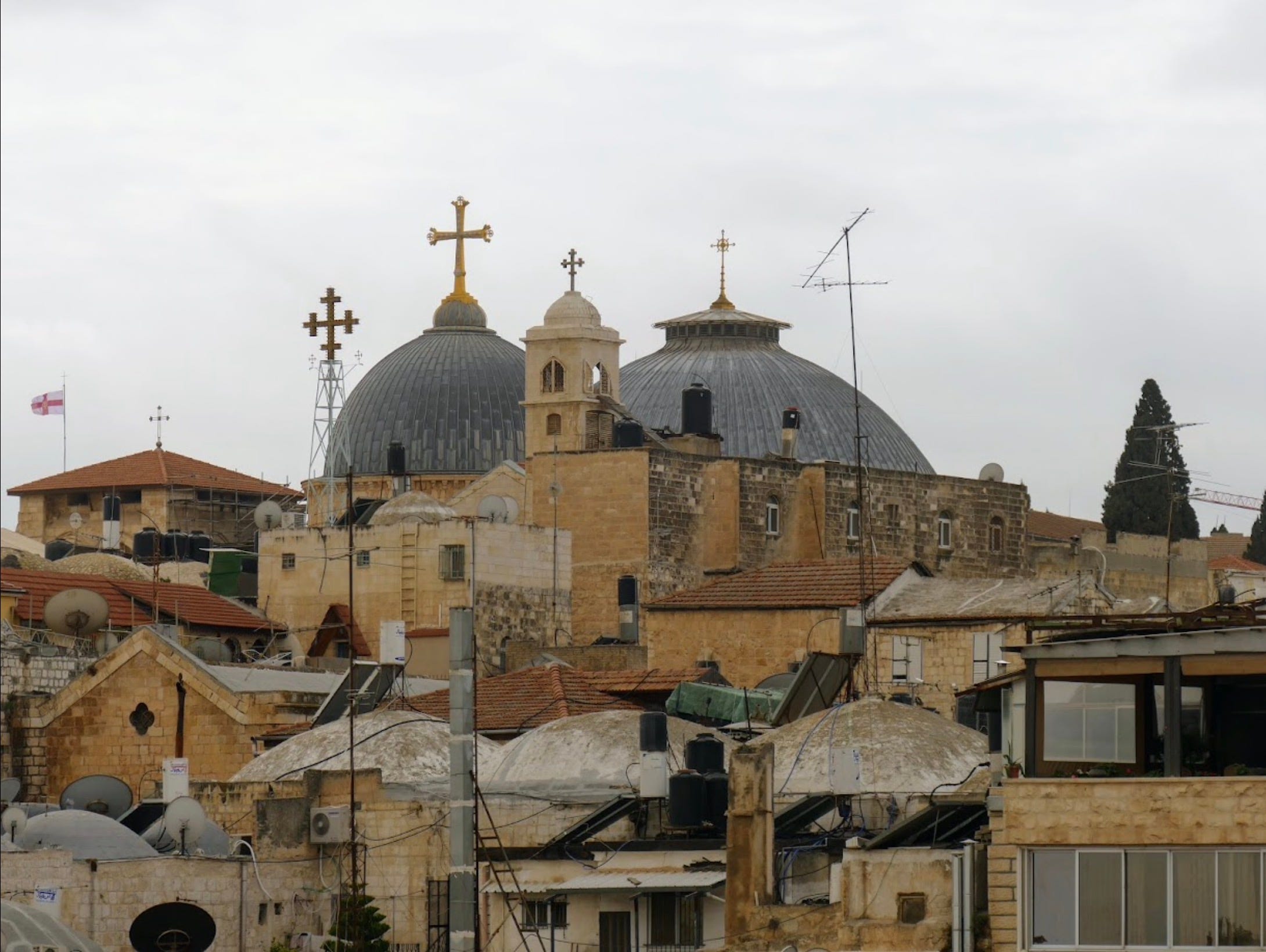
Iranian missile shrapnel landed perilously close to the Church of the Holy Sepulchre in Jerusalem today, and not far from the Knesset and Israel’s National Library.
Along with many other American Jews, particularly of the rabbinic ilk, I’ve been corresponding with friends here and in Israel these past few weeks, trying to get a handle on why almost all Israelis support the current war (for now), while the vast majority of Americans do not. American Jews, many of whom feel “damned if you do, damned if you don’t” with regard to this war, are in a state of epic confusion, not just about the war, but in some cases, about being Jewish altogether.
I’m hearing from people, particularly former students, who want my take on that question. I’ve spent a lifetime hoping to promote Jewish values and peoplehood, but the challenge has never been so great, nor the confusion so acute, as now.
I would love to hear your take, whether you are Jewish or not.
In my desire to take a crack at this, I’m calling in the cavalry.
I’m sharing here, with his permission and in its totality, the perspective of one well-known thought leader, my colleague and long-time friend, Rabbi Irwin Kula, one of the great Jewish visionaries of this generation. This essay was actually shared in the Substack of Professor Shaul Magid, a noted intellectual in his own right, and it moved me greatly. In it, Irwin is responding to a defense of Israel written last week by Alana Newhouse of Tablet, entitled Zionism for Everyone, which is well-worth reading in tandem with Irwin’s.
Irwin’s complete essay is at the bottom. Here is one key passage:
The people who most loudly claim to be defending Jewish civilization seem, in this moment, least in contact with that tradition. What genuine fidelity to Jewish moral seriousness requires right now is not a more elegant defense. It is the willingness to pause, to feel the weight of what is happening to human beings made in the image of God on all sides, and to ask with honesty the question teshuvah demands: how did we get here, and what is our portion of responsibility for where we are?
That is not a betrayal of Zionism. It may be its only redemption.
I also want to share a link to a related Substack essay, by Yehuda Kurtzer of the Shalom Hartman Institute, entitled Daylight.
He comments that this war is the first time where American and Israeli public opinion has meaningfully diverged, with Israelis expressing overwhelming support for it and Americans the opposite - with American Jews caught in the middle (and simultaneously facing steep antisemitic blowback).
Kurtzer, whose father Daniel was once US Ambassador to Israel (and at one point to Egypt too), knows what it’s like to have close ties to both countries. He writes that while “daylight in the US-Israel relationship may be inevitable, daylight in the relationship between American and Israeli Jews need not be. Peoplehood should not demand the kind of loyalty that would require us to subordinate our profound and different political needs and interests that stem from being good citizens of different societies.”
Jews have gotten used to being counter-cultural, often standing on the margins to offer honest criticism where needed, to be the voice of the prophet to counter a consensus marching in lockstep.
In war, it becomes even harder to accomplish, particularly in a media environment that suppresses news that doesn’t fit the official narrative, as happens often in Israel, or when leaders apply extraordinary pressure to suppress truth entirely, as we increasingly are seeing here. We saw it from the White House just today, when Trump’s unhinged media-bashing included cries of treason.
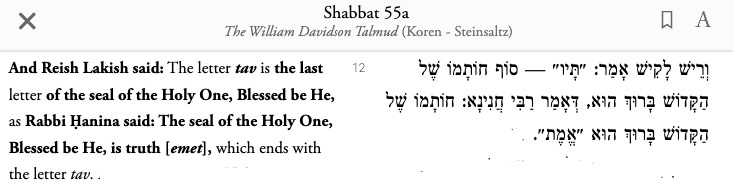
It’s hard to tell painful truths, but that is precisely what makes me so proud to be a Jew. We are able to do that because we are required to do that. Transparency is the best policy, and the Talmud informs us (Shabbat 55a) that “God’s seal is truth.”
And in tractate Avot we read:
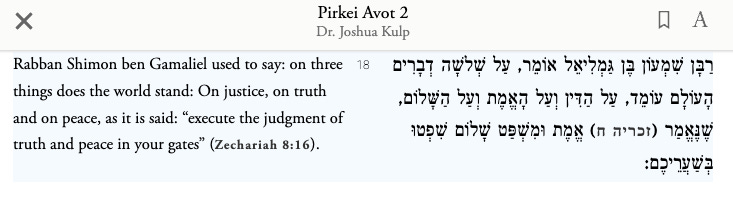
But truth is not the end of the story. Why be Jewish? Well, because, as Alana Newhouse describes, the Jewish state has the potential to bring civilization to a higher level, to provide “a blueprint for human defense and flourishing in the coming century.”
But at the same time, the Torah provides a blueprint for morality, reaching out to one’s neighbor, seeing the Other as one created in God’s image, and of taking ownership of one’s misdeeds rather than sweeping them under the rug. And as Irwin Kula suggests, it requires an ability to lament as well, to grieve the loss of one’s own and others, and those losses one has helped to engender.
Somehow, we’ve forgotten how to do that. We’ve lost our sense of shock when children are killed needlessly in school shootings, missile attacks or bombings, or from hunger. We’ve forgotten how to lament. That’s a fatal flaw in Newhouse’s essay, according to Irwin Kula:
The Jewish tradition has an extraordinarily rich vocabulary for sitting with devastation without converting it into argument — Lamentations, the kinot, the entire tradition of arguing with God, of refusing to make the suffering of the innocent theologically tidy. The scroll of Eicha doesn’t answer the how. It cries it. But Newhouse doesn’t offer a single moment of grief.
That “rich vocabulary” that Jews have to express grief, empathy, and a ceaseless quest for justice and truth, all of these - including Israel’s accomplishments, are why I’m prouder than ever to be Jewish. They are why Jews have never been so essential to the world, and why autocrats, including ones who call themselves Jews, want to neutralize us. We are required to both stand apart to resist peer pressure and yet not to separate from the community. It’s quite a balance that we need to strike. But neither my Jewish moral sensibilites nor my deep loyalties will preclude me from standing against the tide when Israel - and in particular its leadership - does something that can’t be defended.
As I send this out on Monday afternoon, my phone tells me that rockets are falling on Israel once again. This morning, fragments of Iranian missiles fell in Jerusalem, perilously close to the Church of the Holy Sepulchre. In the before-days, Jerusalem was supposed to be off limits. Now that rules no longer apply, it appears that even when it comes to the holy places, nothing is sacred.
Here is Irwin Kula’s essay in full:
“The Sophistication of the Defense: A Critique of Alana Newhouse’s ‘Zionism Is for Everyone’”
Irwin Kula
Alana Newhouse’s recent essay in Tablet, “Zionism Is for Everyone,” is a remarkable piece of writing — erudite, wide-ranging, and in places genuinely illuminating about the civilizational crisis facing Western liberal democracies. It is also, I want to argue, a deeply troubling document - not despite its sophistication but because of it. The essay’s intellectual ambition serves, in the end, as an elaborate permission structure for avoiding the one thing the current moment most demands — honest moral reckoning with what Israel is actually doing, right now, to actual human beings. What follows is an attempt to name what the essay accomplishes, and what it forecloses.
Newhouse’s article is a 6,000 word argument affirming that Zionism now serves as no less than the “civilizational model” for the West. This written during Israel’s ongoing military campaign in Gaza that has killed tens of thousands of civilians, displaced nearly the entire population of a territory, and generated genocide proceedings at the International Court of Justice — while simultaneously at war with Iran and Lebanon, and accelerating the annexation of the West Bank. Israel is described positively as passing the “survival test” of self-defense. Gaza is mentioned once — as the location of an invasion ordered “in response to” October 7th, with the Hamas atrocities detailed and the subsequent two and a half years of devastation elided entirely. Iran and Lebanon appear only as theaters of Israeli military prowess. The West Bank does not appear at all. This isn’t an oversight. It is the essay’s organizing psychological move - a defensive operation requiring that the thing being defended against — the actual moral weight of what Israel has and is doing — never be allowed to fully appear.
In its place, Newhouse offers something that can only be described as fantastical triumphalism. Israel is not merely a legitimate nation state deserving of security and support. It is, in her telling, “a blueprint for human defense and flourishing in the coming century” — the answer to the civilizational crisis of the entire Western world, the model for Argentina and Singapore and India, the heir to Herder’s theory of peoplehood, the fulfillment of a 3,500-year national aspiration, and now the template for everyone else’s national renewal. The extraordinary, almost ecstatic sweep of this claim is itself diagnostic. When reality on the ground includes tens of thousands of dead civilians, the systematic destruction of a civilian infrastructure, and credible accusations of war crimes, the only way to remain fully detached from any ambiguity, any moral qualm, any flicker of self-questioning, is to inflate, as Newhouse does, the counter-narrative to a scale that makes the darkness literally invisible. The fanaticism of her claim — Israel at the center of the revival of Western civilization — is proportional to the intensity of what Newhouse is keeping out. This is ethno-nationalism not merely as politics but as psychological fortress and the grandiosity of the vision is the measure of the armoring required to sustain it.
This sophisticated defensive posture — well-constructed, intellectually serious in places, engaging on questions of nationhood and identity — is essentially unfalsifiable by design. Any critique, however carefully argued, however grounded in Jewish values, however compassionate toward both Israelis and Palestinians, will be metabolized by this framework as antisemitism, or as naïveté, or as envy. The essay has pre-loaded its responses. Critics are either projecting Western civilizational failure onto Israel, or they are failing to understand the true nature of the threat, or they are unconsciously longing for Israel’s national vitality they themselves have lost. Disagreement becomes evidence of pathology. The defense is self-sealing. This is what makes Newhouse’s essay not merely over the top but dangerous. It is constructed precisely to make accountability impossible, and to make the attempt at accountability feel like betrayal.
Newhouse writes with tremendous velocity — from Houellebecq to Herder to the erev rav/mixed multitude to Javier Milei to Olympic skating to Yiddish proverbs — and this velocity serves a function. Manic defenses work precisely by keeping the mind in motion, generating enthusiasm and connection faster than anxiety or grief can consolidate. Newhouse is brilliant and the associative leaps she makes are often illuminating. But her breathless pace is not incidental to the argument — it is the argument’s immune system. Any reader who slows down to ask “but what about the 1000 children under one years old killed in Gaza?” will find themselves already three paragraphs ahead, learning about multiple ethnoses, an HBO series, effective altruism, and Olympic skater Alysa Liu.
The most telling diagnostic is what is entirely absent from the essay’s 6,000 words: lament. The Jewish tradition has an extraordinarily rich vocabulary for sitting with devastation without converting it into argument — Lamentations, the kinot, the entire tradition of arguing with God, of refusing to make the suffering of the innocent theologically tidy. The scroll of Eicha doesn’t answer the how. It cries it. But Newhouse doesn’t offer a single moment of grief. Not one acknowledgment that children are dying and literally millions of innocent people suffering. Not even one mention of moral injury to Israeli combatants. Not one beat of tragic consciousness — the sense that even if everything the author argues is correct, something irreplaceable is being lost and that loss deserves to be felt and mourned before it is explained. This absence is not accidental. A manic defense requires the suppression of lament because lament is precisely the crack through which the defended-against material would enter. To grieve even one dead Gazan child — genuinely, not performatively — is to begin to feel the full weight of what is happening, and that weight cannot be felt while the defense is simultaneously maintained. Newhosuse’s warmth, her wit, the intellectual excitement, the cute Yiddish sign-off — all of that remains. Lament is surgically removed.
This moral coarseness is not a character defect. It is a psychological achievement — something that required the gradual suppression of our more naturally responsive moral sensibility. People who write with this author’s intelligence and passion don’t start out unable to feel the burden of civilian deaths. That capacity had to be managed, contained, redirected. And the energy required to do this managing shows up as the essay’s velocity that never pauses long enough for feeling to consolidate. What is being defended against is almost certainly a combination of grief, guilt and shame that, if fully felt, would be at least temporarily unbearable: sadness at the loss of a dream, guilt for what is being done, and shame — more primitive, more destabilizing — for what it means about the community one loves and has organized one’s identity around.
In arguing Zionism is the “civilizational model” for a West in crisis, Newhouse offers survival tests for free societies that she claims, as of today, only Israel passes. The first, “Can you defend yourself?” is framed entirely in terms of military courage — the Air Force commander flying with his pilots into battle. But the capacity for military self-defense and the ethics of how that capacity is used are entirely different questions. A country can be both genuinely brave and genuinely wrong in what it does with that bravery. The essay collapses this distinction without acknowledgment. A second test “Are you happy?” — cites Israel’s high happiness scores amid war as evidence of national vitality, with no consideration that a society’s psychological relationship to the suffering it is causing might itself be a moral and civilizational datum worth examining.
By grounding national legitimacy in cultural distinctiveness and future-orientation, the essay creates a framework in which Palestinian national claims simply cannot appear. Palestinians are never described as an ethnos with their own mix of language, religion, land attachment, and historical memory — even though by the essay’s own criteria they clearly constitute one. Their absence from the framework is total. This isn’t argued; it’s assumed. The essay discusses the erev rav, Herder’s genetic method and Ruth the Moabite with intellectual generosity, but the people actually living in Gaza and the West Bank are not granted the analytical dignity extended to Bulgarians or Slovenes.
Newhouse’s most audacious claim that anti-Zionism is really Western envy — that critics of Israel are unconsciously longing for what they cannot achieve — is a sophisticated version of a closed loop. Disagreement becomes evidence of pathology, which means it cannot be engaged as disagreement! This is particularly troubling coming from someone writing with apparent psychoanalytic awareness, because the interpretive move of turning critique into symptom is precisely what psychoanalysis, at its best, is supposed to guard against. It can be deployed to make any position unassailable. The essay uses it to inoculate Israel against criticism without having to answer the criticism.
The author lists Narendra Modi alongside Argentinian President Javier Milei and the late Lee Kuan Yew as practicing “Zionism for their own people.” How unnervingly revealing given Modi’s government has systematically dismantled India’s secular constitutional framework, overseen anti-Muslim violence, stripped citizenship from millions of Muslims, and presided over what credible scholars describe as a Hindu nationalist project defined by ethnic and religious exclusivism. Including him without a word of qualification reveals something important - in this framework, the actual content of nationalist policy — what it does to minorities, to dissidents, to democratic norms — matters less than the forward-looking energy and cultural particularity it projects. This is a genuinely dangerous criterion, and one that should alarm anyone who cares about what Zionism and Judaism actually stand for.
Writing this I know that the answer to a sophisticated defense is not counter-sophistication. Newhouse’s implied audience is people who are already persuaded or nearly so — sophisticated defenders who want a more elegant vocabulary for a position they already hold. But this won’t help people who are genuinely troubled, who are holding the tension, who haven’t yet resolved the dissonance by collapsing into either uncritical defense or wholesale abandonment of the Jewish community or the Zionist project. Something harder and more demanding is needed - what might be called accountable solidarity — loyalty that can simultaneously hold genuine love for the Jewish people and the Zionist project, honest acknowledgment of Palestinian humanity and suffering, painful reckoning with the ethics of power, and the psychological maturity to tolerate the profound anxiety that comes with not having a clean narrative, let alone a triumphant one. Accountable solidarity does not resolve the tension between communal love and moral accountability. It insists on inhabiting that tension rather than escaping it — because the escape routes, in both directions, come at too high a cost. Newhouse’s defensive escape forecloses accountability. (The activist escape too often forecloses community.) What is needed is the capacity to stay in the tension and to refuse the consolation of certainty in either direction.
The most dangerous thing Newhouse’s essay does is not its politics. It is that it makes thoughtful, influential Jews feel that moral seriousness and communal loyalty are on the same side as uncritical defense — that to question, to grieve, to hold Israel and ourselves accountable is somehow to betray the community, while to defend with sophistication is to honor it. This is a profound inversion. A mature and deeper loyalty — the kind the Jewish tradition has always demanded of those who love it most — runs precisely through the vulnerability this essay is designed to foreclose. The prophets were not the enemies of Israel. They were its most demanding lovers.
In foreclosing vulnerability, the essay abandons one of the Jewish tradition’s most profound moral resources - teshuvah. Teshuvah is not simply repentance in the narrow sense rather it is a practice of rigorous self-interrogation — the willingness to ask, whatever the external causes, however justified the grievances against the other, however real the threats from outside: what have we done that has contributed to where we are? What choices, what uses of power, what failures of imagination or compassion have helped create the enabling conditions for the tragedy we now find ourselves inside? This question does not erase or minimize what others have done. It does not require false equivalence. It requires only the courage to turn the moral gaze, even briefly, even partially, on oneself — which is precisely what the essay’s triumphalist momentum makes structurally impossible.
The people who most loudly claim to be defending Jewish civilization seem, in this moment, least in contact with that tradition. What genuine fidelity to Jewish moral seriousness requires right now is not a more elegant defense. It is the willingness to pause, to feel the weight of what is happening to human beings made in the image of God on all sides, and to ask with honesty the question teshuvah demands: how did we get here, and what is our portion of responsibility for where we are?
That is not a betrayal of Zionism. It may be its only redemption.

No comments:
Post a Comment