Friday, November 15, 2019

Shabbat-O-Gram for November 15

Shabbat-O-Gram 

The Shabbat Announcements are sponsored 
by Julie and Remi Rosenberg in honor of their 
son, Jonah, becoming a Bar Mitzvah.


Traffic cam shows rocket hitting intersection in central Israel

Traffic cam shows rocket hitting intersection in central Israel.  Some 450 rockets have been launched toward Israel since Tuesday, in conjunction with Israel's assassination of an Islamic Jihad terrorist leader.  Just about every Israeli is informed of rocket launchings in real time by the Red Alert app, which I, along with many living outside the land, have also downloaded. You can find it at the iTunes app store by simply searching for "red alert."  It will give you a greater understanding of what Israelis go through all the time.
Ha'aretz reports that a ceasefilre is holding this morning.


And back here in America, there's no shortage of Jewish angles to the current impeachment hearings.  Read about them here.


Shabbat Shalom!

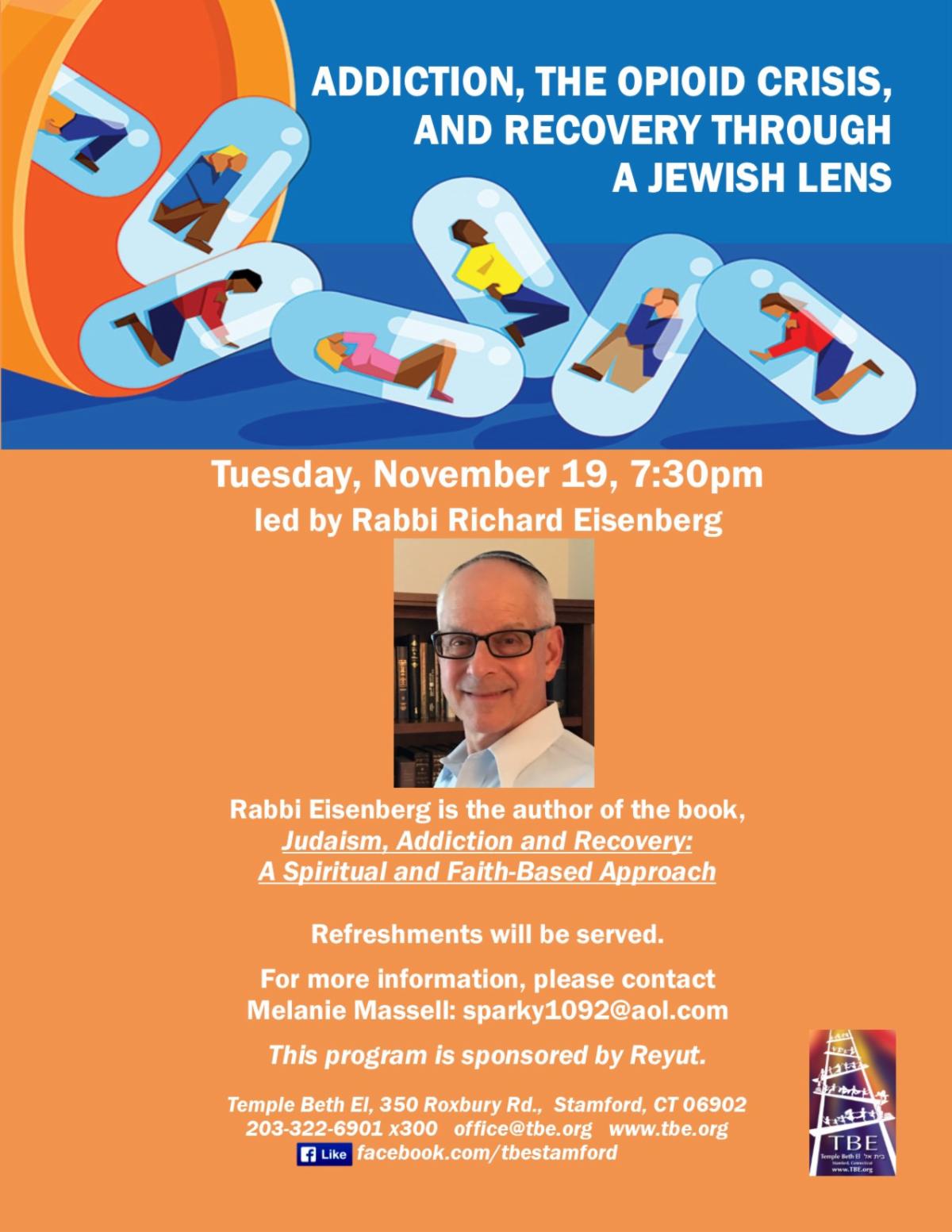
Mazal Tov to Jonah Rosenberg and family as he becomes Bar Mitzvah this Shabbat morning. Get a sneak preview of our weekly portion of Vayera's study packet.  Tonight I'll be joined at services by Cantorial Soloist Katie Kaplan and Koby Hayon, Musical Guest.  (And don't forget to save the date for next Friday's Shabbat Unplugged with the return of Cantor Deborah Jacobson!)  Also, see last week's commentary on Lech Lecha by Bat Mitzvah Lana Busch.  At the bottom of this email, see a flyer for a very important presentation to be held here next Tuesday, by Rabbi Rick Eisenberg, on Jewish approaches to the opioid crisis.


At long last, the Unorthodox podcast taped here in September before a live audience has been released online, featuring an interview with Rabbi Joseph Telushkin. Check it out! And by all means, don't forget to review all about the Fast of Gedalya! (That's an inside joke - you'll need to listen to the podcast).

 
Our Local Hero: Judy Altmann

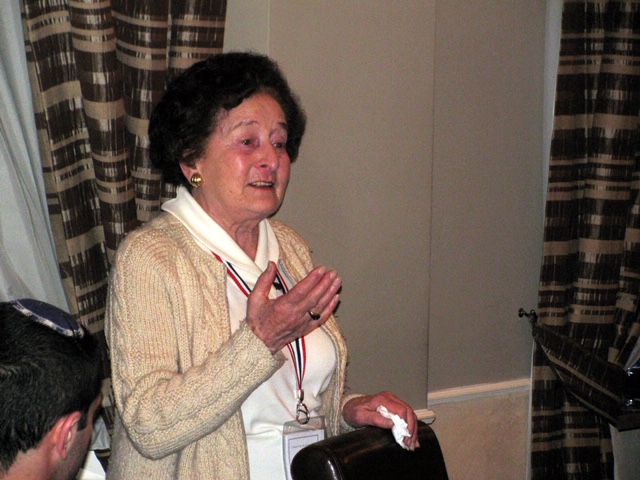
This Sunday, the Jewish Historical Society will be honoring Judith Altmann, along with Agnes Verdes, at its luncheon to be held here at Temple Beth El. Judy was born in Jasina Czechoslovakia, which was invaded by the Nazis in 1939. In 1944 she was arrested and transported to Auschwitz concentration camp with her niece where they were selected for work.  From there she was sent to Essen and Gelsenkirchen Labor camps where she remained until March 1945. She survived the "death march" that ended in the Bergen Belsen concentration camp.  Sick with typhus, Judy was barely alive when she was liberated by the British Army in 1945.  Judy was given the opportunity to go to Sweden. She lived in Sweden until 1948 at which time she immigrated to the United States.
You will not meet too many people who survived both Auschwitz AND Bergen Belsen, but many in our community have been enriched tremendously by her presence.  No one is more deserving of accolades than Judy.


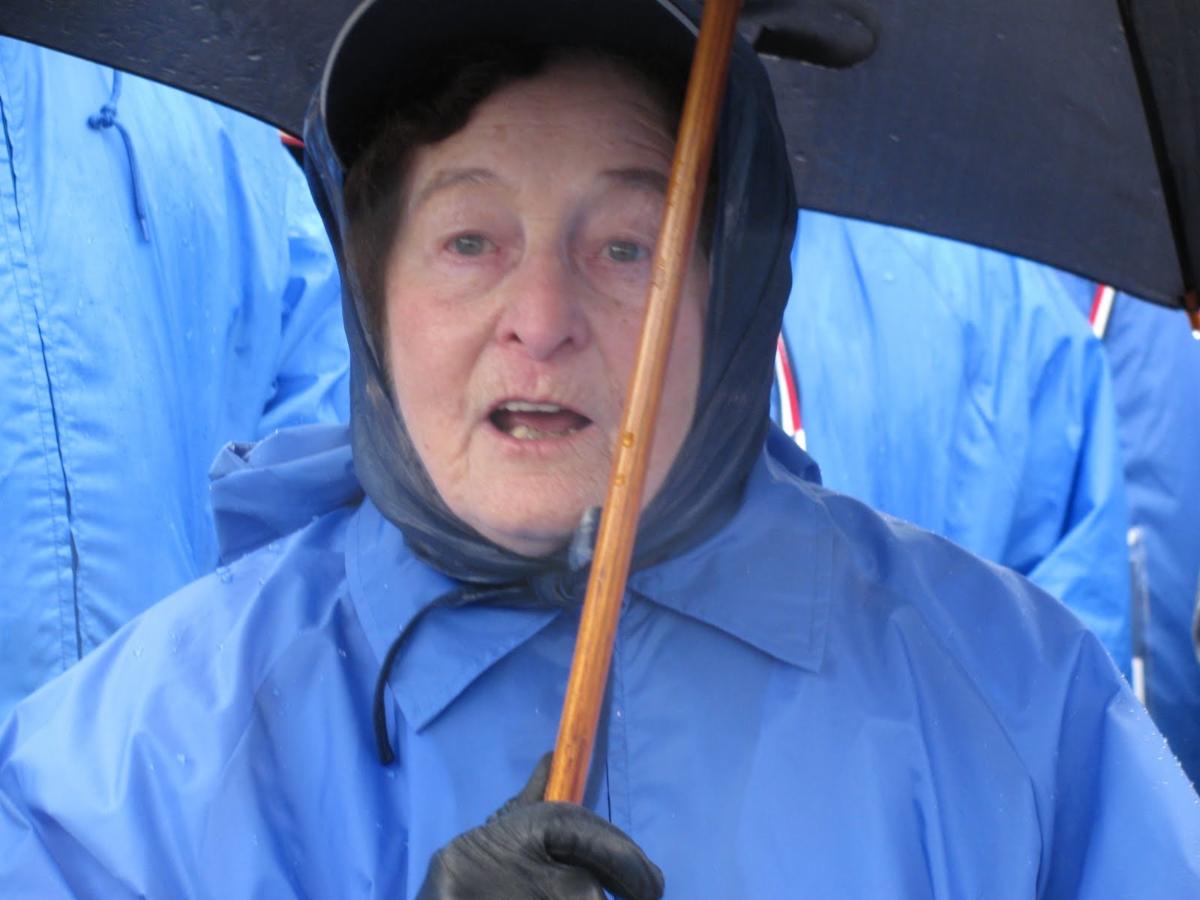
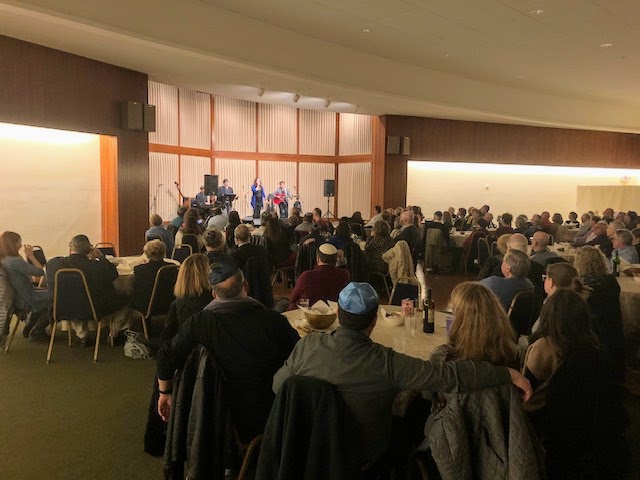
Back in 2010, Judy joined our March of the Living group in Poland.  It was her first time back at Auschwitz, yet she remembered it as if she had just been there.  She brought a few of the teens into the precise barracks where she had been held, and she described the experience of the camp in vivid detail to our group.  She also was invigorated by the march and here verve and excitement brought a note of joy and hope to the whole experience.  Here are some photos from that trip.


Mazal tov to Judy, and Shabbat Shalom

Rabbi Joshua Hammerman

Sunday, November 10, 2019

TBE Bar/Bat Mitzvah Commentary: Lana Busch on Lech Lecha


Shabbat Shalom.
Right at the beginning of my portion, Lech Lecha, God tells Abraham to leave his home. When I read that I thought, “Welcome to my life”
For those who don’t know, one day last March, my mom and my brother were at home when suddenly my dog Lucky, ran upstairs through the invisible fence and started barking at my brother, who noticed her. Then he noticed the smoke accumulating in his room.
At that point, he and my mom ran out of the house and called 911. By the time my dad and I came home, they were 11 fire trucks surrounding our house. The basement was completely destroyed and we have not stayed in the house since.
So I can really relate to what Abraham and his family went through and what they must have been thinking. Some of the things that have happened to me the last 8 months reminded me of Abraham’s ten trials. Many of those trials are described in Lech Lecha.
 While living out of the place you call home, its very hard to get a routine, or expect the same thing to happen everyday, and this is something both me and Abraham can agree on. The positive side is that you get to experience new things and see old things in different ways. Just like how I learned the importance of the items I took for granted, Abraham learned to appreciate Sarah, who of course is not an item, when she was kidnapped in Egypt. Abraham might not have appreciated her beauty before Egypt, but after realizing how everyone wanted a wife like Sarah, Abraham understood how lucky he was to have Sarah as his wife and stopped taking her for granted.
Then Sarah gets kidnapped again, this time by Avimelech, which makes Abraham appreciate her even more than before.
 Then we get the trial of Abraham having to send Hagar and Ishmael away. I too lost very important things that were close to me. I lost a giant 6 foot teddy bear, all the furniture in my room, and my entire collection of remote control cars, which my dad and I built together with my brother. Though, that one is also Lucky’s loss because she loved to chase those around all day.
Of course, this can’t compare to Abraham losing his son, even though God told him Ishmael would be ok and he would have a great nation.
Meanwhile, when the tenth trial came around Abraham didn’t have that same guarantee that Isaac would be alright.
There’s no question but that I’m more grateful for the things I do have. Abraham was able to take all his possessions with him when he left his home. I had no such luck.
It’s safe to say that in the end, possessions weren’t what mattered most to me or Abraham. What mattered to him was having a future. What matters to me at this point is not to rush back into the rebuilt house, but to accept what I have, and to appreciate whatever I have, no matter how big or small, and try to make the best of things wherever I am. Because home is not where my house is, but where my family is - especially Lucky!!
 For my bat mitzvah project I am collecting cat and dog items for Pet Animal Welfare Society. PAWS is a no kill animal shelter in norwalk connecticut that helps animals, mainly cats and dogs, in ways like making sure they are healthy and giving them homes with people who will help them live long and happy lives.
Reading and studying my portion, Lech lecha and my past year, has really made me think about what having a home is like. And what a great feeling it is to have a home, so donate what you can so that the animals at PAWS can have a home too.

Friday, November 8, 2019

Shabbat-O-Gram for November 8: Veterans Day and Kristallnacht

Shabbat-O-Gram 

LAST WEEKEND...
  Prof Stephen Berk speaking last Sunday about the Jews of Cuba.  
Our TBE group  - 38 strong - departs for Havana on March 15.


Neshama Carlebach inspired and delighted us on Friday and Saturday evenings

Our 8th graders hit the RPM Speedway last Sunday!


Shabbat Shalom

Mazal Tov to the family of Lana Busch, who becomes bat mitzvah here this Shabbat morning.   Join us tonight for services at the special time of 6 PMWe set this time so we could accommodate two types of Shabbat dinners, one at 5 PM for families with young children, and a pot luck dinner after the service, at 7 PM, for the congregation-at-large. You can sign up for the potluck here. Thank you to TBEConnect for putting together this program, which offers the chance for us to linger over Shabbat dinner in the traditional manner, after the conclusion of evening services.  You can get a sneak preview of our Torah discussion for tonight here (and a more comprehensive guide here).  For Shabbat morning, we'll discuss, in the spirit of Abram and Sarai, "What's in a Jewish Name (and why we change them).

  
Never is Now! 

TBE will be sending a group to the day-long summit on anti-Semitism and hate, "Never is Now," to be held in Manhattan at the Javitz Center on November 17.  You can read all about it here.  If you are interested in attending, the fee is $225, but if we can get a group of 10, the fee drops 18%.  When you sign up at the website, use the following code: NINTBE
Then, email Dana Horowitz, who is coordinating TBE's involvement, at danalhorowitz@gmail.com.   Check out https://www.neverisnow.org/

Torah, Redeemed

I'm happy to announce that we have successfully concluded our "Redeem the Torah" fund.  Last Friday at 2:36 PM, we passed the 40 donation mark, so now no one will need to fast for 40 days following the unfortunate fall of one of our scrolls.  I joked last weekend that the curse was magically lifted and that our candelabras suddenly transformed into human beings and started singing, "Be Our Guest." But in all seriousness, there is no shortage of discomfort when a Torah falls and that angst often spills over into the realm of the cosmic.  Superstition may be misguided, but the feelings are real.  We needed to get the universe back into balance, and, through Tzedakkah, we did.

While the urgency of the Torah drive has been alleviated, the urgency of hunger has not.  So, with Thanksgiving approaching, please do continue to donate to any of these charities, or to others of your choice.  

The Legacy of November 9


This weekend marks the 81st anniversary of Kristallnacht.  On November 9 to November 10, 1938, in an incident known as "Kristallnacht", Nazis in Germany torched synagogues, vandalized Jewish homes, schools and businesses and killed close to 100 Jews. In the aftermath of Kristallnacht, also called the "Night of Broken Glass," some 30,000 Jewish men were arrested and sent to Nazi concentration camps. German Jews had been subjected to repressive policies since 1933, when Nazi Party leader Adolf Hitler (1889-1945) became chancellor of Germany. However, prior to Kristallnacht, these Nazi policies had been primarily nonviolent. After Kristallnacht, conditions for German Jews grew increasingly worse.  Read more background here.

The tragic aspect of all this is that Hitler could still have been stopped, even then, had the world called his bluff.  The world did not.   The "great appeasement" of Hitler is usually ascribed to Neville Chamberlain at Munich in 1938.  But in truth, it was Kristallnacht, just a few weeks later, that was the most appalling appeasement of the dictator, and the entire world was at fault. 

Hitler's bluff could have been called much earlier too. November 9, which has become a defining date in modern world history, was also the date of Hitler's infamous Beer Hall Putsch, in 1923. A recent article in the New York Times reminds us how there was nothing hidden about the man and his insidious methodologies, even as early as 1919, when he basically invented modern propaganda.  The very fact that he had the opportunity to write his masterpiece of incitement and manipulation, "Mein Kampf," during a brief stint in a comfy jail, after he had tried to bring down the government in that Munich beer hall, shows us how the danger was ignored by those who should have known better.  The man committed treason, but the punishment did not fit the crime.  He spent only nine months in prison.

In "Mein Kampf," Hitler wrote lots of insidious things, one of them being that propaganda "must confine itself to a few points and repeat them over and over."  Hitler and the Nazis repeated again and again a simple slogan to discredit the press: "Lügenpresse." Today the extreme right in Germany has revived this term, which in English is "fake news." 

David King, author of the recent book, "The Trial of Adolf Hitler," writes, "Hitler wasn't very well known before the Putsch," King explains. "He sounded funny, almost like a buffoon. He wanted to take over [the Weimar] government, but instead of taking over a military barracks, he took over a beer hall.  Hitler and his troops fired a shot and declared a national revolution. Later in the shoot out, a bullet missed Hitler. By Sunday morning he was arrested." 

If only the buffoon had been taken more seriously, when everyone thought he was so harmless and amusing.  

The biggest lesson from November 9, both in 1923 and 1938, is that we can never ignore red flags, especially when they are being waved so defiantly, right in front of our noses, and especially when their clear intent is to destroy norms and institutions that preserve democratic values.  Hitler was rightly jailed for trying to subvert the rule of law and upend his country's fragile democracy.  He should have remained in jail for a lot longer, at least until Kristallnacht, had safely passed.  Had that happened, there never would have been a Kristallnacht, and the significance of November 9 would have been altered forever.


For Veterans Day
Take a moment to remember the sacrifices of the brave men and women who have valiantly fought to so that America might continue to be a shining beacon of hope for the world.  Especially during these dark times for our country, we need to be reminded what America has always been - and what it is capable of becoming again.  Here are some relevant quotes, followed by two poems.
"I think there is one higher office than president and I would call that patriot." -Gary Hart
"This nation will remain the land of the free only so long as it is the home of the brave." -Elmer Davis
"On this Veterans Day, let us remember the service of our veterans, and let us renew our national promise to fulfill our sacred obligations to our veterans and their families who have sacrificed so much so that we can live free."-Dan Lipinski
"My heroes are those who risk their lives every day to protect our world and make it a better place-police, firefighters, and members of our armed forces."-Sidney Sheldon
"Our veterans accepted the responsibility to defend America and uphold our values when duty called."-Bill Shuster
"A hero is someone who has given his or her life to something bigger than oneself. "-Joseph Campbell
"As we express our gratitude, we must never forget that the highest appreciation is not to utter words, but to live by them." -John F. Kennedy
"The willingness of America's veterans to sacrifice for our country has earned them our lasting gratitude."-Jeff Miller
"I dream of giving birth to a child who will ask, 'Mother, what was war?'"  -Eve Merriam
"Courage is almost a contradiction in terms.  It means a strong desire to live taking the form of readiness to die." -G.K. Chesterton
"Courage is contagious. When a brave man takes a stand, the spines of others are often stiffened." - Billy Graham
"In the beginning of a change, the patriot is a scarce man, and brave, and hated and scorned. When his cause succeeds, the timid join him, for then it costs nothing to be a patriot." -Mark Twain
"Never give in - never, never, never, never, in nothing great or small, large or petty, never give in except to convictions of honor and good sense. Never yield to force; never yield to the apparently overwhelming might of the enemy." -Winston Churchill
"The most persistent sound, which reverberates through men's history, is the beating of war drums." -Arthur Koestler
"How important it is for us to recognize and celebrate our heroes and she-roes!" -Maya Angelou
"The hero is the man dedicated to the creation and / or defense of reality-conforming, life-promoting values." -Andrew Bernstein
"Better than honor and glory, and History's iron pen, Was the thought of duty done and the love of his fellow-men. " -Richard Watson Gilder
"The battle, sir, is not to the strong alone; it is to the vigilant, the active, the brave." -Patrick Henry
"Regard your soldiers as your children, and they will follow you into the deepest valleys. Look on them as your own beloved sons, and they will stand by you even unto death!" - Sun Tzu
"Without heroes, we are all plain people, and don't know how far we can go." - Bernard Malamud

To the Soldier, To the Veteran

These things I do not know:
The sound of a bullet.
The power of a blast.
The blood of a comrade.
The depth of your wound.
The terror at midnight.
The dread at dawn.
Your fear or your pain.
These things I know:
The sound of your honor.
The power of your courage.
The blood of your wound.
The depth of your strength.
The terror that binds you.
The dread that remains.
Your dignity and your valor.
For these things we pray:
The sound of your laughter.
The power of your voice.
The blood of your yearning.
The depth of your healing.
The joy that frees you.
The hope that remains.
Your wholeness and your love.
The Last Soldier

When the last soldier passes on,
When armies are disbanded and militias discharged,
When weapons are abandoned and armor discarded,
Your mission will, at last, be over.
For you know the soldier's secret.
Yours was not a mission of war
Nor a mission of ruin.
Yours was not a mission of destruction
Nor a mission of death.
Your mission was safety, security, protection.
Your mission was honor, loyalty, service.
Your mission was to end violence, tyranny, despair.
When the last soldier passes on,
When the uniforms are retired and the final grave filled,
We will remember all who served and sacrificed for our nation.
Until then G-d of Old,
Watch over our soldiers and our veterans.
Renew their courage.
Rebuild their strength.
Heal their wounds.
Bind their hearts with Your steadfast love.
Remember them,
Bless then,
Sustain them,
And give them peace.

Shabbat Shalom

Rabbi Joshua Hammerman

Friday, November 1, 2019

Shabbat-O-Gram for November 1: All Roads Lead to Anatevka


Shabbat-O-Gram 


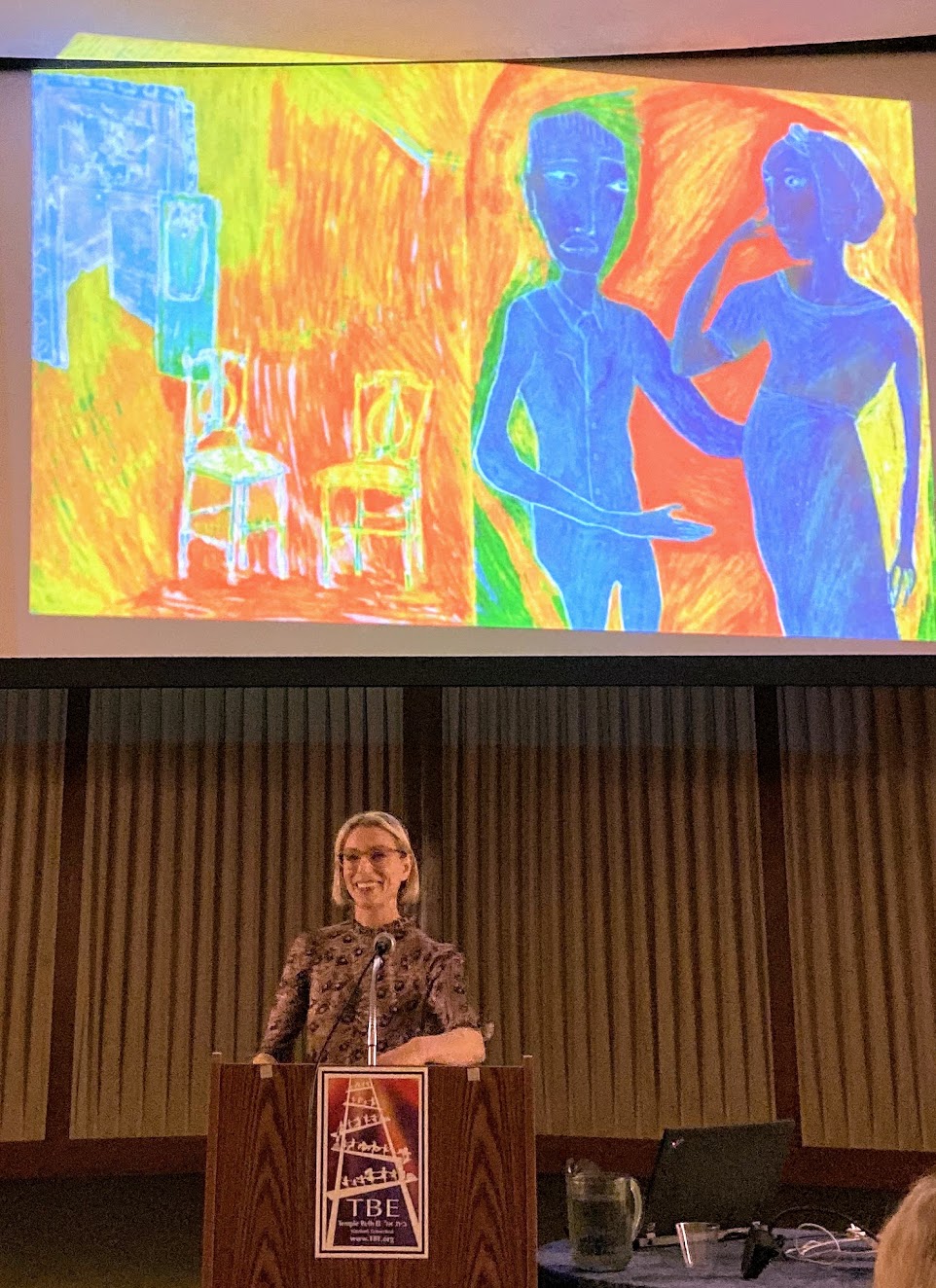
  Lauren Redniss speaking to TBE Sisterhood about her creative journey and her outstanding work, which bridges the divide between journalism and art.

RADIOACTIVE Official Trailer (2019) Rosamund Pike, Anya Taylor-Joy Movie HD
See the just-released trailer for the film RADIOACTIVE, based on Lauren's book, starring Rosamund Pike


Shabbat Shalom

I want to begin with a reminder of what I discussed last week - the eerie, jarring and sudden fall of one of our Torah scrolls from its perch in our ark, at a time when no one was near it - it had been returned to that spot a couple of minutes before.

The sound of that Torah hitting the ground seemed designed to knock us from complacency and to recognize that "it is a Tree of Life," but only if we "hold fast to it."  

How does one "make good" from this disruption?  Fasting for forty days, from sunrise to sunset, is a commonly cited remedy.  In some cases.  But I proposed something different.  Let's have at least forty people in the congregation donate the monetary equivalent of one day's worth of meals to a recognized charity fighting hunger and poverty. 

Around 850 million people around the world go hungry every day, according to a 2017 study by the United Nations.  So let us turn our trauma into a hungry family's blessing.

Between now and next week, please consider making a donation to one of the charities listed below - or another one of your choice that addresses hunger - and let me know when you have done it.  We can go beyond forty donations, naturally (and I hope we will), but we need at least forty to put things in balance again.

I am happy to say that we are nearly halfway to our goal.  Nearly 20 have made donations since the call went out.  But we need more.  Please consider making a donation to one of the charities listed below - or another one of your choice that addresses hunger - and let me know when you have done it.  We can go beyond forty donations, naturally (and I hope we will), but we need at least forty to put things in balance again.

An Extra Neshama

There is a belief that on Shabbat we gain an added measure of spirituality, a neshama yetera, literally an "added soul."  Well, this Friday night that adage will take on new meaning.  The great Neshama Carlebach will join us at services, to sing and to speak - and she will bring added soulfulness, as she does wherever she goes.  At Saturday night's cabaret (BYOB), that soulfulness will increase all the more.  See the flyer below. And on Sunday morning at 11, find out about the Jews of Cuba from the professor who will be escorting our group there this March, Stephen Berk.  It's free and open to the public, and includes brunch.  Thanks to James and Elissa Hyman for their sponsorship of that event, and to sisterhood for helping to bring Neshama Carlebach here.

Balfour Day
Nov. 2 is Balfour Day, commemorating the date in 1917 when Lord Balfour wrote this letter: 


All Roads Lead to Anatevka - "Fiddler" and Ukraine


Fiddler: A Miracle of Miracles | Official Trailer
Fiddler: A Miracle of Miracles - Trailer

I had the chance to watch the documentary Fiddler: A Miracle of Miracles, at this week's Jewish Film Festival. I highly recommend it.  The documentary explores the numerous ways this immortal musical touches on key aspects of the human experience - from parental love to the fear of displacement - exploring its resonance for Japanese and Africans as well as for American Jews.  Contrary to the common assertion that the show is dated, overly nostalgic and kitschy, a closer look reveals layers of depth worthy of Shakespeare.  There is nothing kitschy about it.  It was strangely comforting to learn that the first reviews for Fiddler's initial Detroit tryout were horrible - or they would have been had the local newspapers not been on strike that week, keeping that bad buzz off the streets and giving Jerome Robbins time to make numerous improvements.  Once it got to New York, opening night reviews were also far from perfect (though the New York Times called the character of Tevye "one of the most glowing creations in the history of musical theater").

The documentary premiered in August, but it was completed long before President Trump asked the White House operator to "get me Zelensky" on the now infamous day of July 25. No one had yet heard the names of former Ukrainian Jews named Vindman, Fruman and Parnas.  Yet, Fiddler: A Miracle of Miracles concludes with a scene that now appears uncannily ironic and strikingly  poignant in the post-July 25 world.  

Like Fiddler the musical's final scene, the documentary closes by zooming in on the little Ukrainian shtetl of Anatevka.  In Fiddler times, when Shalom Aleichem wrote his Tevye stories, Ukraine (then called "the" Ukraine) was the epicenter of the Pale of Settlement where Jews were allowed to reside during the latter part of the Czarist era.  You can see the Pale in the map below.  The late 18th century partitions of Poland had brought approximately 900,000 Jews into Russia, where the government immediately confined them to a region in the western part of the Russian empire. There shtetls flourished - for a time - and the Jewish population ballooned.


Shalom Aleichem was born in a cluster of Ukrainian shtetls that included a very real town called Hnativka - just about 20 miles west of Kiev (or, as it's pronounced these days by savvy correspondents, Keev).   The expulsion of early 20th century Jews from Anatevka has gained new relevance to Ukrainians who are now being forced from their homes in the east, where Russians have been waging war for the past several years.  Refugees are refugees, and the message of Fiddler has become increasingly universal at a time when Putin-inspired ethnic cleansing has become all the rage, from Syria to Crimea to...Trumpian America.  But the documentary shows in it's final scenes that Jews are returning to Anatevka and rebuilding there.  Jewish refugees from the contested eastern provinces are constructing a new town in an old place.  And that is where the documentary ends.

But that's not where this story ends.  We all have seen over the past few weeks just how much the Ukrainian and Jewish stories inter-mesh, and how it all comes back to refugees - people like Lt. Col. Alexander Vindman, the Ukrainian (really, Soviet)-born Jew who came to America at age three with his dad and twin brother. He came by way of Italy, following the over-ground railroad that the Soviet Jewry movement created to bring Jews to freedom.  He was three at the time and he has grown into an exemplary American, like so many Soviet-born Jews I am proud to know.  His journey is briefly described in a video clip unearthed this week:

Vindman as a young boy in @KenBurns
Vindman as a young boy in @KenBurns "The Statue of Liberty"
On the other side of the spectrum, some Jews also with Ukrainian roots have not lived such model lives - people like Lev Parnas and Igor Fruman.  As news of their indictment spread, so did a video of them carousing with their buddy Rudolf Giuliani, with Fruman crowing that "Anatevka is the best place in the world."


Why Anatevka?  

The Forward reported last week that the video was posted to a Facebook group for American Friends of Anatevka.  American Friends is a 501(c)(3) nonprofit on whose board Parnas and Fruman serve.  As the Forward states, "The charity's job is not, as one might suspect, to bankroll productions of Sheldon Harnick and Jerry Bock's opus, but to support a real-life Anatevka built near Kiev."  JTA gives more details on the project, highlighting the role of a Ukrainian rabbi Giuliani has befriended.  Reading about these characters makes me wonder whether Tevye's grandkids - were they real - would be suing to extricate their hometown's reputation from the swamp.

That Anatekva is very close to the real Hnativka, the real shtetl that was fictionalized by Shalom Aleichem, the place that has sparked hope over the past half century in the eyes of millions who have found themselves displaced, evicted or simply lost in an increasingly untethered world.  No wonder it is such a short verbal leap from Hnativka to Hatikva.

While Lev and Igor are supporting a vision of Anatevka as a haven for Jewish refugees, their associate Rudy has been doing his best create lots more of them, by strengthening Putin's hand in the east.  Meanwhile, Vindman has displayed particular sensitivity to the need to support Ukraine and stabilize that eastern frontier against the brutal territorial ambitions of Russia.   See p.3 of Vindman's opening statement for this week's testimony, on the geopolitical importance of Ukraine. He asserts that American steadfast support for Ukrainian independence is the only thing preventing a much larger humanitarian crisis on that same border.  Far from being the manifesto of a dual-loyalist, as some crackpot conspiracy theorists have asserted, that opening statement comes directly from the heart of a former refugee, a Jewish refugee, one who cares about the stranger because he has seen Egypt.  He has known slavery and he has known what it means to bask in the shadow of Lady Liberty.  

We even have the Ken Burns footage to prove it.

The fact that Zelensky too has Jewish roots has essentially turned this whole Trump-Ukraine episode into a Jewish morality tale writ large.

Reviewer Peter Stein writes, regarding the Fiddler documentary, "The shtetl of Anatevka has come to stand in for every homeland left behind."  Jewish history has made us into experts on leaving places behind - and occasionally returning - but always caring for the wanderers.  That expertise is coming to the fore once again during this decisive moment for Ukraine and America.

Nancy Pelosi may well be right that "all roads lead to Putin." But if they do, they intersect in Anatevka.

Shabbat Shalom

Rabbi Joshua Hammerman