|
Friday, March 16, 2018
Shabbat-O'Gram for March 17


Thursday, March 8, 2018
Shabbat-O-Gram for March 9
Shabbat-O-Gram

Last week, as part of Greenwich High School's Diversity Week, I joined a panel that also included Muslim, Christian and Hindu clergy. We engaged in a spirited dialogue with over a hundred students - it was wonderful! But what was worth far more than all the words...was this picture. Seeing us stand and hold hands together (which we did at the end) spoke volumes about the potential for us - and for their generation - to build a better world.

Mara and I also had the pleasure last Sunday of escorting our TBE teens to Manhattan, where we spent time at the Museum of the Jewish Heritage, then ate lunch at a kosher dairy restaurant and dessert in the Village at the very trendy (and also kosher)
Cookie DŌ for dessert. When at the Heritage Museum, check out a brand new exhibit, where students interact with holograms of actual survivors. It was both astonishing and a little spooky; through this technology, their stories will live forever - in their own words!


CHECK OUT ALL OUR Purim and late winter photos!
#BoycottRussia
Last week I wrote about Poland's new Holocaust Law and why, as troubling as it is, it should not provoke a travel boycott of that country. I believe strongly that Jews need to visit those sacred grounds where our people were murdered. If we want to boycott a nation, we should go right to the source of so much that is wrong with our world today and boycott Putin's Russia. I can't for the life of me imagine visiting Russia right now, not that my few dollars will make that much of a difference in that massive kleptocracy. Putin is pulling off the neat trick of simultaneously menacing American democracy and Israeli security (in Iran and Syria) - and getting away with it. A version of my comments from last week's O-Gram appears in this week's Jewish Week.
Meanwhile, Poland's president apologized today for a campaign of anti-Semitism in 1968. That's progress, but I suppose he had little choice - it's hard to pin that one on the Nazis. I do sense a desire on his part to walk back some of the more damaging implications of the Holocaust Law, like, for instance, that it could land 90-year-old survivors in jail, simply for telling the truth. But I'm surprised that #boycottRussia has not yet become a thing. Americans of
all political views - 72 percent in the latest polls - unite in our outrage at foreign election meddling. We are aghast at what Putin has done to our world. It's never good to come together in hatred, but it is perfectly appropriate to unite to bring a perpetrator of evil to justice - and that the injustice not be allowed to happen again. The least we can do is to not place more rubles in the coffers of the Kremlin.
all political views - 72 percent in the latest polls - unite in our outrage at foreign election meddling. We are aghast at what Putin has done to our world. It's never good to come together in hatred, but it is perfectly appropriate to unite to bring a perpetrator of evil to justice - and that the injustice not be allowed to happen again. The least we can do is to not place more rubles in the coffers of the Kremlin.
Shabbat Across Stamford
On Friday night, Shabbat Across Stamford will take place at the Stamford Athletic Club on Third St. Registration begins at 4:30 and candle lighting will take place at 5:30, followed by two services, traditional and progressive. We'll all get together after that for dinner and a chance to hear this generation's leading scholar of American Jewish History, Jonathan Sarna, who has spoken here before and is always erudite and on point.
For those who want to attend the service only, no registration is necessary. Remember that we will not have a service at TBE tomorrow evening. We will be reciting yahrzeit names at the progressive service on Friday and then back here the next day at our regular Shabbat morning service.
Parking information:
- At the Stamford Athletic Club: Spots are available in the outdoor parking lot and in the indoor garage behind the building.
- On 3rd Street: Parking is allowed on both sides of the street. All posted parking rules are still in effect.
- At the Tully Center: The lower lot is available to park in on 3rd Street. It is a short walk down the street to the Stamford Athletic Club.
Three years ago, when we first came together for a community-wide Shabbat, I wrote about it for a national audience, because what we were doing was so unique - and so difficult. Rabbi Ephraim Buchwald, the original inspiration for the Shabbat Across America program, praised Stamford's effort, writing:
"I would like to commend the Stamford Jewish community for working together to create a beautiful, unified Shabbat Across America event, the creation of which was dramatically described by Rabbi Joshua Hammerman in his op-ed column, "A Shabbat Across the Bow." The Stamford community, which uniquely gathered all the religious denominations together under one roof, was one of several communities that participated this year in NJOP's new CommUNITY Shabbat Across America and Canada initiative. The other communities were in Staten Island, West Hartford, Conn., and Winnipeg, Canada. These special programs were only a small fraction of NJOP's recently concluded campaign, which featured over 40,000 participants at 565 partner locations throughout all 50 states (an NJOP first) and Washington D.C., six Canadian provinces, and abroad in four other countries. We also note that this year we welcomed our one-millionth Shabbat Across America and Canada participant experience.
Rabbi Hammerman deftly described the challenges faced when making sensitive, value-based, decisions that attempt to take everyone's individual practices and religious standards into consideration, which can only succeed when one recognizes the overarching virtue of Jewish unity."
You can see my original column here, where I describe the significant challenges we faced, and how we overcame them, for a higher purpose.
Three years later, we are now doing this for the fourth time. I must confess that after last year's, I felt that Shabbat Across Stamford, while a worthy idea, was beginning to lose momentum, and that maybe we had made our point and it's time to move on to other projects.
But people in the community kept telling us that they wanted to see this again - and so here we are, and I'm glad we'll be back on Third Street tonight. The venue is far from perfect, the logistics are challenging (e.g. the acoustics, with a special Shabbat-ready sound system), the costs are not trivial and there are other risks. There always are, when it comes to family. But I do know that when we start singing and eating and schmoozing and laughing together, none of that will matter. And I also know that Jonathan Sarna is the perfect speaker for an event like this.... If we can hear him ��
My thanks to the UJF professional leadership. The lay committee and my clergy partners for pulling this together.
Passover Preparations - Embracing the Stranger
With Purim behind us, it's time to focus on Passover, which will be here before you know it!
Also, if you need a Sale of Hametz Form, you can find it here.
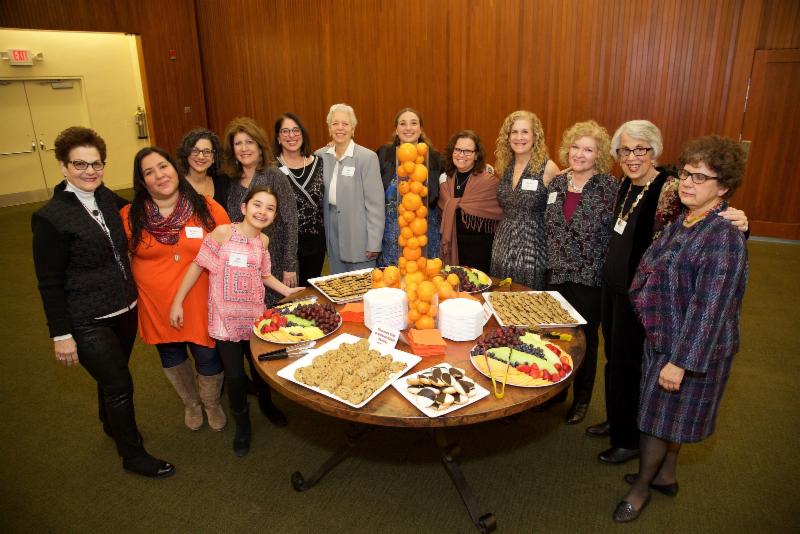
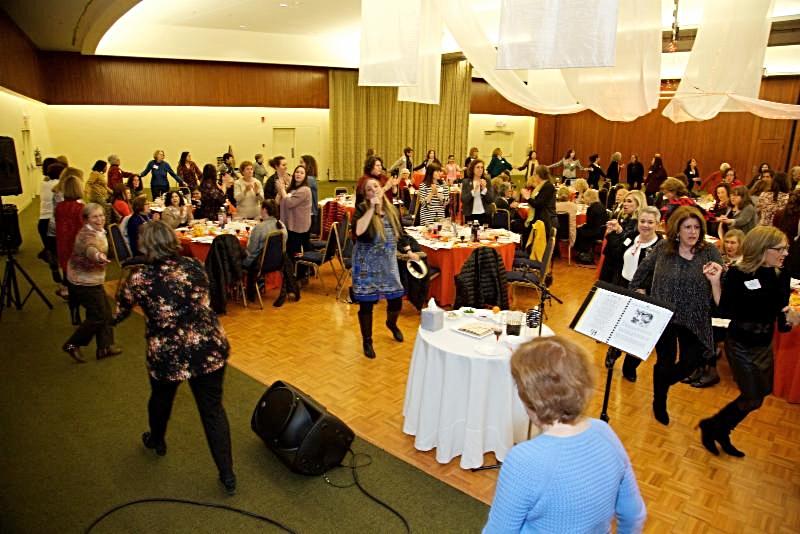
Next Tuesday, March 13, we kick things off with our Women's Seder, and the following Thursday, March 22, our annual Interfaith Seder will once again be hosted by Grace Farms. Then, the Chocolate Seder on March 23. Due to lack of interest, we will not be doing a Congregational Second Night Seder this year.
At the Interfaith Seder, our theme this year will be "With Open Arms," with tie in to the famous injunction of Exodus, "Love the stranger, for you were strangers in the land of Egypt." We'll be hearing from a remarkable young man, Stamford High School student Erwin Hernandez, from Guatemala, who was granted political asylum a year and a half ago. His challenges were already daunting, but then came the accident - just down the street at Table 104, that cost him the use of his right leg. Read his story. You likely have already heard it. Meanwhile, please invite your Jewish and non-Jewish friends to register for this Seder. We want as diverse a group as possible - and space is limited.
For those looking for related material to use at your Seder, HIAS has just come out with its Passover supplement.
Here's an excerpt:
Centuries ago, only those who were free enjoyed the luxury of dipping their food to begin a meal. In celebration of our people's freedom, tonight, we, too, start our meal by dipping green vegetables. However, we also remember that our freedom came after tremendous struggle. And so, we dip our vegetables into salt water to recall the ominous waters that threatened to drown our Israelite ancestors as they fled persecution in Egypt, as well as the tears they shed on that harrowing journey to freedom. As we dip, we recognize that, today, there are more than 65 million people still making these treacherous journeys away from persecution and violence in their homelands. As we dip the karpas into salt water tonight, we bring to mind those who have risked and sometimes lost their lives in pursuit of safety and liberty.
I close with some inspiring words from Rabbi Jonathan Sacks:

Shabbat Shalom
Rabbi Joshua Hammerman
Right Boycott, Wrong Country
OPINION
Right Boycott, Wrong Country

Joshua Hammerman
Poland has made news lately for an infamous “Holocaust Law” that criminalizes accusations of Polish complicity in the Holocaust. The law has caused a deep rift in Polish-Israeli relations and its ultimate fate is uncertain. But even if it is permanently rescinded, the forces that brought it about are not going away.
Some are saying that Jewish tourists should boycott Poland to protest this law. Although I have major concerns about the law, I disagree.
Last summer I went to Poland with my congregation, and we saw a country struggling to come to grips with its dark side. But we did not see outright denial. For instance, in Warsaw’s spectacular new Polin Museum commemorating 1,000 years of Jewish life in Poland, one display speaks with an admirable honesty about the topic, stating, in Polish and English:
“What was the attitude of Poles to the Jewish tragedy? Few chose to risk their lives and the lives of their families by trying to save Jews. Many were simply too preoccupied with everyday hardships of the occupation to concern themselves with the fate of Jews. Some Poles denounced Jews to the Germans or murdered them themselves. How did those on the Aryan side react to the Warsaw Ghetto uprising? Some sympathized with Jews and admired their heroism. Most, however, were indifferent, while others made anti-Semitic comments.”
This hardly sounds like a whitewash to me. The museum was created by a unique partnership of the Polish government and the private sector, including Jewish groups. It has been praised universally and is part of an impressive and expanded array of memorials, museums and restored synagogues in Poland. As the Holocaust recedes into history, it is becoming even more important for Jews to visit these places. The Polin Museum also describes the vibrant Jewish life that preceded the rise of the Nazis, when Warsaw was the second largest Jewish city in the world, trailing only New York, and its cultural life was unrivaled. Even now, it is impossible to find a place on the planet that teems with the intellectual ferment that existed among Polish Jews between the wars.
In assessing the complicated historical relationship between Poles and Jews, let’s acknowledge that we share quite a bit with the Poles. While horrible things happened to Jews in Poland, horrible things — admittedly less horrible — happened to Poles in Poland, too. Jews also need to understand that many of the most violent anti-Semitic episodes on Polish soil over the past millennium — like the 1648 Cossack-driven massacre — were not perpetrated by Poles.
And what exactly is “Polish soil”? Poland has been sliced and diced by its neighbors more than just about any other place on earth — except maybe the land of Israel. With expansionist Russia on one side and aggressive Germany on the other (throw in the Hapsburg empire for good measure), I’m not sure we give Poland its due for standing up to oppression as often as it has.
Poles and Jews also share this: One can make a solid claim that the two biggest causes of the downfall of the Soviet Union were the worldwide Soviet Jewry movement and the Polish Solidarity movement. And just as “Jew” became a moniker of mockery in Europe, so did “Slav,” a term derived from “slave.” Poles, who are Slavs, have, like Jews, often been derided as an inferior race and ridiculed by the Archie Bunkers of this world.
As much as Poles need to understand the unique Jewish sensitivities regarding the Holocaust, Jews need to acknowledge that it would be a grave injustice to call Auschwitz a “Polish death camp.” It wasn’t. Further, Yad Vashem lists over 6,700 Poles among the Righteous Gentiles, and there were likely many more. While the percentage of righteous Poles among the overall population is very low, the question should not be why there weren’t more, but rather how so many could have had the courage to act so boldly at all, overcoming not only fear for the fate of their families, but also centuries of anti-Semitism propagated by the Roman Catholic Church.
Here’s something else Jews and Poles share — the concern for an alarming erosion of fragile democratic norms all over the world, through dangerous demagogic tactics of strongman leaders who pit one group against another. What’s happening in Poland is also happening in Hungary, and in both countries, my group confronted guides who were terrified to discuss the culpability of their co-nationals during the Holocaust. The rise of governments that refuse to accept responsibility for their past actions is only a symptom of the antidemocratic virus infecting the two countries now.
In Poland and Hungary, the far-right wing governments have consolidated power by following a familiar playbook. They demonize the press, co-opt the judiciary and direct the anger toward familiar scapegoats, as demonstrated by the none-too-subtle anti-Semitic billboard campaign in Hungary against George Soros; many of these billboards were touched up with blatantly Jewish graffiti.
This playbook is now being emulated in the two countries I love most — need I elaborate? — and its principle author is neither Hungary’s Victor Orban nor Poland’s Andrzej Duda. In the 21st century, this playbook’s author is Vladimir Putin. If Jewish tourists are looking for a place to boycott, how about Russia? No other country has been more responsible for the swirling hatred that is infecting our world, the suppression of free speech, the corruption of the press, the murder of innocents (see: Syria), the exaltation of the cult of personality and the as yet unchecked attacks on America’s most sacred institution, the unfettered right to vote.
President Trump has recently shown a great love for snake metaphors. Might I suggest that those tourists who wish to boycott a country direct their attention toward the head of the snake? I for one will not consider visiting the land of my grandparents as long as Vladimir Putin continues to spread his venom across the globe.
Poland’s Holocaust Law is wrong and should be opposed, vigorously — and in person.
Don’t boycott Poland.
Boycott Russia.
Rabbi Joshua Hammerman is spiritual leader of Temple Beth-El in Stamford, Conn.
Subscribe to:
Posts (Atom)