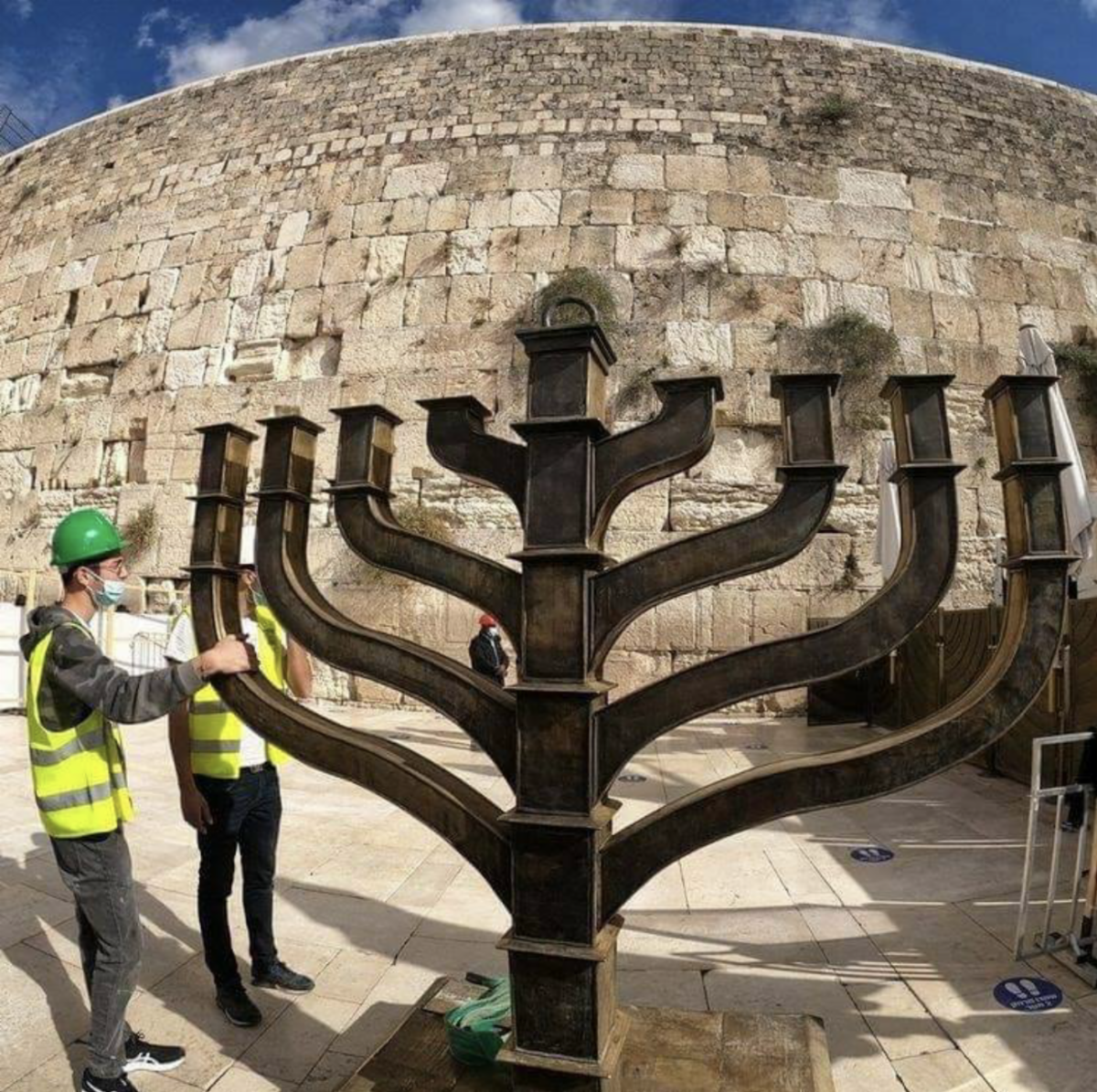
 In This Moment Shabbat-O-Gram, December 11, 2020 Mazal tov to Aaron Friedman on his becoming Bar Mitzvah this Shabbat morning. This Shabbat-O-Gram is sponsored in Aaron's honor by his parents Rachel and Keith Friedman -------------- Just couldn't resist including this photo of a wide variety of fresh sufganiot from everyone's favorite Jerusalem pastry shop, Marzipan in Mahane Yehuda, from Monday's JPost.  And for those really desperate for these mouth-watering delicacies, check out the five top places to get sufganiot in Jerusalem. I can't include those photos here because they might drive your taste buds to madness. Or you could make sufgis at home, by purchasing a new sufgania cook book by Jerusalem's famous Kadosh Cafe. If you get the impression that there is nothing like Hanukkah in Israel, you're right. But Hanukkah's obsession with oil has brought about greasy delights all over the world. Click here to find eight Jewish fried foods that span the globe, one for each night. Speaking of Hanukkah in Israel, take a journey across time this coming Sunday at 11, to the places made famous by that most Hellenized of ancient Judean tyrants, King Herod. Visit Masada, Caesarea and Herodian with guide Peter Abelow, who will top things off with a special celebration of Hanukkah through the ages. Go here to participate on Zoom. Passcode: 940017 . Shabbat Shalom and Happy Hanukkah! 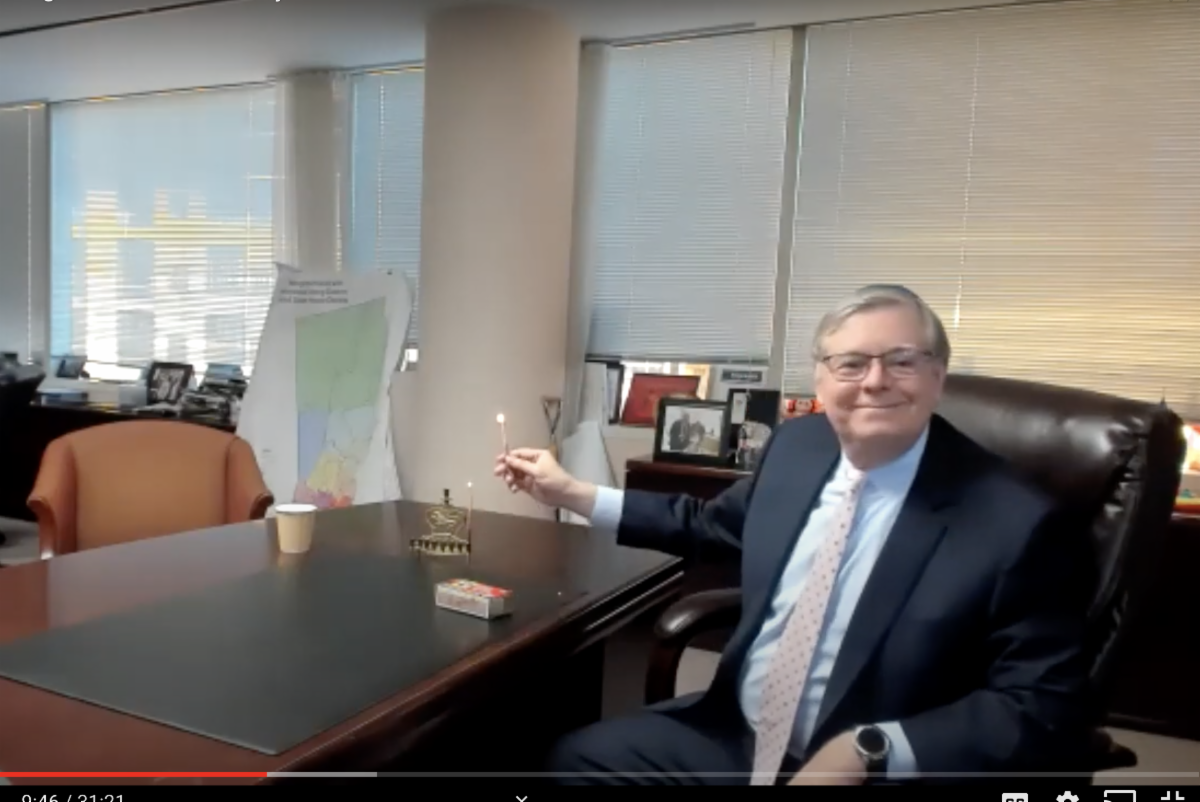 Join us each night for candle lighting, along with a different special feature each evening. See the full schedule and Zoom links on this flyer. This evening we lit the first candle with Mayor David Martin, and it was such a lovely ceremony, made even more special by the urgency of the moment. Watch the video below.
Mazal tov to Aaron Friedman and family, as Aaron becomes Bar Mitzvah this Shabbat morning. He's the first one of the new 7th grade to be doing so. It's so nice for the chain to continue, year after year, rain, shine or pandemic. The continuity is so reassuring. In the midst of the pandemic, we also are refocusing on social justice issues. Next Tuesday, join us for part two of my dialogue series with Rev. Dr. Michael Christie, "The Jewish and Christian Roots of Racism and Inclusion" on Zoom. Check our Temple Announcements for the links. You can find the Zoom recording and source materials from the first session here. But you don't need to have been at the first session in order to benefit from the second. And this session will feature Rev Christie and some Christian clergy guests he is inviting, so I especially hope we will have a large representation from our congregation. In Memoriam: Vegas Trell  I don't usually feature memorials to dogs in this space, especially during a week when our country has been bearing an inconceivable loss of human life. But Vegas Trell was one special pup; he was known to so many dogs and children throughout the community. The photo above was taken in 2015, when we did a "Blessing of the Animals" honoring our dog Crosby's Bark Mitzvah. Crosby was a good boy, but his fellow standard Vegas was the true star that day, definitely the best in show. For weeks after, I would tell my dogs, "Why can't you be more like Vegas?" while Vegas continued to make every day special for so many children, especially at the JCC's Jump Start program. Vegas knew everyone, he was so open and friendly. Our condolences to Gail and Steve. May his memory be for a blessing. And with Raters of the Lost Menorahs Every menorah tells a story. That's why it's my favorite Jewish ritual object, bar none. You can decorate a Sukkah to perfection and find a lovely seder plate or kiddush cup, and each shofar carries with it the mystery of a thousand bleats, honks and baas. But a menorah can express your personal tastes and beliefs in just about any manner you want, while at the same time amplifying a call that resonates though the ages: "Not by might, not by power, but by My spirit, says the Lord of hosts." During this year of Covid, through the miracle of Zoom we've seen the insides of more homes than Elijah the Prophet. A Twitter account, Room Rater, was created to evaluate the trendiness of celebrities' Zoom and Skype backgrounds, their books, floral displays, framed art and, lots of plaques and trophies. But sometimes there is a menorah, and every menorah tells a story. You can learn a lot about a person by the candelabra they keep. Last night I was watching an interview featuring Josh Shapiro, lieutenant governor of Pennsylvania, who has been very visible lately (for reasons too abhorrent to discuss here). 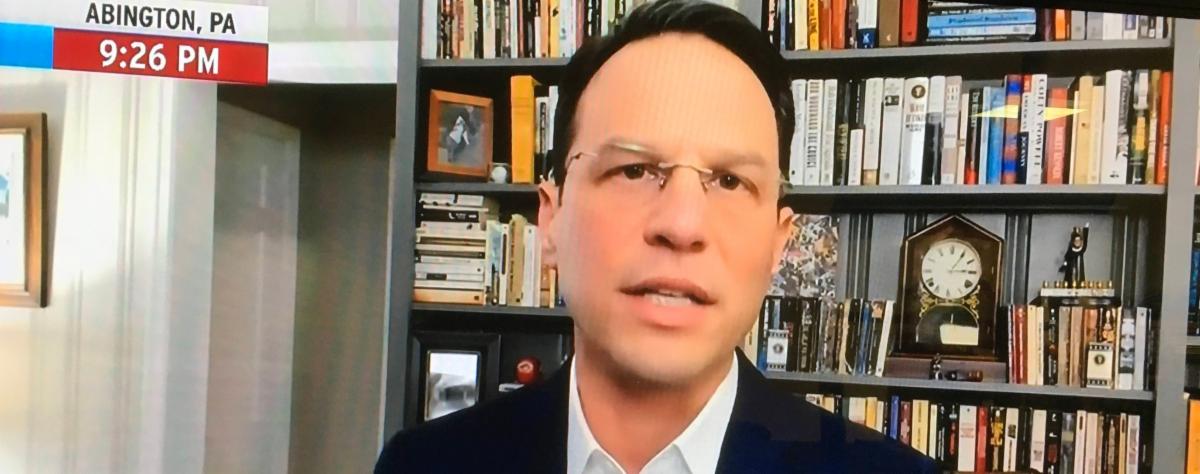 My Room Rater vision detected immediately something over his left shoulder... 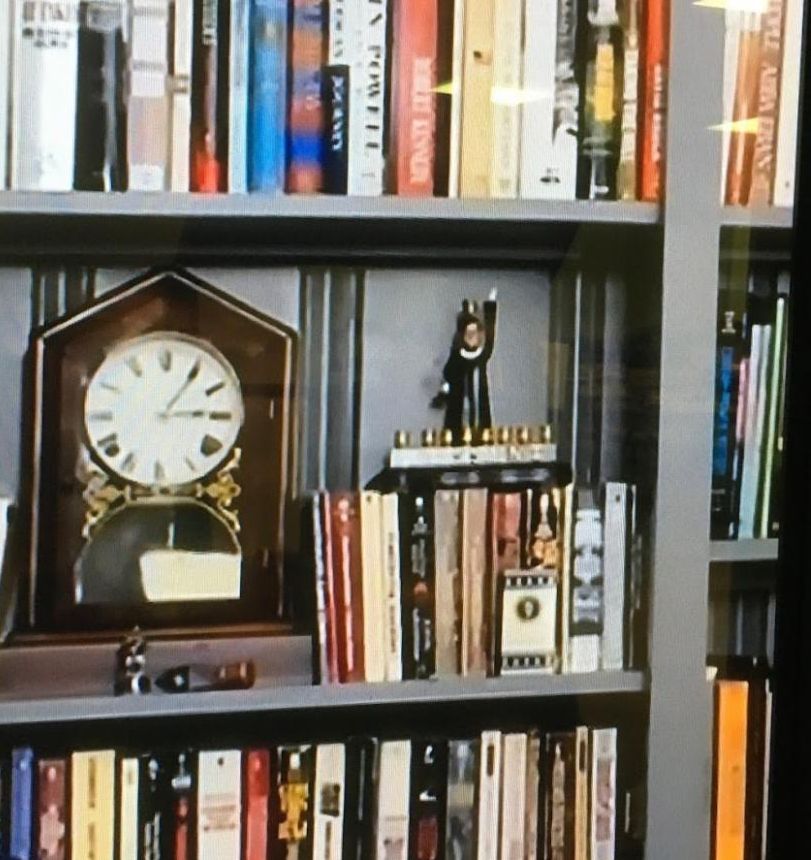 Yes, it's a Ruth Bader Ginsburg Hanukkah menorah. What a perfect tribute to the woman who embodied the spirit of this holiday, and who is so missed right now. Room Rater would surely have given it a perfect score, even if the clock next to Ruth seems to be about 6 hours off. Inspired by this, I checked out some other menorahs on Twitter. Here's one for dog lovers.  And if you are a cat person...  The next one can double as a menorah and packing ice for the Pfizer vaccine:  I don't recommend lighting this one.  If Room Rater had existed back in 1932, this one would have taken the "Profiles in Courage" Award.  And in 1945, so would this:  As I said, every menorah tells a story.  The Hanukkah menorah that Mara and I have used since the year we were married has journeyed with our family across the globe. You can see photos of it here, as it was lit in our apartment in Jerusalem, just a few months after we were married. Notice how I look younger and she looks the same.  We purchased the menorah from a small art gallery in the Old City's Jewish quarter. 'Twas the day before Hanukkah and we needed something to light that night. We passed by all the typical ones, the traditional brass, the modernistic glass, the Zionist replicas of the Menorah outside the Knesset.  None of the menorahs we saw were what we were looking for. Until we came across this shop and immediately, we both knew - this was the one for us. Why did we love it so much? None of the menorahs we saw were what we were looking for. Until we came across this shop and immediately, we both knew - this was the one for us. Why did we love it so much?- It's made of Jerusalem stone. This of course made it a pain-in-the-Knesset to move around (and my mother in law was the one who schlepped it home for us in her carry-on - which has in itself become a family legend over the years). But wherever we lived, we felt we would be carrying a piece of Jerusalem with us. Literally! We owned a piece of the rock. - The stone is carved out in a grid pattern, reminiscent of the Western Wall. But this is no kitschy Kotel scene that you will find in trinket stores. This was a one of a kind, gently carved slab of marble, which may, who knows, have been part of the temple itself once upon a time. You have to understand, one of the more remarkable things about Jerusalem is that when the Romans destroyed the temple, the debris was too heavy to be moved very far. Much was simply tossed into the valley beneath. Entire pillars found their way into the upper city, which is now the Jewish quarter. I saw a bunch of kids creatively use one as a soccer goal. Every pebble in that area could well have come from the holy of holies. Every stone is holy. And each one tells a story. As the popular Israeli song about the Kotel states: Some people have hearts of stone; some stones have the heart of people. These stones cry. When wax drips down, it looks like the menorah itself is crying human tears. - The menorah is not perfect. It slopes a little and the the little holes for the candles (or oil dispenser, which we used at first), are not symmetrically aligned. - The Jewish star and olive branches speak less of Maccabean militarism than of the miraculous enduring hope that lights up our darkest moments - a hope that represents the most eternal victory of our indestructible people. - This menorah, deeply rooted in our holy city, like us, has also accompanied us on our family's journey. As our lifelong companion (and in many ways, our first child, even predating Maggie, the dog), it faithfully waits all year on the floor of our upstairs closet for me to lift it (with a more audible "oy" each year) and carry it downstairs, where it awaits its first glance at us and the boys. And this menorah has seen them grow, year by year  This year the menorah will not be able to look upon our whole family, as the virus has driven us apart. But in a world where everything changes, this slab of Jerusalem has become, quite literally, our rock, one the few constants in a crazy world. This year the menorah will not be able to look upon our whole family, as the virus has driven us apart. But in a world where everything changes, this slab of Jerusalem has become, quite literally, our rock, one the few constants in a crazy world.How fitting that we chose this simple, earth toned, unbalanced shining half-moon with which to share the light of our miracles with the world. It lights up any room it enters. That, in my book, rates it a clear ten. Shabbat Shalom and a Joyous Hanukkah Rabbi Joshua Hammerman  |