Thursday, April 21, 2016

Shabbat-O-Gram for Passover, April 22


Eatin' it all up at TBE's Chocolate Seder!


Happy Passover to everyone in our extended TBE community, from our clergy, staff and lay leadership!

For those of you in college or other exotic places, I'd love to hear about your Seder experiences!


Services
There will be no service here on Friday night of the first Seder.  Festival services on Shabbat and Sunday morningat 9:30.  On Shabbat morning we'll be discussing "How Much of the Seder is Set in Stone?" And on Sunday, in honor of Passover's coinciding with Earth Day this year, we'll look at the newly published "Earth Justice Seder."


Time Lapse Photography

 
You might recall that last year we began compiling a TBE Passover Family Album, containing photos from your Seders, past and present.  Now we have a chance to add to that album with photos from this year.  This will give us a time-lapse effect, as we watch our families - and by extension our TBE family - continue to grow, from year to year, generation to generation.  Please send me jpeg attachments - or you can upload photos directly to the album.  In our lobby, we are displaying photos from this album, as well as our school and family Passover activities, including the Chocolate Seder, along with the recent Women's Seder.


Jew Belong
If you are looking for some last minute Seder assistance, you can download our Women's Seder Haggadah, our Chocolate Seder Haggadah (great activities for the kids) and my Passover Preparation Guide. Thanks especially to Lisa Gittelman-Udi for her work on the Women's and Chocolate Seder Haggadahs.   I also highly recommend as supplements, the American Jewish World Service Global Justice Haggadah, for a more reflective, holistic approach, one of my favorites isThe Velveteen Rabbi's Haggadah; there's even a Jdate Haggadah.  Families with teens can check the Moving Traditionssupplement, from the people who have provided fabulous Rosh Hodesh programming for our teens.

And for someone looking for how to lead a "Kick-Ass Seder" try the Jew Belong Haggadah.  As Rabbi Matt Gewirtz put it, referring to the label, "The name might take you aback at first, but that is part of the point. It is supposed to throw you just enough to make you take a look; to send the overt message that this is not the same old religion with which you grew up. They are encouraging an intriguing, compelling, in-your-face brand of Judaism. It is not about trends, gimmicks or fads. It is about relating to your modern self, engaging you where you are in life and reminding you that meaning is yours to own."
So whatever you do at your Seder, make it relevant!  Make it meaningful!  Make it a night different from all other nights.


The Last Night in Egypt
If you are looking for fodder for Seder discussion, check out these 20 Table Topics for Your Passover Seder, from Jewish Boston.  Or try this challenge from David Arnow:


It's the Israelites' last night in Egypt, the night of the final plague, the slaying of the Egyptian first born. (Note: Sources are divided as to whether this plague targeted only males or included females as well.) When the Egyptians learned about this fearful plague, some Egyptian mothers decided to seek refuge for their firstborn in the houses of Israelites. Imagine the Israelites, sitting safely in their homes, and suddenly there's a knock at the door and an Egyptian mother is pleading for the life of her firstborn.
Should the Israelites take in the Egyptian firstborn?
Read Arnow's response and that of an ancient midrash that he quotes, and discuss what those at your table would have done on that fateful night.  And then reflect on the fact that a family of six from the same war torn region is scheduled to arrive in Stamford next week.


More on Legumes
Everything is coming up Kitniyot!  Suddenly the decision of the Conservative Movement, which I've been discussing in these pages for several weeks, has been discovered b the media and it has shocked the nation.  Who knew a few lentils and beans could cause such a buzz.  On Friday morning - the eve of Passover - at the conclusion of our 7:30 morning minyan, I'll hand out a source sheet on the topic and give you a few insights, so you can sound really, incredibly smart and rabbinic as you expound on kitniyot (a word used for lentils, which comes from the word "small") at your Seders tomorrow night.  That brief study session will also serve as our "Siyum for the First Born."
The Jewish Burka
The "Women of the Wall" prayer group has been planning to stage a first-ever Women's Priestly Blessing at the Kotel this Sunday.  As of this writing, that effort has been stymied by Israel's attorney general; it is on hold, at least for the time being.  While the cause of women's rights has made tremendous strides recently in Israel, the suppression of female voices continues unabated.

The culprit here is a controversial Talmudic concept known as Kol Isha ("A Woman's Voice"), which like many religious restrictions has taken on a life of its own, expanding in scope over the centuries, as female voices have continued to be suppressed and demonized.

There are some justifications for reducing a woman's public role that might have made some sense once upon a time, within the internal logic of a traditional, pre-modern patriarchal society.  Kol isha was never one of them. It was always insidious, inviting suppression and, ultimately and inevitably, harassment and physical abuse.  Once a women becomes an object of scorn, or an object of temptation, or even an object of love - she has become, irrefutably, an object.

The Kol Isha controversy stems from a Talmudic discussion where one rabbi, Samuel, called the voice of a woman ervah, meaning "indecent," "shameful," or "lustful." He was referring to the recitation of the Sh'ma, which was not to be prayed while a woman was singing.  For, as the passage states, "the voice of a woman is indecent" (kol be-ishah ervah) and would be an improper distraction from concentration on holy things.
The idea that an un-muffled female voice can lead men into a state of uncontrollable lust is reprehensible, insulting to both women and men alike.  Are we guys that incapable of keeping our zippers zipped that we have to demand that women keep their lips zipped too?

Natalie Bergner writes on the Women of the Wall website that the Talmudic prohibition flies in the face of biblical precedent; she cites the sensual love poetry of the Song of Songs, and the explicit command from God for Abraham to "listen to the voice of Sarah."
The first wide-ranging halachic prohibition of a woman's singing voice didn't occur until modern times.  In the journal Conservative JudaismEmily Teitz writes that Jewish women's singing voices were in fact heard throughout the Middle Ages, as teachers, entertainers and professional dirge singers, even within the synagogue itself.  Rabbi David Golinkin's responsum on the subject suggests that in the Talmud, Samuel may not have been referring to a woman's singing voice at all.

Golinkin writes:
There is no general prohibition against women singing in classic Jewish law based on the Talmud and subsequent codes and commentaries until the early nineteenth century. The current blanket prohibition accepted by Haredi and some modern Orthodox rabbis was first suggested and rejected by Rabbi Joshua Falk (d. 1614) and was only given as a halakhic ruling by Rabbi Moshe Sofer, the Hatam Sofer, in the early nineteenth century. However, this opinion is not in agreement with the simple meaning of the dictum by Samuel and with all of the opinions of the Rishonim (renowned rabbinic authorities of the Middle Ages).

The fact that such restrictions have become more pronounced over the past few decades mirrors the increased oppression of women in some quarters of the Muslim and Christian worlds and the increased polarization of American politics on religious grounds.   As feminism has taken hold, the reaction to feminism has been equally strong, pulling society both ways, and pulling hard.

With female cantors and rabbis proliferating in the non-Orthodox world, and even now among the modern Orthodox, there is no turning back on this issue.  My conscience will not allow me to participate in ceremonies that give undue deference to Kol Isha - for instance, purely secular celebrations of Israel where a woman's voice should be heard loud and clear. How absurd it is to hear the songs of Naomi Shemer or the verse of Hanna Senesh having to be sung by a man.

As a committed pluralist, I need to accept that for some Jews - and some iterations of Judaism - halachic justifications for the differentiation between male and female sex roles are internally consistent with an accepted worldview that existed in previous eras, long before feminism.  They were right, perhaps, for their time.  I can accept the fact that when I am praying with an Orthodox minyan, traditional restrictions regarding women will be upheld, mostly for reasons other than Kol Isha.

But we can't allow Kol Isha to expand incrementally as religious restrictions so often do (as we've seen even with the eating of lentils on Passover).  Jewish tradition has no inherent problem with women. The problem isn't Judaism - it's Jews.  And discrimination against women, like all discrimination, is a slippery slope, one that leads to objectification which can lead a culture to condone violence.  We need to go out of our way to reverse the disturbing trends.

Last year, when Israel's new government was sworn in, one Haredi newspaper tried to airbrush women out of the picture completely.  Women, evidently, are meant never to be heard OR seen.

Israel has become ground zero in the battle against the suppression of women's voices. Golinkin cites a 2011 incident when nine observant IDF cadets walked out when a woman began singing a solo.  He concludes that there is "no halakhic justification for anyone walking out when women sing. But even if one accepts the very strict ruling... it is forbidden to walk out in order not to insult the female performers."

At least in Israel, female singers have not been suppressed in major national ceremonies, including the official Yom Hazikaron and Yom Haatzmaut ceremony on Mount Herzl.  Given current trends, this may not be the case in the near future.
Jeremiah (33:10) prophesied of a time when "the joyous voice of the bridegroom and bride would once again in the streets of Jerusalem."  Evidently that time has not yet come at the Kotel.  Despite the progress we had hoped was being made, female voices of blessing will not be heard at the Western Wall this Passover.

Kol Isha is coming dangerously close to becoming the Jewish burka, a veritable symbol of the subjugation and humiliation of half our population.  We need to reverse this trend, in Israel and in Jewish communities everywhere. The Jewish burka must be eliminated.

It is time to silence Kol Isha.

The Chad Gadya Machine
As we pray for a peaceful Passover everywhere, especially in light of this week's bus bombing in Jerusalem and other terror attacks this month across the globe, here is a classic poem from Yehuda Amichai:

An Arab Shepherd Is Searching For His Goat On Mount Zion
An Arab shepherd is searching for his goat on Mount Zion
And on the opposite hill I am searching for my little boy.
An Arab shepherd and a Jewish father
Both in their temporary failure.
Our two voices met above
The Sultan's Pool in the valley between us.
Neither of us wants the boy or the goat
To get caught in the wheels
Of the "Had Gadya" machine.

Afterward we found them among the bushes,
And our voices came back inside us
Laughing and crying.

Searching for a goat or for a child has always been
The beginning of a new religion in these mountains.

Chad Gadya, that child's song at the end of the Seder, has a very serious side.  The playful ditty traces a cascade of events beginning with a baby goat being devoured by a cat. Each verse adds a link to the chain reaction; a dog comes and bites the cat, a stick beats the dog, fire burns the stick, water puts out the fire ... and on it goes. Each successive verse gets longer until the fable ends in a final saving stroke; God kills the Death Angel.
Chad Gadya has become a modern metaphor, reflecting how utterly hopeless things can seem.  The ending is nice, but with the world utterly destroyed before we get there, of what use is such salvation? 

The great Israeli singer Chava Alberstein wrote her own version of the song in 1989a time when the Israeli army was in Lebanon and the first Palestinian uprising had begun only months before.  After opening with the traditional Aramaic lyrics, the words of the song turned to the relationship between oppressor and oppressed, with Alberstein stating: "What has changed [mah nishtana]?" - "I have changed this year."
The song was quickly barred from broadcast on the government-controlled airways, but public pressure ultimately caused the ban to be lifted. Now it's a fixture on the play lists during the pre-Pesach period in Israel.
You can see hear it below:


Our father went to market and bought a little goat
For two bits, for two bits
This is how the traditional story goes...
The cat came along and ate the kid
A small kid, a white kid that our father bought
Why are you singing this traditional song?
It's not yet spring and Passover's not here.
And what has changed for you? What has changed?
I have changed this year.
On all other nights I ask the four questions, but tonight I have one more:
How long will the cycle last?
How long will the cycle of violence last?

The chased and the chaser
The beaten and the beater
When will all this madness end?
I used to be a kid and a peaceful sheep
Today I am a tiger and a ravenous wolf.
I used to be a dove and I used to be a deer,
Today I don't know who I am anymore.
Deezvan abba beetray zuzay...
And we start all over again
Now hear Alberstein's version, but this time sung in Arabic and Hebrew by a combined Jewish-Arab choir from Jaffa.


When you watch this video, just uploaded last month, suddenly the Chad Gadya machine doesn't seem nearly so imposing.  Maybe we can somehow manage to extricate ourselves from its wheels.  There may be hope yet!

Happy Passover!

Rabbi Joshua Hammerman

Friday, April 15, 2016

Shabbat-O-Gram for April 15

Shabbat-O-Gram


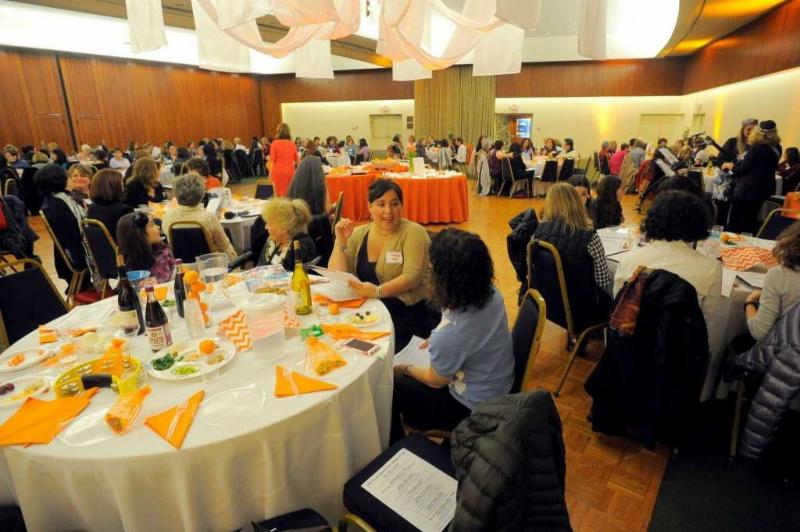
150 women (and a few male Seder Crashers) attended our fabulous Women’s Seder on Wednesday.  Click here to see the album. Thanks to Aviva Maller Photography for most of the pictures, as well as the Stamford Advocate, whose coverage can also be seen here.
 
 
SEND ME YOUR SEDER PHOTOS....
 
This evening at 5:30 for families, we’ve got a Chocolate Seder!  Can’t wait!  Meanwhile, send me your Seder photos, Chocolate or otherwise, to include in our TBE Seder Album.  Just as we interspersed family photos (including vintage ones) with current congregational photos for Hanukkah, we’ll do the same for Passover - and have them on display on our lobby monitor throughout the festival.  Send your pictures torabbi@tbe.org...


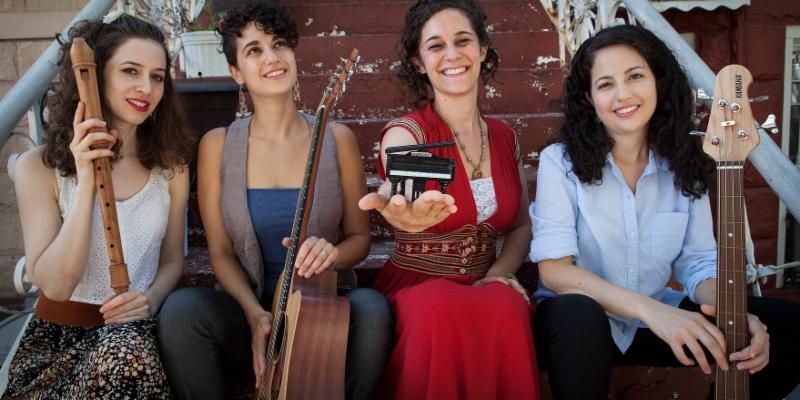
...And join us at 7:30 tonight as we welcome musicians Ella Joy Meir on keyboard and Yonit Spiegelman on guitar; both are part of the new and up-and-coming group Banot.  They moved here after having a successful career in Israel, performing with top Israeli musicians!  Check out their website, and watch (and share) their new video.  


We also are pleased to welcome Hazzan Rabinowitz here this Shabbat, following his recovery from recent surgery.  On Shabbat morning, Shabbat Ha-Gadol (the Shabbat before Passover), we have a Bat Mitzvah Encore, continuing an ongoing effort to feature teens and adults celebrating B’nai Mitzvah anniversaries by reciting their portions once again. This week we welcome back Shayna Finkel, back one year later to reprise her reading from the portion of Metzora.  Mazal tov, Shayna!
 
A reminder that next Friday, April 22, night there will not be a service here.  Over the past few weeks, several have asked about a congregational Seder (aside from the Women's and Chocolate varieties).  We’ve done it in years past, but in recent years interest waned and we dropped the idea.  But this is a decision that can be revisited, so let us know if you would be interested in our having one next year.  In the meantime, also let me know if you have room at your Seder for anyone who might need a place to go.
 
Note that we will have services on all the days of the festival, including NEXT Sat. and Sunday, the first two days of Pesach, at 9:30.  Also, this coming Friday morning after minyan, we will follow the custom of a Siyyum for the First Born, where the act of completing study from our sacred sources enables the first born to eat on what otherwise would be a fast day.  The study session will be brief - we’ll look at some of the texts involved in the Conservative Movement’s recent decision to allow the consumption of Legumes (Kitniyot) on Passover.  See the responsa and decide for yourself - here and here
 
 
A Celebration of Women


As noted above, last Wednesday night was a chance to celebrate the growing role women have played in the unfolding Jewish story.  Cantor Fishman’s unique vision was brought to stunning reality - so much so that this male Seder Crasher could not help but be overwhelmed.  Special thanks to Cantor Fishman for making it happen, as well as Cantor Debbie Katchko-Gray, as well as the hard working committee, and to Lisa Gittelman-Udi, especially for her help in the creation of the beautifully designed Haggadah.  You can download the Haggadah here for use at your Seder.


A few people have asked me when the men’s Seder will take place.  My glib answer has been that the men’s Seder’s been going on for the past 2,000 years.  That is absolutely true, but still, with our rejuvenated Men’s Club, I look forward to opportunities for men to share and learn together, just as the women did - and maybe to sing and dance together too!
 
But we absolutely should be celebrating the role of women.  Many old time feminists are bemoaning the fact that the younger generation doesn’t appreciate the many glass ceilings they have had to shatter in order for these youngn’s to reach a state of relative equality.  This week’s Equal Pay Day is an indication that we still have a long way to go. The feminism generation gap has been borne out especially in this year’s Democratic primaries. 
 
For Jews, Passover, a festival so bound to tradition, is a litmus test as to how bound women still are to traditional roles.  For some - many, in fact - that might not be a problem.  But the issue is not whether women still find themselves bound to the kitchen, but whether they now feel that they have the choice not to be.
 
It is reassuring to see that girls in our congregation are not feeling constrained by traditional sex roles.  Last Shabbat’s bat mitzvah d’var Torah by Ava Sabloff is a perfect example of why.  Ava has so many female role models from all parts of her life, and she learns something from all of them. She also pointed out that in a year where we could elect the first female or the first Jew as President, she could put it all together to become the first female Jewish President (and one with Canadian roots, to boot).
 
It is striking that people seem almost lackadaisical that a woman - or someone Jewish - has a serious chance to become President.  It shows both how far we’ve come and how we’ve begun to take these enormous societal advances for granted.  Equality is something we should never take for granted; basic human rights must always be cherished.  We’ve seen that discrimination is still very much alive and well in this country.
 
At last Shabbat’s service, our tribute to Jewish women was played out in another way, as I asked the congregation to select their Ten Greatest Jewish Women of All Time.   They chose from this extensive list that I compiled.  If you don’t know who some of them are, that’s why God invented Google.
 
*** SEDER IDEA - PRINT OUT THE LIST AND VOTE FOR YOUR OWN TOP TEN.
 
It was interesting to see how those present narrowed the list down to ten, and then three, and finally one - our little tribute to American Idol.  Our seventh graders decided to go biblical, favoring Sarah and Miriam as two of their top three.  Anne Frank also scored highly, and Golda Meir.  A surprising addition to their pantheon was Tzipi Livni, because, as one of the students put it, “we just like the name Tzipi”.   The adults were partial to Barbara Streisand and Ruth Bader Ginsburg, with a nod to Betty Friedan.  No one took the bait of choosing from the array of Hollywood options, though I might have given a nod to Natalie Portman myself. 

There are so many to choose from.  And because of the great sacrifices of those who have come before us, the future for Jewish women is as bright as the shiny kitchen floor that I just mopped.

OK... I didn't really.  But I imagined mopping it.

PASSOVER PREP 
 
For guidance as you prepare for the holiday, check out the Rabbincal Assembly Guide andmy own "Guide for the Perplexed." 
 
Search for and Sell Hametz
 
The traditional search for hametz occurs on Thursday evening, April 21.  During Hebrew School that day, we are going to engage the kids in a hametz treasure hunt around our building to make sure that we've found every crumb!  It's lots of fun.  You can download this sheet to search for hametz at home.  And to sell you hametz to me, simply fill out handy dandy form and send it back to our office.
 
Shabbat Shalom

Rabbi Joshua Hammerman

TBE Bar/Bat Mitzvah Commentary: Ava Sabloff on Tazria and Shabbat Ha-Hodesh

Happy New Year … not really, but in the Torah, this month was considered the first month – the New Year.  And today is the first day of that first month.  Not only that, but this month is called the month of Aviv (which means spring)– and my Hebrew name is Aviva – so I have a special connection to this new month right there.  

But there’s another special connection.  Rosh Chodesh, the celebration of the new month, is considered a woman’s holiday.  And today I am a woman!

Even my portion is connected to women, though not in the most pleasant way.  It talks about childbirth, which was, in the old days, seen as a very mysterious thing – I guess it still is.  On some level it’s about what makes women so special and so important.
So I would like to take a few moments to talk about some important female role models for me, that is, aside from my mom and grandmothers, of course, who are very important.  

         With Passover coming up, there’s Miriam, who was Moses’s sister. A couple of years ago, I wrote a script about the exodus for our Seder and I played the role of Miriam.  Malkam was Moses and Oliver was Pharaoh.  That sounds about right.  Miriam was a great musician – and I like music too, and she cared about her brothers, Aaron and Moses – and so do I!

 In school last month, I did a report on Maya Angelou, the great poet who died not long ago.  She survived racial discrimination, single motherhood, and despite that, she was able to become a successful artist and activist.  In fact, she was the first female African American to write a bestseller and she was awarded the Presidential Medal of Freedom.   

                Last fall, I heard a speech given here by Anat Hoffman, a crusader for equal rights for women (and others) in Israel.  She was behind the recent agreement for a new section at the Western Wall where women and men can pray together, as equals.  I really hope she gets those benches she wanted!   

My next role model isn’t a woman yet. Aine just turned ten and she’s here today because, her family is basically my family. I think she is a role model because, she lives her life with cystic fibrosis. She takes a lot of medication, everyday. She has to wake up earlier than her 8th grade sister, to do treatments and then, have even more treatments in the evening. She is more in touch with her health than other children her age, which shows how mature she has become. If you met her and, some of you already have, you can’t tell. She is always smiling and participates in more sports than I do. Cystic Fibrosis affects a tiny amount of the population, and because of this, research and treatment options are funded by the families and friends directly impacted. Help me in finding a cure by, following the link in my booklet to the Aine’s Angels website and donating money to the fundraising walk. I will be walking and you are welcome to join me. It is Sunday, May 22, and there’s more info on the website.

  My final female role model is… me!  At Oliver’s bar mitzvah he spoke about how he couldn’t be President because he was born in Canada.  But I was born here!  I was even named right here on this bima!   So I could be president.  And while this year we are seeing what could be the first female president, Hillary or the first Jewish president, Bernie or the first Canadian president, Ted.  I could be the first-ever female Jewish President - - with Canadian roots!

                But I have no desire to be president.  I just want to be an actress. Or a singer. Or a director...Really I just wanna be in show business. You might have thought that I would pick a character I’ve played but, Wednesday Addams and Captain Hook aren’t the best role models.


                As I become a woman, on this holiday for women, I know I am walking in the footsteps of not only the women before me, but I also hope to be a role model to those who will come after me. But as I pay tribute to all these women, I can’t forget the most important woman in my life, my mom, who by the way also became bat mitzvah right here. She had to put up with my yelling about practicing but, nevertheless she stood by me, encouraging me, helping me, supporting me. I LOVE YOU MOM! Dad, you’re OK too… 

Thursday, April 14, 2016

Shabbat-O-Gram for April 8

The Shabbat-O-Gram is sponsored by Matthew and Kelly Sabloff in honor of Ava becoming Bat Mitzvah.  
Mazal tov!!!

Shabbat Shalom! 

The great Hebrew poet Hayyim Nachman Bialik wrote:

"So much for words.  But beyond that, God has other languages without words: melody, tears and laughter.... These begin where words end, to bring not closure, but new beginnings.  They rise up bubbling from the chaos.  Indeed they are the rising itself....  Any artistic creation that does not echo one of these three - its life is not a life, and it would have been better had it not been created."  

I was thinking about that verse as my Wednesday Lunch and Learn class was discussing the 150th Psalm, that great cacophony of ancient instrumentation.  Perhaps the two greatest wordsmiths the Jewish people has ever known, the poet and the psalmist, both say that in the end, words are only the first stage of human expression.  Psalm 150 states that, ultimately it is breath itself that proclaims God's glory.  Just the simple act of being alive.  And for Bialik, being alive can be most supremely celebrated in music, in laughter and in tears.

That is precisely our vision here at TBE.  We strive to ensure that any service, any class, any interaction, will be genuinely, authentically and fully human.  Certainly that can be felt at our Shabbat services.  Come tonight at 7:30, as Cantor Fishman and I will be joined by Beth Styles.  And let's be fully human together - for simply by doing that, we are praying.  So let's laugh (a totally under-appreciated for of prayer), cry a bit and sing a whole lot, as we celebrate - like our UConn women and the Villanova men did this week, One Shining Moment, a new month, a new season, and new beginning, just two weeks from our Feast of Freedom.

 
For Starters... 
  • The whole congregation joins in wishing a speedy and complete recovery to Steve Lander, our executive director.  Steve is in the recovering from a recent surgery, and doing well. 
  • Mazal tov to Jewels Harrison, winner of the J Luce Leadership award for his humanitarian efforts in fund raising.  Jewels did much of that fundraising as his mitzvah project while celebrating his most memorable bar mitzvah. 
  • I'm especially proud of my son Dan's new blog posting, published this week on the eve of his 23rd birthday (can it really be ten years since his bar mitzvah?). Read Dan's essay in its entirety here. 

 
 "Israel could always use more Jews, but what the Jewish world needs is more Jewrys: more diversity, more richness, more cultural connections, more interaction with other cultures and yes, more assimilation, not less.  Just as a healthy world needs biodiversity, a healthy Jewish world needs Judeo-diversity." 
 
Passover Prep, Those Darn Legumes and Haggadah Helpers


This Shabbat is Shabbat Ha-hodesh, "The Sabbath of the Month," a special Shabbat when the new month of Nisan, is announced.  It happens that this year Shabbat Ha-hodesh coincides with the actual first day of that month - Rosh Hodesh - giving us the rare trifecta when we read from three Torah scrolls: one for the portion of the week (Tazria), one for Rosh Hodesh and one for Shabbat Ha-hodesh.  Add to that a bat mitzvah (mazal tov to Ava Sabloff and family!) and Shabbat morning will be truly hopping here.
 
Shabbat Ha-hodesh reminds us that preparations for the festival must now begin in earnest.  With that in mind, you can look at the Rabbincal Assembly Guide and my own "Guide for the Perplexed."  Last week, I offered some news on the age old question of what we can eat on Passover, particularly regarding the Ashkenazic custom of avoidingkitniyot (legumes).
 
Since this issue has drawn inordinate interest, I'm reprinting here what is printed in this year's R.A. Guide.
 
Until this year, the position on kitniyot (for Ashkenazim) has followed that of the longstanding Ashkenazi minhag of refraining from eating them. These foods included: beans, corn, millet, peas, rice, soy, and some other plant based foods like mustard, buckwheat and sesame seeds. The one exception was an approved permission of peanuts and peanut oil, provided said items have proper year-round kosher certification and do not contain hameitz ingredients.
 
In the fall of 2015 the CJLS passed two responsa which permit the consumption of kitniyot for Ashkenazim. To fully understand their positions, which differ in their argumentation, please see:
 
 
This permission does not come without a few caveats that do appear in the body of the papers. The first is that the CJLS affirms that this new position does not constitute an instruction to consume kitniyot during Pesah, but rather a halakhic basis and guideline for those who choose to do so. We recognize that while some individuals, communities, and institutions will utilize this new ruling, others may choose not to do so. Both are equally legitimate and derekh eretz should be the guiding value with which we hold our communal and interpersonal conversations around this topic. We encourage all decision-making parties to be transparent in their policies and menus, as well as sensitive to the spiritual and dietary needs of others.
 
For those who do avail themselves of this ruling, it is important to note the following specific guidance:
 
1) Fresh corn on the cob and fresh beans (like lima beans in their pods) may be purchased before and during Pesah, that is, treated like any other fresh vegetable.
 
2) Dried kitniyot (legumes, rice and corn) can be purchased bagged or in boxes and then sifted or sorted before Pesah. These should ideally not be purchased in bulk from bins because of the concern that the bin might previously have been used for hameitz, and a few grains of hameitz might be mixed in. In any case, one should inspect these before Pesah and discard any pieces of hameitz. If one did not inspect the rice or dried beans before Pesah, one should remove pieces of hameitz found in the package on Pesah, discarding those, and the kitniyot themselves remain permissible.
 
3) Kitniyot in cans may only be purchased with Pesah certification since the canning process has certain related hameitz concerns, and may be purchased on Pesah.
 
4) Frozen raw kitniyot (corn, edamame [soy beans], etc.): One may purchase bags of frozen nonhekhshered kitniyot before Pesah provided that one can either absolutely determine that no shared equipment was used or one is careful to inspect the contents before Pesah and discard any pieces of ×—מץ hameitz). Even if one did not inspect the vegetables before Pesah, if one can remove pieces of (hameitz) found in the package on Pesah, the vegetables themselves are permissible.
 
5) Processed foods, including tofu, although containing no listed hameitz, continue to require Pesah certification due to the possibility of admixtures of hameitz during production.
 
6) Even those who continue to observe the Ashkenazic custom of eschewing kitniyot during Pesah may eat from Pesah dishes, utensils and cooking vessels that have come into contact with kitniyot )קטניות מי( may consume kitniyot derivatives like oil that have a KP hekhsher.
 
Search for and Sell Hametz
 
The traditional search for hametz occurs on Thursday evening, April 21.  During Hebrew School that day, we are going to engage the kids in a hametz treasure hunt around our building to make sure that we've found every crumb!  It's lots of fun.  You can download this sheet to search for hametz at home.  And to sell you hametz to me, simply fill out handy dandy form and send it back to our office.
 
With just two weeks to go until the Seders, I offer an annotated guide to some of the best Haggadah supplements out there, in the hopes that your Seder will go beyond the "let's just eat" phase and truly explore some of the ways this timeless ritual can become relevant - and real - to all participants.
 
Haggadah Helpers
 
Just in time to spice up your Seders, here are some recommended supplements.  Next week, BTW, I will share the superb Haggadah put together for our Women's Seder by Cantor Fishman and her committee, with a special assist by Lisa Gittelman-Udi. It is truly remarkable, as is the advance registration of over 120 for the even next Wednesday!  Here's the cover:


Haggadot.com - Make your own Haggadah!
 
Rabbis Against Gun Violence Seder Supplement - Gun violence is indeed a form a slavery, from which no Exodus seems possible.  You can look for my commentary on "The Child Who Cannot Ask" - because we allowed them to be killed on our watch.
 
American Jewish World Service Passover Supplement - New this year. Beautifully designed and written, universalizing the Passover experience: "This year, this Passover, let us recommit to our sacred responsibility to protect the stranger-particularly vulnerable and persecuted people like the Rohingya minority in Burma, indigenous people in Guatemala and LGBT people in Uganda- whose suffering is so easily ignored."
 
Schusterman Foundation Passover Page - Lots of Haggadah possibilities, plus a neat introductory video.
 
Teachings of Nehama Leibowitz - commentary on Haggadah sections by famed Torah scholar
 
The Shalom Center Haggadah for the Earth confronts the plagues and Pharaohs of our generation.
 
Kol Aleph Pesach Prayer for the Earth and the Kol Aleph Seder Home Companion - adds helpful and probing questions for each section of the Seder
 
Holocaust Seder - frames the story of the Holocaust into the Passover narrative


Keshet Resources - materials with an LGBT slant

Friday, April 1, 2016

About Last Night


Last evening at the Unitarian Universalist Society, the community heard from three local Muslim leaders.  We were able to ask questions, including the tough questions, that many have been asking about Islam during these trying times. Perhaps even more important than the content of the responses was the SRO turnout, including many from the Jewish community.  It shows that we care and that we want to be informed.  The speakers happen to be good friends of mine - I serve with two of them on the Interfaith Council board.  They helped us to understand a few important things: 

1) That the essence of Islam has been misrepresented by those who distort it for political ends, including fundamentalists, Isis and those fueling the flames of Islamophobia. 

2) That moderate Muslims have been speaking out against extremism, but they have been drowned out.  The speakers cited especially the work of Duke Professor Christopher Bail in analyzing the media-aided  impact of the anti-Muslim fringe, including his recent book "Terrified." From the book's introduction: "Bail traces how the anti-Muslim narrative of the political fringe has captivated large segments of the American media, government, and general public, validating the views of extremists who argue that the United States is at war with Islam and marginalizing mainstream Muslim-Americans who are uniquely positioned to discredit such claims." 

While there is significant anecdotal evidence that moderate Muslims do speak out  (see also here), Kareem Adeeb, one of the spokespeople, made it clear last night that the risks of speaking out are infinitely higher for moderate Muslim clergy than for others.  Adeeb himself was targeted and nearly killed three times by terrorist groups when advocating moderate positions in Lebanon.  That makes it all the more important that leaders of other faith groups rise to defend the Muslim moderates and help them to re-frame their faith.  It takes far more courage for Kareem to do what he does than for me to defend him.  To see the recent birth of a Reform Movement in Islam is a tribute not only to the courage of those initiating this step, but to the pluralistic culture of America and Canada that has allowed non-fundamentalist expressions of many faiths to thrive - including of course our own.

3) That many of the oft-cited problematic sections of the Quran have been deliberately misinterpreted by extremists and taken out of context by others.  It would have been helpful last night to have had a page of text in front of us and have the speakers address specific verses.  Still, I can relate to how an ancient sacred text can be misinterpreted over the centuries - our Bible certainly has, both by extremist Jews and by anti-Semites; and the Bible also has passages that are very problematic.  The speakers also went so far as to defend the treatment of women in traditional Muslim society.  That too needs to be fleshed out more in future dialogues.  But here again there are parallels to Judaism.  The ultra-Orthodox interpretation of Jewish law regarding women and other matters has become increasingly stringent over the past few centuries, just as Muslim society has polarized.

4) But the main point I got out of last night, and one that came through loud and clear even with a challenged sound system, as one of empathy.  For all the pain everyone is feeling with the rise of ISIS and increases in terror, the pain being felt by Muslims is at least as acute.  For not only are Muslims by far the most frequent victims of this terror (including last week's attack on children in Pakistan), but on top of it, they are facing unprecedented fury and discrimination at home, including, now, here in America.

We cannot allow Islamophobia to prevail.   As Jews, we have seen firsthand the results of unrestrained hate.  We've seen it directed against us and, regrettably, at times by us.

Let's hope that in this country cooler heads can prevail and we can work closely with the Muslim community to deepen the ties that bind us.  As one of the speakers said last night, the Muslim community is in great need, not of sanctions and suspicion, but of a hug.  And perhaps that is what last night's overflow turnout was all about.