Friday, April 17, 2020

From the Rabbi's Bunker and Shabbat-O-Gram, April 17: Mourning Has Broken, God's Quarantine

From the Rabbi's Bunker
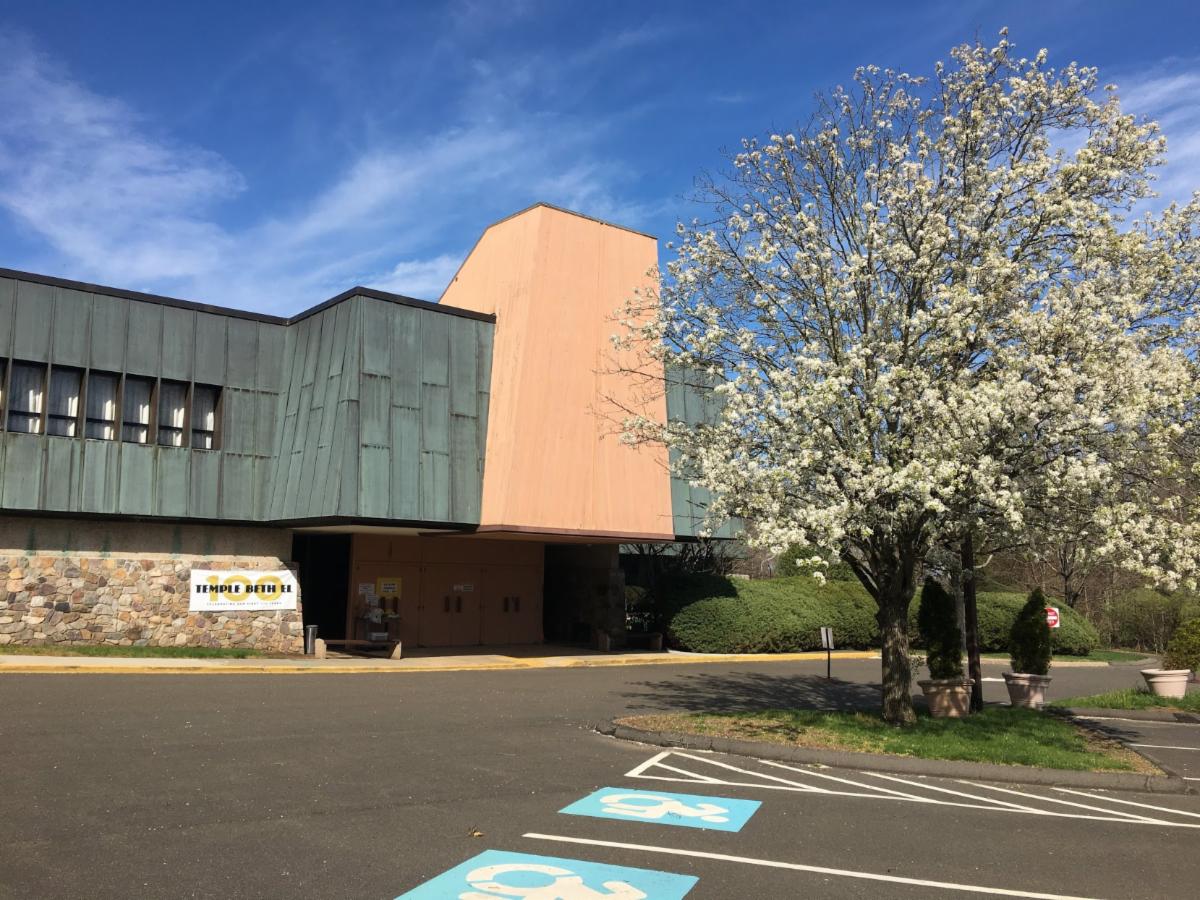


TBE, looking lovely in mid-April bloom, on Tuesday afternoon
 
Also on Tuesday, Steve Lander brought down 61 more bags of food to the Food Bank and presented Kate Lombardo, executive director, a check for $1,426 from TBE members. "When I returned to the office," Steve adds, "there was another check for $1,000 for the Food Bank."
And check this out!
Be My Quarantine - Diana Sabreen and The Social Distance
"Be My Quarantine" - by TBE's own Diana Sabreen and The Social Distance (sister Amy is behind the camera)

 
First there were jackals in Jerusalem, 
now wild boars on the streets of Haifa, per this photo from Ha'aretz


Shabbat Shalom!

With Pesach now behind us, the Jewish calendar moves inexorably forward, toward Yom Hashoah, which falls on Monday night and Tuesday.  This year is the 75th anniversary of the end of the Holocaust and the liberation of the camps.  Our seventh graders, along with Katie Kaplan, will join me on Sunday at 1 PM as part of our regularly scheduled Sunday Healing & Hangout, to commemorate Yom Hashoah.  If you have a yellow candle or other yahrzeit candle, we will be lighting them at that time and it would be nice to see many lit together on the Zoom screen.
The Zoom link is here - Password: 095800  Meeting ID: 866 408 956 

Join Beth Styles and me tonight for Kabbalat Shabbat at 6 PM and Rabbi Ginsburg on Shabbat morning at 11 to discuss the Torah portion.  And on Monday evening at 7, I'll be joined by Rev. Mark Lingle and Dr Kareem Adeeb in an interfaith dialogue on the spring holidays and the coronavirus.

Some recommended reading and viewing:
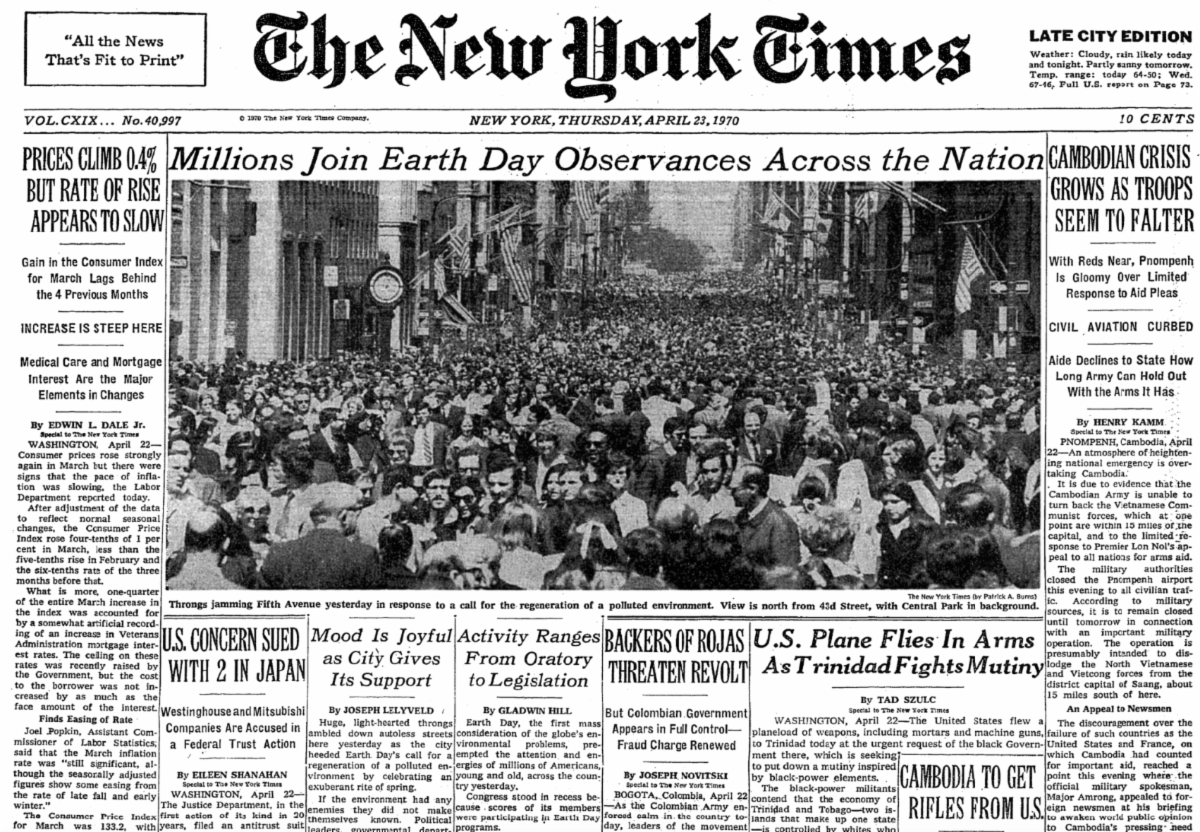

THE DAY THE EARTH MOVED - A website and film devoted to the 50th anniversary of the first Earth Day (April 22)

When the Earth Moves Film

Two contrasting views of Netflix's "Unorthodox."


You've seen the NYT's list of 52 Places to Go (Virtually) in 2020. 

So now, check out...

 TBE's 52 Places to Lead Services in 5780

I led services yesterday from the mystical Ari Synagogue in Safed...virtually.
You'll never guess where I'll be leading services from this evening!


Mourning Has Broken

You look like you could use a hug.  Everyone needs one.  Thanks to Rev Mark Lingle for sharing this video, guaranteed to put a smile on your face.

Everybody Needs A Hug 2

There is enormous sadness surrounding us right now, as we contemplate unfathomable losses. I read this morning of Margit Buchhalter Feldman, a 90-year-old Holocaust survivor from Somerset, N.J., died on Tuesday, one day before the 75th anniversary of her liberation from the camps.  What the Nazis were unable to accomplish, the coronavirus did.

But neither the Nazis nor Covid-19 could crush her spirit, nor can they crush ours. This morning I was up at 5 (Sleep schedule? What sleep schedule? I've even got a dog with insomnia).  Determined to boost my immunities, because that's what we are supposed to do these days, I took a chilly and invigorating 5:30 walk, accompanied only by a chorus of birds, and, in one part of the sky, the post-Pesach quarter moon and the dawn's early light in another. I found myself praying the morning blessings (p. 103 in Siddur Lev Shalem), with a special nod to the commentary written many years ago by Pamela Cohn Allen of blessed memory, as she walked in nature on a morning much like this one.  She was fighting cancer at the time, but I share it with you knowing that right now, each of us is fighting our own private battles...
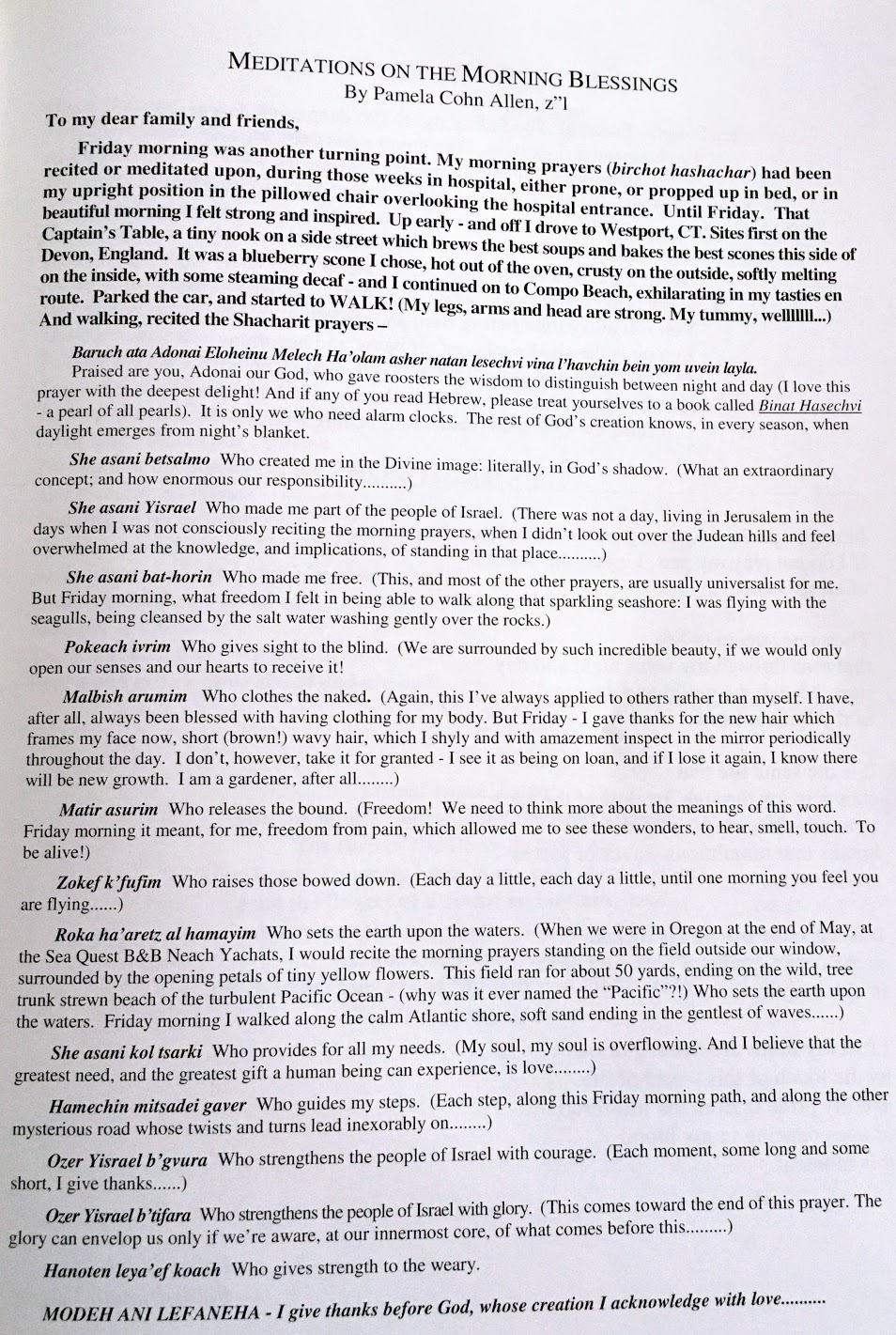

Pamela got me through half the walk, but when I got to Heartbreak Hill (Barncroft Rd - and hey, the Boston Marathon was supposed to be this week), I needed an extra boost, so I chose Cat Stevens' "Morning has Broken," which is based on a Scottish hymn and a poem by English poet Eleanor Farjeon, whose purpose was to inspire worshippers to give thanks for each day. Count me as duly inspired.

Cat Stevens - Morning has broken
Cat Stevens - Morning has Broken
But if you are looking for a faster pace, try Ahinoam Nini (Noa's) "Keren Or" (Ray of Light)

Noa (Achinoam Nini) - Keren Or
The translated lyrics:

All the stars hidden away
And the moon in a pitch black night
From the north
And south to Yemen
Not a ray of light

Morning, loyal widower
Clutch your grey sack tight
From the north
And south to Yemen
Not a ray of light

No light, not a ray of light

Light a small white candle
In this darkened tent,
This heart of mine
From the north
And south to Yemen
Then a brilliant light will shine!

The light, the light will shine


Let it shine, indeed! And for a moment at least, mourning has broken.

And as a bonus, here's another upbeat, whimsical Noa  tune - with a little English sprinkled in, entitled, appropriately, "Boker" (Morning).

Noa - Morning
Noa - Morning


God's Quarantine: 
The Divine Spark in the Human Heart

The Coronavirus pandemic has brought out the generosity of so many, including publishers.  The Koren Haggadah, by Rabbi Jonathan Sacksone of this generation's great rabbis, was made free to the public for this year's holiday.  This Haggadah commentary, like Sacks' many other writings, is filled with wisdom and theological insights.  I was struck particularly by two that related to that most vexing of questions, one that bridges the span between Passover and next week's observance of Holocaust Remembrance Day.  After Auschwitz, how can one even speak of a God who is active in history, like the God of the Exodus and Sinai, the God who saved Israel at the Red Sea?  

In back to back commentaries early in his Haggadah, Sacks shares Holocaust-related stories and in doing so, provides similar replies to that vexing question. In both cases, he demonstrates how a post Holocaust God can only be seen in human terms.  After Auschwitz, the God of Sinai has taken refuge in the human heart.  In the terminology of the day, we can call it God's Quarantine.
The first has to do with the Ha Lachma Anya passage, where Matzah, the "Bread of Affliction" first grabs the Seder spotlight.

Primo Levi's story is inspiring, but Sacks struggles to gerrymander a post-Holocaust God into the Exodus-Sinai framework.   How human beings were able to maintain their dignity in this story - one might even suggest, their God-given dignity - does little to salvage divine justice or compassion from the refuse pile of the Holocaust experience.  The fact that human beings could be so incredibly magnanimous  -despite the inhuman conditions thrust upon them - neither comes from God nor leads one inevitably back to God, at least not the God of Moses, the One capable of splitting large bodies of water and inflicting salvific plagues on nasty despots.  

In the dramatic scene recalled by Levi, the men involved are the true heroes, and indeed they restored freedom and human dignity to the world.  But did they restore God as well?  

Sacks is doing what so many theologians have done since the Holocaust: he is trying to use the canon of the Holocaust to reinforce a pre-Holocaust notion of God.  He is still addressing the God of Sinai, not the God of Auschwitz, and so the story rings hollow.

Rabbi Sacks explains God's presence similarly in his next Holocaust-connected commentary in the Koren Haggadah.  


Should God tarry, Sacks is admitting, we need the courage to take matters into our own hands and bring justice to our world. Here he hints that there is no simple answer to the question of where was God at Auschwitz, but then he returns to the heroic human spirit and the assertion that the only world more terrifying than one with an absent God is one where autocrats try to fill that void.  We need to cling to the idea of God even in God's absence, if only to leave the vacancy unfilled, leaving it to modern Pharaohs presumptuously aiming to fill it.

So what are the implications now, in the Age of Corona?  With so many people using their precious freedom to share their bread, by helping neighbors in distress and in some cases risking life and limb to do that, are those people bringing God back into the world?  And if they are - and I'm not saying that they are not - could the massive human response to this plague (the good response, not the response of those who are cynical, selfish and corrupt) be the first step toward ending the plague of divine darkness, the eclipse of God that has darkened our spiritual world for 75 years?
In his classic 1952 essay, The Eclipse of God, Martin Buber wrote, of the "still unredeemed concreteness of the human world in all its horror." Buber's paper was an effort to rummage through the still-smoldering ashes for some way of comprehending the incomprehensible while reconciling himself to a world without an operational deity.  Now, more than half a century later, has God begun to peer back at us from out of the mist?  Is the darkness receding?

These hopeful albeit farfetched approach may be irrational, but it was Ben Gurion, hardly an apologist for God, who said that in order to be a realist you must believe in miraclesAnd no less a dreamer-realist than Elie Wiesel, who had every reason to succumb to despair, quoted Albert Camus, author of "The Plague" in a 2006 interview with Time:  

"Camus said,'Where there is no hope, one must invent hope.' It is only pessimistic if you stop with the first half of the sentence and just say, There is no hope. Like Camus, even when it seems hopeless, I invent reasons to hope."
We join Sacks in inventing reasons to hope, if not for some manifestation of a traditional God, then at least for a notion of Ultimate Justice; because we desperately need the moral foundation laid out at Sinai, even as the God of Sinai has given way to the eclipsed, human centric God of Auschwitz. In that sense, we need God because no human being should ever be allowed to usurp that divine role. We need God to prevent extremists from perverting religious imagery to horrific ends.  

And the best way to do that, Sacks asserts once again, is to place that divine spark, that Eternal presence, safely quarantined inside the human heart.

Shabbat Shalom

Rabbi Joshua Hammerman

Tuesday, April 14, 2020

From the Rabbi's Bunker April 14: Two Little Goats, the Most Healing of Prayers

From the Rabbi's Bunker

Let's start with a little good news.  
Like this exquisite photo, taken yesterday from Jersey City


And there's more.  Now there are...

Two Gadyas

  
Big News from the Stamford Nature Center, hailing the births of twin goat kids, Ash and Violet, on Saturday, April 11, 2020.  The Nature Center reports that in light of recent times, the chosen names, Ash and Violet, are deeply symbolic. Ash trees are known for symbolizing health and inner strength, and Violets are symbols of love.  Ash and Violet are the first Oberhasli goat kids born on Heckscher Farm, and are their first kids of the 2020 season. They are also the first kids born to both Sweet Pea and Houdini. Oberhasli goats are a mid-sized dairy goat that originated in Switzerland and came to the US in the early 1900s. Ash can be distinguished from his sister by his darker forehead.

Thanks to Sue Plutzer for sharing these glad tidings. The price tag for father, should he wish to buy these two little goats on Pesach?  According to the he total comes to four (4) zuzim, at two (2) zuzim per kid. Read the history of this fascinating song.

But given the fact that they were born on "Heckscher" Farm - and Heckscher is the Hebrew term for kosher slaughter - I'd shell out those four zuzim as soon as possible!

...and keep sending me photos of your Zoom Seders and mitzvah projects...

 
 like this one of Allen Krim hard at work making protective equipment for Stamford hospital health workers - TBE members have made 1600 surgical masks! 

See recent TBE photos at this link

...And just to interject a little needed humor, Steve Lander sent me this photo, along with the suggestion that we count our blessings - we could be having a bris today:


End of Passover

Passover concludes with the seventh and eighth days on Wed and Thurs.  A reminder that. aside from 8th day Yizkor services at 11 AM on Thursday (see temple e-nouncements for the Zoom link and password), there will be no routine online TBE business taking place online until the holiday ends Thursday night.  E-mail remains the best avenue to communicate emergencies during the festival.

The Quintessential Healing Prayer

Over the past few days, I've had some opportunity to speak with people on the front lines here in Stamford, and the picture they paint is not pretty - which is understandable, given that Stamford now has more confirmed coronavirus cases than 15 entire U.S. states.  Plus, we all have connections to those who are suffering so acutely in New York.  I preformed a graveside funeral today.  It's almost becoming routine, were it not so bizarre, to be wearing gloves and a mask and standing far from the very small group of mourners assembled.  I heard from the funeral directors of the literal stacks of bodies on the loading dock of the hospital - human beings who died with no family present, some of whom are not even identified.

We are too numbed by it all to fully grasp what is happening.  And if we are grasping it, we are terrified, because we can no longer say, "There but for the grace of God go I," when every trip to the drug store has become a journey though a minefield, and when the disease may be growing in us even as we speak.  None of us have ever been here before.  Cancer survivors, perhaps, but even they typically aren't faced with such short term uncertainty.

With all that in mind, let me share with you what Hasidim and Kabbalists consider the most potent of healing prayers.    It's called Ana B'Koach, and it's found in our siddur, just before Lecha Dodi on Friday nights.  Here it is, in translation (which, as you'll see, doesn't come close to approaching the power of the original).

null
So what is the healing power of Ana B'Koach? Essentially, it harnesses the positive qualities of divine creative power with the potency of words - Hebrew words that go way back to Creation. As the website neohasid.org explains, the word "God" does not appear, and yet the entire prayer evokes what Kabbalists believe are different names for God - 72 of them, to be precise, in seven lines. It's believed to have been composed in the 1st century CE by the great Kabbalist Rabbi Nehonia. Every line contains exactly six words. The first letter of each word suggests the 42-letter name that is also encrypted in the first 42 letters of the book of Genesis - from Beresheet (‘in the beginning’) to Vavohoo (‘without form, and void’).

Click here for a comprehensive explanation of all this, from a Kabbalist, but don't let yourself get too caught up in the weeds. Now look at the Hebrew, line by line, revealing layered meanings that have excited mystics for centuries.
Now here it is, chanted, in a popular melody originated in Israel (and here are several other niggunim used as incantations for this prayer):

Ana B'Ko'ach


Here is a story shared by the maggid (master story teller), Yitzchak Buxbaum(you can see some of the other tales he has collected here) demonstrating the healing power of this prayer. It can also be found online here.

Rebbe Mordechai of Neshkiz was at a big wedding in Slavita, Russia, which many great rebbes and rabbis attended. At that time, early in his career, the Rebbe of Neshkiz had become famous as a miracle worker, but many of the other Torah leaders did not yet know him. After the wedding, when the Neshkizer had already left, some of the Torah leaders who remained discussed among themselves how the Rebbe of Neshkiz had become such a great miracle worker. And they began to consider that perhaps his power was not from the side of holiness. So they decided to send two delegates to Neshkiz to ask him about it. If he would not tell them, then certainly he was not from the side of holiness, and they would do everything possible to oppose him. So they sent two rabbis to him to ask him why he was able to perform such great miracles.
The Rebbe greeted these two rabbis, who bluntly asked him their question. In reply, he went over and got a Kabbalistic siddur, and opened it to the page with the prayer Ana BeKhoach. He then pointed out to them the Kabbalistic secrets found in every verse and phrase of the prayer. He said, "If one wants God, blessed be, to help with livelihood, one meditates on this divine Name in this part of the prayer; if one wants another kind of help, one meditates on this other Name." And he continued to show them that all the divine Names that effected salvation in every possible situation are found in Ana BeKhoach. "But the truth is," he said, "I've never used any of these Names. Let me tell you how I came to have the power to do all these miracles."
"When I was a young man I once went out for a walk to be alone and to take a rest from my divine service [of Torah study and prayer]. While on the street, immersed in my thoughts, I heard the rumble of carriage wheels; I looked up and saw an open carriage slowly pass by, and in it lay a man who was terribly sick, with sores covering his body from the soles of his feet to the top of his head; and he was groaning in pain. I immediately began to weep for him. And I prayed for God, blessed be He, to send healing and cure him!
"I wept and prayed so much that my soul actually left my body. When I came to the Upper World, the angels began to yell at me, 'What are you doing here? Your time to pass away hasn't come yet!' And they ordered me to return to this world. I told them, 'If there can be someone in that world who is so sick and suffers so much, I don't want to be there any more! I can't bear it!' They passed what I said on to the heavenly court and the court sent back a promise to me that because I really felt the man's pain, anyone on whom I had pity would immediately be healed. That's where I got the power to perform all these miracles of healing."
When the two emissaries took this information back to the tzaddikim and Torah leaders who had sent them, they then sent out messages to all the cities where Jews lived to tell them that all the sick people should immediately go to Neshkiz and the Rebbe there would heal them.
And that was what happened. Sick people from all over went to Neshkiz and were healed, and so many of those who were crippled or bed-ridden threw away their crutches or the wooden pallets they had been carried there on, that they were used to heat up the baths.
-----------------------------
There's an expression, "Pray as if your life depended on it." It's from St Augustine and it's not actually the whole quote. Here it is (at least according to BrainyQuote):

"Pray as though everything depended on God. Work as though everything depended on you."

In that Hasidic story, we have a person praying so hard in the face of someone else's suffering that it actually squeezes the soul out of him. The miracles came not as result of any power of the incantation or prayer, but from the unbounded empathy that drove him to pray in the first place.

And so I offer you this magical, special prayer, Ana B'Koach, knowing that it does have some power - but that the power is dependent on the person who is praying it. Rav Yehudah said in the name of the Rav: "The 42-letter name is entrusted only to him who is unassuming, humble, middle-aged, free from anger, never gets drunk and is not insistent on his rights. And he who knows it is heedful thereof and observes it in purity, is beloved Above and popular below, feared by man, and inherits two worlds: this world and the future world."

So let's complete this Passover with a heavy dose of humility fueled by a matzah-flattened ego. And then, as we move through the end of the festival and beyond, let's pray for those who are suffering - so many of the wounded and the dead - and let's pray for a general healing for our world. Let's pray as if the world depended on it.

Because it does.

Hag Samayach v'Bari (A joyous and heathy - and healing - Passover)


Rabbi Joshua Hammerman

Monday, April 13, 2020

From the Rabbi's Bunker April 13: The Blessings of Home

From the Rabbi's Bunker

A Passover Like No Other


While Many TBE Families Zoomed their Seders...


....and many joined our seder and services


Some also prepared masks for Stamford Hospital


...and many lined up to donate food

See more of our recent TBE photos at this link
...and send me more photos of your family Zoom Seders and mitzvah projects.

There is still much more that we need to do!!!

Stamford Health sent notification that their frontline hospital workers are in urgent need of donations because they are unable to go home or get to a store. The pick up or drop off is very easy and safe. If you're able to drop off go to Tully Health Center, 10 AM - 2 PM, M-F. We just dropped off several boxes of supplies requested in the letter below. This is real and desperately needed. Signage will guide you once you enter the Tully campus during that timeframe. Tully is at 32 Strawberry Hill Ct, Stamford, CT 06902. It's curbside drop off.
They would appreciate any donation of the following items: Food Essentials 1. Non-perishables (grains, rice, oats, pasta, nuts, granola bars) 2. Canned foods (beans, tomatoes, pasta sauce, tuna, soup, fruits) 3. Bottled water Non-Food Essentials 1. Toilet paper 2. Paper towels 3. Tissues 4. Shampoo 5. Body wash 6. Hand soap, sanitizers, and disinfectants 7. Laundry detergent, dish detergent & soap If you need pick-up or have ANY questions please contact the people below. Chris Riendeau - 203-276-5977 or criendeau@stamhealth.org Andy Bisselle - 203-276-2533 or abisselle@stamhealth.org Remember: there is curbside drop-off zone located at Stamford Health's Tully Health Center - 32 Strawberry Hill Ct. Volunteer staff will be available to accept donations Monday through Friday from 10:00 am to 2:00 pm. Please note that items should be in their original, unopened packaging.
------------------

Blessings of HOME


Traditional home blessing by artist Mickie Caspi - Traditionally the Birkat ha-Bayit  (Blessing of the Home) is hung on the wall next to the front door or next to a window: it is meant to drive any evil spirits out of the house and protect the occupants within.  In that sense, it serves much the same purpose as a mezuzah, or other protective amulets that have appeared in Jewish history, like the so-called "magic bowls" popular during the Talmudic era, that were buried at the front door of a home to keep out demons.


"The world is like an inn, the world to come like home." ~ Talmud, Mo'ed Katan 9b


As we continue to make our way through the intermediate days of Pesach, a theme that keeps returning is how much of a homecoming this unique period has become.  Even those who live thousands of miles from loved ones have found their way back, via social media, while most of the world has been forced to remain stationed in place, and for most, "in place" means "at home."

Home has been central for Jews since the beginning - and I mean the very beginning.  In fact, the word Bereisheet  "In the beginning," which begins the entire Torah, starts with the letter bet - a letter that itself means - and is shaped like - a house.  The Hebrew alphabet began as pictographs, and as you can see below, bet clearly was designed to look like a house, with an opening, which it maintains in its current form.

So the basic building block of the Torah, and in fact of all Creation, is the letter that both symbolizes and literally means a home.

And now, we've never been more acutely aware of the protective and nurturing nature of home.  Home has its pitfalls as well, and no doubt this month's close quarters have spawned some strife.  But when we see what is happening around us, we realize that, in the words of Robert Frost, "Home is the place that when you have to go there, they have to take you in" (see the full poem here). And never before, at least since the night of the 10th plague, has home been more needed as a sanctuary, a place to return to, where we can stay.  

T.S. Eliot expressed in his poetry how many of us are feeling right now.

"We shall not cease from exploration
And the end of all our exploring
Will be to arrive where we started
And know the place for the first time."

And so let's pay tribute to what home means for us, as Jews and as Americans - and also anticipate this weekend's massive concert for the World Health Organization, "One World: Together at Home..."

One World: Together at Home


No musical tribute to home can even hope to begin without this classic sung by Frank Sinatra. "The House I Live In" was a short film made in 1945 at the end of World War II to promote racial tolerance starring Frank Sinatra. It received an Honorary Academy Award and a special Golden Globe award in 1946. It's a (more diverse) Norman Rockwell painting, come to life.


Frank Sinatra
Frank Sinatra - music " -The House I Live In"
The House I Live In - full documentary - with Frank Sinatra

Here are some more "home" songs, beginning with this new Passover classic...

Dayenu, Coming Home - The Fountainheads Passover Song


Israeli and Palestinian teens sing about home - in three languages.

"Home" (Phillip Phillips) - Sam Tsui & The YMCA Jerusalem Youth Chorus | Sam Tsui

Another great "home" song, about the recognition that home is where the heart is.

The Greatest Showman |
The Greatest Showman | "From Now On"

The classic Yiddish yearning for the hearth and home.
A song of longing made more poignant by the recognition that 
some homes may never be regained.

Israeli children sing Oyfn Pripetshik | Holocaust Day
Israeli children sing Oyfn Pripetshik 
Holocaust Day

By the Fireplace

A fire burns on the hearth
And it is warm in the little house.
And the rabbi is teaching little children
The alphabet.

Remember, children,
Remember, dear ones,
What you learn here.
Repeat and repeat yet again,
Komets alef-o.

Learn, children, don't be afraid.
Every beginning is hard.
Lucky is the Jew who studies Torah.
What more do we need?

When, children, you will grow older
You will understand,
How many tears lie in these letters
And how much crying.

Learn, children, with enthusiasm,
As I instruct you.
The one who learns Hebrew better
Will receive a flag


And finally, my personal favorite, "Bless this House," recorded by my father, Cantor Michal Hammerman. (You can also find it here).

What is your favorite "Home" song / passage / poem / insight? What is giving you strength at a time like this?

For in the end, every journey is a journey home.

Interfaith Heroes

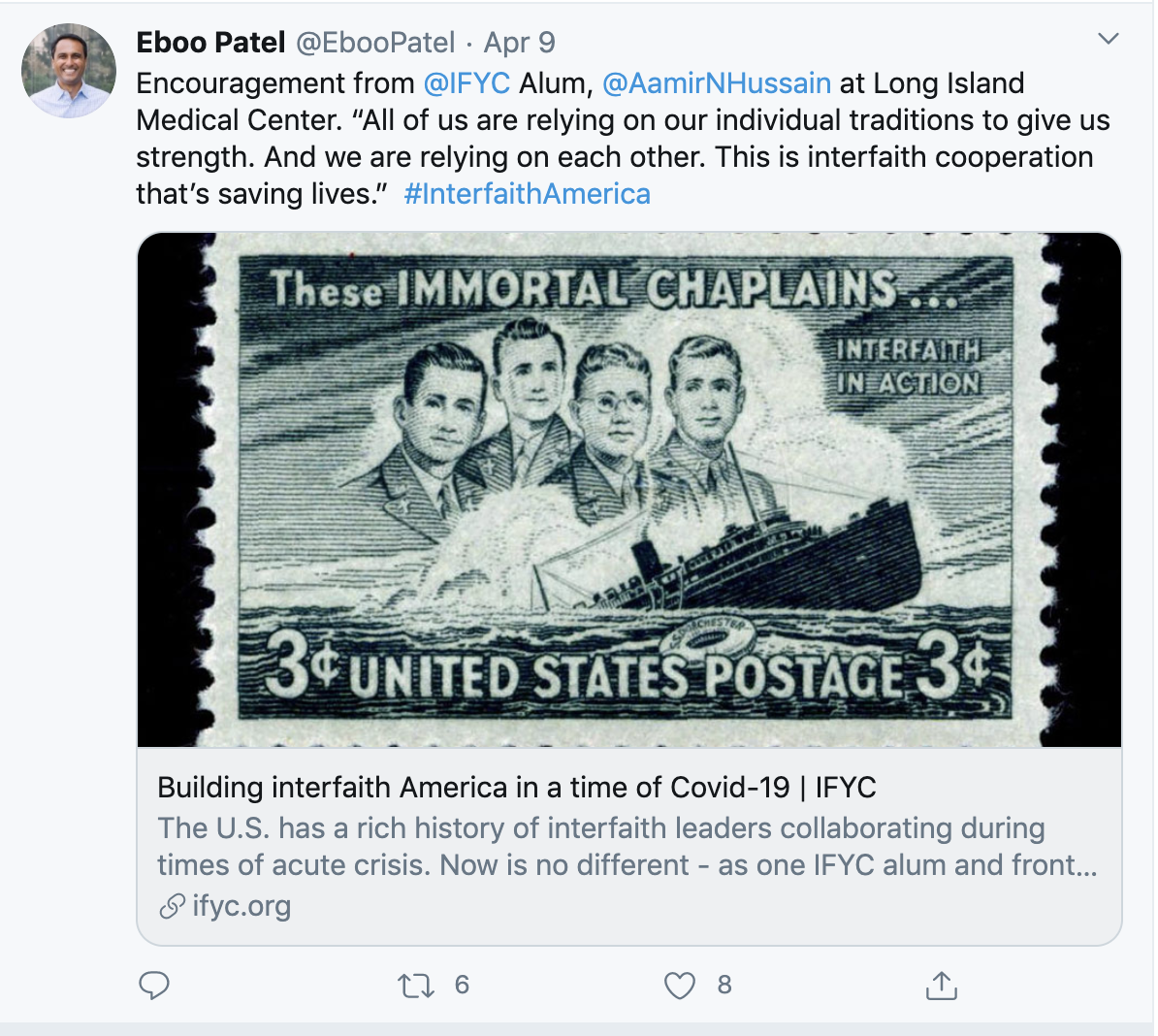
I was taken by a story referenced today on Twitter by interfaith leader Eboo Patel.

The story referenced here is one that deserves retelling for as long as religion exists on this planet. You can find the full story here, but here's the short form: In February 1943, a torpedo from a German U-Boat hit the USS Dorchester. The Four Chaplains aboard - a Catholic, a Jew and two Protestants - handed out life jackets to the frightened soldiers. When there were none left, the men removed the vests from their own bodies and gave them away. Witnesses saw the four arm in arm, each whispering their final prayers according to their respective traditions, going down with the ship. We can now add Muslims, Hindus and others to the mix of interfaith partners and heroes. And I am exceedingly proud of the interfaith community we have nurtured here in Southwestern Connecticut. Which reminds me that you are invited to join me and by Muslim and Christian colleagues (some call us the "Three Amigos,") next Monday night, as we discuss - with you - these unforgettable holidays.

Hag Samayach from the Bunker
Rabbi Joshua Hammerman