Thursday, September 17, 2020

In This Moment: Sept 18, 2020: Next Year is Here: Is That a Good Thing?


In This Moment
Shabbat-O-Gram for Sept 18, 2020


We can quibble over lots of aspects of this week's Abraham Accords, including the fact that Israel was never in a state of war with UAE and Bahrain to begin with, but the headlines from these Arab newspapers have got to bring a smile to the face of anyone who has borne the burden of Israel's geopolitical isolation over the decades. 
---------


Some Rosh Hashanah Notes:
 
The more things change...  Every year for 33 years the Fein family has donated flowers for our sanctuary and lobby.  Well, we aren't going to let a little thing like a pandemic break that chain - so my special thanks to the Feins for the virtual flowers that they have donated to honor the new year, in loving memory of Lily and William Vail, z'l.

It takes a village...  We may not be together, but we will all be watching the same thing at the same time, and that counts for something.  So if you are so inclined, have someone snap a photo (not that I would ever ask anyone to do that on Shabbat) of your group / family/ self watching / participating in the service.  Send your pics to me and I'll share them.  We'll find new ways to beat this thing and come together.

- You can also join us in the live Zoom Lobby right after the final prayer of Musaf on Saturday.  You'll be able to wish your friends and neighbors a sweet new year, and chat with them.  Check your local listings for the link.  And on Sunday, we have the live shofar drive-through and Tashlich.


TBE 100

Our TBE 100 programs last Sunday, on the actual 100th anniversary of our first service, were very special. 

Thanks to the filming and editing skills of Stephany Zelazny, our 100th Anniversary Montage was a huge hit! 


At our early program, Lisa Manheim spoke at the playground's "Pre-Dedication," remembering Emmet on his first yahrzeit and TBE's 100th Anniversary. Photo by Aviva Maller Photography.  See more photos in our Fall 2020 Album


Next Year is Here!  Is that a Good Thing?

The Maccabeats have gone Jewishly viral this week with their new version of the Israeli classic, "B'Shana Ha'ba'ah,"  "Next Year."  Listen to it.


The Maccabeats - Bashana Haba'a - Rosh Hashanah
The Maccabeats - Bashana Haba'a 

Yes, next year has at last arrived, and it can't possibly be worse than the one that is ending.  Right?

Well... The Hebrew name for 5781, the year we are about to enter, says it all.  

 
Tav shin peh alef.  If you toss around the letters, you get the word ASHPOT - a garbage heap. Literally in the Bible, a pile of dung. The gate adjacent to the Western Wall is called Sha'ar ha-Ashpot.  The Dung Gate. It's where they carried out the residue of all those animals brought up to the temple for sacrifices. Nehemiah 2:13 mentions a Dung Gate that was probably near this one. 


Dung Gate: Sha'ar ha-Ashpot

So be careful what you wish for, or we may end up in a year that is even worse than this one has been, a dung-show of biblical proportions, a real dung-ster fire.

Or maybe, just maybe, the view from the dung heap is just what we need to assess our world, warts and all, and act on what we see. The idea is that the prevailing winds would usher foul odors out of Jerusalem through that gate, along with the carcasses and other garbage.  Dung Gate saw its share of death and suffering, sacrifice and service. And there our ancestors escorted that suffering away and brought joy in.  These days, Dung Gate happens to be where many celebrants enter the Old City for B'nai Mitzvah and other joyous occasions; it is after all, the closest gate to the Kotel.  I've seen very little suffering in the numerous times I've been there, save for the overcharging by taxi drivers lying in wait for unsuspecting (and very tired) tourists looking for a quick ride back to the hotel.

Check that - actually I have seen tense moments in that spot having less to do with taxis and more to do with the tensions between some Israelis and the residents of Silwan, a contested Arab neighborhood just below.
 
Maybe that's precisely where we need to enter this new year - where we leave the old one - just inside Dung Gate, a reality check for life at the limits, a place of transition, from death to rebirth; from unspeakable suffering to hope.  

Play it again, Maccabeats!

Rosh Hashanah 5781: Leadership in Action

We enter the new year with a glimmer of promise and a whole lot of concern.  As the US reaches the unimaginable number of 200,000 dead from Covid-19, Israel has entered into a lockdown that will encompass the entire fall holiday season.  Yesterday, Israeli President Reuven Rivlin delivered one of the most heartfelt messages I've ever heard out of the mouth of a politician:  
I understand the feelings of confusion and uncertainty, the anxiety that many people are feeling. I understand and, first and foremost, want to apologize for that....
When the coronavirus burst into our lives, we thought it would be a tough battle, but we hoped for a swift victory and so we accepted the restrictions of social distancing with understanding, despite the costs it entails. You paid a high price, a real price for a long time - our synagogues were closed on Pesach, our mosques were closed during Ramadan, and until today I grieve when I think of the bereaved families who were unable to visit the graves of their loved ones on Yom Hazikaron.

We celebrated with our families under great restrictions, we mourned our dead in a way unworthy of them, we lived our lives in a painful compromise in the belief that the country and its institutions would get us out of this crisis quickly.
You, the citizens of Israel, deserve a safety net that the country gives you. Decision-makers, government ministries, policy implementers must work for you and only for you. To save lives, to reduce infection, to rescue the economy. I understand the feeling that none of these were done satisfactorily. And now, today, my fellow Israelis, we are forced to pay the price again. I think of those with mental health issues in hostels, of soldiers, of parents in old-age homes. The lockdown means that our ability to live together, to celebrate together, to mourn together, to pray together, to fulfill our most basic human needs together - all these are harmed. And from here, I want to say to the government of Israel - its leaders, ministers and advisors: the trust of the people is beyond value. We must do everything to restore personal, medical and economic confidence to our fellow citizens... This is a second chance and we must take it because we will not, I fear, get a third one. We must refrain from blaming other parts of the society as if one sector is 'responsible' for spreading the disease. Every group and community in our society plays a crucial role in our combined strength and in our ability to win this battle. We will not prevail through finger pointing and toxic accusations. Only together.

Rivlin has always been the consummate mensch and once again he proves that with this demonstration of mature, responsible leadership.  Israel is in turmoil over this right now, but with that kind of leadership at the helm, I have confidence that they will get this thing under control again.

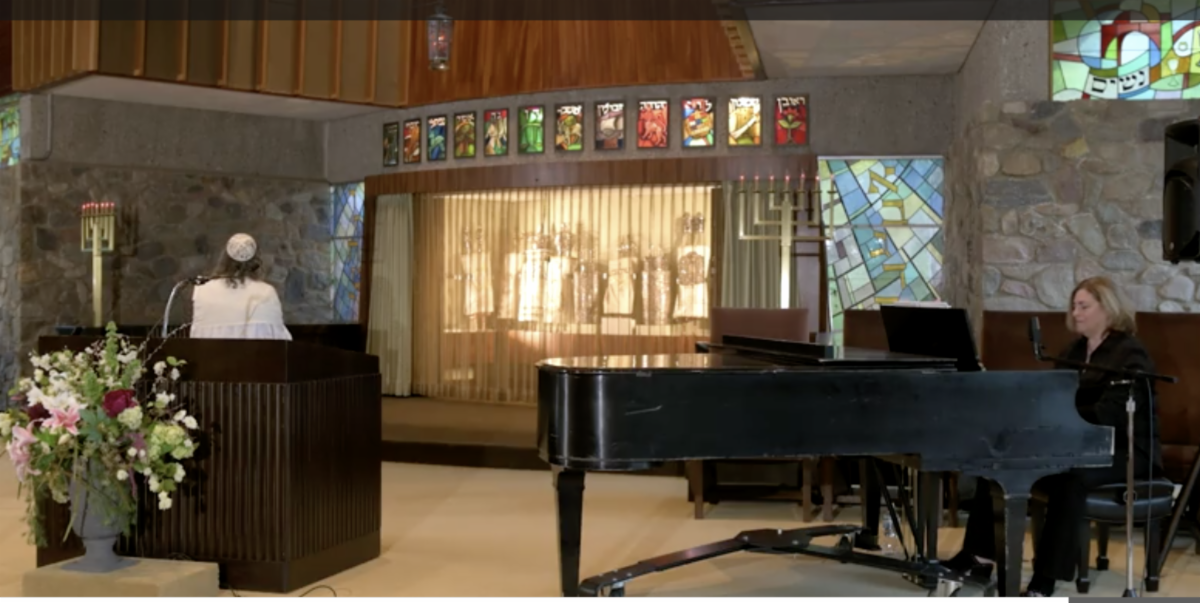
Here is a photo preview of what you be watching this weekend from our sanctuary:


Some supplementary material to bring to services with you, or for other High Holiday reading:


For those looking to take a virtual excursion to Israel, check out Israel is Beautiful - a new venture produced by Peter Abelow, a tour guide that many of us have come to know and love. Israel Is Beautiful provides incredible video tours to the Holy Land of Israel for individuals, groups, families and schools.  Their first tour - of Jaffa Port - is free.


May your year be as sweet as rugelach from Marzipan, with honey as sweet as Torah.  

A sweet and healthy year to your family from mine,

Rabbi Joshua Hammerman

TBE 100th Anniversary Photo Montage, by Stephanie Zelazny


FIRST-EVER 50-STATE SURVEY ON HOLOCAUST KNOWLEDGE OF AMERICAN MILLENNIALS AND GEN Z REVEALS SHOCKING RESULTS

Disturbing Findings Reveal Significant Number Of Millennials and Gen Z Can’t Name A Single Concentration Camp Or Ghetto, Believe That Two Million Or Fewer Jews Were Killed And A Concerning Percentage Believe That Jews Caused The Holocaust.

NEW YORK, NEW YORK: September 16, 2020 – Gideon Taylor, President of the Conference on Jewish Material Claims Against Germany (Claims Conference), today announced the release of the U.S. Millennial Holocaust Knowledge and Awareness Survey, the first-ever 50-state survey on Holocaust knowledge among Millennials and Gen Z. The surprising state-by-state results highlight a worrying lack of basic Holocaust knowledge, a growing problem as fewer and fewer Holocaust survivors – eyewitnesses to a state-sponsored genocide – are alive to share the lessons of the Holocaust.

Nationally, there is a clear lack of awareness of key historical facts; 63 percent of all national survey respondents do not know that six million Jews were murdered and 36 percent thought that “two million or fewer Jews” were killed during the Holocaust. Additionally, although there were more than 40,000 camps and ghettos in Europe during the Holocaust, 48 percent of national survey respondents cannot name a single one.

The state-by-state analysis yielded a particularly disquieting finding that nearly 20 percent of Millennials and Gen Z in New York feel the Jews caused the Holocaust.

“The results are both shocking and saddening and they underscore why we must act now while Holocaust survivors are still with us to voice their stories,” said Gideon Taylor. “We need to understand why we aren’t doing better in educating a younger generation about the Holocaust and the lessons of the past. This needs to serve as a wake-up call to us all, and as a road map of where government officials need to act.”


The study reveals that Wisconsin scores highest in Holocaust awareness among U.S. Millennials and Gen Z. Arkansas has the lowest Holocaust knowledge score1, with less than 2-in-10 (17 percent) of Millennials and Gen Z meeting the Holocaust knowledge criteria.

We calculated our Holocaust “knowledge score” by using the percentage of Millennials and Gen Z adults who met all three of the following criteria: 1) have “Definitively heard about the Holocaust,” AND 2) can name at least one concentration camp, death camp, or ghetto, AND 3) know that 6 million Jews were killed in the Holocaust.

In what might be considered a disturbing sign of the times, 59 percent of respondents indicate that they believe something like the Holocaust could happen again.

The states with the highest Holocaust Knowledge Scores are: Wisconsin, Minnesota, Massachusetts, Maine, Kansas, Nebraska, Pennsylvania, Idaho, Iowa, and Montana.

The states with the lowest Holocaust Knowledge Scores are: Alaska, Delaware, Maryland, New York, Georgia, Hawaii, Louisiana, Florida, Mississippi, and Arkansas.


Wednesday, September 16, 2020

Brown Alumni Magazine


Review: Embracing Auschwitz (Religions for Peace, Australia)

Review: Embracing Auschwitz

Book Cover: Embracing AuschwitzI have a cynical friend who claims that there have been more books written about the Holocaust than there were people who perished in it. That is, no doubt, an exaggeration, but it is true that most of the books on this subject sound very much alike. Joshua Hammerman’s Embracing Auschwitz (Ben Yehuda Press) deserves our attention because it is by far the most original book on this subject that has come along in a great many years.


It acknowledges right up front that this was the darkest time in all of human history, but it affirms that this generation can achieve new visions of faith and strength – and even joy – out of a confrontation with it. And I don’t know of anyone who has said anything like that before.

He tells what he learned the first time that he was on a bus with a group of teenagers on the way to the hell-on-earth that was Auschwitz. He expected them to be feeling an overwhelming sense of dread, but when he looked around, he saw that these kids were trading their school pins and their sweatshirts and displaying an astonishing amount of teenage hormones… and he realised that they were the ultimate repudiation of the Nazis’ intentions.

Right there, right on the way to the centre of the valley of the shadow of death, these kids were expressing the excitement of life, and they were thereby demonstrating that the Final Solution was not so final after all.

And it is here that Hammerman offers his boldest idea, an idea that offends us when we first hear it, an idea to which our first reaction is that this is something that goes beyond the boundary of what a Jew can say. He proposes that there are now two Torahs that we must learn how to live with: the Torah of Sinai and the Torah of Auschwitz, and that each has validity, and each has lessons to teach us.

A Torah of Auschwitz? Is that phrase not the ultimate oxymoron? Surely, we can take pride and give honour to those who wrote poetry and composed songs even in the bowels of Hell without using a phrase like this one.

Surely we can stand in awe of those who shared their scraps of food, and those who held Seders in secret, and those who escaped by crawling through sewers, and those who somehow preserved a bit of their humanity in that most inhuman of all places, without calling that world a place of Torah.

How can we talk of a Torah of Auschwitz? Is not such a phrase a desecration and a perversion of the whole Jewish tradition, which stands on the Torah of Sinai?

And yet, Hammerman declares that our perception of God, of ourselves, and of our purpose in the world will be transformed when we begin to see them through the prism of Auschwitz. The Torah of Sinai has not been abrogated, but we will understand it differently in confrontation with one that is sometimes much harsher and sometimes much gentler: the Torah of Auschwitz.

The rest of this book is a description of some of the ways in which these two Torahs differ and yet are intertwined. Hammerman tells us how he and his travelling companions found once-abandoned synagogues all over Eastern Europe now rebuilt with the names of every single person in their community who was killed by their Nazis inscribed upon their walls.

In some cemeteries, they found tombstones that had been overturned and desecrated with swastikas, but in others they saw tombstones that have been restored and repaired so that the names that are inscribed on them will not be lost.

They remembered the words of Simon Wiesenthal, who said that he envied those who were fortunate enough to have graves instead of just being thrown into rivers or into ditches. And he envied even more those that had sunflowers planted on their graves, because the sunflower is known in European folklore as the flower that remembers.

Hammerman recounts that the young people on this trip came away from this experience with the determination to be sunflowers to the next generation. He says that when you listen to a witness, you become a witness.

And so these young people resolved that when they came to Yad Vashem they would look up the names of these people in the archives, so that, when they got home, they could tell their congregations the stories of their lives, and not just their deaths.

Hammerman finishes this account of all the different collections of names that they saw wherever they went with this turnabout on one of the mitzvahs that is found in the Torah of Sinai. When they came to Berlin, they saw bricks on the sidewalks that you could stumble over, and therefore could not help but notice. These bricks are called stolpersteine, which literally means, “stumbling stones.” Each one is inscribed with the name of the person who once lived here, who was taken away to his death from here, a name that must not be forgotten.

The Torah of Sinai says that you must not put a stumbling block before the blind, for if you do, you may cause him to fall. The Torah of Auschwitz says the very opposite: that stumbling blocks make people look down and see the names of those whose names they would rather not see.

The Torah of Auschwitz says that you must put a stumbling block before those who want to pretend they are blind so that they will have to come to terms with what happened here. And then it goes one step further, saying that it is a mitzvah to put a stumbling block before those who want to pretend that they are blind to suffering – not only then and there but here and now as well.

You will not be the same after you have read this disturbing book. It will force you to see God as the One who was with us in Auschwitz, who suffers with us, and who needs us.

Brace yourself to read a book that is sometimes painful, sometimes funny, and often inspiring. Brace yourself so that you can acquire a whole new perspective on who we are and what our purpose is. Brace yourself, even though you will put this book down many times along the way and wish that it were wrong. Brace yourself because you will learn that we are all survivors and that perhaps God is too.

Rabbi Jack Riemer is the author of Finding God in Unexpected Places and The Day I Met My Father Isaac at the Supermarket.


Embracing Auschwitz Book Cover

Tuesday, September 8, 2020

TBE Bar/Bat Mitzvah Commentary: Brandon Nadel on Tazria-Metzora AND Ki Tavo

 Shabbat Shalom!

I’m the lucky one who was originally assigned the Torah portions about leprosy and infectious diseases, and then, just to make it even more challenging, was next assigned the portion about a whole bunch of curses!    In all seriousness, I believe we can tie both portions together and receive some very important lessons.


I know a lot of people have suffered because of  COVID-19   The Torah teaches us not everything in life is supposed to be pleasant.  COVID-19 is anything BUT pleasant.   Due to COVID many loved ones were taken away too early.  Those who survived may still have long term symptoms.  And overall,  this disease has resulted in social isolation.   In order to protect one another, we wear masks, which is essential, but can make it difficult to hear others or interpret their emotions correctly.   


Social isolation is described in my Torah portion from late April, Tazria-Metzora.  The person who has leprosy is sent to live outside the community in isolation.  We too were called upon to socially isolate,  which was necessary, but can have emotional drawbacks and mental health implications.  


From the very beginning of Genesis, the Torah teaches  it is not good for human beings to be alone.  But during the height of the crisis and even now if someone is sick, there is no choice but to be alone and isolate.


So how does the Torah portion resolve this problem?  When the priest hears about the situation he is instructed to go outside the camp – to go to the afflicted people and not wait for them to come to him.


Hence, the lesson learned,  even when you feel  alone, you are not truly alone.  There can always be the support of your community and the warmth of your loved ones to be there for you.  The key to healing is to help the person maintain connections with other people.  The Talmud states  if you visit a sick person it cures 1/60th of the illness.   Even if you need to be six feet away. 


This week’s Torah portion, ki tavo, is about the laws of Judaism, as well as the curses and blessings  people will get if they obey or disobey.   We have seen this in the past few months with coronavirus.  When we disobeyed the scientists and doctors by opening up the economy too rapidly and became more lenient about social distancing, the numbers spiked.    We have collectively been cursed for not doing what would have kept our community healthy and alive.  . The curses have not been simple, random punishments, but direct consequences of bad choices.  


Likewise, New Zealand as well as many nations in East Asia had success in dropping the COVID case numbers, because these countries listened to their government’s isolation and distancing policies.  They understood wearing masks was a health and safety issue,  rather than a political issue.  Judaism teaches the importance of protecting our fellow people, and unfortunately in many regions in the United States,  we are now suffering the consequences of not protecting one another.   If we follow the best guidance, we will be delivered from the suffering.


Another way we can “reverse the curse”  is by following an  important law in the Torah: a ten percent tax that goes to those who may need it.   We have a religious and moral obligation to use our money to help the sick and poor.  

 Many of the less fortunate can’t afford to pay their rent and/or if inflicted with the disease, their hospital bills can be extraordinary.   To make matters worse, The government hasn't been providing adequate benefits for the unemployed and hasn’t provided enough free health care.  This broken system could be helped through the mitzvah of charitable donations. 


Lastly, this torah portion teaches us forgiveness, with the optimism wrong-doers can learn from their mistakes, but only after being accepted back into society.   When individuals do actions they realize now were wrong and can sincerely apologize, we are expected to pardon them. When we hold grudges, we often end up in conflict, and all sides get hurt.  Tying this back to the beginning of my speech, we are to forgive those who did not originally wear a mask or take the virus seriously.   If we forgive, one is more likely to obey the rules and wear a mask, rather than rebel.    I have found from personal experience forgiving others ends conflict between the two parties involved, and heals any inner turmoil as well.   


    For my mitzvah project, I’m donating books to Fairfield County Children’s shelters.  I love to read, and would love to encourage others to read as well – especially since books can be pretty good companions when one feels isolated.  Those kids who receive the books will know someone cared about them.


Thursday, August 6, 2020

This Moment, by Rabbi Joshua Hammerman: Now, A Power Outage Too? A Stiff-Necked Perseverance


In This Moment

 
A July front page of NY Daily News rings even truer now


Now, a Power Outage Too?

What hasn't yet gone wrong in 2020?  All that was missing was a massive power outage?  Of course!  What a perfect time to have a tropical storm, just the trick to smoke us out of our sultry shelters and force us to gather in precisely those public places that we have been trying to avoid. But at least the temple has never lost power in these situations.  Until this week.

To quote the old Yiddish saying, "Man plans and God laughs."

On Tuesday, we were among the thousands to lose power in Stamford and it just came back at TBE this morning. Yet, because of the strangeness of this Zoom era, we not only have had online services each day since the storm hit, we've always had at least ten present!  That never could have been the case were we doing services exclusively "live" on site.  It looks like cancellations due to weather may be a thing of the past.  Nothing can shut us down - we're not so powerless as it may seem.  Maybe we can get the last laugh on God.

I understand that this thing is not yet over for many of you and I feel your pain.  I hope that you have the strength to endure and enough charge in your phone to be reading this.  Special thanks to the people at the Ferguson Library for being so hospitable to me yesterday, providing a needed service for the community while maintaining safe distancing practices - and I recommend the library for those looking to charge up and use the internet.  Unfortunately, TBE is not able to serve in that capacity this time, as we have so often in the past.

We will get word to you regarding the barbecue and meals-to-go scheduled for tomorrow.  Meanwhile, all services will take place on line as scheduled.

As I circumnavigated my way through the long line for coffee at Donuts Delight yesterday, and then headed for the library, I was grateful that the rate of Covid-19 spread in our area has been reduced significantly.  It is precisely to survive emergencies like this blackout that we all worked so hard to reduce the virus's spread in the first place.  We can't waste that effort on frivolous things, as many have done in other states and in other countries (including in Israel). It only takes a few careless people to reignite community spread.  So let's do our best to continue to be careful.

A Stiff Necked Perseverance

ו  וְיָדַעְתָּ, כִּי לֹא בְצִדְקָתְךָ יְהוָה אֱלֹהֶיךָ נֹתֵן לְךָ אֶת-הָאָרֶץ הַטּוֹבָה הַזֹּאת--לְרִשְׁתָּהּ:  כִּי עַם-קְשֵׁה-עֹרֶף, אָתָּה.Deut 9:6 Know therefore that it is not for thy righteousness that the LORD thy God giveth thee this good land to possess it; for thou art a stiff-necked people.

In this week's portion, "Ekev," Israel is called a "stiff necked people."  It's not a compliment, but given the sharpened awareness of the vulnerability of the neck, a symbolism brought home most recently by the murder of George Floyd, this peculiar metaphor has gained resonance.  If the challenges of life are to be met by a stubborn resolve, that gumption originates in the part of the body where we swallow hard, that unguarded spot most vulnerable to the spear's thrust, the batter's foul tip - and the knee's plunge.  We all need to develop a thick skin - but more than that, a stiff neck.

I found this journal entry by the musician Stevie Nicks to be inspiring, at a time when so many of us our feeling such deep frustration and impatience. To be a "spiritual warrior" is not to take undue risks.  True courage is marked by perseverance and stiff-neckedness.  To be a hero, then, to beat this virus, is not to climb a mountain and turn around, as Stevie Nicks might have done one upon a time.  It is, in fact, to stay home.


I read this important letter in the Jewish Journal, written by a rabbi from L.A. and speaking to the predicament so many Jews are facing these days: the decision to sustain (or better yet, intensify) their affiliations within the Jewish community.  Here's an excerpt:

The COVID-19 era has devastated the world. It has taken away lives. It has left others stricken financially, mentally and emotionally and impaired people's health. Many cannot afford to rejoin our communities, and these are the members who  must hear our support and feel our love. Fellow Jews who need our emotional and financial help.  But for those who question the spiritual nourishment of online services, feel disconnected without in-person gathering and have the means to continue to join sacred communities, my plea is to you. Parents who show their children that the value of the Jewish community relies on whether or not religious school will be in-person or online don't teach their children the value of being a link in the chain of thousands of years of Jewish history. Will you place your child before a screen every single day? Perhaps. But choosing to remain active in your synagogue, day school, religious school or camp community models for our children that when a family experiences a difficult time, we choose to hold one  another's hands instead of fade away into the silence of resignation. A real community is one that upholds those who have fallen. A true community exists even when times are difficult and scary. A sincere community chooses to remain active when the world falls apart.
This is a beautiful opportunity to teach our children why being Jewish is so important. We learn, "All of Israel is responsible for each other." The midrash reminds us of the story of a group of people sitting in a boat. One man drills a hole under his seat. Everyone screams. The man simply replies, "Why are you worried? I am only drilling under my own seat." To which the passengers reply, "But you will flood the boat for us all." When we choose to drill a hole only under our seat, thinking that we are merely separating just ourselves, we begin to puncture the ark of Judaism. Even just one hole in the ark has the potential to drown us all.
Phrases like "opting out" or "taking a break" don't exist when you see yourself as a spark of a greater light that penetrates the darkest corners of this world. Staying a member of a community is a covenant; a promise that God can count on you to step up when your unique voice is needed. And if you find yourself not currently in a community, we welcome you to join one, strengthening all of our souls during these moments of great uncertainly and fear.
Read the whole letter here.
Shabbat Shalom!
Rabbi Joshua Hammerman

In This Moment: July 30: Tisha B'Av

In This Moment

I return today from a few weeks "away" - and just in time for Tisha B'Av, the fast day that begins this evening.  I hope this finds you in good health.  A special thank you to all who held the fort in my absence.  I heard great things! 

We continue to plod along as the pandemic rages around us, though thankfully, for the moment, less so in our state.  Our minyans and Shabbat services will continue to be on Zoom, as we fight off the ennui of cabin fever, which too often leads to letting down our guard, and we cherish our moments together - moments of real connection, even if they are primarily virtual.

See below a flyer about tonight's unprecedented partnership among Conservative synagogues near and far in the chanting of Lamentations.  We'll be joined by Congregation Beth El of Norwalk, North Suburban Synagogue Beth El, Highland Park, IL, Ohr Kodesh Congregation, Chevy Chase, MD and The Conservative Synagogue of Westport.  Click here to register for the service on Zoom.  And click here to watch the service on YouTube.  It begins at 8:15.

Also, see the other flyer regarding tomorrow's Tisha B'Av learning sessions sponsored by the UJF, featuring our community's Board of Rabbis.


Tisha B'Av is a time to recognize the dangers of causeless hatred (see these sources as to why the temples were destroyed) and to promote "causeless love," by listening to our neighbors with compassion.  Let's redouble our efforts to do that, as we summon the patience to endure our own trials.

May we all be comforted.

Rabbi Joshua Hammerman


 Contact Diane Sloyer at dianesloyer@ujf.org to register