Thursday, September 14, 2023

In This Moment: The Birthday of Worlds; Do Repentance, Prayer and Charity Avert the Severe Decree?


A Star is Born...Literally


Hayom Harat Olam: Today is the Birthday of the Cosmos


The glittering landscape of a newborn star.

From the Webb telescope. Photo by NASA

And this news story, from the BBC, just yesterday:

Tantalizing sign of possible life on faraway world


Nasa's James Webb Space Telescope may have discovered tentative evidence of a sign of life on a faraway planet. It may have detected a molecule called dimethyl sulphide (DMS). On Earth, at least, this is only produced by life. The researchers stress that the detection on the planet 120 light years away is "not robust" and more data is needed to confirm its presence. Researchers have also detected methane and CO2 in the planet's atmosphere. Detection of these gases could mean the planet, named K2-18b, has a water ocean.Prof Nikku Madhusudhan, of the University of Cambridge, who led the research, told BBC News that his entire team were ''shocked'' when they saw the results. "On Earth, DMS is only produced by life. The bulk of it in Earth's atmosphere is emitted from phytoplankton in marine environments," he said.


Today is the birthday of the world....

But which one?


In This Moment

Unetane Tokef: Some Reflections


As we approach that most sacred of times, and the prayer that has come to embody the essence of the day, take a look at these thoughts - perhaps bring them along.

Warm wishes to you and yours for a sweet new year, and many more to come.


We'll start with my take:


In Israel, go into a supermarket and you'll see a version of this prayer everywhere. Not exactly Unetane Tokef; but Pag Tokef. A pag tokef is an expiration date. This prayer reminds us that we all have one. We sit there on the shelf, waiting to be summoned to the task at hand, not wanting to spoil or go stale.


Most of us don't know when our pag tokef is. Steve Jobs knew. Jobs died after a long bout with pancreatic cancer. But as early as 2005, he could tell a goup of students at Stanford, “Remembering that I’ll be dead soon is the most important tool I’ve ever encountered to help me make the big choices in life. Because almost everything, all external expectations, all pride, all fear of embarrassment or failure, these things just fall away in the face of death, leaving only what is truly important.”


Each of us is one day closer to that expiration date than we were when we woke up yesterday, one hour closer than when we began musaf. The High Holidays, more than anything else, are designed to remind us of that simple, clear fact. Rabbi Eliezer stated that we should repent one day before our death. “Does then one know on what day he will die?" his students asked. "All the more reason they should repent today, lest they die tomorrow" (Shabbat 153a). 


We should examine our deeds every single day – because every day could be our pag tokef, our expiration date. 


...Unetane Tokef is a call to arms against determinism. It is a call to live with dignity and compassion for however many days we have left. It is a call not to be preoccupied by the precise date of our death, but always to have awareness that it could be any day. 

Rabbi Joshua Hammerman, 2012


-------------


Unetaneh toqef is to Rosh Hashanah what Lekhah dodi is to Shabbat. Both poems capture the spirit of the day more memorably than the classical Rabbinic liturgy. Indeed, they have come to epitomize what their respective day has come to mean. Just as Lekhah dodi provides the imagery for transforming Shabbat into a rendezvous between God and Israel, so Unetaneh Toqef provides the imagery for transforming Rosh Hashanah into a trial between God and humanity..... While our judgement is inscribed on Rosh Hashanah, it is not sealed until Yom Kippur because Teshuvah, Tefillah, and Tzedakah can help us change our outcome. Moreover, they provide the resilience to bear the ups and downs of life. Repentence works on our relationship with the self (mind), prayer works on our relationship with G-d (tongue), and charity works on our relationship with others (hand). Having a good relationship with all of these helps us overcome adversity.

Rabbi Reuven Kimelman


On Rosh Hashanah it is written and on Yom Kippur it is sealed. At that moment, I realize that not all of us will be here next year. These people — congregants, friends, family — it is a sad but inescapable fact that some will die over the course of the coming year. Our lives are a gift. We perform teshuvah not to appease a distant and invisible Deity, but rather to remind us of our value to one another and strengthen our relationships with each other. We give tzedakah to better the lives of those around us. And we engage in prayer to further develop the bonds of our connection to Judaism and our community. Our job is not to temporarily put on our best behavior in order to convince God to let us live for another year. Instead, we acknowledge that our time here on earth is limited and our lives tenuous. The true and vital message of Unetaneh Tokef requires us to ask ourselves not who shall live, but how shall we live?

Cantor Matt Axelrod


The Talmud originally taught that when we pray, and do Teshuva and Tzedakah (charity), during the ten days between Rosh Hashanah and Yom Kippur, we actually succeed in having the Divine decree against us torn up - ma’akirin et ha-gezerah. The terrible things we did are as if they never happened, and their consequences won’t happen either.

But do prayer, Teshuvah, and Tzedakah actually change our fate? The rabbis who came along later realized that of course they do not. The real change is in the way we perceive the world. So they changed the language of the prayer accordingly. Now we say, Teshuvah, Tefillah, and Tzedakah ma’avirin et ro-at ha-gezerah. The act of Teshuvah is no longer seen as ripping up the evil decree. Now it transforms the evil of the decree. Teshuvah doesn’t change what happens, and it doesn’t change the way we are. It merely changes the way we see these things. We no longer see things as evil, we simply see them as they are, and that makes all the difference.

Rabbi Alan Lew


Teshuvah, tefillah, and tzedakah are to the harsh decree like rehab is to an addiction; they don’t eliminate the issue, but teach us how to live with it. They are also like rain falling over the years after a volcanic eruption - they turn the barren landscape into a foundation for life.

Rabbi Margaret Moers Wenig


 We reach within (Teshuvah), we reach beyond (Tefillah), and we reach toward others (Tzedakah). Through repentance, prayer, and charity we learn, and then we teach, the great lessons that come from adversity.

Rabbi Karyn Kedar


We are all born with predispositions - to alcoholism, to weight gain, to anger - but we have it within our power to reshape, although not totally alter, our fate.

Rabbi Avi Weiss


We can be kinder, more forgiving, more generous. We may not be able to make our lives longer, but we can make them better, less bitter, more loving. We may find ourselves facing unintended circumstances, confronting situations not of our making. Those circumstances aren’t inherently meaningful, but can give them purpose.

Rabbi Sandy Eisenberg Sasso


Rabbi Joseph Meszler incorporated the Serenity Prayer into the Unetane Tokef for the High Holidays:


For the things we can change, there is t’shuvah, realignment,

For the things we cannot change, there is t’filah, prayer,

For the help we can give, there is tzedakah, justice.


Reuven Kimelman's Translation


On Rosh Hashanah it is recorded 

But on the fast of Kippur it is sealed

[see B. Rosh Hashanah 16a]


How many shall pass on [see Psalm 104:9a]

and how many shall come into being [see Psalm 104:30a].

who shall live and who shall die [B. Rosh Hashanah 16b),

who shall reach his end and who shall not: 

who by fire and who by flood [see Psalm 66:12a],

who by war and who by beast [see Leviticus 26:6],

who by starvation and who by dehydration[see Jeremiah 15:2-5

who by shattering events[2] and who by plague,

who by choking and who by pelting,

who shall be at rest and who restless,

who shall be tranquil and who tormented,

who shall be at ease and who at dis-ease, 

who shall wax rich and who shall wane poor,    

who shall have an upturn and who a downturn.


But teshuvahtefillah and tzedakah 

remove the harshness/hardship of the decree.


...One’s origin - from dust; his end - to dust [see Genesis 3:19b].

At the risk of his life he earns his bread 

[see Lamentations 5:9].

(In Scripture, life) is said to be 

Like a shard – shattered [see Leviticus 6:21]

like grass – withering [Isaiah 40:7]

like a flower – wilting [Isaiah 40:7, see Psalm 103:14] 

like a shadow – passing [Psalm 144:4b]

like a cloud – fading  [Job. 7:9],

like a breeze – fleeting [see Isaiah 40:7]

like dust – flittering [see Isaiah 5:24a]

like a dream – flying off [Job 20:8].


But You are king everlasting God.


Leonard Cohen's Version


  • Unetaneh Tokef: Do We Control our Fate? (MJL) - At that moment, I realize that not all of us will be here next year. These people — congregants, friends, family — it is a sad but inescapable fact that some will die over the course of the coming year. Our lives are a gift. We perform teshuvah not to appease a distant and invisible Deity, but rather to remind us of our value to one another and strengthen our relationships with each other. We give tzedakah to better the lives of those around us. And we engage in prayer to further develop the bonds of our connection to Judaism and our community. Our job is not to temporarily put on our best behavior in order to convince God to let us live for another year. Instead, we acknowledge that our time here on earth is limited and our lives tenuous. The true and vital message of Unetaneh Tokef requires us to ask ourselves not who shall live, but how shall we live?

As we prepare for Rosh Hashanah, some reminders and requests from the rabbi (i.e me)


1) As in prior years, we will be live streaming. There is nothing like being here, but we are delighted to bring the joy to everyone looking for our support. Please arrange to get the password to tap into our service if you can’t be here live.  


2) Once again, we are collecting food for Person to Person. Please take a bag home and fill it, bringing it back over the coming days.


3) Once you are settled into your seats, please look around and if you notice someone sitting alone or looking lost, PLEASE go up to that person, show them what page we're on, wish a happy new year, and smile. We call this "radical hospitality," and we've gotten much better at it, but sometimes we get all caught up on being guests when in fact all of us are hosts. This is your place! 


4) Plan to be here on second day Rosh Hashanah, which will be on Sunday. Our attendance has been growing every year, and it's a great time to really settle in to a more relaxed service with great music, hear the shofar for the first time, and take in part two of the sermon cycle.


5) Plan to get here as early as you can in the morning. On both Rosh Hashanah days, I'll be leading the morning service, which brings me back to my first High Holidays gig (at age 16) as a "Ba'al Shacharit" at an overflow service in my home shul. Please don't rush for the doors as the service nears its conclusion. I know the shuttles are inconvenient but think of the wait as an added opportunity to wish more people a sweet year. 


6) Please turn off electronic devices - this is both for adults and kids. I love those items as much as anyone and I'm also as dependent on them as you are. But there comes a time when simply living requires living simply. No need for Facebook while we face the Book. But once the holiday is behind us, feel free to post and tweet (X?) away how wonderful it was to be at TBE, and share what you gained from the experience!


7) TBE has long been egalitarian, but equal opportunity is not enough. Since the day I arrived, nearly every Bat Mitzvah has worn a tallit. I think it's time to see more of those tallitot being worn by women on the High Holidays. If you have one, bring it and if you don't, use one of ours. There is no greater statement of Jewish pride than to wear a tallit. Plus, it feels cool and empowering, a sense of ownership and humility at the same time and a profound connection with God and our own ancestors. If it's the first time, all the better. I would love to see a sea of tallitot standing before me.


8) Tashlich always provides a welcome change to get outdoors after a long day of praying and eating. When the first day of Rosh Hashanah is Shabbat, it is typically delayed until the second day. Given that we don’t have our family service on the second day (I still encourage people to come, for one thing, to hear the shofar, which is not used on Shabbat), we will leave materials on our info table for people to do Tashlich on their own. You can also download the materials found here.


9) Smile a little. Maybe even a lot. You'll be amazed at how much a thousand smiles can illuminate and energize a room. Despite the craziness of things right now, there is so much for each of us to be grateful for.


10) Since I arrived at Temple Beth El in 1987, I’ve delivered a total of 134 High Holiday sermons. Four to go. And if you are already feeling nostalgic, you can read / watch / hear most of them here.


See also:


  • When Rosh Hashanah Falls on Shabbat (MJL) - Jewish law requires that the shofar is blown on Rosh Hashanah at least 30 times (Rosh Hashanah 34a), although many communities sound the shofar as many as 100 times on each day of Rosh Hashanah. But when Rosh Hashanah coincides with Shabbat, the shofar isn’t blown in most Ashkenazi congregations. According to the Talmud (Rosh Hashanah 24b), this practice dates back to Temple times, when the shofar wasn’t blown on Shabbat. The rabbis explain that the talmudic sages instituted this prohibition not because the actual blowing of the shofar breaks Shabbat, but out of fear that a shofar blower might accidentally violate Shabbat by carrying the shofar beyond the permissible area. If the first day of Rosh Hashanah falls on Shabbat, Ashkenazi Jews do Tashlich on the second day. Sephardi Jews, as well as some non-Orthodox Ashkenazi Jews, perform Tashlich on the first day, even on Shabbat. Rosh Hashanah will coincide with Shabbat in the coming years: 2023, 2026, 2027, 2030, 2033, 2040.


Recommended Reading


Today's Israeli Front Pages

Yediot Achronot

Ha'aretz (English)

Jerusalem Post

  • A webinar , "Diaspora Jews: Time to Take a Stand!"with Yossi Klein Halevi, Daniel Gordis, and Matti Friedman. Hosted by Amanda Borschel-Dan. Co-sponsored by The Times of Israel and SOS - Save Our Shared Home. See also: American Rabbis, Tell Your Congregants: The Israel You Knew Is a Relic of the Past (Ha'aretz) Rabbis pretending everything is normal would be doing a disservice to the people who look up to them...These are not normal times. Israel is undergoing a formative, defining confrontation over its very identity. You are part of it, not a distant cousin who casually pays attention and is paralyzed by risk-averseness. This is not the usual déjà vu-type Israeli political crisis or impasse that Diaspora Jews can stay out of because “we don’t send our kids to the military and we don’t live there.” ...This is the real thing. Sanctimoniously bemoaning the lack of “unity” and preaching about the perils of “divisiveness” as we enter a new year “as one” is disingenuous. There are no talmudic dialectics at work here, no moral equivocation. This government is all about excluding you and your community, rabbi.


  • Haaretz Exclusive | Thomas L. Friedman: The Thread Connecting Trump, Putin and Netanyahu (Ha'aretz) - Israel's democracy-defense movement is one of the most remarkable, authentic, vibrant and important democracy movements I've ever covered. But Americans don't fully appreciate its unique power – and how confronting Netanyahu connects to the struggle against Trump and Putin.....On November 4, 2022, immediately after the last Israeli election, I wrote a column explaining the implications to my readers. My worst fears were all contained in the headline: “The Israel We Knew Is Gone.” It was meant to shock Americans into understanding just how radical and far right some members of this newly elected Israeli government were. As I privately warned my Jewish friends about the Religious Zionism party in the ruling coalition and some of the fringe Likudniks brought to power: “You did not go to Camp Ramah with these people. Your family did not vacation in the Catskills with these people. Your parents did not meet these people on their last UJA tour to Israel. They are to the right of the far right. But now they have positions of real and central power.” ... I basically only write about three subjects these days: Donald Trump, Ukraine and Israel. My view is that if America goes for Trump again, Ukraine goes Putin and Israel goes autocratic, the world I want to leave to my new grandson won’t be there for him. Israel will be dominated by a cocktail of far-right Jewish religious nationalists, Jewish supremacists and ultra-Orthodox Jews, uncommitted to democracy. The European Union will be threatened by Russian religious-nationalists from the outside – uncommitted to democracy – and their own, often pro-Putin, antisemitic nationalists from the inside – uncommitted to democracy. And America will be threatened by a Trump cult of nationalists, isolationists and white supremacists uncommitted to the peaceful transfer of power


  • Orthodox Union certifies Israeli brand of lab-grown meat as kosher — but not pareve (JTA) - Obtaining kosher certification for lab-grown meat is complicated because the process of cultivating meat from stem cells requires the use of living animals — and kosher law bars the consumption of any part of a living animal. Founded in 2015, SuperMeat’s lab-grown poultry avoids this dilemma by acquiring stem cells from eggs rather than from the living birds themselves. And because the eggs are at an early stage of fertilization, there’s no concern that blood will end up in the product, which would also be prohibited by Jewish law.


  1. The immense stress of the job: 56%
  2. I feel lonely and isolated: 43%
  3. Current political divisions: 38%
  4. I am unhappy with the effect this role has had on my family: 29%
  5. I am not optimistic about the future of my church: 29%

I can relate to all of these, but in particular, the top two are the ones that figured heavily into my decision. Being a pastor is like being a parent. You can imagine what it’s like to have a child, but until you are in the role, you cannot fully appreciate what it’s like to shoulder the responsibility of caring for a life 24/7. The same is true for being a pastor. You think you know what to expect, but the lived experience is very different from your imaginings of what it will be.

Above: A High Holiday message by Rabbi Lauren Tuchman, on behalf of thre Rabbinical Assembly. Rabbi Tuchman, who addressed our congregation on Pride Shabbat, will be teaching a three-session mini-course for us this coming November. Stay tuned!

Temple Beth El
350 Roxbury Road
Stamford, Connecticut 06902
203-322-6901 | www.tbe.org
  
A Conservative, Inclusive, Spiritual Community

Thursday, September 7, 2023

In This Moment: Reflections on "Golda"; 50 Years Ago - TBE Finds a New Home While the Jewish Homeland Fights for Survival


The headline says, "Welcome Youngest Grade!"

Rise and Succeed! 180,000 children are starting their exciting journey today!


In This Moment

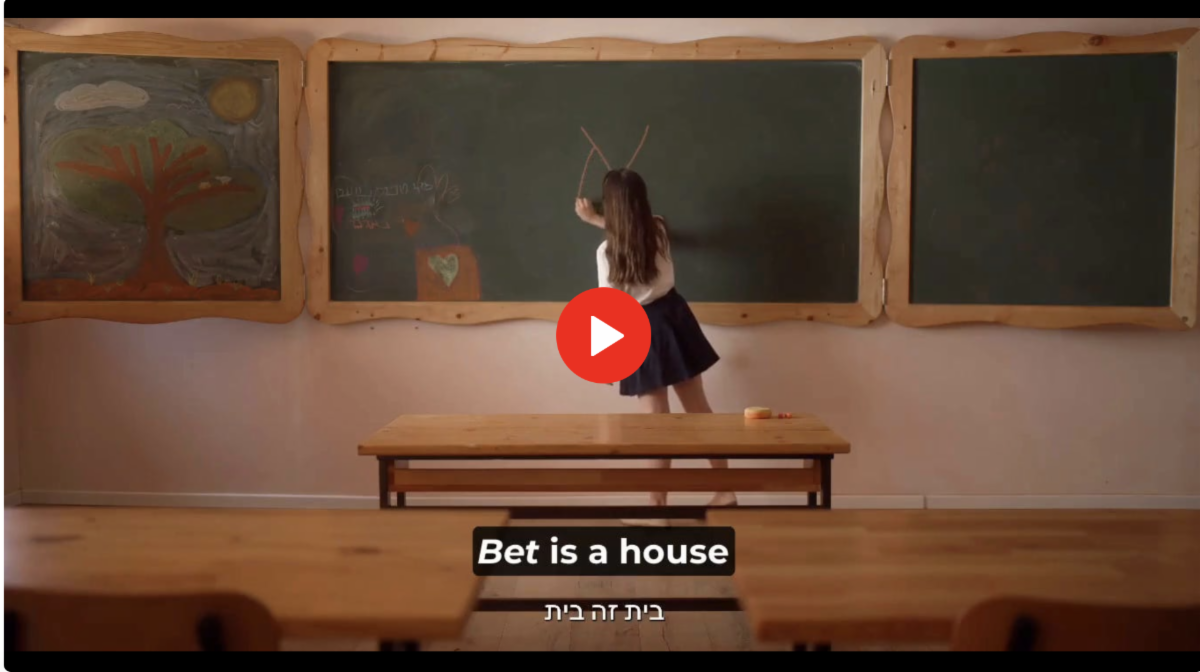
As in Stamford, Israeli schools opened this week. Daniel Gordis, who has been bringing insight into the landmark Israeli democracy protests to diaspora audiences over the past several months. HIs latest posting celebrates the new school year and the democracy protests with a subtitled, rewritten mashup of Naomi Shemer's famous Alef-Bet song with Zemer Noga (Hatishma Koli) With key Supreme Court hearings set to begin, it is incumbent on us to understand what's at stake - and to support democracy in the Jewish state. As Gordis describes, the creators "took two songs everyone in Israel knows, and used them to remind teachers, parents and everyone else of an equally important, and different, set of concepts." Gordis also appears in a podcast of the Times of Israel this week, along with Yossi Klein Halevi and Matti Friedman, all center-right Israelis who oppose the judicial coup. Gordis said in the panel discussion, "If diaspora Jews do not respond to the challenge, we can no longer call ourselves one people.” He urged his audience to ask themselves how they will respond ‘when your children and grandchildren years from now ask ‘how could you remain silent?’”

And here's a news flash from this morning, with a reminder that when a would-be dictator reveals his plans, we'd best believe him. Time to strap in. Next week's Supreme Court session will likely be epoch-defining. The warning signs are clear for all to see - just as they were 50 years ago, on the eve of Yom Kippur.


  • Prime Minister Benjamin Netanyahu on Thursday shared on social media a speech by Knesset Speaker Amir Ohana from a day earlier, in which Ohana suggested the coalition may not accept a High Court of Justice ruling next week if it strikes down a recently passed controversial law amendment. (Times of Israel)

50 Years Ago

TBE Finds a New Home

While the Jewish Homeland Fights for Survival

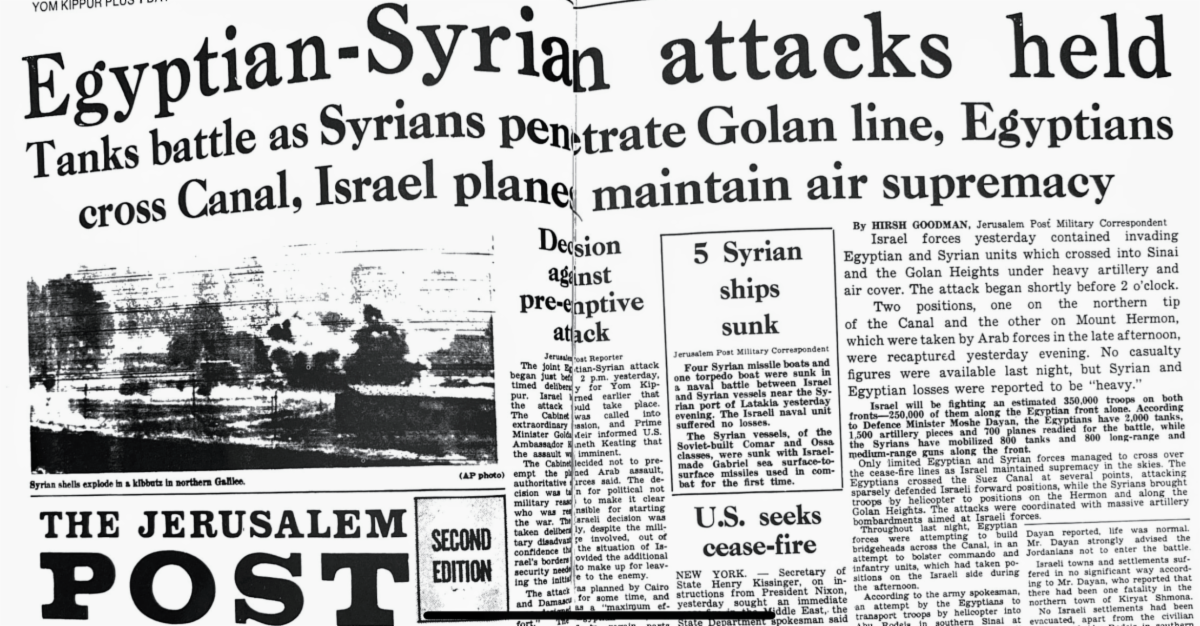
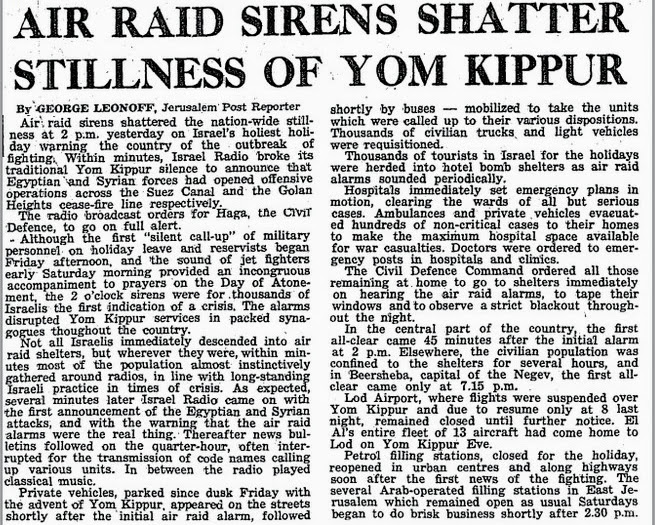
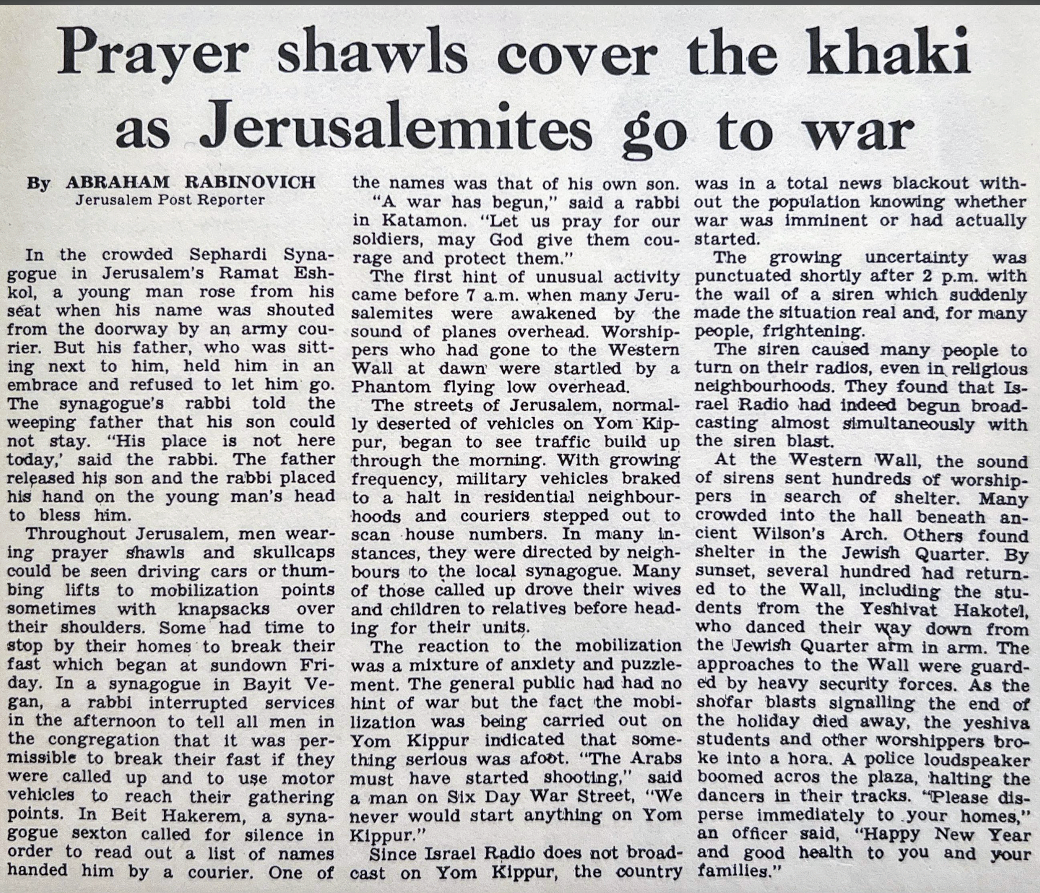
The two epic events were interconnected a half century ago. When TBE was opened on Roxbury Rd., among first major events to be held in the new building was a large community rally on behalf of Israel. Below you'll find photos recording the day when the Torahs were brought to the new place, and below that articles from the Jerusalem Post describing the shock felt by Israelis shedding their tallises and taking up arms on our holiest day. On Shabbat morning, we'll hear from TBE members who were part of that historic time.

Golda

and the 50th Anniversary of the Yom Kippur War


  • Read a speech by Elie Wiesel, "Against Despair" delivered to a UJA conference on Dec. 8, 1973. It perfectly captures the mindset of Jews in the wake of that traumatic war: "Never before have Jews been so organically linked to one another," he said. "Shout here and you will be heard in Kiev. Shout in Kiev and you will be heard in Paris. When Jews are sad in Jerusalem, we are moved to tears everywhere. Thus a Jew lives in more than one place, in more than one era, on more than one level."


Reflections on Golda


I had the chance to see the new film Golda last week and recommend it highly. Helen Mirren transformed herself into the former Prime Minister, capturing her full spirit as no one has done before. The film also captures the existential terror felt by Israelis as the Yom Kippur War began to unfold, along with the hubris that led to the war in the first place. Israel failed to heed the warning signs (the film partially exonerates Golda by revealing that some of those early warning systems did not function properly). But when there was a chance to head off the conflict with diplomacy, it was Golda herself who missed the opportunity. The shadow of 20th century Jewish calamities - Holocaust, pogroms, wars, terrorism, all of which Golda witnessed, contributed to a national PTSD that failed to recognize a genuine peacemaker when it presented itself in the form of Anwar Sadat.


Eric Alterman's new book, We Are Not One, a flawed but interesting analysis that Israel supporters should read (even as they will disagree with much of it), highlights the dangerous game played by Henry Kissinger prior to the war, something the film only touches upon. Alterman writes that according to Sadat's memoirs, "Kissinger actually encouraged the attack, via secret messages, in order to improve Egypt's negotiating position in the war's aftermath." This after Kissinger warned Israel strongly not to engage in a preemptive strike. According to Alterman, Kissinger also resisted sending the massive airlift to assist Israel, a recommendation that Nixon fortunately overruled. (Yes, you saw me connect the words "Nixon" and "fortunately.") He wanted Israel to stew in its brush with death, as if the Jewish people needed even more trauma.


And once Israel turned the tide, Kissinger prevented the Israelis from achieving the complete victory they had earned. As it turned out, in this matter Kissinger was right, since Sadat, having won back his country's honor, was then able to forge a peace agreement with Israel a few years later - an agreement that endures to this day.


Through it all, the figure of Golda, so revered and reviled, is given a massive makeover. This Iron Lady. who Israelis have joked over the decades as "the only one in the cabinet with balls," is portrayed here as one of the most empathic leaders ever seen on a screen, grieving over every single battlefield death. And while not a single wartime killing is seen on the screen - this is a bloodless war movie - a number are heard, using actual transmissions of soldiers in the fight, and those scenes are among the most powerful depictions of war that you will ever witness. Imagine the first scenes of Saving Private Ryan, but where the horrors of Omaha Beach are only heard - and the rest is left to the imagination. You cry with Golda, and for her.


American Jews always identified with Golda as one of us, not just because she came from Milwaukee and Denver, but because she came from the Ukraine of the Czars, just like so many of our forbears did. She understood the sounds of the marauding Cossacks outside the door. She was a quintessential diaspora Jew, transformed into the fighting Israeli - but never losing touch with the suffering of her people.

Her line to Kissinger, who claimed to be a Jew only as his third highest priority, to which she replied "In Israel we read from right to left," was inserted into the script at the recommendation of Kissinger himself, according to Liev Schreiber, who plays him (superbly). The director, Guy Nattiv, revealed this in a recent interview on JBS.


So forget Barbenheimer. Go out and see Goldenheimer, and trade in your Barbie dolls for a Golda figurine. The two films, Golda and Oppenheimer, are perfect bookends and warnings about the consequences of living in the shadow of a possible nuclear armageddon - showing one war where nuclear weapons were used and another where they almost were. The films both discuss how it takes the right people to know how far to go in wielding immense power, and at the same time how to cherish every life, be they soldier or civilian. Both are inherently Jewish films, in that they dwell less on the consequences of brute force than the redeeming power of conscience.

The letter above appeared in the Jerusalem Post a few months after the war. Its call for unity for the sake of those who made the supreme sacrifice is as relevant to day as it was then. I've enlarged the last part - see below - to make sure you can read it.

Rosh Hashanah card from Israel in the 1940's


Preparing for the High Holidays


Click to enlarge the poster below

See also How To Lead A Sephardic Rosh Hashanah Seder (MJL)

Machzor contents: Guide to the High Holiday services (MJL)

Rosh Hashanah card from Poland, early 20th century: The postcard shows a young woman flying an early aircraft in the sky. The woman holds in her hand a bouquet of flowers with a greeting card attached to it (from the National Library of Israel).


Below is a reading from AJWS. Click here for additional materials

Recommended Reading


Today's Israeli Front Pages

Yediot Achronot

Ha'aretz (English)

Jerusalem Post


  • The Ballad of Golda Meir and David Ben-Gurion (NLI) - She was “just a girl from Milwaukee” when he was already the famous “Ben-Gurion.” He was a few steps ahead of her throughout their public and political careers. Still, Golda Meir and David Ben-Gurion formed a delicate and meaningful friendship, which ended suddenly due to an ugly political scandal. After years of detachment, towards the end of his life, Ben-Gurion tried to reconcile with her. Did it work?


  • Why carrying Narcan is a mitzvah (Forward- Jay Michaelson) - This week, America took an important step forward in the fight against the deadly opioid crisis, which kills over 100,000 people per year: Narcan, which can save the life of someone who has overdosed on opioids, is soon to be available over the counter. This step has been a long time coming. Narcan, a nasal-spray version of the drug naloxone, essentially blocks the effects of opioids on the brain and can help pull someone out of an overdose that could kill them within minutes. For years, every EMT and drug treatment facility has had naloxone on hand, but the truth is, we should all have it in our medicine cabinets.  We’re living in a horrifying new reality in which lethal quantities of fentanyl — an opioid 100 times more powerful than morphine — can be found in substances posing not only as ketamine and cocaine, but as oxycodone and Xanax as well. 


  • What Really Happens When Americans Stop Going to Church (Atlantic) - In fact, people become even more entrenched in their political views when they stop attending services. Though churches have a reputation in some circles as promoting hyper-politicization, they can be depolarizing institutions. Being part of a religious community often forces people to get along with others—including others with different political views—and it may channel people’s efforts into charitable work or forms of community outreach that have little to do with politics. Leaving the community removes those moderating forces, opening the door to extremism.


  • Leonard Cohen's song, "Who By Fire," an adaptation of the Unetane Tokef prayer, which was released a year after the Yom Kippur War, is featured at the end of the film Golda.

And who by fire, who by water

Who in the sunshine, who in the night time

Who by high ordeal, who by common trial

Who in your merry merry month of May

Who by very slow decay

And who shall I say is calling?

And who in her lonely slip, who by barbiturate

Who in these realms of love, who by something blunt

And who by avalanche, who by powder

Who for his greed, who for his hunger

And who shall I say is calling?

And who by brave assent, who by accident

Who in solitude, who in this mirror

Who by his lady's command, who by his own hand

Who in mortal chains, who in power

And who shall I say is calling?

And who shall I say is calling?

And who by fire who by water

Who in the sunshine, who in the night time

Who by high ordeal, who by common trial

Who in your merry merry month of May

Who by very slow decay

And who shall I say is calling?

And who shall I say is calling?


Temple Beth El
350 Roxbury Road
Stamford, Connecticut 06902
203-322-6901 | www.tbe.org
  
A Conservative, Inclusive, Spiritual Community