
Wednesday, November 30, 2011

Friday, November 25, 2011
Toldot, Black Friday and Impulse Buying
Click here for our Parsha Packet of study materials for this Shabbat morning's Torah discussion. The topic is instant gratification, which has great relevance to the portion (see: Esau and the birthright) and Black Friday. How much is impulse buying necessary for the growth of our economy? Should that be considered a virtue or a vice? What of Esau's impulsive makeup can be corroborated given modern psychological research? How do traditional commentators react to those character traits? And what in the world does all this have to do with Nimrod (thy guy, not the sandals) and the soon-to-go under Feline's Basement.
For a hint to that last answer, some of my fondest childhood memories (not) involve going with my mother to the aforementioned bargain hunter's paradise and watching civilized people fighting over a marked down garment at the bottom of a large pile of clothing. A bunch of Esaus bargain hunting.
Wednesday, November 23, 2011
Shabbat-O-Gram for 11/24/11
When you are so stuffed that you can't eat another bite...or when all those out of town relatives are beginning to go a little stir crazy...
...JOIN US RIGHT HERE AT TBE ON
FRIDAY NIGHT @7:30 FOR OUR SPECIAL THANKSGIVING WEEKEND
KABBALAT SHABBAT!
Show us off to your relatives! We like that! Show your college students what all the buzz is about (we love to welcome them home)! Work off that second helping of stuffing by belting out a few verses of Lecha Dodi! But most of all, come here to feel spiritually renewed, ever grateful for the blessings in our lives.
Join Cantor Mordecai and myself on Friday evening , and on Shabbat morning too.
Also, morning minyan will be held on Thurs., Friday and Sunday at 9 AM.
AND PLAN TO JOIN US NEXT FRIDAY NIGHT, DEC. 2, WHEN SENATOR RICHARD BLUMENTHAL WILL BE OUR GUEST SPEAKER!
Happy Thanksgiving and Shabbat Shalom
Rabbi Joshua Hammerman
PS - Take a look at my "Hammerman on Ethics" piece
Sunday, November 20, 2011
TBE Bar/Bat Mitzvah Commentary: Rachel Sherman on Toldot
Shabbat Shalom!
At the beginning of my Torah portion, Toldot, Rebecca discovers that she is about to give birth to twins. She feels them fighting inside her, and when they are born, things get even worse. Jacob and Esau could not be more different. Jacob is the student, who spends most of the time indoors. Meanwhile, Esau is the hunting type. He loves to be outdoors. Rebecca loves Jacob and Isaac loves Esau. Jacob is the younger one, but in the end he wins out, and gains the birthright and the blessing through deception. Later commentators see Esau as one of the least liked figures in Jewish history, but the Torah itself doesn’t think Esau is that bad. He’s just misunderstood.
From the first time I rode on the back of my father’s bike when I was little, I’ve always loved the outdoors. Imagine my surprise when Esau is described as a man of the outdoors. I could relate to him immediately. Not only is he outdoors, but, like me, he’s the first born and his father’s favorite.
So today I want to state the case for Esau. Loving the outdoors has helped me to grow in so many ways.
Last summer at camp, I went on a 33 mile hike. It wasn’t easy. Imagine huffing and puffing your way to the top of a mountain in Vermont, and then looking down and realizing that you still have 28 miles to go! But I did it and I felt really proud that I was one of only five from my group of 25 kids to finish, and we even broke the record, finishing the “Death March” in less than 6 hours.
Those who know me know that I love to ski and snowboard. Gliding down a trail and looking over at the other peaks is an amazing feeling. You can’t get that inside of a tent.
I’m all for studying – my favorite subject is history – but maybe it’s important to be a little like Jacob and a little like Esau. I understand how it’s important to be a studious person like Jacob. But it’s also important to be athletic like Esau – except for the hunting part.
Maybe the Torah, in making these two characters twins, is telling us that there is a little of each of them in each of us. Sometimes these two parts of us fight for control, much like Rebecca’s twins fought in the womb. There are times when I really want to play basketball outside with my brother and my dad – but I have a big math test tomorrow. So what do I decide to do?
Of course….STUDY!
So in this case the Jacob in me wins out.
And there are times when my parents ask me to clean my room and those are times when the Esau in me wins out and I go outside and play basketball.
In the Torah, a couple of portions from now, the two brothers unite once again, but this time, instead of wrestling, they embrace.
And so, in order to correct a big historical injustice, I thought I could say some words on behalf of Esau today. Because in the end, there’s a little of Esau in all of us.
For my mitzvah project I’ve been helping less fortunate kids at the Domas foundation by running a khaki drive. I’ve been asking people in my school to donate their used khakis that they’ve grown out of.
At the beginning of my Torah portion, Toldot, Rebecca discovers that she is about to give birth to twins. She feels them fighting inside her, and when they are born, things get even worse. Jacob and Esau could not be more different. Jacob is the student, who spends most of the time indoors. Meanwhile, Esau is the hunting type. He loves to be outdoors. Rebecca loves Jacob and Isaac loves Esau. Jacob is the younger one, but in the end he wins out, and gains the birthright and the blessing through deception. Later commentators see Esau as one of the least liked figures in Jewish history, but the Torah itself doesn’t think Esau is that bad. He’s just misunderstood.
From the first time I rode on the back of my father’s bike when I was little, I’ve always loved the outdoors. Imagine my surprise when Esau is described as a man of the outdoors. I could relate to him immediately. Not only is he outdoors, but, like me, he’s the first born and his father’s favorite.
So today I want to state the case for Esau. Loving the outdoors has helped me to grow in so many ways.
Last summer at camp, I went on a 33 mile hike. It wasn’t easy. Imagine huffing and puffing your way to the top of a mountain in Vermont, and then looking down and realizing that you still have 28 miles to go! But I did it and I felt really proud that I was one of only five from my group of 25 kids to finish, and we even broke the record, finishing the “Death March” in less than 6 hours.
Those who know me know that I love to ski and snowboard. Gliding down a trail and looking over at the other peaks is an amazing feeling. You can’t get that inside of a tent.
I’m all for studying – my favorite subject is history – but maybe it’s important to be a little like Jacob and a little like Esau. I understand how it’s important to be a studious person like Jacob. But it’s also important to be athletic like Esau – except for the hunting part.
Maybe the Torah, in making these two characters twins, is telling us that there is a little of each of them in each of us. Sometimes these two parts of us fight for control, much like Rebecca’s twins fought in the womb. There are times when I really want to play basketball outside with my brother and my dad – but I have a big math test tomorrow. So what do I decide to do?
Of course….STUDY!
So in this case the Jacob in me wins out.
And there are times when my parents ask me to clean my room and those are times when the Esau in me wins out and I go outside and play basketball.
In the Torah, a couple of portions from now, the two brothers unite once again, but this time, instead of wrestling, they embrace.
And so, in order to correct a big historical injustice, I thought I could say some words on behalf of Esau today. Because in the end, there’s a little of Esau in all of us.
For my mitzvah project I’ve been helping less fortunate kids at the Domas foundation by running a khaki drive. I’ve been asking people in my school to donate their used khakis that they’ve grown out of.
TBE Bar/Bat Mitzvah Commentary: Shaina Lubliner on Sukkot
Those who know me know that I love theater. My mom passed that love on to me when I was very young. I remember my first acting experience, at Curtain Call when I was about six. It was a medley of Disney songs. Since then, I’ve been in over a dozen shows and I’ve seen lots more, on and off Broadway.
There are a lot of similarities between my showbiz career and becoming a bat mitzvah. There are lots of lines to learn, hours and hours of practice and rehearsal, the butterflies of opening night and one other thing. When you finish a show, the experience stays with you long after the lights have gone down. When this service is finished, I’ll always remember this day, but even more so, I’ll remember the lessons I’ve learned in preparing for it.
Add to all this drama one more thing. This is the festival of Sukkot, which involves more choreography and staging than a production of Les Miz. We wave the Lulav on other days of the festival and march around the sanctuary. Out there is the set for this drama, the sukkah, where we’ll be going at the end of the service. And there are special readings for Sukkot, including one that we did earlier in this service, a selection from the biblical book of Ecclesiastes, or, as it’s called in Hebrew, Kohelet.
Kohelet is a very old book filled with very modern wisdom, and many of the pieces if advice it gives remind me of shows that I’ve seen and participated in.
For example, the verse, “The dust returns to the earth as it was, and the spirit returns unto God who gave it.” This reminds me of the musical, “Once on this Island,” which speaks how when we die we return to nature.
Kohelet also said, “One who loves money will never be satisfied.” I played an orphan in a production of “Annie” at Curtain Call. In that show, both the bad guys and even the hero, Daddy Warbucks, need to learn that lesson.
I was also in the all-school production of “Fiddler on the Roof” a couple of years ago, playing one of Tevya’s daughters. Kohelet must have had Anatevka in mind when he wrote, “Enjoy life with the one you love all the fleeting days of your life that have been granted you under the sun.”
One of my favorite musicals, Pippin, actually has a song that begins with a line from Ecclesiastes. Pippin, the prince, is trying to figure out his place in the world, much as a bar or bat mitzvah does. So he sings, “Everything has its season, everything has it’s time; show me a reason and I'll soon show you a rhyme.”
How many of you have seen and loved the musical “Wicked,” like me? (PAUSE). I first saw it when I was about ten, and I found it so thought provoking that I couldn’t stop thinking about it all the way home on the train. How is it that someone we’ve always thought was evil, the Wicked Witch, could turn out to be good? And how could the ones we thought were good, actually be so selfish? I think Kohelet asked the same types of questions when he wrote, “There is not one righteous person on earth who does only good and never sins.”
This teaches us that no one is perfect and we should not judge a book by its cover – even if that cover happens to be green.
Finally, “Eat your bread in gladness and drink your wine in joy,” says Kohelet. Which is sort of what I sang when I played the role of Balloo in the JCC’s production of “The Jungle Book.” All you need to get by are the “bare necessities” of life, things like good friends and family, which is what I have here today.
For my mitzvah project, I’ve been raising scholarship money so that other children will have the opportunity to participate in Curtain Call, so that they can share in my passion for theater.
There are a lot of similarities between my showbiz career and becoming a bat mitzvah. There are lots of lines to learn, hours and hours of practice and rehearsal, the butterflies of opening night and one other thing. When you finish a show, the experience stays with you long after the lights have gone down. When this service is finished, I’ll always remember this day, but even more so, I’ll remember the lessons I’ve learned in preparing for it.
Add to all this drama one more thing. This is the festival of Sukkot, which involves more choreography and staging than a production of Les Miz. We wave the Lulav on other days of the festival and march around the sanctuary. Out there is the set for this drama, the sukkah, where we’ll be going at the end of the service. And there are special readings for Sukkot, including one that we did earlier in this service, a selection from the biblical book of Ecclesiastes, or, as it’s called in Hebrew, Kohelet.
Kohelet is a very old book filled with very modern wisdom, and many of the pieces if advice it gives remind me of shows that I’ve seen and participated in.
For example, the verse, “The dust returns to the earth as it was, and the spirit returns unto God who gave it.” This reminds me of the musical, “Once on this Island,” which speaks how when we die we return to nature.
Kohelet also said, “One who loves money will never be satisfied.” I played an orphan in a production of “Annie” at Curtain Call. In that show, both the bad guys and even the hero, Daddy Warbucks, need to learn that lesson.
I was also in the all-school production of “Fiddler on the Roof” a couple of years ago, playing one of Tevya’s daughters. Kohelet must have had Anatevka in mind when he wrote, “Enjoy life with the one you love all the fleeting days of your life that have been granted you under the sun.”
One of my favorite musicals, Pippin, actually has a song that begins with a line from Ecclesiastes. Pippin, the prince, is trying to figure out his place in the world, much as a bar or bat mitzvah does. So he sings, “Everything has its season, everything has it’s time; show me a reason and I'll soon show you a rhyme.”
How many of you have seen and loved the musical “Wicked,” like me? (PAUSE). I first saw it when I was about ten, and I found it so thought provoking that I couldn’t stop thinking about it all the way home on the train. How is it that someone we’ve always thought was evil, the Wicked Witch, could turn out to be good? And how could the ones we thought were good, actually be so selfish? I think Kohelet asked the same types of questions when he wrote, “There is not one righteous person on earth who does only good and never sins.”
This teaches us that no one is perfect and we should not judge a book by its cover – even if that cover happens to be green.
Finally, “Eat your bread in gladness and drink your wine in joy,” says Kohelet. Which is sort of what I sang when I played the role of Balloo in the JCC’s production of “The Jungle Book.” All you need to get by are the “bare necessities” of life, things like good friends and family, which is what I have here today.
For my mitzvah project, I’ve been raising scholarship money so that other children will have the opportunity to participate in Curtain Call, so that they can share in my passion for theater.
Friday, November 18, 2011
Is Turkey Kosher (Hammerman on Ethics)
Is Turkey Kosher?
Friday, November 18, 2011
Jewish Week Online Columnist
Q: I’ve heard that turkey may actually not be kosher. Is that true?
A: From a halachic/ethical standpoint, it is 100% kosher. Or not.
The halachic problem, dealt with in excruciating detail in this article from The Journal of Halacha and Contemporary Society, is that, for birds, the Torah offers no identifying features to distinguish kosher from the non-kosher species. It just lists some examples of non kosher birds and expects us to figure out the common denominators, but the list is incomplete. And back in biblical times, the turkey was not yet known.
The Mishnah specifies four ways of determining the kashrut of a bird, including that it not be a bird of prey. A principle behind kosher laws is that “you are what you eat,” and we prefer not to be violent scavengers. On all counts, this resilient but peace loving bird would seem to pass that test. But as a relatively new face on the scene, the turkey has caused confusion and controversy; in the Middle Ages, some major authorities expressed reluctance to add any new birds to their “permitted” list, absent an ancient tradition (mesorah) legitimizing it.
While almost all authorities now consider the turkey kosher, some families have maintained a tradition of refraining from eating it. As Rabbi Joshua Heller puts it, his old family custom presents him with a November Dilemma:
“Do I follow a more general family tradition, which is at variance with conventional Jewish practice, or follow instead the counter-tradition passed down from my own branch of the Heller clan, which is to disregard that restriction? Perhaps, in addition to meat, milk and Passover dishes, I need to purchase a fifth set just for Thanksgiving? Or do I just give up and go to my in-laws?”
But beyond the halachic question, there is an ethical question as to whether turkeys should be eaten at all. Full disclosure: I’m a vegetarian. I don’t even eat Tofurkey, which looks like turkey (and if PETA gets its way will soon become the new name of “Turkey, Texas,”). For me on Thanksgiving, “Pass the kugel and green beans!” is just fine – as long as I also get to see the Packers devour the Lions.
Rabbi Marc Soloway writes, “As delicious as that turkey dinner is on Thanksgiving, it is an increasingly ironic way to celebrate freedom and gratitude,” given the fact that almost all of the 45 million turkeys eaten by Americans each Thanksgiving have lived horrible, painful lives.
Jonathan Safran Foer elaborates in “Eating Animals,” his scathing critique of factory farms:
“Today’s turkeys are natural insectivores fed a grossly unnatural diet… Given their vulnerability to disease, turkeys are perhaps the worst fit of any animal for the factory model. So they are given more antibiotics than any other farmed animals. Which encourages antibiotic resistance. Which makes these indispensable drugs less effective for humans. In a perfectly direct way, the turkeys on our tables are making it harder to cure human illness.”
My sympathies were stoked this week when watching the PBS “Nature” program, “My Life as a Turkey,” describing Joe Hutto’s year of parenting a gaggle of wild turkeys he’d raised from birth. He literally learned to talk turkey, and they taught him much more than he taught them.
Turkeys evidently have much to teach all of us about being thankful. They are smarter than many think and, like other animals, they have a complex emotional life, including expressions of joy, sadness and playfulness. “We do not have a privileged access to reality,” Hutto says, “So many of us live either in the past or the future and betray the moment and in some sense we forget to live our lives. These wild turkeys were reminding me to live my life.”
At my Thanksgiving table this week, where turkey will be consumed, I just might speak of how these tough birds teach us to appreciate each meal, each caring touch and each moment of life, long before the make their acquaintance with the shochet. It’s time for all of us to thank that the “Bird of Courage” that Ben Franklin preferred over the eagle. When President Obama pardons that lucky turkey at the White House this year, we should demand that he pardon them all. Why should the 99% suffer! It’s time to Occupy the Hen House!
I don’t know that I’ve ever seen a more moving nature documentary than “My Life as a Turkey.” Watch it and you might just be inclined to change your own family’s mesorah – about turkey, and about ethical eating too.
Wednesday, November 16, 2011
TBE Bar/Bat Mitzvah Commentary: Sydney Gubner on Hayye Sarah
Those of you who know me know that I have a passion for fashion and interior design. I always liked to shop, but about two or three years ago, I really began to get into it. I got my first sketch pad and started to get some ideas and before you know it, I had sketched several outfits.
It’s so perfect that the portion for my bat mitzvah introduces one of the most important accessories invented in the history of fashion: The veil.
Rebecca was about to meet Isaac for the first time, after she had been chosen by Abraham’s servant to become Isaac’s wife. She was on a camel and isaac saw her from a distance. When Rebecca saw Isaac, she put on a veil. She when he met her close up, her could not even see her face. But he loved her and took her to be his wife.
The Torah is teaching us that love runs much deeper than what you can see on the surface. That’s what happened for Isaac and Rebecca, and for hundreds of generations since then, brides have been wearing veils at Jewish weddings.
Not just Jewish ones, of course. One of my favorite TV shows is “Say Yes to the Dress,” where brides come into a bridal shop to find their dream dress. I love looking at all of the different designs, from ball gowns to mermaid bottoms to the sweetheart necklines. Usually when the bride is not sure about a dress, the salesperson will bring out the veil and a little jewelry, and that is when she says “yes.” The veil is the most important accessory and often “makes” the dress.
The veil adds a sense of mystery, but on the other hand, since it is removed during the ceremony, it shows that the couple should ways be learning more about each other and never take anything for granted.
But most of all, in a wedding, the veil adds an element of surprise.
I think surprise makes for strong statements in fashion. When I design clothes or living spaces, I always aim for surprise.
For instance, the rabbi asked me what I would do if I were given the job of redesigning this sanctuary in my own way. Now don’t get me wrong, I like the sanctuary how it is right now, because I am the 4th generation here at this temple.
But I also know that things have to change.
So, with that in mind…..If I were to redesign the sanctuary, the walls would be hot pink. That would keep everybody awake!
Instead of the benches, I would replace them with long white leather couches, and a pink curtain around the Torahs.
Below the bema there would be flashing lights, and a runway down the middle! Also you can’t forget the sparkles everywhere- there HAVE to sparkles! The effect is that you don’t know what you are walking into. You’re expecting to come into a sanctuary, like dozens of sanctuaries you’ve seen before. But instead, it’s like walking into
Fashion Week in Paris.
And for Jews, we all know that doing good never goes out of style. It’s always fashionable to learn the lessons of the Torah and to help others. And that’s what it means to become a bat mitzvah.
For my mitzvah project, I’m helping to fight kids being hungry in America by supporting an organization called “Share our Strength: No Kid Hungry.”
It’s so perfect that the portion for my bat mitzvah introduces one of the most important accessories invented in the history of fashion: The veil.
Rebecca was about to meet Isaac for the first time, after she had been chosen by Abraham’s servant to become Isaac’s wife. She was on a camel and isaac saw her from a distance. When Rebecca saw Isaac, she put on a veil. She when he met her close up, her could not even see her face. But he loved her and took her to be his wife.
The Torah is teaching us that love runs much deeper than what you can see on the surface. That’s what happened for Isaac and Rebecca, and for hundreds of generations since then, brides have been wearing veils at Jewish weddings.
Not just Jewish ones, of course. One of my favorite TV shows is “Say Yes to the Dress,” where brides come into a bridal shop to find their dream dress. I love looking at all of the different designs, from ball gowns to mermaid bottoms to the sweetheart necklines. Usually when the bride is not sure about a dress, the salesperson will bring out the veil and a little jewelry, and that is when she says “yes.” The veil is the most important accessory and often “makes” the dress.
The veil adds a sense of mystery, but on the other hand, since it is removed during the ceremony, it shows that the couple should ways be learning more about each other and never take anything for granted.
But most of all, in a wedding, the veil adds an element of surprise.
I think surprise makes for strong statements in fashion. When I design clothes or living spaces, I always aim for surprise.
For instance, the rabbi asked me what I would do if I were given the job of redesigning this sanctuary in my own way. Now don’t get me wrong, I like the sanctuary how it is right now, because I am the 4th generation here at this temple.
But I also know that things have to change.
So, with that in mind…..If I were to redesign the sanctuary, the walls would be hot pink. That would keep everybody awake!
Instead of the benches, I would replace them with long white leather couches, and a pink curtain around the Torahs.
Below the bema there would be flashing lights, and a runway down the middle! Also you can’t forget the sparkles everywhere- there HAVE to sparkles! The effect is that you don’t know what you are walking into. You’re expecting to come into a sanctuary, like dozens of sanctuaries you’ve seen before. But instead, it’s like walking into
Fashion Week in Paris.
And for Jews, we all know that doing good never goes out of style. It’s always fashionable to learn the lessons of the Torah and to help others. And that’s what it means to become a bat mitzvah.
For my mitzvah project, I’m helping to fight kids being hungry in America by supporting an organization called “Share our Strength: No Kid Hungry.”
Sunday, November 13, 2011
7th Graders Plant Bulbs - Photos
Today our TBE 7th graders planted hundreds of bulbs in our Finkelstein Mitzvah Garden. The class decided that as their mitzvah project, they will donate the flowers to nursing homes and hospitals, and also sell some for Passover and donate the proceeds to plant trees in Israel. Before the planting, I spent time with the kids discussing Judaism's focus on envionmental sustainablilty. The garden, a centerpiece of TBE's educational programming, had been damaged severely by Hurricane Irene, but recently was fully repaired. Click on photo below for pics:
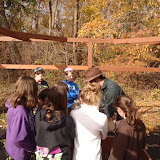 |
| 2011 November 13, 7th Graders Plant in Mitzvah Garden |
Friday, November 11, 2011
Shabbat-O-Gram for November 11/11/11
Shabbat Shalom, on a day when we salute our veterans and set our clocks to 11/11/11. Mazal tov to Sydney Gubner, who becomes Bat Mitzvah tomorrow afternoon. And click here to see the Torah commentary given by last week’s Bat Mitzvah, Tori Katz.
CARLEBACH IN CONCERT
Aside from Veterans Day, this week is the yahrzeit of Reb Shlomo Carlebach z’l, whose music has revolutionized how Jews pray. We’ll be paying tribute to him and his music this evening at services. Join us at 7:30. In honor of this yahrzeit, I am pleased to release to the public for the first time this vintage recording of a concert featuring Reb Shlomo, recorded in the mid 1960s at my home shul, Kehillath Israel in Brookline, Mass. It also features my father, Cantor Michal Hammerman z'l and Cantor Alex Zimmer. My dad brought Reb Shlomo to Brookline as part of the local Jewish Music Forum. The recording features not only some of his famous melodies, but his inimitable storytelling style. My father had the concert taped, but it was never mass produced or released. Until now. Click here to listen to this vintage recording.
PENN STATE AND IRAN
This has been a sobering week at Penn State. We can only be heartbroken to hear of the victims of these horrible alleged crimes, and perplexed – if not enraged - about the efforts to cover them up. I’ll be sharing some reflections at services on Shabbat morning (OK for older kids, but given the subject matter, keep in mind that we do have Junior Cong. tomorrow as well). We’ll be connecting this topic to some lessons from our portion (think Sodom and Gomorrah) and Jewish laws of gossip.
As shocking as the revelations are, the news regarding Iran is far more urgent. The UN report released this week reveals for the world the extent of the Iranian nuclear weapons program. I’ve heard Israeli experts say that they are still a couple of years from being fully operational., but that should not make us complacent. See several editorials on the topic and read Dore Gold’s report, The Significance of the November 2011 IAEA Report on Iran.
| |
NEW WEBSITE GOES LIVE
Check out our new, updated website, created in cooperation with JVillage . While the design is similar to the old one, it has many new features and more accessible information, although some of that has not been uploaded yet. Soon we’ll be able to handle many financial transactions and reservations online, so when you wake up at 3 AM and say, “I can’t go back to sleep until I’ve donated to TBE,” you’ll be able to! You can also take a look at early childhood director Ronnie Brockman’s blog entry, “This Thanksgiving, Let’s help Our Children Embrace Diversity.”
TBE AND THE JEWISH HOME IN ISRAEL
Check out this TV report on TBE B'not Mitzvah who will be on the Jewish Home’s Israel Trip. What an amazing journey it will be. Mazal tov to Gaby and Marley Baum and their family!
Read about my experiences last summer on safari and how it helped me to better understand why I do what I do, in my op-ed from this week’s New York Jewish Week. And see also this week’s “Hammerman on Ethics” column, Davening for Dollars, where a reader asks if it’s OK to pray that God help improve his financial situation when others are even less fortunate.
ISRAEL ADVENTURE MEETING DEC 12.
Please note that the meeting date has changed to Dec. 12, at 7:30, at my home and there is a strong chance that the trip will be departing on August 12 rather than July 30, to accommodate those with camp schedules. Please join us at that meeting if you are interested in coming on this incredible trip. View the current itinerary. See the Pricing and Registration forms.
Shabbat Shalom!
Rabbi Joshua Hammerman
Thursday, November 10, 2011
Davening for Dollars (Hammerman on Ethics)
Hammerman on Ethics
The Jewish Week
Q: When I daven, I am tempted to ask God for help improving my difficult financial situation. But I always feel this is wrong since so many other people are in worse circumstances involving their health, safety and even worse financial conditions, whereas I at least have a job and a healthy family. Is it unethical to ask God for more money, or should I just be grateful for all the good things I have?
A – Not only is it OK to ask, but a number of our traditional prayers do just that. The weekday Amida is chock full of requests, especially the 9th blessing (of 19), where we ask God to bless us in this year “for good.” “Good” is assumed to mean agricultural sustenance – i.e. food – but it can be expanded to mean all things material. Some say that “good” implores that the material gains we receive from God’s blessings not distract us from spiritual pursuits. Other Amida blessings focus on other personal needs: knowledge, forgiveness, security, redemption and health. While most of these blessings are formulated in the first person plural, there are opportunities to add more private, personalized prayers. Other prayers, like Avinu_Malkeinu, ask God for all kinds of material favors (I cringe every time I see the line asking God to “fill our coffers with plenty”). So it’s done.
But it’s not done much.
Most Jewish prayer is not petitionary. On Shabbat, even the Amida sheds nearly all requests. And even when we ask for things, the net effect of the asking is to help us appreciate what we already have. We ask for rain “in due season” in order to help us appreciate the significance of timely rain, so that we’ll act responsibly to conserve our resources long before there is a drought. Also, by asking in the first person plural we are reminded that the accumulation of wealth is not a zero sum game. We pray that everyone be blessed, which encourages us to share our blessings with others. The American Jewish World Service has put together a collection of source mateirals calling for concerted action to address the global food shortage during this harvest season.
But what if it IS a zero sum game? Is it right, for example, for an athlete to point heavenward and thank God for bringing him victory, if that means that God then would have wanted the other team to lose? Does God love the St. Louis Cardinals more than the Texas Rangers? (Let’s leave aside God’s clear fascination for torturing Cubs fans). Red Sox slugger Adrian Gonzalez claims God wanted his team to collapse this year. If that’s true, what then of 2004, when, as I wrote at the time, the Sox victory seemed heaven-sent?
I’ve found that it’s best not to credit God for bringing us victory or blame God for losses. But I also understand that caring passionately about my sports teams is what trained me as a youth to care for things that are even more important. And when we care passionately about something, we naturally turn to God.
So it’s fine to pray for financial gain, as long as it doesn’t require someone else’s loss. It’s also not a good idea to confuse God with Bernie Madoff: if your earnings just keep going up up, up, I’d pray for the occasional reversal.
If your financial situation is dire, by all means, seek strength from prayer – then go out and hire a good accountant.
Send your ethical queries to Rabbi Hammerman at rabbi@tbe.org.
TBE B'not Mitzvah on Jewish Home Israel Trip!
See this TV report about an incredible journey that will be taking place next week!
Wednesday, November 9, 2011
Jews In The Jungle (Jewish Week)


Tuesday, November 8, 2011
Special To The Jewish Week
Last summer I journeyed far from the daily craziness of rabbinic life, to the wilds of Africa, and it was out there that I rediscovered why I do what I do back here.
Job states, “God teaches us from the animals of the land,” and on safari I found myself immersed in a vast, orderly ecosystem, where, Anatevka-like, all creatures know who they are and what God expects them to do. It took my breath away.
In our world, the only sure things are death and taxes. But there, the only sure thing is death. Because death is ever-present, it is strangely beautiful. Every moment is sharpened. The sunset’s reds are redder, the lion’s roar is louder and the stars are unbelievably bright. Life develops its own intensified rhythm.
The animals I saw were free and content (except for those unfortunate moments when they were being eaten). They became my new congregation, often resembling the folks back home in unexpected ways.
Take the lion, for instance.
Karen Blixen wrote, “You know you are truly alive when you’re living among lions.” There is such pathos to their story. No wonder lions have become a prime symbol of the Jewish people and Jerusalem. So powerful, yet so fragile. Adult males wander vast distances and often appear forlorn and threatened, sharing with the Jew both nobility and mobility.
In Jewish art, lions are always guarding something; they are the epitome of earthly courage. Leon Uris chose the name Ari — lion — for his quintessential Israeli hero in “Exodus,” and Israel often uses lion synonyms in naming jet fighters.
With lions, as with Jews, the problem of continuity is particularly acute. Three out of four cubs do not make it to adulthood and the population has become dangerously small. It was shocking to learn that lion males destroy the cubs of other sires in order to give their own kids a competitive advantage.
Back home we call that the college admissions process.
One morning, we came upon two panting lions devouring a giraffe. Even this longtime vegetarian was transfixed at this most carnivorous sight, one that somehow reaffirmed my faith in the order of things. This was a meaningful death, meant to perpetuate the grand plan. That giraffe had been born, in part, for the purpose of being eaten by that lion, and on some level the giraffe knew it.
That evening, I heard the news about the mass murder that took place at a summer camp in Norway, a senseless killing in a world gone mad. In contrast, the carnage I saw on the savannah reaffirmed a grander plan and sustained nature’s precious balance. I wished I didn’t have to go back to “civilization.”
Incidentally, did you know that giraffes are kosher? But you won’t find much giraffe meat at Fairway. There are, shall we say, logistical problems. Imagine this elderly rabbi with a knife walking up to a giraffe with a stepladder and trying to find the right spot to kill it painlessly.
I fell in love with giraffes — clearly the most Jewish animal in the bush. They’re basically pacifist, but they have a good swift kick to fend off predators. Like Jews, they hang out in family groups and protect each other; they are a little goofy and try to keep out of everyone else’s way. And they are ruminants. That, along with the split hoof, is what makes them kosher.
It’s great to be a ruminant. Giraffes get to enjoy life. They nosh a little, and then they just hang while they regurgitate their food and eat it again with their second stomach. Elephants, in contrast, have only one stomach, so they have to keep eating nonstop, consuming leaves and branches the weight equivalent of three people daily. An elephant may never forget, but memory alone is not enough. Ruminants get to, well, ruminate. Like Jews. You are what you eat — and Jews eat animals that are peace-loving ruminators.
Once our guide alerted us to a pair of giraffes that looked like they were about to mate. We watched for several minutes. The male kept on chewing. Ruminating. Finally the female walked away. The moment was missed. God knows what this male was thinking. If giraffes are the most Jewish of animals, we had just met the Woody Allen of giraffes.
Rhinos are fascinating. Whenever I saw one I felt like we were in Jurassic Park. I asked our guide who is the rhino’s most feared predator and he said, “You.” Sure enough, rhino poaching has reached epidemic proportions in Africa. I also learned that rhino males pile their dung in huge heaps, to leave a sort of calling card on their territory, so their families can find them. Our guide compared the practice to posting on someone's Facebook wall. I reflected on all the dung that flies in the turf wars that so often rip apart Jewish communities. At least the rhinos pile theirs neatly.
Despite spasms of violence, most of what we saw was like a grand Garden of Eden. Lots of moms and babies cuddling. Lots of eating, drinking, sleeping and reproducing. The miracle of the ordinary. On Shabbat afternoon, I gazed down at the water hole beneath my porch and saw a small antelope gently picking at branches and drinking. I thought of Psalm 42: “As a deer thirsts for water, so, O Lord, do I thirst for You.” The world around me seemed so at peace and complete. Long after I am gone, I thought, this will still be here, and to the degree that I am One with it, so will I.
My week on the savannah reminded me that I have a role to play, that I’m a small piece in a very large puzzle, that I fit in, right next to the lion and the giraffe, the bar mitzvah student and the grieving widow. We all have our sacred task in this eternal game.
We all know a song of Africa.
Rabbi Joshua Hammerman is spiritual leader of Temple Beth-El in Stamford, Conn.
Tuesday, November 8, 2011
TBE Bar/Bat Mitzvah Commentary: Victoria Katz on Lech Lecha
Hi, everyone----Shabbat Shalom
My portion is all about journeys.
In fact, Lech lecha means “go out.” And in the portion, Abraham had to leave his homeland and father’s family in order to follow God’s plan and to fulfill his destiny.
The message here is that you need to take journeys to new places in order to grow.
Abraham’s journey involved many trials and challenges. He had to overcome fear and doubt, and he had to learn to be empathetic and help others along the way.
Interestingly, the final challenge for Abraham takes place on a mountain, when he is instructed to bring his son Isaac up there to be sacrificed.
Mountains have been a big part of my life. Either I’m climbing up them or skiing down them. And in each case, like Abraham, I journey far from home, help others, discover new places and overcome the fear of the unknown.
Many of you know that I ski competitively. I’ve been skiing since I was 4. My specialty is freestyle, including moguls, and in particular Big Air. Big Air is exactly what it sounds like. You go off a jump and get “BIG AIR”
The first time I tried Big Air, I was scared crazy. It was about 4 years ago. My friends encouraged me and I just decided to face my fear and let it fly. I don’t remember, but it probably wasn’t the smoothest landing or the biggest air.
In fact, whenever you try anything new in freestyle, you’re probably going to fall more often than not. Abraham also made a number of mistakes while on his journey. It comes with the territory, but in the end you are a better person for having done it. For Abraham it was a leap of faith. For me, it was literally a leap, and I had the faith that I would end up on my feet or at least my skiis.
Here’s a tip regarding overcoming fear when you are skiing. It looks a lot harder when you’re watching someone else do it or looking down, than when you are actually doing it. I now can understand the Nike philosophy, “Just do it!”
By the way, (that would not have good advice for Abraham on the mountain with Isaac,).
What goes down, must go up.
Just as I love to go down mountains on skis, I also am looking forward to climbing up one. This mountain however is one of the top seven summit in the world. Next June, I will be climbing Mount Kilimanjaro in Tanzania- Africa. I’ll be doing it to raise money for Rett Syndrome, a disorder of the nervous system. In most cases, girls loose purposeful use of their hands, have muscle weakness and often have limited mobility. I have a family friend named Jessie who has Rett Syndrome. I’ve known her just about all my life and she has been a real inspiration to me. I’ll be thinking of her throughout my journey. We are calling my trip “Step Up 2 Rett” as it’s the second time our family is climbing the mountain and I am proud to be doing it with my sister Abby. We are going to climb for all the girls who can’t and bring awareness to Rett Syndrome. Shortly, you will be able to make a donation to the Foundation.
Why do we climb an enormous mountain? As the famous British climber George Mallory once said when asked why he wanted to climb Mount Everest, he simply replied, “Because it’s there.”
This is true for all kinds of challenges, not just mountain climbing - we need to set the bar very high (and there’s nothing higher than a mountain). The goal is finding a cure for Rett Syndrome, this is an obstacle that we all need to overcome.
I can really relate to Abraham and his journey, even though I’ve only just begun mine. In some ways, it begins today, as I become a bat mitzvah.
My portion is all about journeys.
In fact, Lech lecha means “go out.” And in the portion, Abraham had to leave his homeland and father’s family in order to follow God’s plan and to fulfill his destiny.
The message here is that you need to take journeys to new places in order to grow.
Abraham’s journey involved many trials and challenges. He had to overcome fear and doubt, and he had to learn to be empathetic and help others along the way.
Interestingly, the final challenge for Abraham takes place on a mountain, when he is instructed to bring his son Isaac up there to be sacrificed.
Mountains have been a big part of my life. Either I’m climbing up them or skiing down them. And in each case, like Abraham, I journey far from home, help others, discover new places and overcome the fear of the unknown.
Many of you know that I ski competitively. I’ve been skiing since I was 4. My specialty is freestyle, including moguls, and in particular Big Air. Big Air is exactly what it sounds like. You go off a jump and get “BIG AIR”
The first time I tried Big Air, I was scared crazy. It was about 4 years ago. My friends encouraged me and I just decided to face my fear and let it fly. I don’t remember, but it probably wasn’t the smoothest landing or the biggest air.
In fact, whenever you try anything new in freestyle, you’re probably going to fall more often than not. Abraham also made a number of mistakes while on his journey. It comes with the territory, but in the end you are a better person for having done it. For Abraham it was a leap of faith. For me, it was literally a leap, and I had the faith that I would end up on my feet or at least my skiis.
Here’s a tip regarding overcoming fear when you are skiing. It looks a lot harder when you’re watching someone else do it or looking down, than when you are actually doing it. I now can understand the Nike philosophy, “Just do it!”
By the way, (that would not have good advice for Abraham on the mountain with Isaac,).
What goes down, must go up.
Just as I love to go down mountains on skis, I also am looking forward to climbing up one. This mountain however is one of the top seven summit in the world. Next June, I will be climbing Mount Kilimanjaro in Tanzania- Africa. I’ll be doing it to raise money for Rett Syndrome, a disorder of the nervous system. In most cases, girls loose purposeful use of their hands, have muscle weakness and often have limited mobility. I have a family friend named Jessie who has Rett Syndrome. I’ve known her just about all my life and she has been a real inspiration to me. I’ll be thinking of her throughout my journey. We are calling my trip “Step Up 2 Rett” as it’s the second time our family is climbing the mountain and I am proud to be doing it with my sister Abby. We are going to climb for all the girls who can’t and bring awareness to Rett Syndrome. Shortly, you will be able to make a donation to the Foundation.
Why do we climb an enormous mountain? As the famous British climber George Mallory once said when asked why he wanted to climb Mount Everest, he simply replied, “Because it’s there.”
This is true for all kinds of challenges, not just mountain climbing - we need to set the bar very high (and there’s nothing higher than a mountain). The goal is finding a cure for Rett Syndrome, this is an obstacle that we all need to overcome.
I can really relate to Abraham and his journey, even though I’ve only just begun mine. In some ways, it begins today, as I become a bat mitzvah.
Friday, November 4, 2011
Shabbat-O-Gram for November 4, 2011
The Shabbat Announcements are sponsored by Laura and Daniel Katz in honor of Victoria’s becoming a Bat Mitzvah on Shabbat morning.
This weekend, as we move the clocks back, we move forward to the beauty of our Friday night and Shabbat morning services, the drama of a Bat Mitzvah (mazal tov, Tori), the hilarity of Comedy Night (BYOB and tickets are available at the door) and, for our our Bar/Bat Mitzvah class, an important session on bullying this Sunday, coordinated by the ADL and sponsored by our own Herb Kahan.
Busy, busy, busy.
I hope everyone has power back by now - I know this has been a difficult week for so many. But this Shabbat we also think of those who have it much worse, whose concern isn’t simply whether they will be able to charge their computers or need to pile on an extra blanket (not to minimize the inconvenience of having no heat) but to fill their stomachs each day. Global Hunger Shabbat will be a prime focus of this weekend’s programming. This week’s portion includes the first famine in biblical history - no sooner do Abraham and Sarah arrive in Canaan than the food shortage forces them to relocate to Egypt. Read our Parsha Packet for Lech Lecha for more information on this and other aspects of Global Hunger Shabbat.
Speaking of Parshas, read what last week’s b’nai mitzvah, Elias Boyer and Jessica Rubin, had to say about their portions.
TWO IMPORTANT ANNIVERSARIES
This weekend marks the anniversary of the murder of Prime Minister Rabin - one of those rare years when the Hebrew and English anniversaries virtually coincide. Today, President Shimon Peres lit a candle at the memorial site, eulogizing Rabin as one who “paved a path to peace.” That path was paved my many good intentions, but now we see a diplomatic stalemate with the Palestinians (who apparently have been stifled at the Security Council without need for a US veto) and, more than ever, the focus being turned on the looming threat of a nuclear Iran. The leaked news this week of Prime Minister Netanyahu having opted for the military option was either an unintended blunder of a dysfunctional Israeli leadership or a brilliant thrust designed to redirect the world’s attention and turn up the heat on Tehran. Whatever it was, Netanyahu has backed out of attending the annual Federation General Assembly in Denver - and that tells us something. I just don't know what!
There is another anniversary this coming week - Kristallnacht, on Wednesday.
See also this week’s Hammerman on Ethics column, Killing Kaddafy: Was it Ethical?
Our new, updated website should be live within a very short time. While the design is the same, you notice enhanced features, greater accessibility and much more information at your fingertips. We’ve had some delays, which has caused the old site to go somewhat stale, but the wait will have been worth it once the new one is in place. Features will include increased educational content, better online payment and reservation options, more of the cantor’s music and tutorial materials, archives, photos, and lots more. It will be a few weeks before all the information is uploaded, but check it out anytime.
So as we move the clocks back and readjust our bodily rhythms to that depressing feeling of darkness at 5 PM and winter on the way, this is a good time remind ourselves that we can avoid these gloomy shifts by instead setting our clocks to Jewish Time.
Shabbat Shalom
Rabbi Joshua Hammerman
Killing Kaddafy - Was it Ethical?
See http://www.thejewishweek.com/features/hammerman_ethics/killing_kaddafy
Q - Was it ethical to kill Muammar Kaddafy and Osama bin Laden on the spot, apparently in cold blood, rather than arrest them and bring them to trial? Didn’t it work for Iraq to try Saddam Hussein?
A – Yes, it was ethical to kill them right then and there.
It would have been nice to bring both to trial, but in both cases, it would also have been impractical and dangerous. The trial of Saddam Hussein proved cathartic to the Iraqi people and a boost to the nascent Iraqi justice system. But in Baghdad the Americans kept watch over the prisoner and the process to keep nefarious parties at bay. Such was not the case in Libya, where Kaddafy’s compatriots were still fighting to the finish on the day he was killed. Meanwhile, bin Laden’s buddies would have gone to great lengths to disrupt a trial, likely killing, maiming and kidnapping many along the way. Who knows what his Pakistani protectors would have done.
Think about it. If one Israeli soldier was traded for a thousand unknown terrorists, how many innocents would have been kidnapped to exchange for these prize prisoners?
Since the Shalit deal, in fact, some Israelis have argued for capital punishment for terrorists. They argue that imprisonment is hardly an impediment these days, given the current “rate of exchange” of a thousand to one. But the Israeli judiciary’s dedication to due process and the lack of capital punishment should not give too much comfort to those bent on terror – because Israeli drones are not nearly so charitable, and its security services have ways of making ticking-bomb terrorists disappear. The “ticking bomb” ethical scenario has been used to justify targeted killings and torture. This approach provides ample deterrence. Still, it is comforting to know that once terrorists are taken prisoner, Israel follows the norms of civilized nations ruled by law and protects the rights of prisoners to be kept alive and given a fair trial (with one controversial exception – the Bus 300 affair in 1984).
Gone are the days of Nuremberg Trial; those postwar proceedings neatly closed the door on a genocidal era that had commenced with the racist laws enacted in the same city just over a decade before. Perfectly symmetrical – what began in Nuremburg ended there. There was no such tidy culmination for families of the victims of 9/11 or Lockerbie, with no trial for the ringleaders. But the facts of those crimes were incontrovertible long before the prime perpetrators were killed, the guilt long since proven, confessed and even boasted, without need of a trial. History will be the ultimate judge of Kaddafy and bin laden. No jury is necessary.
Killing those two likely saved many lives, so on utilitarian grounds alone these were defensible acts, especially in wartime. That Kaddafy and bin Laden were also monsters responsible for the deaths of thousands only serves to further justify their treatment. They needed to be eliminated and buried in secrecy, so that they and their movements might be simultaneously snuffed out.
Subscribe to:
Posts (Atom)