It hasn’t been a good week, particularly for Jews, even perpetual optimists like me.
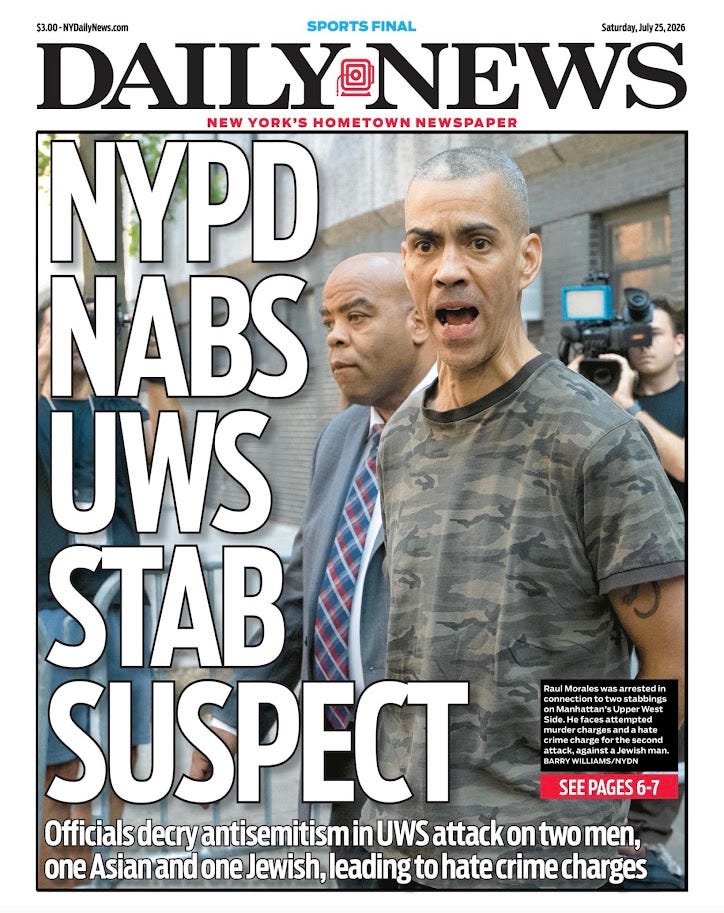
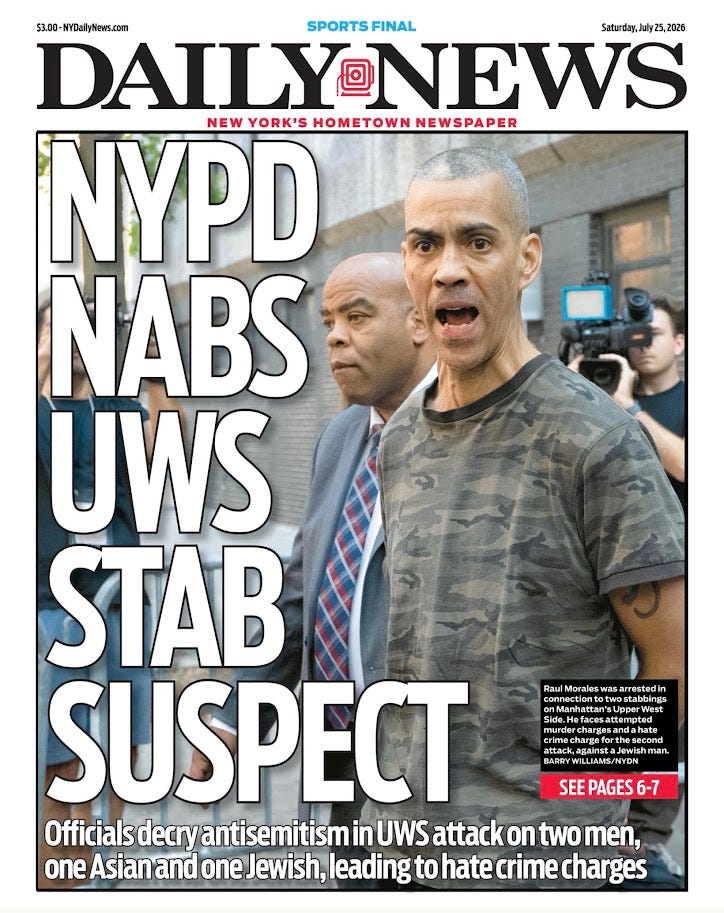
On Thursday, the fast of Tisha B’Av, while Jews congregated to pray, fast and study at a synagogue on the Upper West Side (my son was among them), a hate-motivated double stabbing took place just outside
Antisemitic violence hit Toronto once again - an attack on a bagel bakery

The Mayor of New York decided it would be a good idea to fan flames of hate by releasing a gratuitous video explaining why he wouldn’t be arresting the Prime Minister of Israel, inflaming hatred even more for no constructive reason at all.

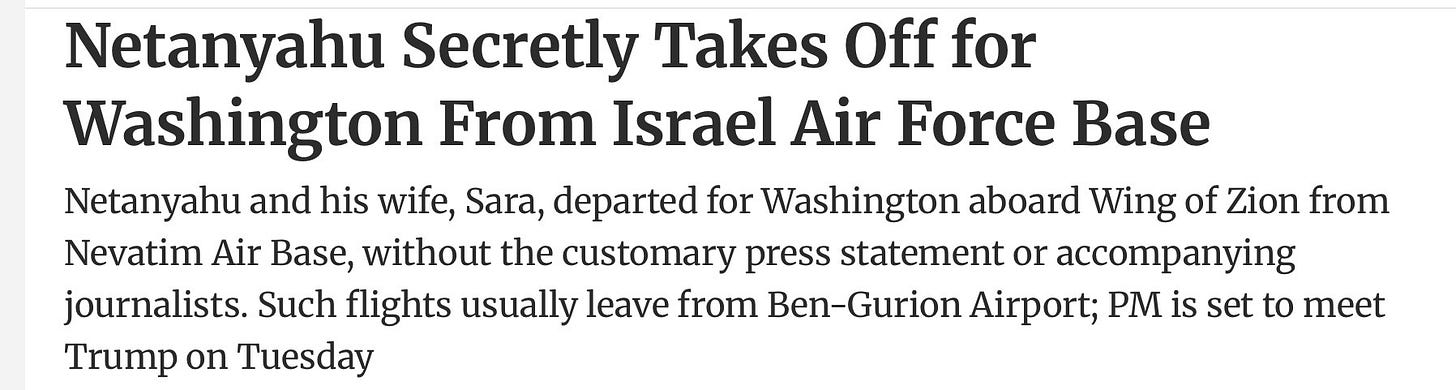
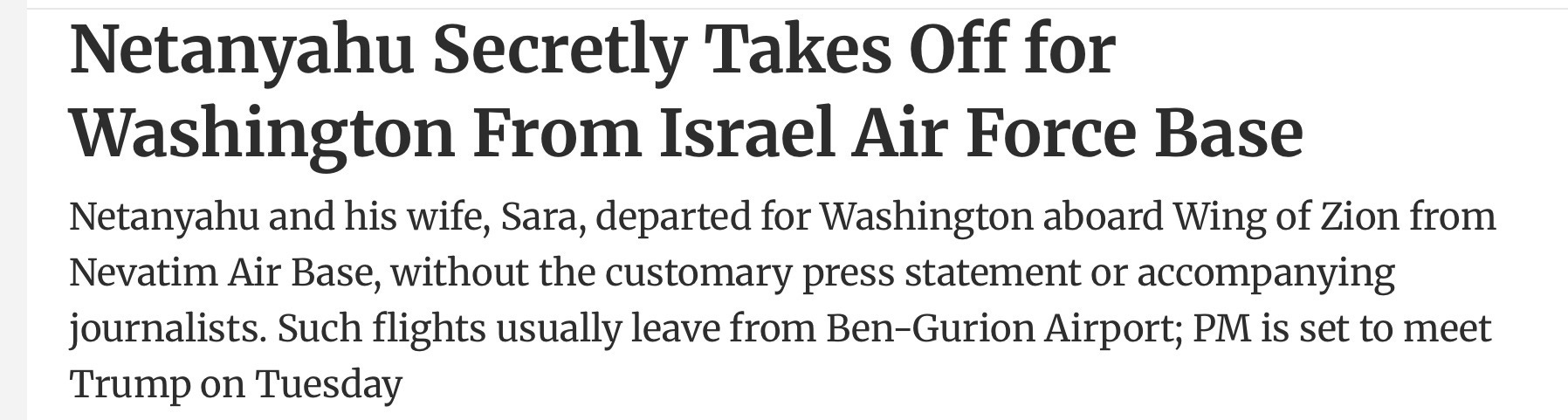
Meanwhile, that prime minister just snuck out of Israel for Washington this morning, minus his normal press entourage, as one does when huge majorities in both countries hate you.
It was done ostensibly because of security concerns, but I expect him to enter the White House tomorrow via the servants’ entrance. He’s been ushered in through the back door before, maybe this time it will also be in the dark of night. He’s toxic even to Trump.
Ha’aretz In Altadena, just outside L.A., a synagogue that was totally destroyed by last year’s wildfires was further desecrated by graffiti, adding insult to injury and establishing the linkage between anti-Zionism and an antisemitism (an attack on a synagogue can only be seen as antisemitic).

At the White House correspondents’ dinner, evil was normalized. It was not funny to hear Trump bomb. It was sickening. And it was sickening that no one got up when he lashed out at journalists and others, particularly women and people of color, and that no one in the room reprimanded him afterward. While that disgusting display was not in itself an example of antisemitism, it’s no coincidence that all the animus that this man has deliberately unleashed has resulted in more hatred toward Jews. Normalizing any evil is normalizing all evil.
And if you think everyone is suddenly ganging up on Jews, it’s not a figment of your imagination. CNN’s inimitable Harry Enten, as proud a Jew as can be, whose bar mitzvah was in Israel for God’s sake, was - alongside fellow mensch John Berman - the bearer of bad tidings.






BTW, mazal tov to John and Harry, who gained a lease on their professional lives last week when the sale of Warner Brothers, which includes CNN, was frozen by a multi-state antitrust suit. No question that if Bari Weiss had became the wolf at Wolf Blitzer’s door, which was on track to occur this month, Enten and Berman would have been among the first to go.
So now, watch Enten’s reporting on Israel’s dramatic bipartisan crash (see the Israel part about 4 minutes in). This should be required viewing for any Israel supporter who is still looking to assign blame and cry “Antisemitism!” Israel has faced double standards for a long time but American Jews have never been burdened with a tsunami like this.
In a curious situation of art imitating life, a current film took on the role of Harry Enten.
I recently saw the surreal, harsh film Yes, by Nadav Lapid (available on Amazon Prime). It’s hard to watch - do NOT bring the kids - hard to understand and it has found controversy both on the left and the right, but I believe it will be one of the enduring works of art from the post October 7 period, even if no one wants to distribute it now. It shows both the unbearable pain and the unimaginable denial, the madness begetting madness, the willful complicity (the main character’s “yes” applies to morally repugnant requests), and the occasional pangs of conscience, the resignation, the explosive anger - and ultimately the possibilities of recovery. All that, and it’s a satire.1
At one jarring moment, a character breaks the fourth wall, turns to the camera, makes like Harry Enten and says, “Even the audience hates Israel.”
And so it does.
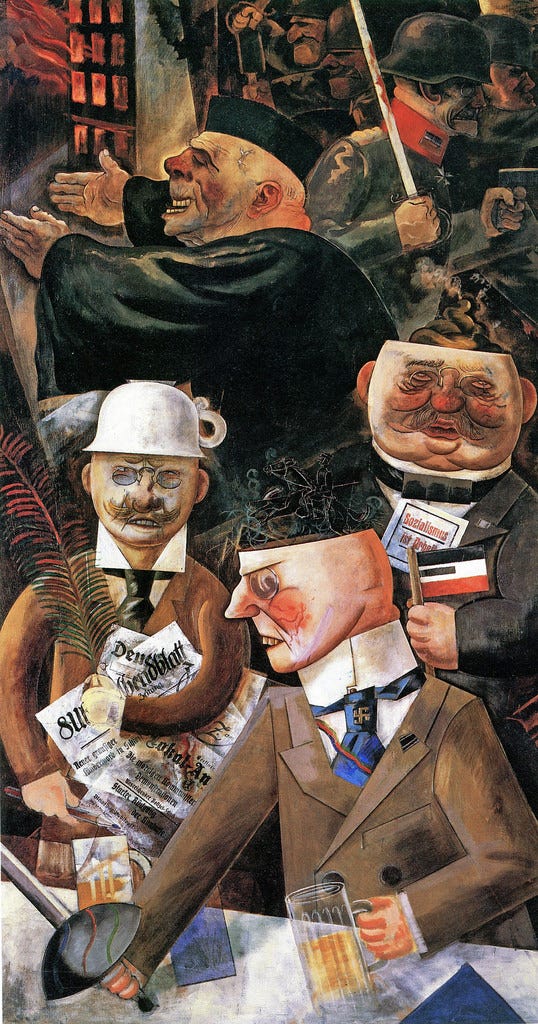
BTW, the White House Correspondent’s Dinner reminded me of the first scene from the film, minus the orgy. It’s all about complicity among social elites to the whims and appetites of power and the powerful. Nadav Lapid was inspired by George Grosz's "Pillars of Society" (1926), a painting that portrays Germany's elite as grotesque and selfish supporters of nationalism. The painting is displayed conspicuously at the end of that first scene.
Close your eyes and you might see Trump and his tech bros, including an Ellison or two, planning their next conquest.
Most subscribers to this Substack know that I am an incurable optimist. Part of being hopeful is being ready to roll up our sleeves, stop kvetching and make the changes that need to be made.
When the numbers have fallen so drastically and so fast, it’s time to look beyond the usual suspects. Israel’s declining popularity cannot be blamed simply on wokeness or Hamas propaganda. It can’t be cured by simply telling the story better. in Yes, one character is a master of Hasbara (propaganda) for the IDF and she delivers a devastating rapid-fire monologue filled with devastating details about Hamas atrocities from October 7. It will be clipped and played in Jewish day schools throughout the world. It is a soul-crushing “aria,” as one critic described it. But even in the movie, it doesn’t reduce one iota the impact of Gaza’s ongoing devastation on the characters and the viewers.
Israelis may have been in denial - some of it out of necessity and self preservation - but the corruption of its government has only made it more urgent to begin a process of recovery and regeneration.
Americans need to understand that Israelis are now fighting back to transform perceptions by changing their political reality. Things have sunk so low that real changes in the political landscape are suddenly possible. Until now it was inconceivable to have the ultra-Orthodox out of the government and Arabs in. Now I’m beginning to think it’s inevitable.
We see the same happening here in America in the runup to the midterms, Trump shedding loyalists and new coalitions beginning to coalesce. Israel is providing us with a blueprint for how to make these changes, just as Hungary did in the spring.
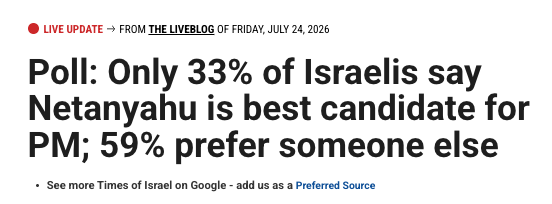
In his recent essay in The Forward, “Mamdani isn’t the real resistance against Netanyahu — Israelis are,” Rob Eshman points out that the opposition led by Gadi Eisenkot — the former IDF chief of staff who broke with Netanyahu’s government over the Gaza War, would win 59 seats, compared to 51 for Netanyahu’s ruling coalition, according to the latest projections. Eisenkot also beats Netanyahu head-to-head as the preferred prime minister.
Eshman adds:
If Eisenkot joins with Arab parties his coalition would receive 69 seats, substantially more than the 61 seats needed to govern. Though Eisenkot has not said yet whether he would link up with Arab parties, a plurality of Eisenkot’s potential voters (44%) said they would support such a move, in a country where Arab parties have only once been part of a governing coalition.
Eisenkot is no dove. He is someone who has concluded, rightly, that the threats Israel faces include the ones it’s inflicting on itself.
He has vowed to strengthen Israeli democracy and pursue diplomacy with Israel’s neighbors. His party’s platform calls for non-military national service for Arabs, something 75.8% of them favor. His likely coalition partners will include the Democrats, a smaller party expected to win 10 to 11 seats, for whom resolving the Israeli-Palestinian issue is a defining issue. “I see the conflict and the continued occupation as the greatest tragedy of our lives,” Emilie Moatti of the Democrats said at a party rally last month. “The most moral and patriotic act is to end it.”2
I agree with Eshman that these are “the most hopeful winds to blow through Israeli politics in memory, ahead of the Oct. 27 election — the closest Israelis have come to real, structural change in years.”
Meanwhile, as he points out, in the United States, it’s Mamdani’s admission that he lacks the power to arrest Netanyahu — and call for the federal government to do so instead — that has captured the media’s attention and consumed American Jews all week. “But one of these stories is theater, the other is real.”
We’ve let ourselves become consumed by an empty threat from a politician with no power to carry it out, instead of doing everything we can to support those Israelis who actually have the power to change their country.
Eshman is correct in that Netanyahu and the anti-Israel movement each need a cartoon version of the other to keep telling their one-sided story. Mamdani and Bibi are like the Joker and Batman (I won’t say which is which). They complete each other and relish the chance intensify the confrontation. The rest of us should just turn off the cartoons.
If those defending Palestinian rights really want to see some positive change, stop calling every Jew who disagrees with you a baby killer. And Jews who continue to defend the indefensible actions that Netanyahu has countenanced, often for purely personal motives, know that there is another way, and Israelis are working toward finding it.
The pain has been so great. It is impossible for anyone to imagine it.
I’ve had lots of people call me (and through me, my people) genocidal baby killers. They are wrong and these accusations hurt me personally but even more as a Jew, because I know that Judaism stands for precisely the opposite values. But the pain it makes me feel is nothing compared to the isolation anger and shame that Israelis feel. For some it is simply the shame at having survived when so many loved ones didn’t.
It’s time to turn off the cartoons. To stop the propagandizing and scoring cheap debating points. We all need to try to understand the pain of the people of the entire region. We can’t let the demagogues lord over us, manipulating our hope and our despair.
In the film Yes, the protagonist is charged with writing a new national anthem for Israel, one poisoned by militaristic, ethnocentric hate. But the movie ends and what remains is the anthem that has stood tall for a century: Hatikva, which means hope. What remains is the hope.
Let that hope sustain us through these storms of hate. I have not been so hopeful in years.
From the Rolling Stone review:
“There are only two words in the world,” Y. tells his infant son, as he bikes through the streets and past the beaches of Tel Aviv. “Yes, and No. Which do you choose?” The movie itself operates on that same binary. Can you ignore what’s done in your name? Yes or no. If power were dangled in front of you, would you grab it no matter what the cost? Yes or no. Is such an existential shriek into the abyss, all while living in a society suffused by mind-numbing grief and nationalism, worth subjecting yourself to? That last one, at least, is easier than the others. The answer is in the film’s title.
See also: Indy Wire’s review
See this from Israeli Democrats’ leader Yair Golan and you can’t help but be hopeful

:

No comments:
Post a Comment