For video of this sermon taken from the livestream, click on tbe.org/tbe-live/, go to Kabbalat Shabbat service of 8/28/26 and go to 59 minutes in (or listen to the wonderful music before that).
For Shabbat morning’s Torah discussion, “Old Shoes and Fresh Clothes,” scroll down to the bottom of this posting.
Shabbat shalom and welcome back from your summer travels. I took mainly short trips this summer. My most exotic one was to the Greek islands, by way of the IMAX in Milford. Yes, I saw The Odyssey. How many people here have seen it?
Well, spoiler alert, if you can have spoilers for a story nearly 3,000 years old. But in case you didn’t know, Matt Damon does find his way home to Anne Hathaway. It takes him ten years.
You know, I checked Google and mapped out the route from Troy to Ithaca and it should take just three hours and 17 minutes - and that’s without tolls. But if you take the New York Thruway it’s 3 hours 24 minutes and will cost you $10.57. That’s with tolls but no trolls. Or Cyclops. You just have to remember to take a left in Syracuse… not the one in ancient, Sicily. The one in New York State. Near Lake Ontario.
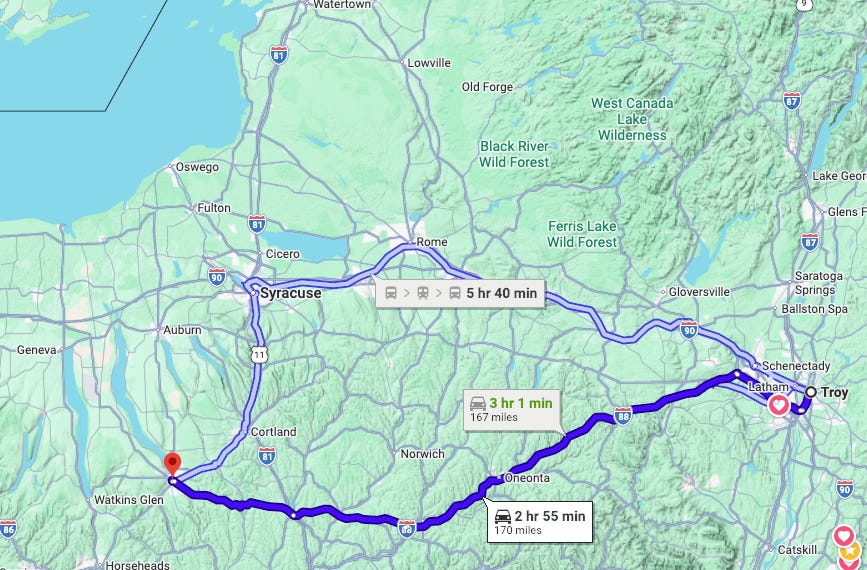
And to go from ancient Troy, in modern day Türkiye, to Ithica in Greece? Shouldn’t take ten years. By car it can be done in under 12 hours. By boat, maybe a few days. By Trojan horse? Not recommended.
Anyway, spoiler alert, Matt Damon does make it home – but isn’t Boston home for him? And Anne Hathaway also made it home this summer – home to Runway Magazine and Milan. Or is it Stratford-upon-Avon with her husband Will and kid Hamnet? (You know, the original Anne Hathaway). Or Genovia where Anne the actress will be returning in Princess Diaries 3 – but this time without Julie Andrews. And wasn’t it Julie Andrews who wrote, “I’ve come to realize that home is a feeling as much as it is a place; it is as much about loving what I do as being where I am.”
Which brings us back to do(e). These movies have made me very confused about home this year.
But it’s natural to be confused about home. I mean, where am I now? Where is home for me? People often ask me that. Is it here in Stamford? Or Madison, where I now own my house for the first time. But when it comes to home, I’ve never had a feeling of being at home more than when I stepped off the plane in Israel for the first time as a teenager. For me, Israel is home and always will be. But of course, as with Matt Damon, so is Boston. Not only is Boston home, but specifically Jewish Boston, the neighborhood where I grew up and my childhood synagogue. Yet I must admit, when I returned to Brookline for Rosh Hashanah it felt strangely disorienting. I realized that you really can’t go home again.
For Odysseus, every step of the way, every leg of the journey, is a test. A test to see his worthiness as a responsible leader and his readiness to return. He understands that you need first to be lost in order to find your way home. He says:
“Nevertheless I long—I pine, all my days— to travel home and see the dawn of my return. And if a god will wreck me yet again on the wine-dark sea, I can bear that too, with a spirit tempered to endure. Much have I suffered, labored long and hard by now in the waves and wars. Add this to the total— bring the trial on!”
He wants to eventually return, but not before he has earned it. He wants to be tested – in part because he feels the need to make amends for breaking the moral code of war in the Trojan Horse attack. Funny thing is, there are no pangs of guilt in Homer’s original poem, just in Christopher Nolan’s version, which, honestly, sounds more Jewish than Greek. Nolan’s film is a High Holidays sermon about the biblical laws of just war – precisely at a time when that question is most relevant to the world – and to Jews. Warfare is now filled with Trojan horses, whether they be computer viruses, low flying drones or booby-trapped pagers.
But before we get lost on that tangent, let’s return to the topic – of being lost and finding our way home.
I was listening to a podcast1the other day, about how Gen Z young adults, the generation that grew up with smartphones and social media, are pining nostalgically for a time when there were no smartphones and social media. Of course this was being discussed in a podcast that people listen to on their smartphones and discuss on social media, but that aside, a question came up that was fascinating. One of the hosts asked the other: When was the last time you were lost?
It had to be a time when she wasn’t carrying a phone around with maps. So the host responded:
It was like two months before I would get my first smartphone. The year was 2013. I was 23.
She was in St. Petersburg, Russia and had gone sightseeing, and was headed back to her hotel. But she was so jet lagged that she fell asleep on the bus, and when she woke up, she had no idea if she had already missed her stop.
No GPS, no idea where she was, and no one spoke English. She eventually realized that she had missed the stop, got off the bus and groped her way back to her hotel. It was terrifying, to have no GPS, or other divine hand, to guide her.
This week’s portion talks about the journeys the Israelites will take after they enter the land. It presents a bleak picture of the consequences of not fulfilling the covenant. This list of warnings in Deuteronomy 28 is called the Tochecha and it is scary. This dark chapter is always read at this time of year, right before the new year, and among the curses, there is a leitmotif - an obsession with being lost.
Verse 65: “You will be driven into nations you do not know, wandering with “a trembling heart, failing eyes, and a despairing soul”
Verse 68: The Lord will bring you back to Egypt in ships... and there you shall sell yourselves to your enemies as male and female slaves, but no one will buy you.”
What a curse! Worse than being a slave. You’ll be marked down!
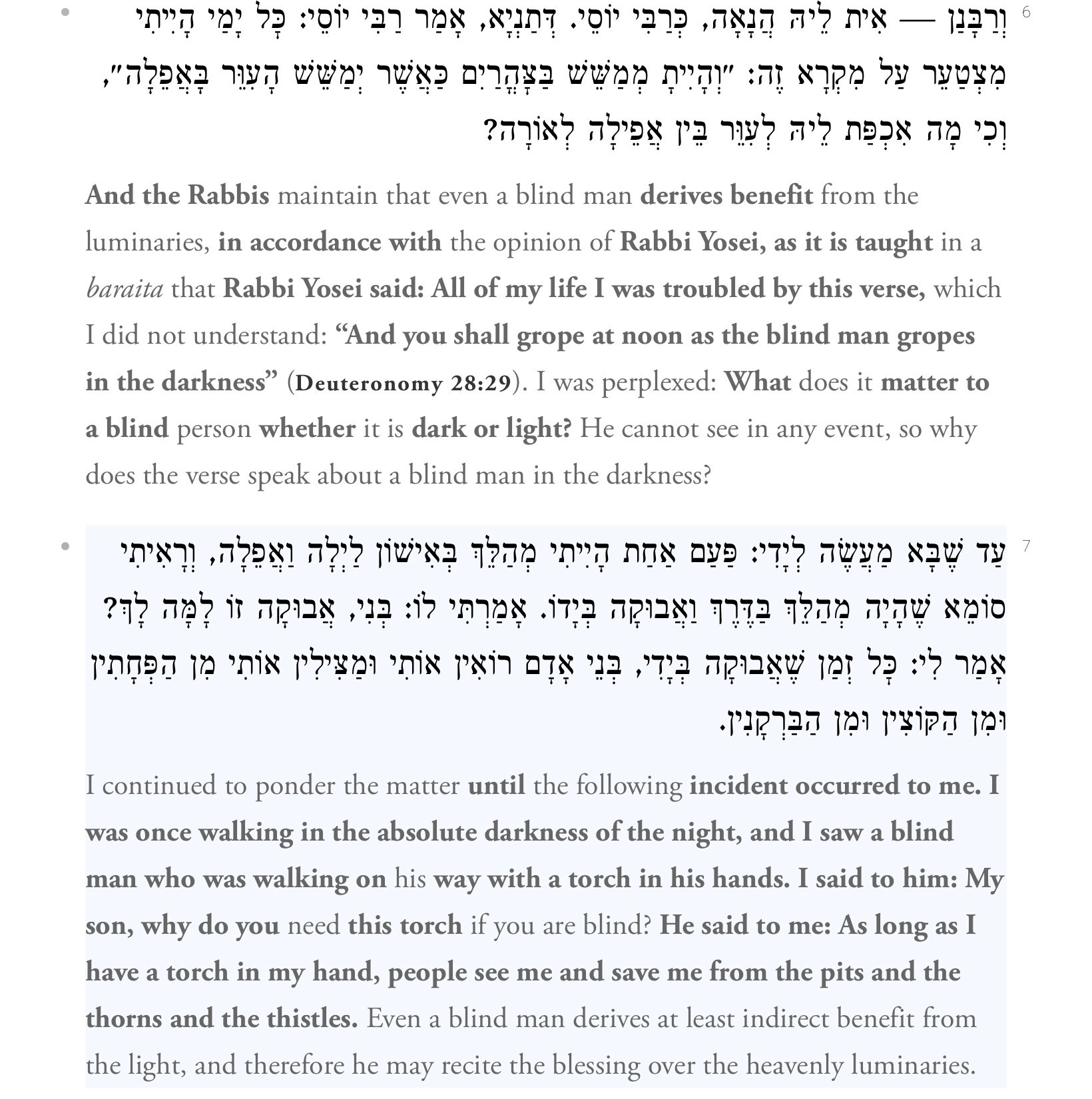
Verse 29: “And you shall grope at noonday, as a sightless person gropes in darkness.”
The Talmudic sage Rabbi Yosi noted2 that this is one of the most painful verses in the entire Torah. It describes a psychological and spiritual state where a person is entirely disoriented. Even in the “broad daylight” of opportunity or truth, a person under this curse cannot find their path and has no inner compass.
And yet, is this really a curse? Is it a punishment at all? After all, as Odysseus understood, unless we are lost we can never experience what it’s like to find our way home.
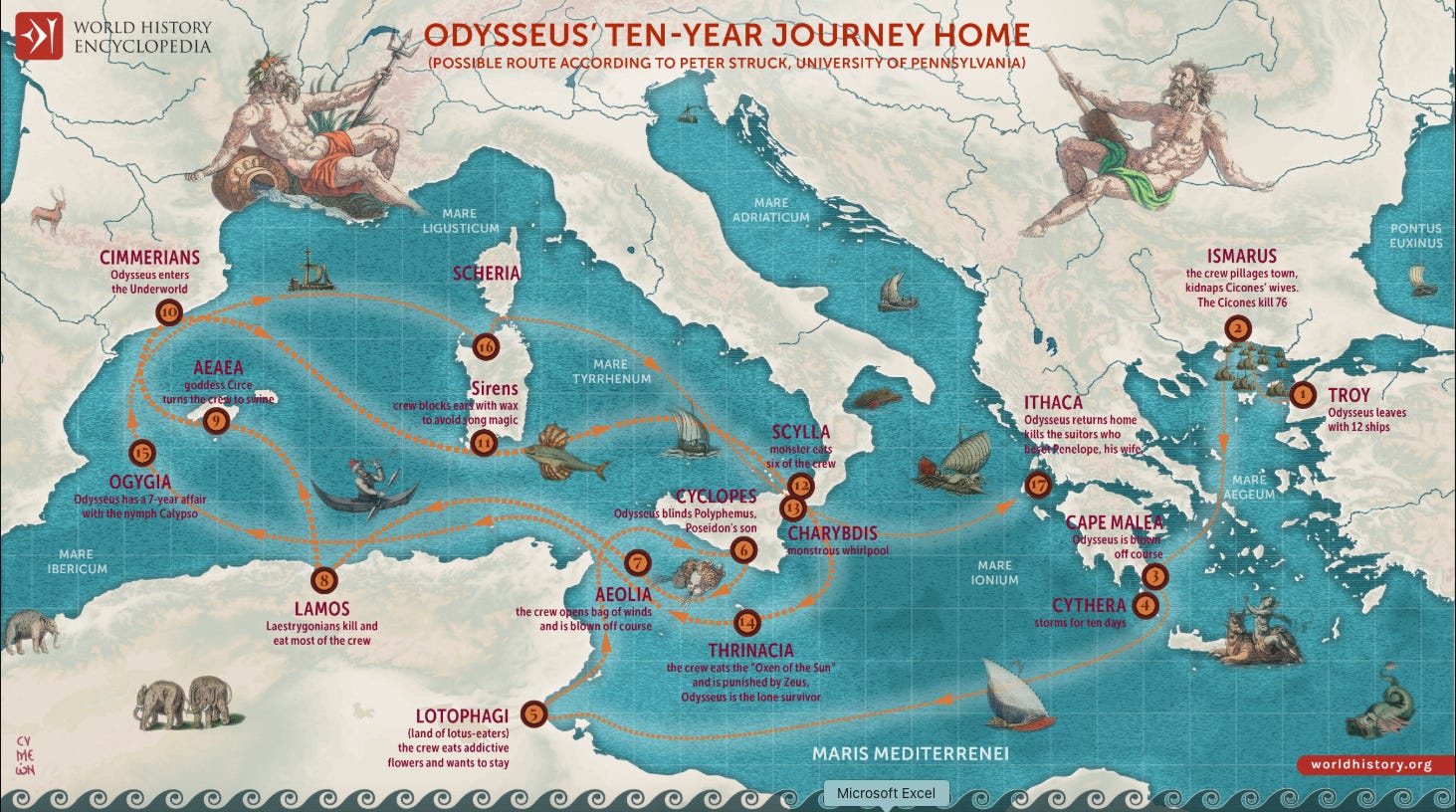
When is the last time you were lost? Really lost? I mean Odysseus lost. I mean, this guy was really off track. He basically took a right at Crete and ended up literally in Barcelona.
Funny thing. I had a chance to book one of those High Holidays cruises where you lead services onboard for three days and spend the rest building up your inventory of sins for the coming year. This one happens to sail from Barcelona and ends up in Athens. The exact route, of Odysseus, just in reverse. It would have been perfect for me to go and deliver this sermon on The Odyssey. But then I thought… no. It would be like having movie night on the Lido Deck and showing “Titanic.”
Better to leave well enough alone.
Better to stay home.
I’m lost enough as it is. But I am a tracker at heart.
I collected maps as a kid. The way others collect comic books and baseball cards. I had over 200. Some people idolized Carl Yastrzemski. My idol was Rand McNally. And I loved to be in strange places and find my way home.
So I love to get a little lost sometimes.
But I can’t – because my phone is always spoon-feeding directions to me – in that nice female voice. Sometimes she’s annoying. But she’s always there to guide me. Back when it began, GPS map guidance was the canary in the coal mine of AI. We had our Magellan or Garmin devices in the car and we felt like Kings of the Road.
And now the tables are turned. We can never be lost, but instead of feeling liberated, we feel trapped. It feels like we are being pulled by some vast leash, an all-controlling mind that knows exactly how to get there and how long it will take. It is constantly showing us the way.
We’ve lost the art of being lost – one of the things that keeps us human.
That makes us machines. We are not being left to fend for ourselves, we are allowing ourselves to be guided.
In Barcelona – of all places - not long ago there was a massive power outage and the internet went down, and the taxi drivers were absolutely lost. Imagine – taxi drivers were clueless. They had lost the knack of how to find their way. Without their GPS, they were groping at noonday, as a sightless person gropes in darkness. TAXI DRIVERS became Waymos.
Note that the curse in that verse in Deuteronomy is not that we will be lost, but that we will lose the ability to find our way back home.
Welcome to Elul, friends. This is the time of year when we all realize that we are those taxi drivers in Barcelona. We are Odysseus. We are Gilligan. We are the passengers and crew of Oceanic Flight 815. We are the space family Robinson and Dr. Smith. We are Amelia Earhardt. We are the Lost Boys of Never Land. We are Jews wandering through every country in Europe and the Middle East. We are 41.6 million refugees currently stateless in the world. Or the ones scared stateless in their Connecticut homs because of ICE. We are Lost.
Despite all the tragedies associated with displacement, we need to cultivate the ability to find our way without artificial intelligence.
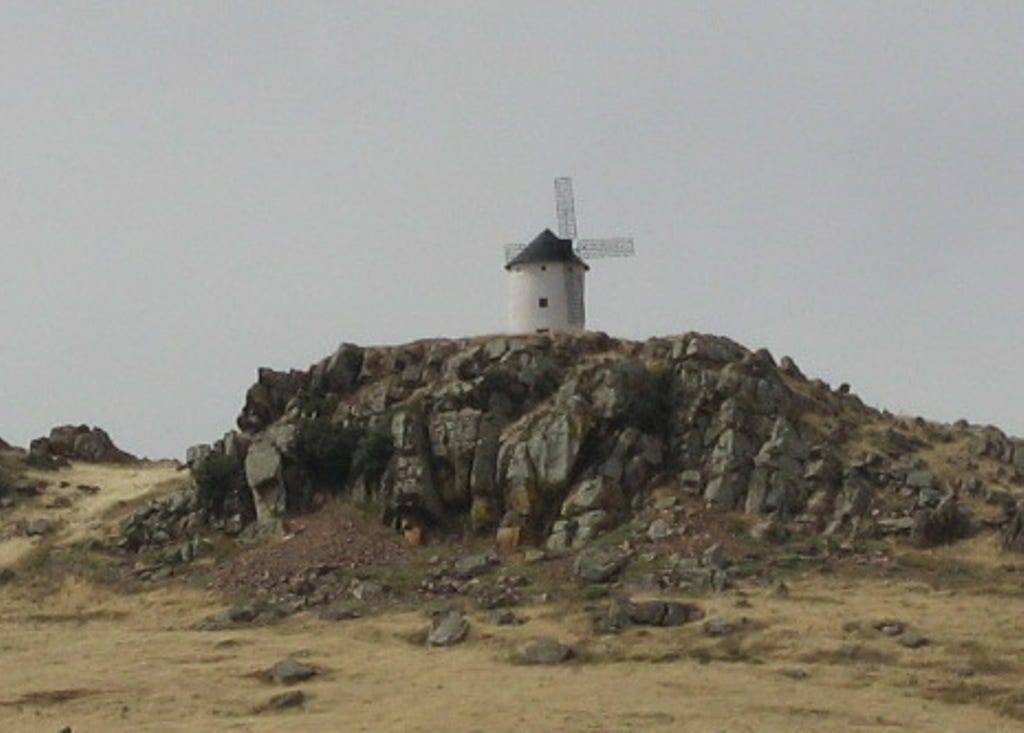
Back in 2008 on a family trip in Spain, I was the designated driver, and I kept getting us lost. We were looking for landmarks as we drove on the vast central plains going from Toledo to Cordoba. I looked up at a hill towering over us and saw a simple medieval wooden windmill. And I knew right where I was. We were in La Mancha. We were lost, but now we were found.
So were our biblical ancestors in the Sinai Wilderness for 40 long years. Mara and I actually wandered through the Sinai back when Israel still controlled part of it. We went on a bus from one end of the peninsula to the other and it took only about a day – and that was with a five-hour delay at the Egyptian border.
But whether we wander for one day or 40 years through Sinai or 13 hours or ten years through the Mediterranean, if we embrace the disorientation, as Odysseus did, as Don Quixote did, and as Moses did, we can develop the survival skills to overcome the obstacles and find our way again.
While we can’t rely on any GPS to orient us, our tradition literally points the way. How fascinating that Judaism originated the notion of directional prayer. No matter where we are in the world, we face Jerusalem. It is our proverbial north star. That is the only GPS we need.
Meanwhile, with our compass calibrated, for Jews, home is and always has been portable, with some of the Jewish people’s greatest achievements occurring in exile: by the rivers of Babylon, the mountains of southern Spain and the boulevards of Vilnius and Vienna.
And we have our annual tune up in Elul to help us from getting too lost on this journey, and the High Holidays reorient us as well. We should never be afraid to be lost, because we have within us and with us, the tools to find our way.
Herman Hesse wrote, “One never reaches home, but wherever friendly paths intersect, the whole world looks like home for a time.”
As the well-known Hasidic parable puts it, two people were lost in a forest. When they met at a crossroads, one asked the other for the right path out, and the second replied, I am lost too, but we know that the paths we have chosen before are not the right, so let’s join up and look for a new way together.
Just take the first right at Syracuse, just before you reach Lake Ontario3. But if you hit Barcelona, you’ve gone too far.
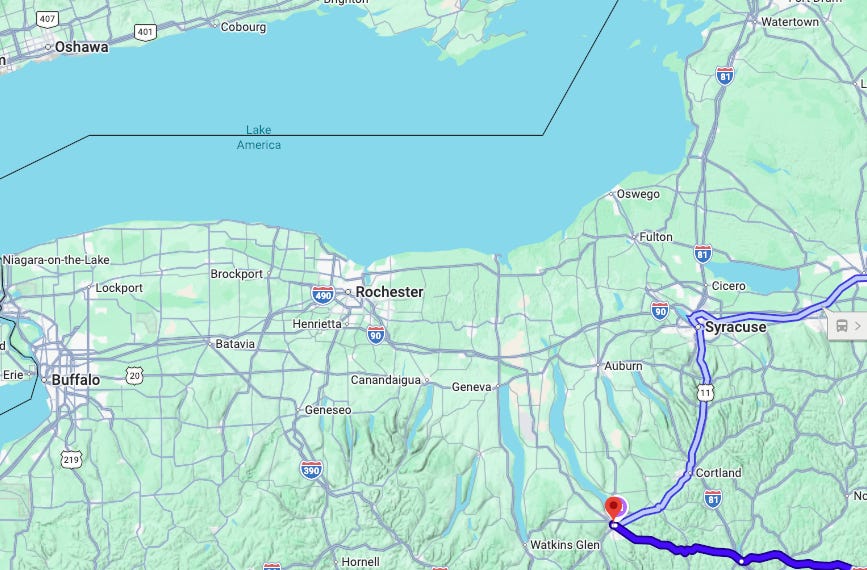
Google maps this morning has Lake America!!!!!!!!! Time to cancel Google Maps.
“Old Shoes and Fresh Clothes” Shabbat morning Torah discussion
I try to do a good amount of walking, especially at this time of year. One time when I went away, I did so much walking that I wore out the soles of my walking shoes and had to throw the pair away before boarding the plane to go home. Just as well – it got us under the weight limit.
I was determined not to let that happen again, so the following summer, I planned to rotate my shoes and sandals so as not to place undue strain on any one of them. But I walked A LOT and I wasn’t sure if my old sandals would make it. These water sandals had carried my feet everywhere. Israel, India, Israel, the beach at Cape Cod, Israel, Southeast Asia, and did I mention Israel. These sandals had been in Hezekiah’s water tunnel more times than Hezekiah!
I wore them so often and in such hot conditions that at one point the tops of my feet developed what I think will be permanent tan lines. My sandals were literally baked in!
It wasn’t that they were particularly expensive. These limousines for my feet were purchased at Payless in the mall.
But nothing lasts forever and sure enough, after what seemed like thousands of miles, on a regular day as I was just taking a regular walk in my neighborhood, the sandals broke.
Which brings me to Deuteronomy chapter 29, verse 5, the very end of this tumultuous portion, after all the blessings and the curses, we get THIS line that God says to Israel, through Moses: Deut. 29:4
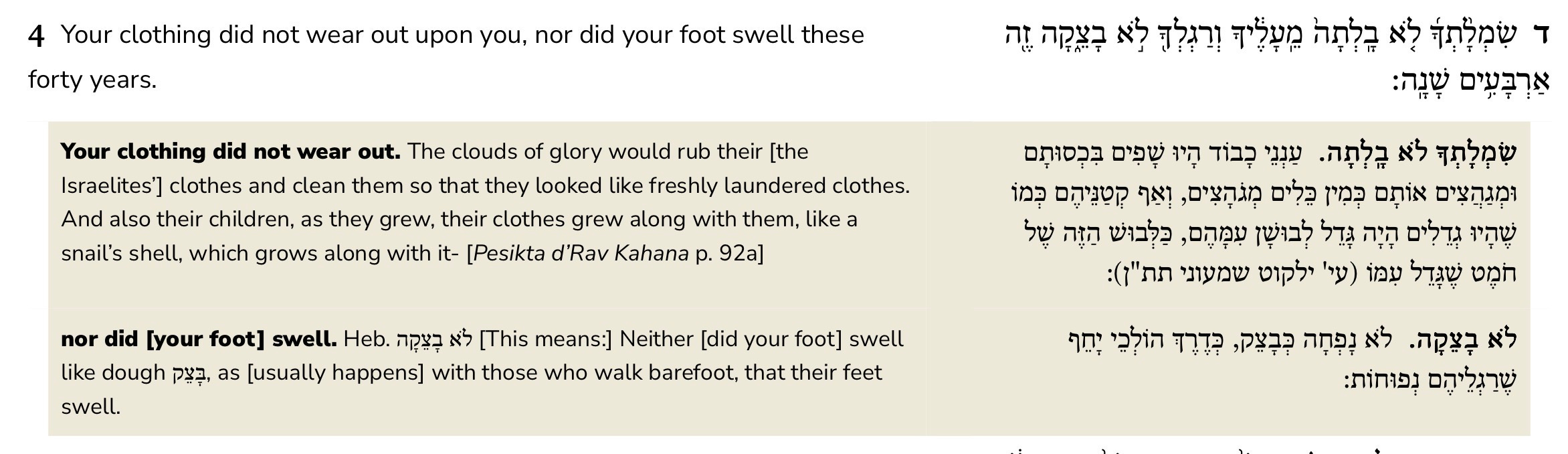
ד וָאוֹלֵךְ אֶתְכֶם אַרְבָּעִים שָׁנָה, בַּמִּדְבָּר; לֹא-בָלוּ שַׂלְמֹתֵיכֶם מֵעֲלֵיכֶם, וְנַעַלְךָ לֹא-בָלְתָה מֵעַל רַגְלֶךָ.
4 And I have led you forty years in the wilderness; The clothes upon you did not wear out, nor did your sandals on your feet.”
Moses basically tells the people, “You wandered through the desert for 40 years without having to buy new sandals EVER and without having to do laundry ONCE.”
Talk about not washing our dirty linen in public! They never even had to do it in private!
And their shoes never wore out! In the Sinai! A miracle!
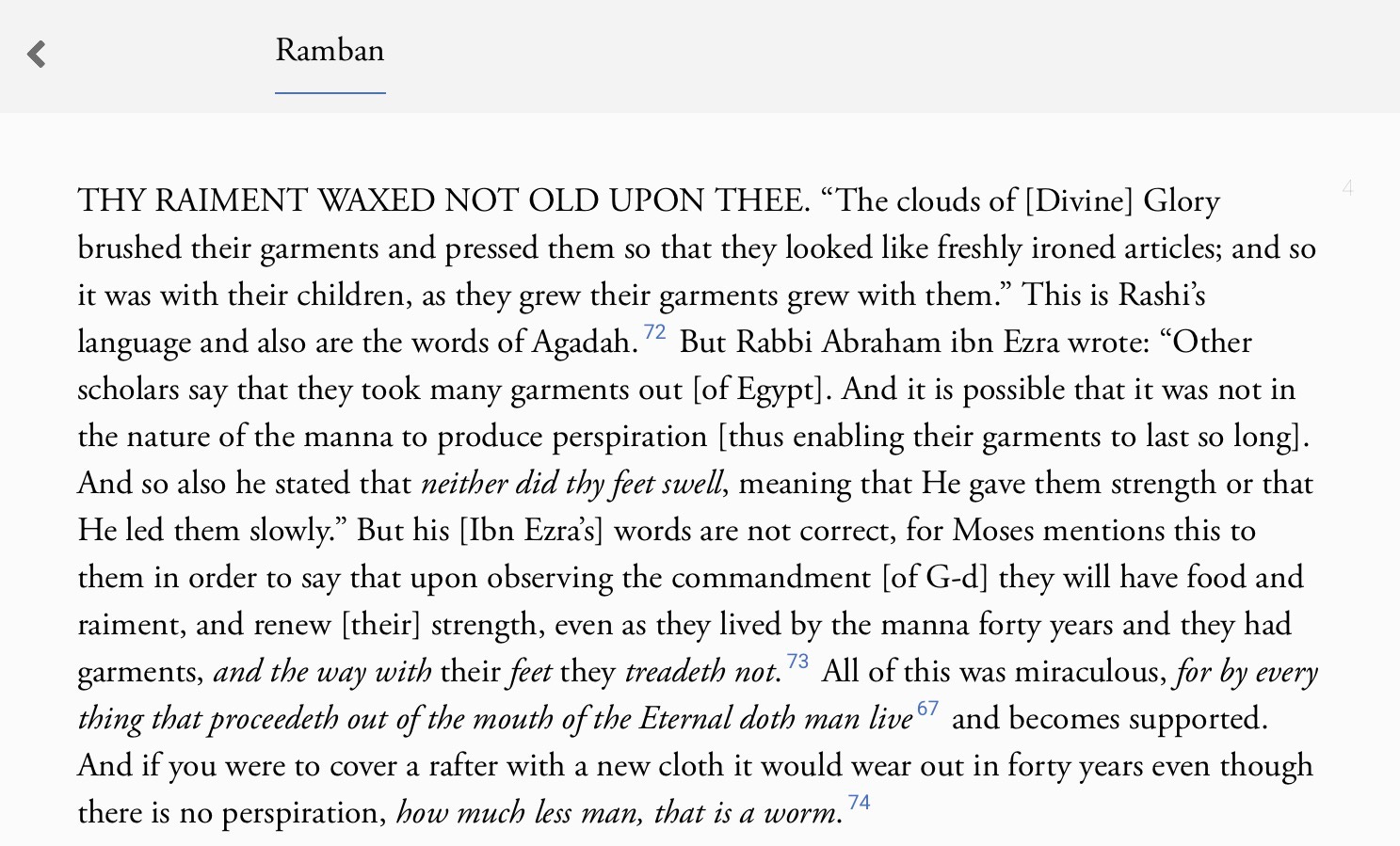
Our Humash compares this to mannah. Just as God provided sustenance for inside the body. God gave our ancestors apparel to hang outside their bodies too. Basic needs were taken care of supernaturally, inside and out. Why such comprehensive, umbrella coverage? Because the people refused to recognize God’s power behind the miracles of the Exodus. They were stubborn and forgetful. So, God says, here’s a miracle for you every day! Food, drink, shoes and clean clothing – this is one all-purpose God - splits the Red Sea – and gets rid of ring around the collar!
When you think of those Tide commercials, it does seem like a miracle when those clothes get so clean, even after a muddy game of touch football. And mom is just happy-go-lucky, singing as she hangs a hundred pairs if underwear on the clothesline. Thank God for 1950’s mom!4
Here’s a second take on this miracle. Not only did the clothes not get dirty, but they self-tailored to fit different body types. I mean, think about it. Didn’t the children outgrow their clothes during those 40 years? Wouldn’t things start to get very tight on them - and their parents too - what with their all-you-can-eat mannah, quail and matzah diet? I mean, is this when God invented Ozempic? Maybe their slacks all had a stretch waist. Or the Israelites got very good at letting things out. This is how Jews became tailors. In partnership with God.
You know that partnership, Lord and Taylor.
A third possibility: this verse demonstrates that at that moment, miraculously, the Israelites invented hand-me-downs. The clothes never got old because families shared. The miracle was in the sharing of their material possessions.
This is when people overcame their innate desire to hoard and share with all. This is when they became socialists. Maybe not.
Here’s a fourth way of looking at this verse. Rabbi Sarah Meirowitz looking at a nearly identical verse in Deuteronomy chapter 8, noticed that there the word “vatseka” swelled, is swapped in for balu, wear out.
שמְלָ֨תְךָ֜ לֹ֤א בָֽלְתָה֙ מֵֽעָלֶ֔יךָ וְרַגְלְךָ֖ לֹ֣א בָצֵ֑קָה זֶ֖ה אַרְבָּעִ֥ים שָׁנָֽה׃
Typically the shoes wear out as the feet swell. But in this case the feet never got too big for the shoes. A miracle! No cankles. And we’re talking Jews here. No diabetes.
Meirowitz wonders whether the reason that image of swelling was chosen has to do with slavery. The word for “swell,” vatseka; the same root is used for the dough, batsek, which the Israelites baked into matzah during the Exodus. The clothing they wore was the same pristine clothing their parents pilfered from their Egyptian slaveowners (Exod. 12:35). Though their slave parents had long since perished, these wanderers were about to enter the Land carrying the same baggage of slavery and memories of liberation on their very bodies. And those memories, like their clothes, stayed fresh.
They were liberated, but they took the scars of slavery with them and of their ancestors.
In many ways, we are still wearing the clothes of our parents and grandparents who went through so many trials over there and coming here. And we’ll hand down our own garments to the next generation. But they will not be torn or tattered. They’ll be fresh, so in some manner will represent renewal rather than shame or pain.
Here’s a fifth take:
Rabbi Yose ben Hanina said that the clothes and shoes they WORE did not get old, but those that they packed away in trunks got old.” (D’varim Rabbah 7:11)
And you know, it’s true. When I moved, I gave away many clothes but took enough to stuff into my closet – just enough so that the closet was so stuffed it’s almost impossible to take things out. So most of the clothes. I haven’t touched. I
And when I do try on an old pair of pants, or shoes, odds are it won’t feel right. That’s a generous way of saying it won’t fit.
We need to wear our clothes often to keep them fresh.
When we don’t use something, it atrophies. Our bodies require exercise. Our brains turn to mush if we don’t keep reading – or writing.
When we stop praying or studying Torah, we stagnate spiritually and we stagnate emotionally too, and we stagnate morally. We’ve got to keep exercising our moral muscles – and with so many crazy things happening in our world, we can’t lose our ability to be outraged.
Heschel loved to tell story about small remote town with no watchmaker. All the clocks had become inaccurate. Many owners gave up in disgust, ignoring or discarding the clocks. Others wound their clocks each day even though they were off. One day a watchmaker came to town. The only ones he could repair were the ones that people had kept on winding.
And the same is true with prayer. Unless we keep on doing it – even when it makes no sense, we lose that “muscle.”
So this verse, which is always recited just before the High Holidays, is a warning not to allow our moral, physical, mental and emotional muscles to atrophy.
A sixth and final way to look at the verse is that certain looks never get old. Certain fashions never go out of style.
Rosh Hashanah never gets old. The rumors of its demise are highly exaggerated.
Or perhaps we need to understand that oldness and newness – are simply a state of mind – everything old is new again!
So over the next few weeks, we’re going to be sifting through the attic of our minds and rummage through the refuse of our souls.
Let’s sift carefully as we are inspired by prayers old and new.
We may find some treasures there. Even if some shoes have tattered soles. Let those old soles renew our souls.
In the words of Rav Kook, May the old become new and the new become holy.
Radio Atlantic podcast

Babylonian Talmud, Megilla 24b
“Over the past year, Trump’s obsession with naming places has given rise to a new term—toponymic narcissism—which refers to the condition of being obsessed with naming places after oneself.” (Time Magazine)
See Rashi’s commentary on the similar verse in Deut. 8, below, and beneath that, Ramban (Nachmanides’):

No comments:
Post a Comment