Friday, January 29, 2016

Shabbat-O-Gram for January 29 - The Moses Caucus and the Old Jewish Guy


Shabbat Shalom

Join us tonight as we welcome Shulem Deen, who will speak about his riveting and heartbreaking book, National Jewish Book Award winner, "All Who Go Do Not Return." 
Katie Kaplan will be co-leading the service with me tonight at 7:30, in Cantor Fishman's absence.

Tomorrow we will discuss the portion Yitro and the Ten Commandments, with some of our Hebrew School students joining us, in another of our successful "Shabbat School" weekends.

If you missed my photo essays from Israel last week, they've been revised and are now both featured on the Times of Israel site:  Jerusalem After Dark and The Scribbles on the Wall.  Check them both out (and if you like 'em, share 'em!).  You'll get a real feel for what I experienced on my recent visit to Israel.

Speaking of visits... our website for this summer's Jewish Heritage Tour of Central Europe is now live and we are taking reservations. Click here to check out the itinerary and other details.  You know, even the Pope will be joining us...sort of.  He'll be in Krakow (and Auschwitz) about a week after our visit this summer.   I've heard from more than enough people to warrant moving forward, so now is the time to put down deposits. Please know that if the trip is cancelled because of low registration, the deposits will be refunded in full. (If the trip is a "go" and you pull out for other reasons, the cancellation policy is explained on the site).  We are exploring air options - and there are several good ones - but flights should not be booked until we are 100% good to go.  So now is the time to sign up - and tell your friends.  Reservations will be accepted on a first-come, first-served basis.  As a little teaser, take this virtual journey of the brand new Polin Museum in Warsaw, which we'll be visiting. The museum traces the fascinating history of Polish Jewry.
 
Relationships

This Sunday, our temple leadership will be engaged in a retreat about engagement; our focus will be on nurturing relationships.  We've been reading Ron Wolfson's thought provoking book, "Relational Judaism," and we'll be discussing its treasure trove of ideas, all with the goal of weaving deeper connections between one another, and between ourselves and our families, community, our Jewish traditions and God.  

Check out this article, which lays out Wolfson's thesis in great detail.

Ultimately, in order to grow our community - and to ensure our own spiritual growth - we need to encounter one another with honesty, selfless love and humility.  At a time when surveys show that  younger people leaving religion in droves (see chart below), we need to demonstrate to them - and to everyone - how indispensable it can be to develop deep connections with your religious community.


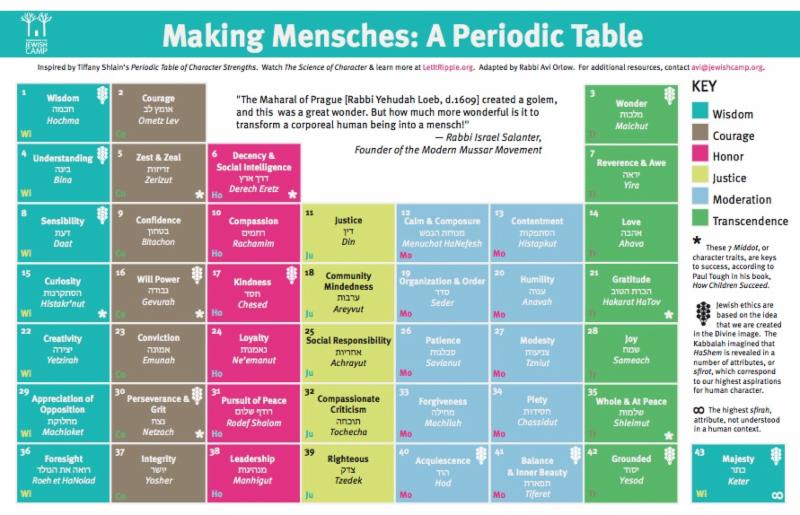
It is my hope that as we all move forward, we will work together to develop relationships that can in turn foster the qualities of menschlichkeit revealed in this chart below (click here for a clear version of it).
 

The Progeny Page

Our TBE family includes some remarkable young people doing some remarkable things.  I highlight two of them today:

Josh Pickel, one of our teens, is on his way to movie immortality - and we can help him get there!  Part of his new zombie film, "E-19 Virus" was actually filmed at Beth El (no actual viruses were harmed in the making of this movie) and if you click hereand check the end of the trailer, you will see that Steve Lander, TBE and I are mentioned!  (I'd like to thank the Academy...).  You can order tickets to the one-night-only Connecticut premiere on Feb. 18.  The movie is also being shown at AMC Theaters in Los Angeles & Sacramento. Los Angeles is "SOLD OUT" and Sacramento is close to being sold out, and Connecticut is on the way.  If the film sells out in all 3 locations, AMC will add 6 additional theaters nationwide. If those 6 theaters sell out then they will add 12 additional and if that sells out it GOES NATIONWIDE to all AMC Theaters.   So here's our chance to help lift Josh to stardom. 

Alex Weinberg, a TBE college student, sends a more sobering request.  Here it is, below:

"My name is Alex Weinberg and last year I had the privilege of studying in Israel at Yeshivat Maale Gilboa. While I have begun my freshman year in college, my Israeli friends have gone on to join the army, risking their lives for the Jewish State. One friend, Eldar, is currently in the Nachal brigade, 50th Battalion, 9th Company. He and the rest of his unit are raising money to buy socks, coats, and other essentials. If you would like to take part in this fundraising, please be in touch with him atEldar27p@gmail.com."  

Thank you to Alex, for letting us know about this worthy cause.
 
The Moses Caucus and the Old Jewish Guy

So, with the caucus and primary season at last upon us, we naturally are asking, who would the Torah pick for President?  Well, in fact, in this week's portion Moses makes his choice.  And it's.... (drumroll, please)...Trump!  Oh, and Sanders! Oh, and everyone in between....

We actually discussed this at our "Hot Topics for Cold Months" class last Tuesday, which drew a large and extremely diverse group of learners, something that I really appreciated. 

In this week's portion, Moses' father in law Yitro (Jethro, but not the guy from the Beverly Hillbillies) suggests to Moses that he delegate some of his leadership responsibilities, so that he won't continue to be overwhelmed by the many cases being brought to him by the rank and file.  The criteria they establish for choosing these new leaders is illustrative. If you take a look at this page of commentaries from the portion, you will see that one of the qualifiers is that the nominees be "capable men," ("Anshei Hayil," in Hebrew).  What does that expression mean? 

Well, pick a commentator and you get a current candidate.  Rashi says, "Rich men," who are beholden to no one.  He would clearly be a Trump or Bloomberg supporter. Rashbam focuses on the quality of fearlessness.  Ibn Ezra looks for physical endurance, and one might say that Hillary has been around the political bock enough times to qualify.  Nachmanides is looking for wisdom and honesty, which frankly, means he is possibly thinking about writing in Larry David.  But then there's the next line in the Torah, the next qualification, "who spurns ill gotten gain," which Ibn Ezra immediately defines in one word: "money."  So he would be the Sanders delegate. 

All of which goes to show us that political eligibility is in the eye of the beholder.   We'll see how the people of Iowa choose on Monday.

Two other points to make:

1)     The Torah is very committed to the idea that our leaders should be incorruptibly independent, owing nothing to anyone.  Peruse our packet from the Hot Topics classand you will see that the Talmud - and the Reform and Conservative movements - come down squarely Campaign Finance Reform and against the "Citizens United" decision.  See the Rabbinical Assembly's resolution.
 
2)     A word about the Old Jewish Guy. I may or may not support Bernie Sanders politically, but I LOVE the two unspoken messages coming out of his campaign: IT'S OK TO BE JEWISH AND IT'S COOL TO BE OLD.   

Sanders is overtly Jewish in precisely the opposite way Joe Lieberman was.  His Jewishness pours forth in an ethnic tribal sense, and Lieberman's was expressed in terms of religious observance. Both are legitimate.  The fact that Jewish identity been not been seen as a political detriment in either case is both highly significant - and profoundly reassuring.  They love us!  They really love us!
 
But it's the "old" part - that's the real revelation.  I'm not just talking about the fact that he is older - so was Ronald Reagan and so are other current candidates - or that if elected he would become  the oldest president.  What's telling is that he doesn't feel a need to hide it and in fact seems very comfortable beneath his Ben Gurion bushel of gray.  And despite his visible senior-ness, or maybe even because of that, he is a rock star on campuses and is adored in almost Obama-like fashion by millennials and younger siblings.

This is really important, I think, and a reversion to an era long before old people were derided as irrelevant, out of touch, or worse (anyone recall  "Where's the Beef?" - and John McCain wandering about the debate stage?), back to a time when the Torah could state, "Rise before the aged," and the mitzvah of honoring the elderly drew more than lip service at retirement dinners.  

I've seen it in the rabbinate and so many other professions, where wisdom and experience have been cast aside as congregations and corporations have sought to grow ever younger.  Even when I was a young rabbi, reaping the benefits of these distorted priorities, I questioned the logic of idolizing youth.  As I've grown and grayed, I've seen a dismaying acceleration of this trend, to the point where, from what I hear,  prestigious synagogues that once waited for candidates to turn 50 before even considering them for top rabbinic positions, now immediately filter out those who dwell in the valley of the shadow of 38.

But now we've ushered in the era of grandpa-chic, and Bernie is a rock star on campus. Maybe the kids themselves are telling us to "chill" about aging.  It's not unusual for young people to emulate the ways of their grandparents' generation - hence the return to electric typewriters, vinyl and Brooklyn.  I also understand that there may well be an unfair double standard when it comes to women.  But for an Old Jewish Guy to be rockin' like Bernie is, it's got to be reassuring for people of all ages and hairy hues.

And kids, GET OFF MY LAWN!
 
Shabbat Shalom!

Rabbi Joshua Hammerman

Friday, January 22, 2016

Shabbat-O-Gram for January 22

Shabbat-O-Gram


TBE Religious School students celebrate Tu B'Shevat at Thursday's "Top Chef Challenge." See more photos in our Winter Photo Album (scroll down) 


Shabbat Shalom

Join us tonight for our potluck dinner and services.  The service will be in the sanctuary tonight, as we are expecting a nice crowd, and of course, as always, lots of great music!  Tomorrow and Sunday could bring weather issues.  Since we don't cancel Shabbat services, please use your good judgment in deciding whether to make the trek on Shabbat morning, when snow is expected to be falling.
I'm grateful to Senator Blumenthal for his visit while I was away.  I saw all the pictures and heard great things.  See our album from his visit here.

Make plans to be here next Friday night!  Our speaker, author Shulem Deen, was just awarded the prestigious national Jewish National Jewish Book Award for his heartbreaking and gripping memoir about leaving ultra-Orthodox life, All Who Go Do Not Return."

A number of people have inquired about our proposed Europe trip for the summer.  The website is now up, but I am still waiting for air arrangements to be included there. The itinerary has been adjusted from the draft I shared earlier.   You can find the website here
 
TU B'SHEVAT - Spring is here???

This weekend is Shabbat Shira - a harbinger of spring, ironically, given the forecast, featuring the tree planting festival of Tu b'Shevat.  We learned this week, to little surprise but to what should be great alarm - that 2015 was the hottest year on record.  So Tu b'Shevat takes on even greater significance as the official Jewish Sustainability Holiday.  See my source packet on Tu b'Shevat and sustainability.

Tu b'Shevat also turns our hearts to Israel.  In Tel Aviv last weekend, the temperature hit the upper 70s, the land was lush and green, and signs of spring were everywhere.  So despite the predictions of snow, Tu b'Shevat calls upon us to dream of greener days to come, here, and in particular, in Israel.

This week I'm featuring two photo essays from my trip, both featured on my blog:


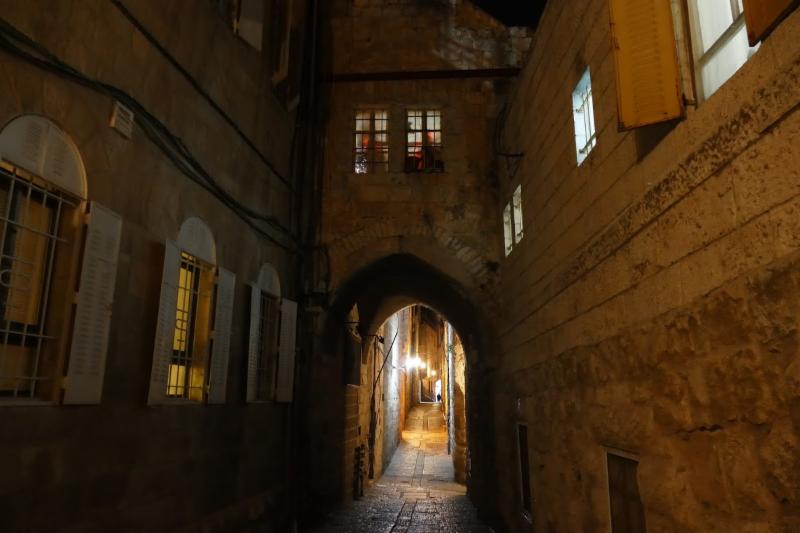
Circling the Night in Jerusalem - Photos of my visit to the Old City at night. The quiet of the night is exquisite yet deafening.  The quiet is in itself a prayer for the peace of Jerusalem, a beautiful, if fragile, gift, as well as a reminder that for tourists less intrepid (or foolishly impulsive) than I was that day, the dream of a united, peaceful Jerusalem remains far from fulfilled.


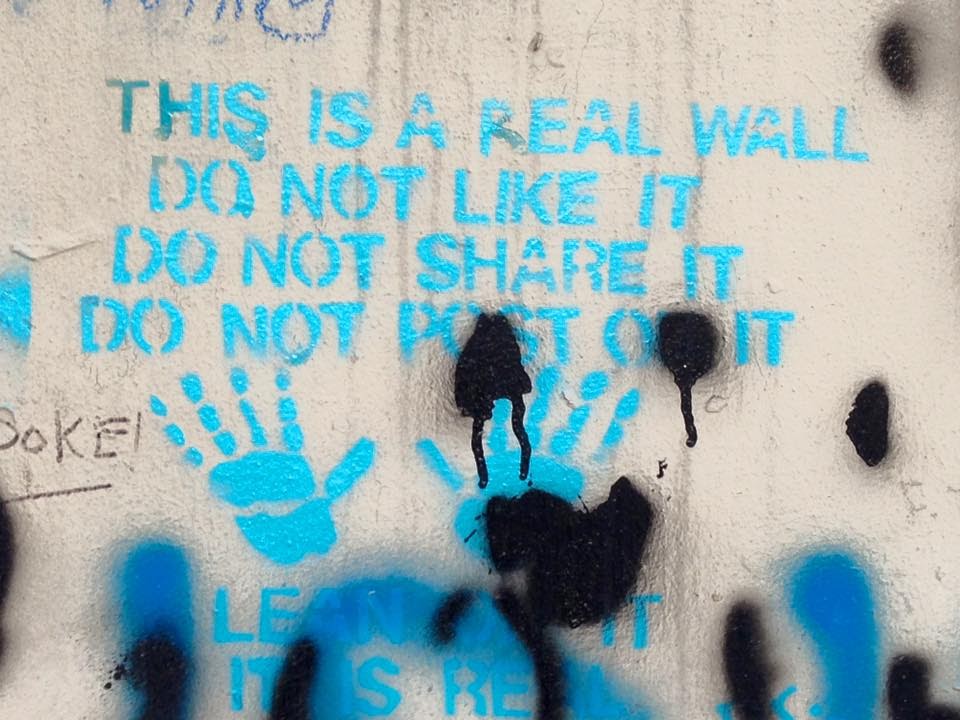
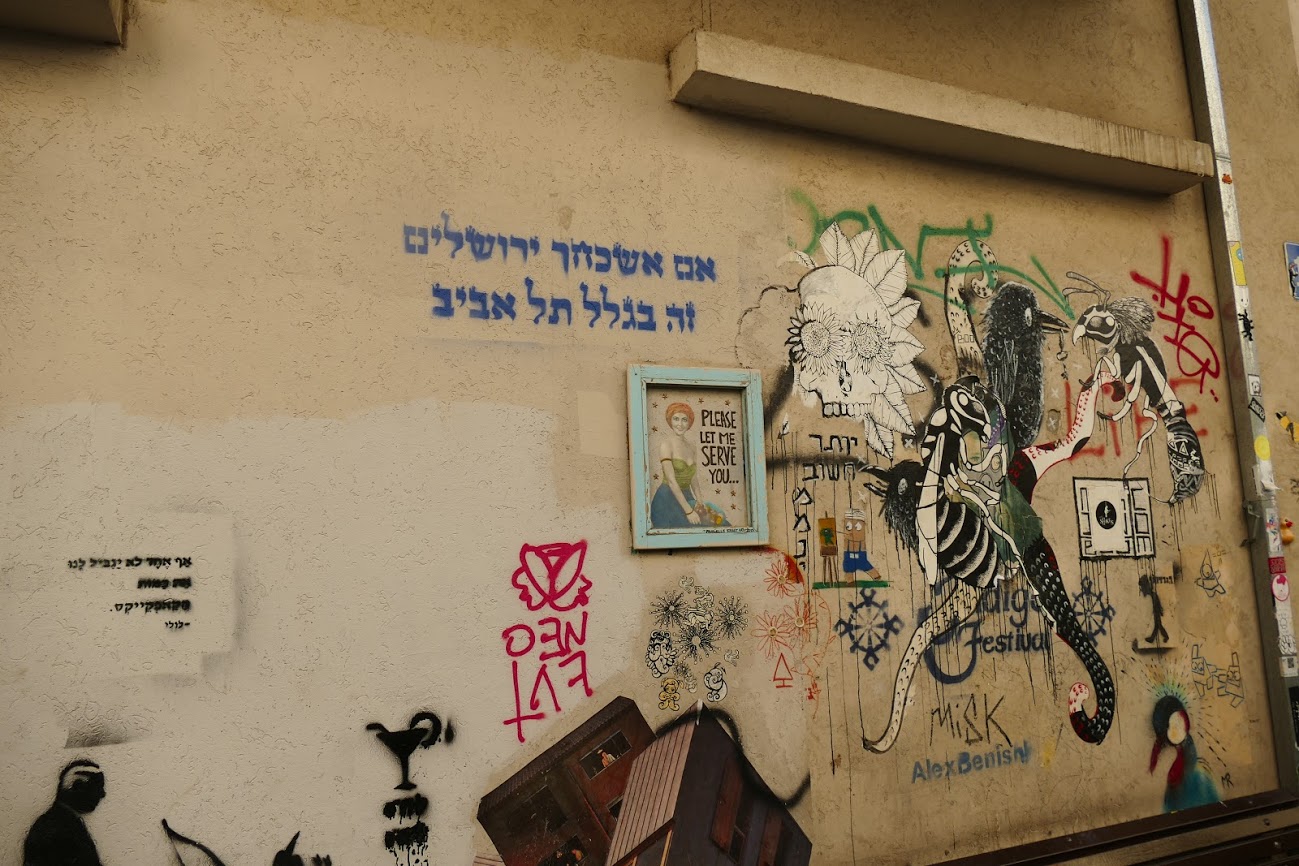
The Words of the Prophets - showing pointed and hopeful messages from the graffiti of Tel Aviv’s Florentin quarter, and elsewhere in Israel. 

Lod: A Mosaic of Hope

My son Dan has been participating in the Yahel Social Change program in Israel this year, focusing his attention on the small, diverse city of Lod.

Israels typically laugh when I tell them that my son is working in Lod.  Derision concerning Lod seems to unite Israelis more than just about anything this side of hummus.  Left-leaning friends call it an armpit of corruption, crime and neglect.  Right wingers, even those from the most far flung settlements, say they would never set foot in Lod because “it's too dangerous.” 

Those who have read Ari Shavit’s book, “My Promised Land,” will recall that Lod (also known as Lydda) was the place where tens of thousands of Arabs were evicted at the time of Israel’s creation.  He writes, “Lydda is our black box.  In it lies the dark secret of Zionism.  The truth is that Zionism could not bear Lydda.  If Zionism was to be, Lydda could not be....If a Jewish state was to exist in Palestine, an Arab Lydda could not exist at its center.”

Even more than, perhaps, Jerusalem, Lod, then, stands at the center of the conflict. 
And I sent my son there, to this godforsaken, dangerous, miserable armpit of central Israel.

Lod is one of the most ancient cities in the world, by some estimates over 8,000 years old.  It’s mentioned in the Bible and was home to famous leaders of the rabbinic period.  Conquered by the early Muslims and then the Crusaders, by the Middle Ages only a handful of Jews remained of what was once a thriving Jewish center.

The city might be considered a poor man’s Armageddon.  Megiddo, which lies at the juncture of the Carmel mountains and the Jezreel Valley, right on the central trading route known as the Via Maris, is the site of the New Testament Armageddon, where apocalyptic battles are forecasted to take place.  But Lod is even more centrally situated, at a place where the central mountains meet the coastal plain, where armies from Africa, Asia and Europe have always had to pass as they crossed over land on their conquests.  And unlike Megiddo, Lod remains an indispensible center to international trade and transport to this day.  Israel’s main airport, once known as Lydda Airport (now Ben Gurion), is just a couple of miles to the north.  The strategic presence of that airport is what Ari Shavit was referring to in emphasizing Lod’s strategic importance. And unlike Megiddo, Lod actially still exists as a living, breathing city.

I discovered something interesting during daily visits to Lod:  The city where Israel‘s original sin is alleged to have taken place in 1948 just might become a gateway to redemption and reconciliation in 2016. 

Lod is where hope is being reborn.

Lod, which now boasts a gorgeous, recently discovered archeological mosaicfeaturing animals harmoniously coexisting, prides itself on being a Mosaic of Cultures and is one of the few places in Israel where Jews and Arabs of all backgrounds find literal common ground.  Featured in this recent article, the city of 77,000 is gaining notoriety for its mix of Muslim and Orthodox Christian Arabs, including Bedouins, which comprise more than a quarter of Lod’s population, added to Jewish immigrants from the former Soviet Union, Ethiopia and elsewhere, an assortment of religious and secular Ashkenazim and Sephardim - all of these plus, for this year at least, my son.

Lod, like Stamford, demonstrates that in an increasingly polarized world, diversity can be a priceless asset (which is why I love our Stamford public schools).  While the rest of Israel and the West Bank have been reeling from the recent violence, Lod has been peaceful.

Last week, Dan Hammerman’s parents made a visit to his Arab school and we were greeted like royalty.  The school is a place of vibrant learning, where co-existence and friendship are at the core of the curriculum.  Classrooms and halls are plastered with banners and quotes, like the one in Hebrew below, from Pirke Avot, “Don’t look at the flask but at what is contained within it.”  The students are being taught precisely how not to have hatred toward the Other. 

The kids engulfed us.  “You’re Dan’s mother and father,” they said to us in English - 
having looked forward not only to meeting us, but also to having the opportunity to practice the words “mother and father.”  They asked us about America, wanted to see pictures of our dogs, and were especially interested in hearing us talk about the wonders of New York and Disney World.  (On another day, three Ethiopian Jewish children, who are taking an afterschool music class with Dan, regaled us with a song and dance performance to “Let it Go.”) 

One of the Arab girls, Hilba, who is really bright, came over to tell us that until recently she wasn't confident speaking English. “But because of Dan I love English."
I’m not naïve enough to say that one volunteer program is going to change the world.  But I know that at least one group of Arab middle schoolers now have had a positive encounter with Jews - and I must add, with Americans - one that differs greatly from the images that they undoubtedly have seen both in the media and on the street.

I don’t know at what age people begin to mistrust, but I do know that hatred can be arrested, because I saw that in Lod.  While there is undoubtedly horrific incitement happening in other places, especially in the Territories, where children are encouraged to hate, even to kill, right here, in this place, there is only excitement, the excitement of learning.

The teachers were also thrilled to see us, posing for selfies and sharing small talk.  When one of them asked what I do and I replied “I’m a rabbi,” she seemed shocked.  I guess I also didn’t seem like rabbis she has met before.

We are all the face of Judaism, and, at least in this school on this day, Lod was able to get accustomed to that face, quite easily.

Deputy Mayor Aviv Wasserman says of the turnaround in Lod, “I think it comes from the people, who have been together here for so long and have forged social and economic ties. Lod can really serve as a model, a symbol of sanity in Israel today.”
Lod, the poor man’s Armageddon nestled on the rolling lowlands where the Sharonplain meets the Shfela, could end up as Israel’s City on a Hill. Islamic lore posits it as the place where the Devil will be slain, and Christians believe that at the city's Church of St. George, Jesus will slay the Antichrist.  Maybe those ancient prophecies are in some manner prescient.

So can Lod also be the place where the unwritten rule that Jews and Arabs must be enemies comes undone?

The Lod Mosaic’s imagery has no overt religious content, making it impossible for experts to determine whether it was commissioned by a pagan, a Jew, or a Christian.  Yet each of its animals appears to thrive in their shared habitat.  Even the animals, it appears, are able to look not at the flask, but at what it contains.

On our final night, I stopped at my regular gas station at the outskirts of town to fill my tank before heading to the airport.  The guy there, a Jew, asked me about New York - how tall the buildings are, how cold it gets in the winter.  I imagine how he must feel, a lifetime resident of a place everyone laughs at, imagining a city that glistens and gleams.  “I want to go to New York some day,” he tells me.

“I want to come back here,” I reply.

Nesiah tovah,” he says as he tops off the tank, which literally means “a good trip,” but is usually meant as a wish.  For me it was more descriptive of the part of the trip that was ending right there - it most definitely was a “nesiah tova” - a great trip.
And I finally understood why Dan has entitled his blog, Live. Love. Lod.
I leave you with a few photos from the school.

Shabbat Shalom


The Words of the Prophets...

In Tel Aviv, graffiti has been raised to a fine art. The words of these modern day prophets are written on the subway walls, so to speak, and with a light rail system turning half the city into a massive construction site (and even more massive traffic jab), there was plenty of wall to decorate.  

Below is an annotated photo essay showing examples of this prophetic art from my recent visit to the not-always-so White City, as well as other spots in Israel.  

Sadly, graffiti often takes a destructive tone - words can heal and also hurt.  While I was there, I saw a synagogue in Tel Aviv defaced with words comparing Jews to Nazis, and I was on Mount Zion in Jerusalem the day the Dormition Abbey was defiled by anti-Christian graffiti, an act for which two Jews were later arrested.

All in all, Israeli Graffiti left me hopeful. Life there is intense, purposeful, creative, celebratory, and, despite it all, hopeful.  Like the film "American Graffiti," perhaps it might spawn a spin-off that will bring us closer to "Happy Days."

Click on the photos to enlarge


From the Florentin quarter, rejections of the virtual in favor of what is real and human


On a store in Jerusalem's German Colony: "Jerusalem says NO to Violence."


Tel Aviv says "No" too - in its own way,


And again.


Even real starlings got into the act, forming the shape of a dove of peace 
over the beach in Tel Aviv


I love this one.  
On highway 4 heading north near Bnai Brak,
a sign implores us to refrain from gossip (Lashon Ha-Ra).  Only in Israel.


In Florentin, "If I forget thee, O Jerusalem...it's because of Tel Aviv!"
Truly, the contrast between the two cities could not be more stark, except that both are doing precisely the same thing - stretching the limits of the human capacity to dream.


Forentin - note that English has become the chosen language in Tel Aviv's graffiti world.


Adorning the cemetery of Zichron Ya'akov: A quote from one of the first Zionist pioneers: "We've come to the land of our ancestors with a sacred goal.  We have no other home in the world.  Here we will live and here we will die."  


Netanya's central square, where I heard almost no Hebrew spoken - but lots of French and Russian.  Here. a Facebook "Like" appears with the Hebrew expression, "whole heartedly," echoing the first paragraph of the Sh'ma.


On a wall in Neve Tzedek, a lovely, gentrified old neighborhood in Tel Aviv.  God's name is on this wall - spelled backwards.  Is this a challenge to God, a statement of our being created as God's mirror image, or a means of making it easier to see God in our rear view mirrors, as we leave Him/Her in the dust?


I visited the school where my son Dan is volunteering, teaching Arab children in Lod.  The sign above, which I saw in a classroom. says, in Hebrew and Arabic: "It takes years to build a friendship - and an hour to destroy it."

The one below states, "One worries for a year to grow wheat, and to plant and nurture a tree, it takes years.  But to nurture and educate a child, it takes generations."


Just outside the Carmel Market in Tel Aviv, a defiant "The People of Israel lives!" And so they do.  I arrived just a few days after the attack on Dizengoff St.  One night, while eating at a restaurant just next door to the bar that was attacked, I asked the waitress how everyone had dealt with the new threat.  "We were nervous for a short time, " she said "but people are coming back now."  And sure enough, the restaurants and bars on Dizengoff and Rothschild were pulsating with humanity during my visit.

Wednesday, January 20, 2016

Circling the Night in Jerusalem

Here are some photos from my just-completed trip to Israel.  

With the recent violence in Jerusalem waning a bit, on the last night of the journey, I decided to make a complete circle of the ancient city walls,  from Zion Gate to Jaffa to Damascus and back around again, observing the teeming life, the incessant traffic, the commerce, the smells, the parents with school children, the tourists and residents, all exactly the same on each side - yet totally disconnected from the other side of the city.

And then, as darkness descended, I parked at Zion Gate and strolled though the Jewish quarter and down to the Kotel.  In contrast to the bustle outside the walls, it was so peaceful and quiet inside.  Almost no tourists there at that hour (given the violence of the past few months, few venture to come to the Old City at night). 

At the Kotel itself, hundreds of Haredim were gathered for the evening prayers, a sea of black surrounding myself and my son Dan.  When the Ma'ariv service was done, they broke into a circle dance - the song, very familiar, was "L'shanah ha'ba'ah b'Yerushalyim," "Next year in Jerusalem".  A perfectly inspiring song. Except that it's "this year" and we were/are right there, already in Jerusalem.  That juicy blurring of vision and reality, of past, present and future, echoes the first verse of Psalm 126, "When the Lord restores the fortune of Zion, we see it as a dream."  Are we really here?  Has the dream been fulfilled?  We ask God to pinch us, so that we might awaken to a glorious new reality, an old reality, really,a vision fulfilled. Clearly, for this group of Haredi dancers there is still some fulfillment that needs to take place - a rebuilt Temple, a messianic restoration - and for others, like me, that "next year" that we are praying for involves two states at peace with one another, bustling and alive, like the two sides of this ancient city.  But we all are singing the same song of longing while dancing in a dream-like place, a place that my great grandparents could only have dreamed of achieving.  

Post-pinch, we awaken, and Jerusalem is not yet "there."  The quiet of the old city is exquisite yet deafening.  The quiet is in itself a prayer for the peace of Jerusalem, a beautiful, if fragile, gift, as well as a reminder that for tourists less intrepid (or foolishly impulsive) than I was that day, the dream of a united, peaceful Jerusalem remains far from fulfilled.

Click on the photos to enlarge.


Click below for a video of "Next Year in Jerusalem"