
Tuesday, June 9, 2020

In This Moment, by Rabbi Joshua Hammerman: June 9 - Look Who's Paying for our Praying! Reimagining the TBE Experience

In This Moment

 
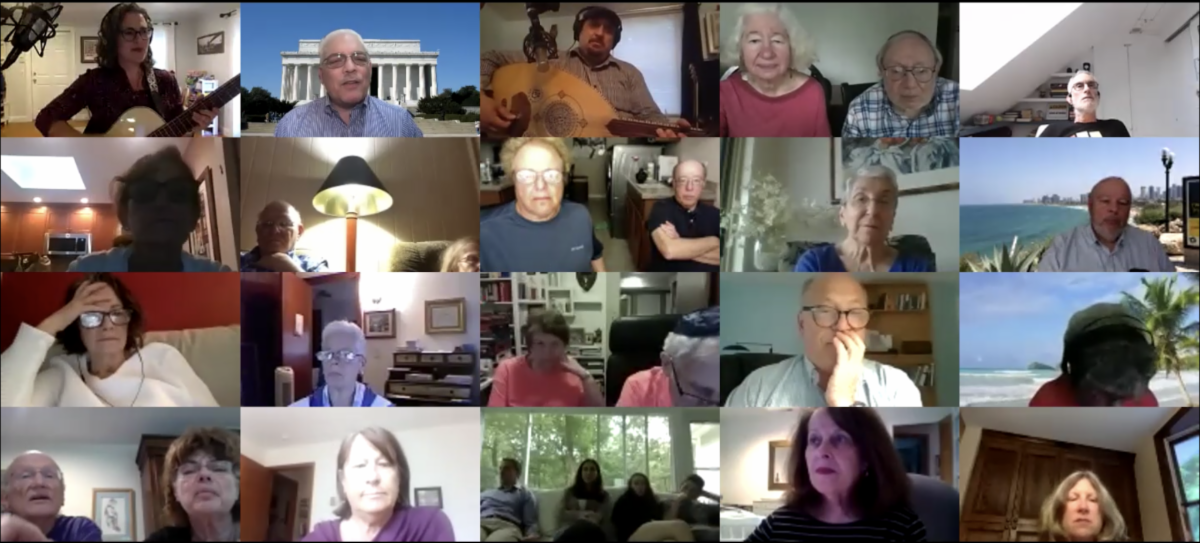
Snippets from last Friday night's service - watch it here 
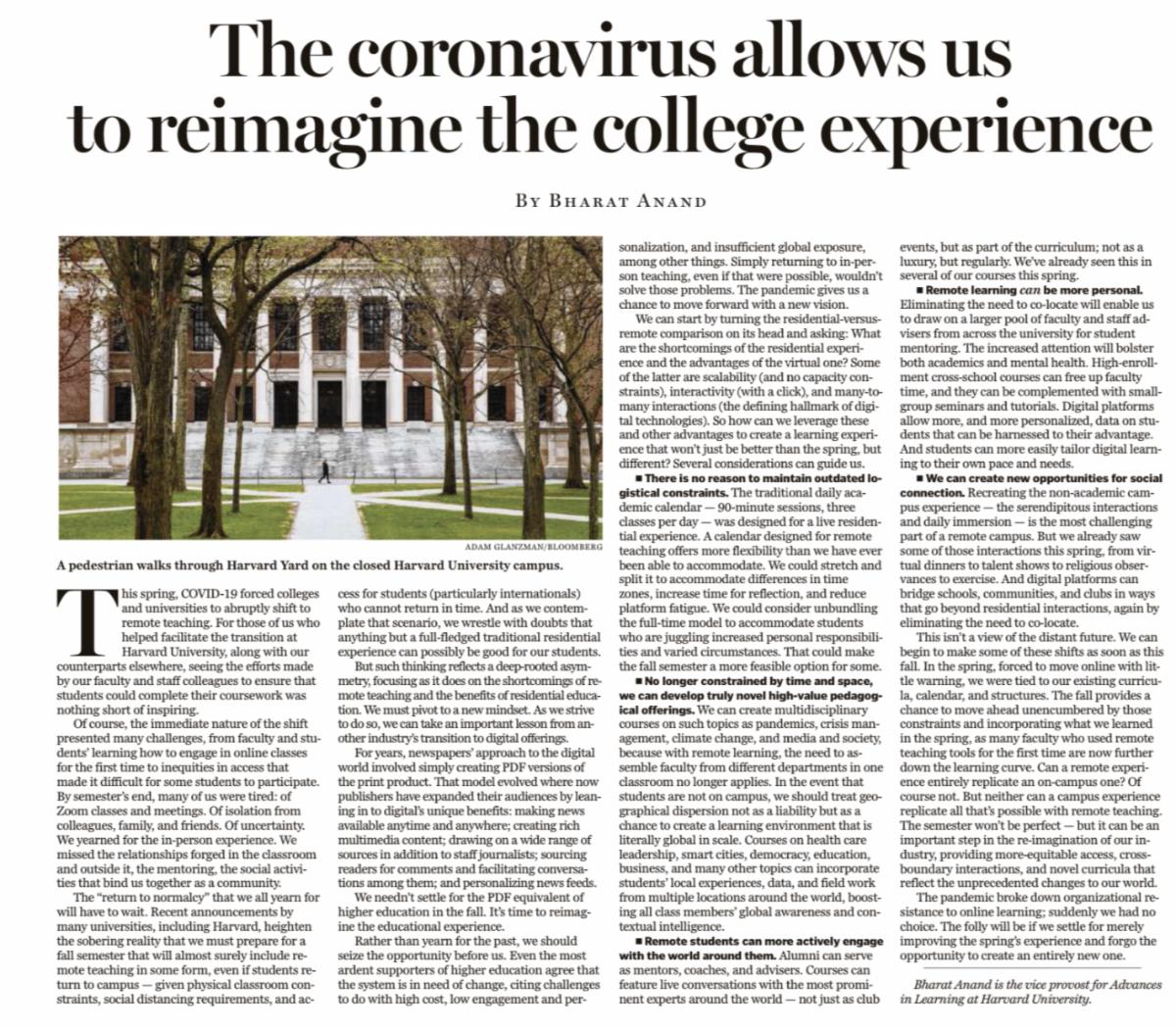
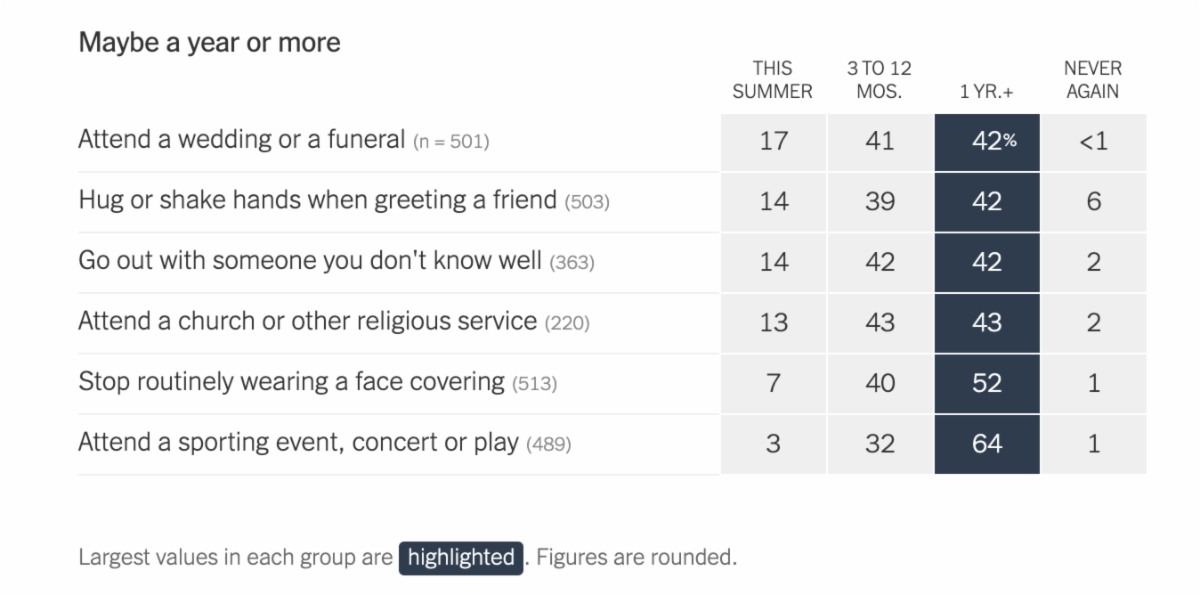
This article suggests that given the new realities of the pandemic, we need to reimagine the college experience for the coming fall, and that in some ways the virtual can be superior to the physical. The same is true for houses of worship. The New York Times surveyed 511 epidemiologists, and of all the activities suggested, returning to houses of worship was near the bottom of the list, and for good reason. 
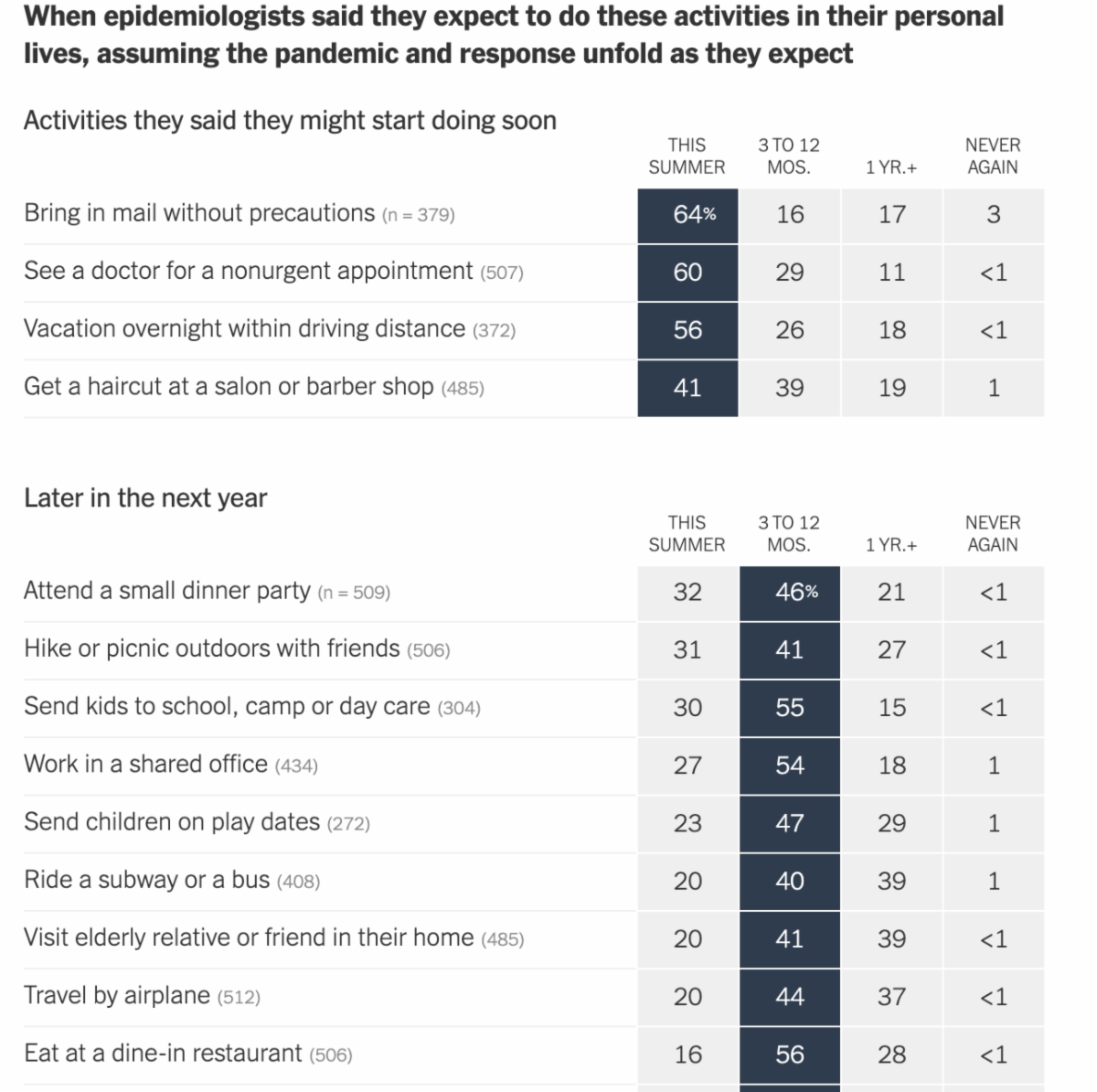


So if the public health pros are saying go slow with reopening, who are we to argue?
As we consider our options, the prime Jewish value that guides our thinking is - and must be - to protect the health and safety of our congregants. WIth that in mind, we need to continue to find new ways to comfort, challenge and inspire, ways that take us through the summer and beyond the holidays into the fall, for as long as it takes until it we can all be physically together.  And that is precisely what we are working on.

We'll have lots of time to discuss the holidays, but for now, here's a quick peak inside our planning:  First, you’ll be happy to note that Rosh Hashanah will still take place on Rosh Hashanah, and Yom Kippur on Yom Kippur. Though the time frame of the services will be consistent with past experience, we’ll be packaging the event into more palatable segments, with a good deal of it being prepared remotely and in advance.  That will allow us to have choral singing and inspiring music (which distancing rules would not allow us to do on-site), and you’ll just have to wait to see how we do it.  All I can say is that it will be different - and fantastic.  The service will be professionally produced (unlike our current Zoom services) to maximize the experience for everyone. 

With our Torah readers chanting remotely, we can expand the roster of readers to include people have moved away, including college students and other young adults who have read here on the holidays over the years.  So please get the word out to our alumni to let me know if they are interested in "coming back" - virtually - to read.
We would also love to involve more families in doing English readings, which can be taped in advance from home.  Some congregants might also want to share experiences from the past difficult months.  We'll be asking each family who wants to send video Rosh Hashanah greetings, which we will incorporate into the services, along with photos - and for Yizkor on Yom Kippur, our virtual "Book of Remembrance" will include photos of our departed.

But with all that, so much of our service will be comfortingly familiar.  And yes, there will be sermons.

We've only just begun to imagine the TBE Experience.


Look Who's Paying for our Praying

I'm of two minds about today's New York Times op-ed, "The Quiet Demise of the Separation of Church and State."
 
On the one hand, I've always been a rock-solid proponent of the separation of church and state, a brilliant Constitutional innovation that is the prime reason why America has been the most successful diaspora experience in the 3,000 year history of the Jewish people.  There have been other contenders for that title, in particular the 500 years of Jewish life in Spain leading to the 1492 expulsion, the first few centuries of which have been called "The Golden Age."  But it did not end well - the world "expulsion" sort of gives away the ending - so that disqualifies Spain as the Best. Diaspora. Ever.
 
On the other hand, the largesse of the US Government this spring, in the form of loans to non-profits that did not exclude places of worship, is now paying my salary.  To be more specific, the money we received is enabling the temple to stay afloat without laying off staff.  I know that I would not have been among those laid off, which would make me incredibly selfish to pooh pooh the PPP.  The article, written by law professors Nelson Tebbe, Micah Schwartzman and Richard Schragger, lays out the benefits to the Jewish community and others in stark specificity:
 
The Paycheck Protection Program violates the constitutional rule requiring the separation of church and state, and it does so on an enormous scale. Nine thousand Catholic parishes have received loans so far. The Archdiocese of Louisville, for example, was awarded more than $20 million across 84 entities, for an average of $238,000 each. One church, St. James parish and school in Elizabethtown, Ky., received loans totaling $439,800.

Moreover, a national survey found that 40 percent of all Protestant churches had applied for government funds and that 59 percent of those applications were approved. The Jewish Federations of North America reported in late April that 575 organizations had received loans, with a median of $250,000 each and a total of $312 million. Recipients included more than 200 synagogues. With 445 entities awaiting word on their applications, the J.F.N.A. estimated that Jewish nonprofits could receive $500 million from the program.

This is no small thing.  One wonders how it was determined who got what (and what that church in Kentucky did to merit $439,000), but these loans and grants have been lifesavers to the non-profit community, and I suspect that it won't be the last lifeline extended during this prolonged crisis.  Imagine our world had there been no Cares Act.
 
But I am still troubled.  The erosion of church/state separation has been happening for a long time, to the point where it has hardly been mentioned as this money has been handed out.  One wonders where this is just softening us up for what could be real shock to that precious wall of separation when the Supreme Court addresses abortion over the coming days. 
 
For Jews, reproductive freedom is also religious freedom.  The Rabbinical Assembly stated in a recent resolution:
 
Denying a woman and her family full access to the complete spectrum of reproductive healthcare, including contraception, abortion-inducing devices, and abortions, among others, on religious grounds, deprives women of their Constitutional right to religious freedom.
 
Abortion is framed as a religious issue by its opponents, and so it is.  Many Christians believe that human life begins at conception but rabbinic Judaism expressly does not.  Therefore, it is not murder.
 
It's not just about abortion rights, of course, but of the fear that a zealous majority will impose its religious views on minority faiths by claiming that its beliefs supersede all others, and there is legitimate fear that the American judiciary is headed in that direction.
 
The separation of church and state has enabled the American experiment to succeed, not just for Jews, but for everyone.  OK, not everyone, if you happen to have darker pigmentation, as these past couple of weeks have driven home.  But theoretically, for everyone.  Jews have faced our share of anti-Semitism here, as we've seen especially since 2016.  But it has never been endemic to the culture, as it was in places where one religion was legally dominant.  In the pluralistic, free marketplace of American religion, Judaism has flourished as never before.  In some ways, we are freer to practice our faith here even than in Israel (try having a progressive service at the Western Wall).
 
That Wall of Separation is all that separates us from being Spain...and Poland and Germany, England, France, Babylon, Egypt, and all the other places Jews once called home, from where we were ultimately expelled.  (Since you are so curious, I've listed them at the bottom of this email).
 
So you can excuse me from being just a little uncomfortable with the fact that I am now being paid, even if indirectly, by the US Government.  Whom do I work for?  Uncle Sam?  You?  The Jewish people? Or God?  I can handle some mix of the last three choices.  But the first one makes me uncomfortable.
 
And you should be too.

Be safe, and enjoy this beautiful day!

Rabbi Joshua Hammerman


Expulsions of Jews in Europe from 1100 to 1600
The following is a list of Jewish expulsions and events that prompted major streams of Jewish refugees.
733 BCE
Samaria (Israel/Judah). King Tiglath-Pileser III deports Jews.[2]
722 BCE
King Sargon II captures and deports Jews.[2] The Assyrians led by Shalmaneser conquered the (Northern) Kingdom of Israel and deports the population to KhorasanTen of the twelve Tribes of Israel are considered lost.
597 BCE
The Babylonian captivity. In 537 BCE the Persians, who conquered Babylon two years earlier, allow Jews to return and rebuild Jerusalem and the Temple.[3]
475 BCE
Persia. Haman plots to expel and kill all Jews.[4]
139 BCE
Expulsion from the city of Rome under the accusation of aggressive proselytizing among the Romans.[5]
19 CE
Expulsion from the city of Rome by Emperor Tiberius together with practitioners of the Egyptian religion.[6][7]
41-53 CE
Claudius' expulsion of Jews from Rome.
70 CE
The defeat of the Great Jewish Revolt. Masses of Jews across the Roman Empire enslaved, while many others flee.[8]
119
Large Jewish communities of CyprusCyrene and Alexandria obliterated after the Jewish defeat in Kitos War against Rome. This event caused a major demographic shift in the Levant and North Africa. According to Eusebius of Caesarea the outbreak of violence left Libya depopulated to such an extent that a few years later new colonies had to be established there by the emperor Hadrian just to maintain the viability of continued settlement.[citation needed]
135/6
The Romans suppressed the Bar Kokhba's revolt. Emperor Hadrian expelled hundreds of thousands Jews from Judea, wiped the name off maps, replaced it with Syria Palaestina, and forbade Jews to set foot in Jerusalem.[9]
415
Jews expelled from Alexandria under the leadership of Saint Cyril of Alexandria.[10]
418
Jews expelled from Minorca or asked to convert.[11]
612
Visigothic king Sisebut mandated that every Jew who would refuse for over a year to have himself or his children and servants baptized would be banished from the country and deprived of his possessions.[12]
629
The entire Jewish population of Galilee massacred or expelled, following the Jewish rebellion against Byzantium.
7th century
Muhammad expelled Jewish tribes Banu Qaynuqa and Banu Nadir from Medina, The Banu Qurayza tribe was slaughtered and the Jewish settlement of Khaybar was ransacked.
1012
Jews expelled from Mainz.
1095 - mid-13th century
The waves of Crusades destroyed hundreds of Jewish communities in Europe and in the Middle East, including Jerusalem.[9]
Mid-12th century
The invasion of Almohades brought to end the Golden age of Jewish culture in Spain. Among other refugees was Maimonides, who fled to Morocco, then Egypt, then Eretz Israel.
1276
Jews expelled from Upper Bavaria.[13][14]
12th-14th centuries
France. The practice of expelling the Jews accompanied by confiscation of their property, followed by temporary readmissions for ransom, was used to enrich the crown: expulsions from Paris by Philip Augustus in 1182, from France by Louis IX in 1254, by Philip IV in 1306, by Charles IV in 1322, by Charles V in 1359, by Charles VI in 1394.
13th century
The influential philosopher and logician Ramon Llull (1232-1315) called for expulsion of all Jews who would refuse conversion to Christianity. Some scholars regard Llull's as the first comprehensive articulation, in the Christian West, of an expulsionist policy regarding Jews.
1288
Naples issues first expulsion of Jews in Southern Italy.[15]
1290
King Edward I of England issues the Edict of Expulsion for all Jews from England. The policy was reversed after 365 years in 1655 by Oliver Cromwell.
1293
Destruction of most of the Jewish communities in the Kingdom of Naples.[15]
1360
Jews expelled from Hungary by Louis I of Hungary.[16]
1392
Jews expelled from BernSwitzerland. Although between 1408 and 1427 Jews were again residing in the city, the only Jews to appear in Bern subsequently were transients, chiefly physicians and cattle dealers.[17]
1421
Jews expelled from the Duchy of Austria at the behest of Albert II of Germany.[18][circular reference]
1442
Jews again expelled from Upper Bavaria.[13]
1478
Jews expelled from Passau.[13]
1491
Jews of Ravenna expelled, synagogues destroyed.[15]
1492
Ferdinand II and Isabella I issued the Alhambra decree, General Edict on the Expulsion of the Jews from Spain (approx. 200,000), from Sicily (1493, approx. 37,000), from Portugal (1496) from Calabria Italy 1554.
1495
Charles VIII of France occupies Kingdom of Naples, bringing new persecution against Jews, many of whom were refugees from Spain.[15]
1496
Jews expelled from PortugalMaximilian I, Holy Roman Emperor, issues a decree expelling all Jews from Styria and Wiener Neustadt.
1499
Jews expelled from Nuremberg.[13]
1510
Jews expelled from Naples.[15]
1519
Jews expelled from Regensburg.[13]
1526
Jews expelled from Pressburg (Bratislava) in the wake of the defeat of the Kingdom of Hungary by the Ottoman Empire.[19]
1551
All remaining Jews expelled from the duchy of Bavaria. Jewish settlement in Bavaria ceased until toward the end of the 17th century, when a small community was founded in Sulzbach by refugees from Vienna.[13]
1569
Pope Pius V expels Jews from the papal states, except for Ancona and Rome.[15]
1593
Pope Clement VIII expels Jews living in all the papal states, except Rome, Avignon and Ancona. Jews are invited to settle in Leghorn, the main port of Tuscany, where they are granted full religious liberty and civil rights, by the Medici family, who want to develop the region into a center of commerce.[13]
1597
Nine hundred Jews expelled from Milan.[15]
1614
Fettmilch Uprising: Jews are expelled from FrankfurtHoly Roman Empire, following the plundering of the Judengasse.
1654
The fall of the Dutch colony of Recife in Brazil to the Portuguese prompted the Jewish arrival in New Amsterdam, the first group of Jews to flee to North America.
1669-1670
Jews expelled from Vienna by Leopold I, Holy Roman Emperor and subsequently forbidden to settle in the Austrian Hereditary Lands. The former Jewish ghetto on the Unterer Werd was renamed Leopoldstadt in honour of the emperor and the expropriated houses and land given to Catholic citizens.[20]
1683
Jews expelled from Haiti and all of the other French colonies, due to the Code Noir decree issued by Louis XIV.[21]
1701-1714
War of the Spanish Succession. After the war, Jews of Austrian origin were expelled from Bavaria, but some were able to acquire the right to reside in Munich.[13]
1744-1790s
The reforms of Frederick IIJoseph II and Maria Theresa sent masses of impoverished German and Austrian Jews east. See also: Schutzjude.[citation needed]
1791
The tzarina of Russia Catherine the Great institutes the Pale of Settlement, restricting Jews to the western parts of the empire by means of deportation. By the late 19th century, over four million Jews would live in the Pale.
1862 TennesseeMississippiKentucky
Jews expelled by Ulysses S. Grant by General Order No. 11.[22]
1880-1910s
Pogroms in the Russian Empire: around 2.5 million Jews emigrated from eastern Europe, mostly to the United States.[23]
1933-1957
First Batch of Refugee children arrive in England from Germany.
Buchenwald survivors arrive in Haifa.
The Nazi German persecution started with the Nazi boycott of Jewish businesses in 1933, reached a first climax during Kristallnacht in 1938 and culminated in the Holocaust of European Jewry. The British Mandate of Palestine prohibited Jewish emigration to Mandatory Palestine. The 1938 Evian Conference, the 1943 Bermuda Conference and other attempts failed to resolve the problem of Jewish refugees, a fact widely used in Nazi propaganda (see also MS St. Louis). A small number of German and Austrian Jewish refugees from Nazism emigrated to Britain, where attitudes were not necessarily positive.[24] Many of the refugees fought for Britain in the Second World War. After WW-II, eastern European Holocaust survivors migrated to the allied-controlled part of Europe, as the Jewish society to which most of them belonged did not exist anymore. Often they were lone survivors consumed by the often futile search for other family and friends, and often unwelcome in the towns from which they came. They were known as displaced persons (also known as Sh'erit ha-Pletah) and placed in displaced persons camps, most of which were by 1951 closed. The last camp Föhrenwald was closed in 1957.
1947-1972
Jewish refugees look out through the portholes of a ship while docked in the port of Haifa.
Iraqi Jews displaced 1951.
The Exodus bringing in refugees.
In the course of the operation "Magic Carpet" (1949-1950), the entire community of Yemenite Jews (called Teimanim, about 49,000) immigrated to Israel.
The Jewish exodus from Arab and Muslim countries, in which the combined population of Jewish communities of the Middle East and North Africa (excluding Israel) was reduced from about 900,000 in 1948 to under 8,000 today, and approximately 600,000 of whom became citizens of Israel. The history of the exodus is politicized, given its proposed relevance to a final settlement Israeli-Palestinian peace negotiations.[25][26][27][28][29][30] When presenting the history, those who view the Jewish exodus as equivalent to the 1948 Palestinian exodus, such as the Israeli government and NGOs such as JJAC and JIMENA, emphasize "push factors", such as cases of anti-Jewish violence and forced expulsions,[25] and refer to those affected as "refugees".[25] Those who argue that the exodus does not equate to the Palestinian exodus emphasize "pull factors", such as the actions of local Jewish Agency for Israel officials aiming to fulfil the One Million Plan,[27] highlight good relations between the Jewish communities and their country's governments,[29] emphasize the impact of other push factors such as the decolonization in the Maghreb and the Suez War and Lavon Affair in Egypt,[29] and argue that many or all of those who left were not refugees.[25][27]
Then UNHCR announced in February 1957 and in July 1967, that these Jews who had fled from Arab countries "may be considered prima facie within the mandate of this office," so according them in international law, as bona fide refugees.[citation needed]
1947
Egypt passed the Companies' Law. This law required that no less than 75% of employees of companies in Egypt must be Egyptian citizens. This law strongly affected Jews, as only about 20% of all Jews in Egypt were Egyptian citizens. The rest, although in many cases born in Egypt and living there for generations, did not hold Egyptian citizenship.[31]
1948
State of Israel established. Antisemitism in Egypt strongly intensified. On May 15, 1948, emergency law was declared, and a royal decree forbade Egyptian citizens to leave the country without a special permit. This was applied to Jews. Hundreds of Jews were arrested and many had their property confiscated. In June through August 1948, bombs were planted in Jewish neighborhoods and Jewish businesses looted. About 250 Jews were killed or wounded by the bombs. Roughly 14,000 Jews left Egypt between 1948-50.[31]
1949
Jordan occupies and then annexes the West Bank - largely allotted by the 1947 UN Partition of Palestine to an Arab state, proposal rejected by the Arab leadership - and conducts large scale discrimination and persecution of all non-Muslim residents - Jewish, Christian (of many denominations), Druze, Circassian, etc. - and forces Arabisation of all public activity, including schools and public administration.[32]
1954
Gamal Abdel Nasser seizes power in Egypt. Nasser immediately arrested many Jews who were tried on various charges, mainly for Zionist and communist activities. Jews were forced to donate large sums of money to the military. Strict supervision of Jewish enterprises was introduced; some were confiscated and others forcibly sold to the government.[31]
1956
Suez Crisis. Roughly 3,000 Egyptian Jews were interned without charge in four detention camps. The government ordered thousands of Jews to leave the country within a few days, and they were not allowed to sell their property, nor to take any capital with them. The deportees were made to sign statements agreeing not to return to Egypt and transferring their property to the administration of the government. The International Red Cross helped about 8,000 stateless Jews to leave the country, taking most of them to Italy and Greece. Most of the Jews of Port Said (about 100) were smuggled to Israel by Israel agents. The system of deportation continued into 1957. Other Jews left voluntarily, after their livelihoods had been taken from them, until only 8,561 were registered in the 1957 census. The Jewish exodus continued until there were about 3,000 Jews left as of in 1967.[31]
1967
Six-Day War. Hundreds of Egyptian Jews arrested, suffering beatings, torture, and abuse. Some were released following intervention by foreign states, especially by Spain, and were permitted to leave the country.[31] Libyan Jews, who numbered approximately 7,000, were subjected to pogroms in which 18 were killed, prompting a mass exodus that left fewer than 100 Jews in Libya.[33]
1970
Less than 1,000 Jews still lived in Egypt in 1970. They were given permission to leave but without their possessions. As of 1971, only 400 Jews remained in Egypt. As of 2013, only a few dozen Jews remain in Egypt.[31]
1960s-1989
Due to the 1968 Polish political crisis thousands of Jews were forced by the communist authorities to leave Poland. See also rootless cosmopolitanDoctors' plotJackson-Vanik amendmentrefusenikZionologyPamyat.[citation needed]
1962
Jews flee Algeria as result of OAS violence. The community feared that the proclamation of independence would precipitate a Muslim outburst. By the end of July 1962, 70,000 Jews had left for France and another 5,000 for Israel. It is estimated that some 80% of Algerian Jews settled in France.[34]
1965
Situation of Jews in Algeria rapidly deteriorates. By 1969, fewer than 1,000 Jews remain. By the 1990s, the numbers had dwindled to approximately 70.[34]
1970s-1990s
State-sponsored persecution in the Soviet Union prompted hundreds of thousands of Soviet Jews, known as Refuseniks because they had been denied official permission to leave, to flee; most went to Israel or to the United States as refugees.[35]
1991
14,000 Jews fled Ethiopia as part of Operation Solomon.
2014
Orthodox Jews who fled from Canada after accusations of child sexual abuse expelled from Guatemala by the residents who accused them of not integrating within the culture and damaging the tourism based economy[36]

Sunday, June 7, 2020

In This Moment, by Rabbi Joshua Hammerman: June 7 - The Three Blessings We Seek


In This Moment

Rev. Dr. Michael Christie spoke with us on Friday night.  

Our Matthew Klein Memorial Garden is in full bloom this morning


Shavua Tov (A good new week).


"We are what we pray for. If you seek to understand a people, look at its prayers. The Jewish people did not ask for wealth or power. They did not hunger after empire. They had no desire to conquer or convert the world. They asked for protection, the right to live true to themselves without fear; for grace, the ability to be an agent for good in others; and peace, that fullness of being in which each of us brings our individual gifts to the common good. That is all our ancestors prayed for, and it is still all we need."


Throughout the world this week, and especially yesterday, people prayed-with-their-feet for those very blessings: for themselves, but more for their neighbors, people like George Floyd, and so many others.  And while the focus is primarily on people of color in this country, in Israel, dozens of rabbis in Israel called for day of mourning over the killings of George Floyd and also an autistic Palestinian man, who was killed during a police chase in Jerusalem's Old City on May 30. A police spokesman said at the time officers suspected he was carrying a weapon.  He too has a name, Iyad al-Halaq, 32, and Prime Minister Netanyahu expressed condolences a few days ago, (a full week after the killing, but better late than never). 

On Friday night, Rev. Christie challenged us as to what we are doing to fight racism.  It is not enough simply to not be racist, a status few people can honestly claim.  Here are some resources he shared with us:


You might also want to review my 2016 Rosh Hashanah sermon on racism, which laid out in detail why race is a false construct and why erasing racism is a moral imperative, as well as Jewish obligation.

I'm looking for your ideas as to how we might continue what we began on Friday night, as well as your willingness to help.  The "75 Ways" link is filled with good suggestions for collective action, along with donation suggestions, which some were asking about on Friday night.

Meanwhile, Rev. Christie was very happy with the reception he received, and I am certain that our dialogue will continue.

Below is something that appeared in today's Washington Post.

 
Some other suggested reading

Hashkiveinu: Seeking Comfort and Protection Through the Night  (MyJewishLearning) - This prayer, traditionally recited in the evening, envisions God as a guide and shelter.

Rising conspiracy theory claims George Soros behind US unrest, ADL says (Times of Israel) -  Jewish group finds massive uptick in anti-Soros tweets, as right-wing pundits falsely claim the Holocaust survivor billionaire is paying protesters nationwide. 

It goes without saying that we should all be extra careful about the sources of information we receive, especially those claiming massive conspiracies behind the current protests.  It's interesting to look at the local coverage, well beyond the coastal cities.  Take a look at "Today's Front Pages" at the Newseum site, and you'll see that throughout America, the perspective on the protests is remarkably uniform - and supportive.  Some examples are below:


"They asked for protection, the right to live true to themselves without fear; for grace, the ability to be an agent for good in others; and peace, that fullness of being in which each of us brings our individual gifts to the common good. That is all our ancestors prayed for, and it is still all we need."

Let us be the blessing.

Be safe, and enjoy this beautiful day!

Rabbi Joshua Hammerman

Wednesday, June 3, 2020

In This Moment - June 3


In This Moment
In today's bizarro-world twist, the Auschwitz museum has become the first museum in the world to install a new coronavirus-proof sanitation devide that visitorsd will walk through at the gate of the museum in order to "disinfect."  The goal of erecting the gate is to minimize the risk of spreading the coronavirus, "as well as other viruses and bacteria which can be brought inside, for example on clothes," according to the museum's press release. 
So Auschwitz, the history's most potent symbol of death, is now setting an example in how to protect and preserve life.


Greetings from the - whatever!
Yes, it is time to leave the bunker.  I was considering a change in title even before this week's events, but when the White House decided to open its basement bunker for the season, it was time for me to say sayonara to mine.  "The Bunker" had its time and place, but now, when people think of bunkers in this racially charged moment, the first thing that comes to mind is Archie.  Plus, this is the week when people around here are taking their first baby steps back into the world of Outside, even as the pandemic has not gone anywhere.

So I am looking to you for a new title.  "The Front Porch" sounds too relaxing at such an imperiled time, and not engaged enough.  "The Home Page" displays our continued reliance on our homes as well as the virtual world.  Or maybe I should eschew location altogether and, recognizing the unprecedented crises we are facing, I should simply call it, "In This Moment."

People have compared This Moment to the most cataclysmic years of the 20th century, all in one.  The pandemic of 1919, the financial crash of 1929, the social turmoil of 1968.  Of those three, I was around only in 1968, and these protests have very few similarities to those riots, and that election was very different as well. I'll leave it to others to dispel the 1968 comparisons

For me, the most apt comparison is to none of those years, but to 1944.  A while back, while I was making one of my road trips to Massachusetts to see my brother (Happy Birthday, Mark!), I transported myself back in time by listening to long segments of the radio broadcasts of D-Day. You can find 24 consecutive hours of that real-time coverage on YouTube.  Below is the first four-hour segment of it.

D Day - Broadcast Part 1 - 0250 AM

To listen to this coverage is to place yourself in a world that existed before anyone knew if this enormously risky venture would succeed.  The landing had been expected, so when the first announcements came in - from German sources - the world was at the edge of its collective seat.  As news began to filter out into the American street, you can hear reports from large cities and small towns, as people went about their daily activities with one ear glued to the radio.

The next several months of 2020 are our June 1944.  D-Day (which we commemorate this week), will, for America and for the world, last for the next 152 days (at least).  Back then, had thousands of brave soldiers not scaled the forbidding cliffs of Normandy, our bold experiment in democracy would have failed.  The same could well be true now.  Those who do not feel this way are free to disagree with me, I welcome that - it's your First Amendment right - and I won't retreat to my bunker or call out the same forces that scaled Omaha Beach to fire tear gas at you for protesting.

Yes, the very same forces! 


Wanna hold up a Bible and then actually read from it?  How about 2 Samuel 1:27?  

אֵיךְ נָפְלוּ גִבּוֹרִים, וַיֹּאבְדוּ כְּלֵי מִלְחָמָה

"How have the mighty fallen - their weapons of war perished!"

Monday night sullied the name of the 82nd Airborne and our distinguished military.  Read about these heroes, who fell by the thousands in St. Mihiel and Meuse-Argonne in World War One, then in Sicily, Normandy and the Bulge, and later in the Gulf War.  And they helped when the call came after Hurricane Andrew.

And now, Lafayette, we are here.  From the defenders of the flag to defenders of the photo op.  From the invasion of Nazi-held territory, to the uninvited incursion into the sacred precincts of a church.  From fighting a lethal enemy to facing off against unarmed fellow citizens.  From Hitler's Wehrmacht  to your cousin Louie, his wife and their 17-month old, out for a stroll and wanting to lend their voices in support of those grieving about a grave injustice.  Is this where G.I. Joe wants to be?

I join Episcopal leaders in their expressions of outrage.

How have the mighty fallen, indeed.


In This Moment

So what can we do during this imperiled moment?  What is clear is after the George Floyd tipping point, there will be no going back to the world that existed before a week ago Monday.  This was not "just another incident," or the act of a single "bad apple," but the culmination of centuries of discrimination and neglect.  For those who are looking for my perspective on the pandemic of American racism, you can re-visit my 2016 Rosh Hashana sermon or see chapter 11 of "Embracing Auschwitz."

This was a true culmination.  Not in the most vicious scenes of "12 Years a Slave" can you find the callous cruelty, the unmitigated evil, that you see in those 8 minutes and 46 seconds of tape.

One thing we can do is engage in dialogue.  I am happy to announce that during services this Friday evening at 6, we will hear from Reverend Dr. Michael G. ChristieAssistant to the Pastor and Minister of Prison Ministry at Union Baptist Church. The topic: "We Can't Breathe: A Conversation About Race."

Rev. Christie participated in the Interfaith Service held on Monday evening.  At that vigil, two very moving passages were recited, which I share for you here:


Let us live in the moment...

Rabbi Joshua Hammerman

And join me as I "visit" our sister synagogue in Las Vegas on Thurs. at 7 PM (our time) https://www.facebook.com/events/3521105074571350/


Temple Beth El
350 Roxbury Road
Stamford, Connecticut 06902
203-322-6901
  
A Conservative, Inclusive Spiritual Community

Monday, June 1, 2020

From the Rabbi's Bunker: June 1: Constructive Outrage; the Sound of God's Name

From the Rabbi's Bunker
 
 Scenes from our first-ever Zoom Bar Mitzvah last Shabbat, for Eli Schwartz

Greetings from the Bunker!

Our first Zoom Mitzvah went off without a hitch. You can watch the video here.  At a time where there is so much (justifiable) concern about how things are coming apart in our world, it was nice to have a moment where hundreds could come together to celebrate around a student who has inspired us with his courage.  You've got to hear his speech - at 1:35 into the recording - to fully appreciate how remarkable Eli is.  Click here to read the speech.
Eli's class read a lovely blessing specific to a bar mitzvah at this time of Covid-19. You can read it here.

What about the rabbi's charge?  We solved the distancing challenge when I charged Eli from the organ loft overlooking the sanctuary. It felt less like a rabbi talking to a Bar Mitzvah and more like the balcony scene from "Romeo and Juliet."  

It was quite a morning.  Thank you to Rabbi Vicki Axe, who led singing and also shared some moving words.

Last Friday night's service with Cantor Katie and Koby was also recorded - You can find it here.  And finally, all the services and events that we have recorded thus far this Quarantine Season have been assembled in one place - You can access that archive here.

This Thursday, we have a chance to meet up with our sister congregation in Las Vegas.  At 7 PM (our time), I'll be talking with congregants of Temple Beth Shalom  about "Embracing Auschwitz" and engaging in dialogue with my colleague, Rabbi Felipe Goodman.  We'll also make time for congregants from the two congregations to participate and get to know one another (as best that can happen in Zoom world).  BTW, many of us know the president of the Las Vegas shul and shadchan of this event - Jared Finkelstein, a former trustee of TBE.  Here are the links for the event:

Some Recommended Reading and Watching

- If you are looking for a balanced and comprehensive perspective on the prospective Israeli annexation next month of the Jordan Valley, read this analysis by Time of Israel’s David Horovitz. Horovitz shares “the consensual Israeli opposition to relinquishing large swaths of West Bank territory to the Palestinians now or in the near future,” for security reasons.  “Nonetheless,” he adds, “unilateral annexation - the move Netanyahu is signaling absolute determination to execute in the next few weeks - would be an unmitigated disaster for Israel, an indefensible decision in the full meaning of that word.”

- Those of us still trying to figure out what is happening next week may have been shocked to hear yesterday that AIPAC has cancelled its Policy Conference for next
year. The fact that several people came down with the novel coronavirus after this past March's conference might have had something to do with this decision. Read more about it here.

Americans may be distancing, but research shows Jews are more connected than ever (Forward)  The COVID-19 pandemic has rapidly and painfully transformed almost all facets of American life. The way we live, work, and connect with others have all been disrupted, in some cases by social distancing, and in others by loss. There is good news, though: New data shows that the coronavirus has not altered the resolve of the nation’s Jewish community to empathize and connect with others around them.

- Did you see the documentary shown last week on PBS, Viral: Antisemitism In Four Mutations? The film explores the recent rise in antisemitism, which is increasing in ways not seen since the 1930s, in the U.S. and Europe.  The “virus” (a term that has gained resonance these days) is seen across the political spectrum, where it is manifested through nativist nationalism (Hungary), Islamic extremism (France), leftist anti-Zionism (Great Britain) and White Supremacism (the US).  When seeing the whole film at one time, you can begin to find the commonalities between them.  It’s really well done, AND....you can stream it for free until June 23!

- This weekend I also streamed a film that I have been wanting to see, and it’s now available for rental on Amazon, YouTube and Google. “Incitement”  tracks the events leading up to the assassination of Yitzhak Rabin in 1995, perhaps the single most important event to take place in Israel since the Six Day War. The film focuses on the perpetrator, Yigal Amir, and his descent into religious extremism.  Much of the film is shot almost as if you are looking at the world through his eyes - the camera seems to shadow him rather than observing him.  It’s really powerful.  Some have criticized the film as humanizing Amir too much.  But we need to know him as a human being in order to understand the viral - that word again - nature of what drove him and so many others to accept the insanity of murder as an option.  The culpability of extremist rabbis - and even Jewish tradition itself - is not minimized here.  It’s worth watching, now that is easily available online.

Constructive Outrage

אני לא יכול לנשום = "I can't breathe!" 

The phrase of the year, for our two crises...

In the Bible, the same words connote both breath and soul: "nefesh" and "neshama"

And the name of God is the sound of breathing
 

These are heartbreaking times.  Yes, they are enraging and frightening as well, but sadness is the overwhelming emotion that we are feeling after the murder of George Floyd, after seeing that video, and the video of the dog-walker in Central Park, and the coverage of the protests.  Perhaps it is a sign that America has changed for the better, in that so many have felt sadness more than fear or anger. If we're angry, it's at those who are seeking to manipulate the shock to foment panic and hate.  If we are fearful, it's less of the "other" than of those who are trying to divide people and destroy the precious fabric of commonality that historically has joined Americans together during tough times. But the sadness cuts across the political spectrum, and that hasn't always been the case.  We need to be grateful for the little things like a unifying sorrow at a time like this.

But a degree of outrage is also warranted at this time.  We've seen all too often proof of how racism pervades our society.  Institutional racism has the power to erode our basic humanity, to erase what is good and what is positive. We need to recognize that the toxicity is found in each of us. While issues surrounding law enforcement and the justice system need urgently to be addressed, racism is a pathology that affects everyone. This past week the issue once again bubbled to the surface, but it's been in fact bubbling quite a bit since the pandemic began, on the ground in our cities and in the halls of power, where few have heeded the the cry for help among communities of color that have been disproportionately afflicted.  From that tinderbox, the specific events of the past few weeks, the flame was lit.

But outrage needs to be constructive - and that means not directing it entirely against one segment of society.  None of us should paint any group with a single broad brush, whether that group be distinguished by ethnicity, religion or profession.  I for one continue to be in awe of our first responders, who have courageously protected us during trying times.  I'm grateful especially to police officers who put their lives on the line daily for us.

Constructive outrage does not impose labels, nor does it resort to wanton destruction, theft and violence.  But destructive outrage is not really outrage.  It's driven by ideology, greed, cynical, political machination or simply a nihilistic desire to break things - under the cover of presumed outrage.

We need a quick reminder here from the Bible.  Genesis states that God created diverse kinds of plants and various kinds of animals. But strikingly, as Abraham Joshua Heschel pointed out, the Creation account does not say that God created distinct kinds of human beings, of varied colors and races; rather it proclaims that God created one single person. From a single human being all are descended. 

While diversity is to be treasured, beneath it all, we are the same.  And that's the message being proclaimed by religious leaders this week.


Clergy Groups Weigh in on George Floyd

In 2016, in response to incidents of police brutality against black people in Ferguson (Missouri), Baltimore and other cities in the United States, the Rabbinical Assembly, the international association for Conservative/Masorti rabbis, passed a Resolution on Racial Injustice and Police Brutality, which called on lawmakers to pass legislation aimed at reducing decades of historically high levels of inequality, especially in our prison system. It also called on members across the country to form deep, meaningful relationships with local communities across lines of faith and race, in order to better understand the issues that impact us all and to be in solidarity with movements for racial justice and inequality.
We are dismayed that since then, insufficient progress has been made and as we bear witness today to the brutality of treatment and subsequent death of George Floyd by law enforcement, and we cannot remain silent. As the Torah teaches, we will not stand idly by while our neighbor's blood is shed (Lev. 19:16).
The scourge of racism is prevalent in only some but far too much of our law enforcement and must be addressed and those guilty of abuse must be held accountable to the strictest penalty. It has become painfully evident that the overwhelming majority of decent officers and others entrusted with police powers and their oversight have not been able to make the necessary changes to a system that disproportionately targets minority communities and people of color.

We join in the collective call for peace and reflection during civil unrest, but understand that to achieve this end we must act. For these reasons, the Rabbinical Assembly calls on legislators at the national, state, and local levels to fundamentally change their approach to law enforcement and the justice system so that they serve and protect all Americans, regardless of race or ethnicity. We encourage our own members to reach out to other communities, to Jews of Color, as well as to local law enforcement to help lead and shape these endeavors within the community.
United in purpose, we will dismantle the systemic racism all too embedded still within American law enforcement and its justice system. The firing and we hope prosecution of the four Minneapolis police officers involved in this one egregious murder is a necessary step, but it cannot be the only action against structural injustices that have plagued generations and continue to this day. We must forever strive for a free and just society for all people.


Stay safe,

Rabbi Joshua Hammerman